 0
0
 0
0
Understanding your electric water heater’s wiring diagram can save you money on repairs and improve its efficiency. By knowing how components like thermostats, heating elements, and limit switches work together, you can troubleshoot issues yourself. Check the power supply, inspect connections, and use a multimeter for testing. Keeping your system well-maintained prevents costly problems. Want to uncover more tips for effective DIY repairs and optimizing efficiency? There’s plenty more to explore!
Overview of Electric Water Heater Components
Electric water heaters are made up of several essential components that work together to provide hot water efficiently. You’ll find an upper and lower thermostat, each paired with heating elements at the top and bottom of the tank.
The upper thermostat controls the temperature of the water in the top portion, while the lower thermostat manages the bottom, guaranteeing you get hot water based on your usage. Access covers, secured with Philips screws, allow for easy maintenance and replacement of these parts.
Operating on a 240-volt supply, your water heater uses two 110-volt legs and features a limit switch with a high-temperature cutoff for safety. This setup guarantees a continuous supply of hot water through effective temperature regulation. Additionally, the importance of accurate data extraction in various devices ensures efficient operation and maintenance of appliances like water heaters.
Understanding the Wiring and Power Supply
To get your water heater running efficiently, you need to understand its power supply and thermostat functions.
The 240-volt power supply is essential, as it activates the heating elements based on temperature needs.
Knowing how these components work together guarantees safe operation and effective troubleshooting. Additionally, leveraging tools like expense tracking tools can help you manage the costs associated with maintenance and repairs effectively.
Power Supply Basics
Understanding the power supply is essential for guaranteeing your electric water heater operates efficiently. Your water heater relies on two 110-volt legs to achieve a total of 240 volts, powering the heating elements.
Here are some key points to keep in mind:
- Power Source Types: Typically, your heater connects to a dedicated circuit from the breaker panel.
- Voltage Requirements: Verify the power supply meets the 240-volt requirement for peak performance.
- Circuit Safety: A limit switch with a high-temperature cutoff prevents overheating, enhancing safety.
- Wiring Diagram: Familiarize yourself with the wiring diagram, as it illustrates the flow of electricity and helps in troubleshooting.
Thermostat Wiring Functions
When it comes to your water heater, the thermostat plays an essential role in regulating temperature and ensuring efficient operation.
The thermostat wiring connects to a 240-volt supply, using two 110-volt legs from the breaker panel. Acting as a single pole double throw switch, it directs power to either the upper or lower heating element based on temperature control needs.
When the thermostat calls for heat, it shifts power from terminals one and four to terminal two, energizing the correct heating element. The lower thermostat activates first to heat incoming cold water, while the upper thermostat kicks in when the top of the tank cools.
A limit switch prevents overheating, requiring a manual reset if it trips.
The Role of Thermostats in Temperature Control
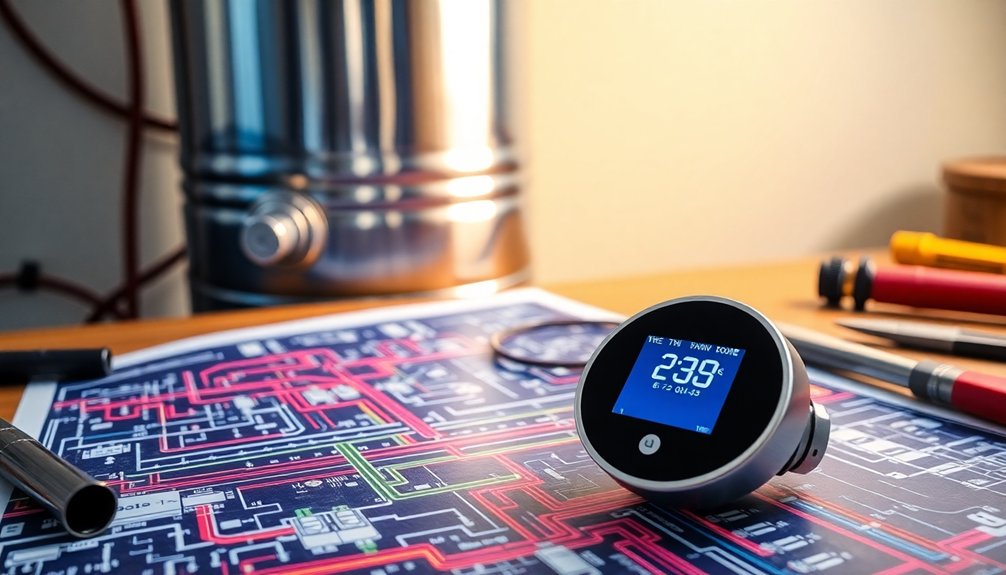
Thermostats are essential for maintaining the right water temperature in your electric heater. They regulate heat by switching power to the heating elements based on the tank’s temperature, and understanding the different types can help you optimize performance. Plus, knowing how to reset the system guarantees you prevent overheating and keep everything running smoothly. Additionally, incorporating budgeting apps can enhance your financial management while investing in home improvements like a water heater.
Thermostat Types Explained
Temperature control in electric water heaters relies heavily on two key thermostat types: the upper and lower thermostats. Each thermostat plays an important role in managing water temperature efficiently. The upper thermostat activates when the top of the tank cools, while the lower thermostat engages when the bottom section needs heating.
- Each thermostat features a red reset button for safety.
- Dials allow you to customize your desired temperature.
- They maintain a closed circuit for efficient heating.
- Regular thermostat maintenance is critical to guarantee proper function.
Understanding these thermostat functions helps you maintain your water heater effectively, guaranteeing safe and efficient operation.
Don’t overlook these components; they’re essential for your hot water needs!
Temperature Regulation Mechanism
Understanding how thermostats function in your electric water heater is essential for maintaining ideal temperature control and energy efficiency.
Your heater features two thermostats—one for the upper element and one for the lower element—guaranteeing precise regulation based on water temperature needs.
When temperature fluctuation causes the upper tank to cool, the upper thermostat activates first, followed by the lower thermostat for the bottom.
Employing effective thermostat calibration techniques helps optimize performance, sending power only when necessary.
Additionally, energy efficiency practices, like using the manual reset button to prevent overheating, can greatly reduce energy waste.
Resetting for Optimal Performance
When your water heater isn’t performing as it should, resetting the thermostats can make a significant difference in restoring ideal performance. Each thermostat has a reset button functionality that prevents damage due to overheating.
Here’s how to guarantee your water heater runs smoothly:
- Regularly check for signs of overheating and respond promptly.
- Use thermostat maintenance tips to keep the system efficient.
- Reset the thermostats if you notice inconsistent hot water supply.
- Monitor the temperature settings to prevent unnecessary energy use.
How Hot Water Draw and Recovery Works
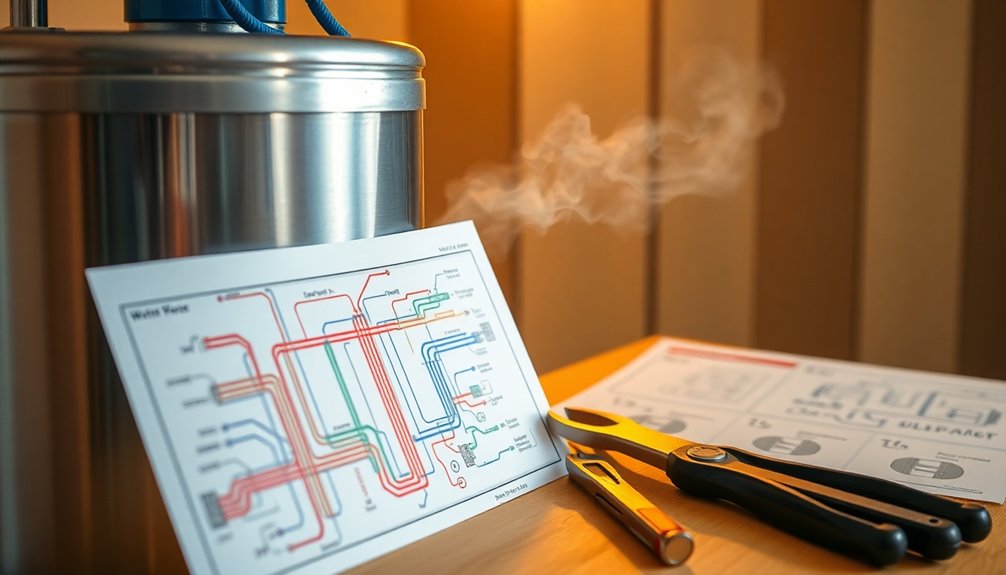
Hot water draw and recovery happen seamlessly in your water heater, ensuring you have a steady supply when you need it.
Hot water draw and recovery work effortlessly in your water heater, guaranteeing a consistent supply whenever you require it.
When you draw hot water from the top of the tank, cold water enters through a dip tube at the bottom, creating a stratification effect. As you continuously draw hot water, the lower heating element activates until the water reaches the desired temperature.
If the upper portion of the tank cools considerably, the upper thermostat triggers the upper heating element for the recovery process. This system relies on temperature sensors in the thermostats, managing heating and recovery efficiently.
Once the upper thermostat is satisfied, it resets, preparing the system for the next demand, maintaining effective hot water recovery. Understanding savings and investments can help you make informed choices about optimizing costs in your household.
The Importance of Stratification in Water Tanks
Stratification in water tanks plays an essential role in maximizing heating efficiency, ensuring you get hot water when you need it without wasting energy. By maintaining temperature layering, hot water stays at the top while cooler water settles at the bottom.
This method provides several stratification benefits:
- Keeps hot water at 120-140°F, ready for use.
- Activates the heating element only when the lower layer cools down.
- Prevents mixing of cold water with hot, preserving temperature longer.
- Optimizes recovery time by engaging the upper thermostat only when necessary.
Understanding stratification is key to enhancing energy efficiency in your water heater, allowing for a steady, reliable supply of hot water while reducing unnecessary energy consumption. Additionally, employing budget apps can help you track your energy expenses and promote better financial management in relation to home maintenance costs.
Manual Reset and Limit Switch Functionality
Understanding how the manual reset and limit switch work is essential for maintaining your water heater’s safety and efficiency.
The limit switch operation acts as a fail-safe, cutting off power to the heating elements if the water temperature exceeds a preset threshold. This guarantees that your water heater doesn’t overheat, preventing potential hazards.
The limit switch serves as a critical safety mechanism, preventing overheating by cutting power to the heating elements when necessary.
When the limit switch trips, you’ll need to perform a manual reset by pressing a red button on the thermostat panel. This reset importance can’t be overstated, as it allows your system to resume normal function once temperatures drop to safe levels.
Regularly checking the limit switch and its manual reset feature can enhance safety feature benefits, guaranteeing peak water heater performance for years to come. Additionally, understanding the importance of timely payments can help you budget for any necessary repairs or replacements.
Steps for Diagnosing Common Issues
Before diving into diagnosing issues with your water heater, it’s essential to guarantee your safety by turning off the power at the breaker panel.
Use these troubleshooting techniques to identify common symptoms:
- Check the upper and lower thermostats with a multimeter to verify they’re functioning and set correctly.
- Inspect the limit switch for a manual reset button if the heater isn’t heating.
- Verify the continuity of the heating elements using a multimeter; zero resistance indicates a short, while infinite suggests a broken element.
- Examine wiring connections for any loose or burnt wires that could disrupt power flow.
Additionally, understanding expense categorization can help you budget for potential repairs and maintenance costs effectively.
With the right repair tools and these steps, you can effectively tackle water heater issues, saving both time and money.
Tips for Safe DIY Repairs
When tackling DIY repairs on your electric water heater, guaranteeing your safety should always come first. Always turn off the power at the circuit breaker before starting any work to prevent electrical shock.
Use essential tools like a multimeter to check for voltage at the thermostat terminals to confirm the power is off. Familiarize yourself with your water heater’s specific wiring diagram to avoid common mistakes that could lead to dangerous malfunctions.
Don’t forget to regularly test the reset button on the high-temperature limit switch to verify it’s functioning properly.
Finally, replace any damaged or frayed wires immediately, using proper safety equipment to maintain both safety and efficiency in your water heating system. Additionally, consider utilizing automated bill payment notifications to ensure timely payments for any necessary repair services.
Optimizing Efficiency to Reduce Energy Costs
Ensuring safety during DIY repairs is just the first step toward maintaining an efficient electric water heater.
To further optimize efficiency and reduce energy costs, consider these energy saving strategies:
- Adjust the thermostat: Lower it by 10°F to save 3-5% on energy costs.
- Insulate your heater and pipes: This can cut heat loss and save up to 9% on heating expenses.
- Use hot water during off-peak hours: Take advantage of lower energy rates.
- Schedule routine maintenance: Flushing the tank annually keeps it running efficiently by removing sediment.
Additionally, incorporating a structured framework for budgeting can help you allocate funds for necessary repairs and upgrades, ensuring long-term savings and efficiency.
Conclusion
In closing, mastering the mechanics of your water heater can save you both time and treasure. By diving into diagrams, deciphering devices, and diagnosing dilemmas, you’ll not only boost your confidence but also enhance efficiency. Don’t forget to prioritize safety while you tinker and tweak. With a little know-how and a hands-on approach, you can tackle tasks and trim those energy costs. So gear up, get going, and enjoy the warmth of savings!