
 0
0
 0
0
To tell if an apartment’s floor is truly soundproof on a budget, start by evaluating the flooring materials like carpet or hardwood. Listen for noise when walking around, and try dropping a heavy object to gauge sound transmission. Check for gaps or cracks that could let sound through. Understanding the building’s construction helps too. By exploring simple solutions and enhancements, you can create a quieter living environment that’s enjoyable. You might discover more useful tips ahead.
Understanding Soundproofing Basics
When you think about soundproofing your apartment, it’s important to understand the difference between blocking noise and reducing echoes.
Soundproofing primarily focuses on preventing noise transfer, while sound absorption reduces echoes within your space. You’ll encounter two main types of noise: impact noise, like footsteps that travel through floors and ceilings, and airborne sound, such as voices and music that move through the air.
Soundproofing prevents noise transfer, while sound absorption reduces echoes; impact noise and airborne sound are the two main types to consider.
To effectively soundproof your apartment, consider material density; high-mass materials are essential for blocking airborne sounds, while soft, absorption materials help mitigate impact noise. Additionally, consider the environmental impact of your materials and opt for sustainable packaging solutions that can contribute to a greener home environment.
Setting realistic expectations is important, as achieving absolute soundproofing is often impractical without major renovations.
Identify weak spots like windows, doors, and thin walls to target your soundproofing efforts effectively.
The Importance of Flooring Materials
Selecting the right flooring materials plays a key role in how sound travels throughout your apartment. Soft materials like carpet and rugs excel in absorbing sound, minimizing impact sound from footsteps.
In contrast, hard surfaces such as tile and hardwood can amplify noise, making them less ideal for soundproofing. If you have concrete floors, consider soundproof underlays to reduce both impact and airborne noise effectively.
Engineered wood and luxury vinyl can also enhance aesthetics while providing some sound-dampening properties, especially when paired with appropriate underlayment. Additionally, choosing eco-friendly brands that prioritize sustainable materials can further contribute to a quieter and more pleasant living environment.
Identifying Noise Sources in Apartments
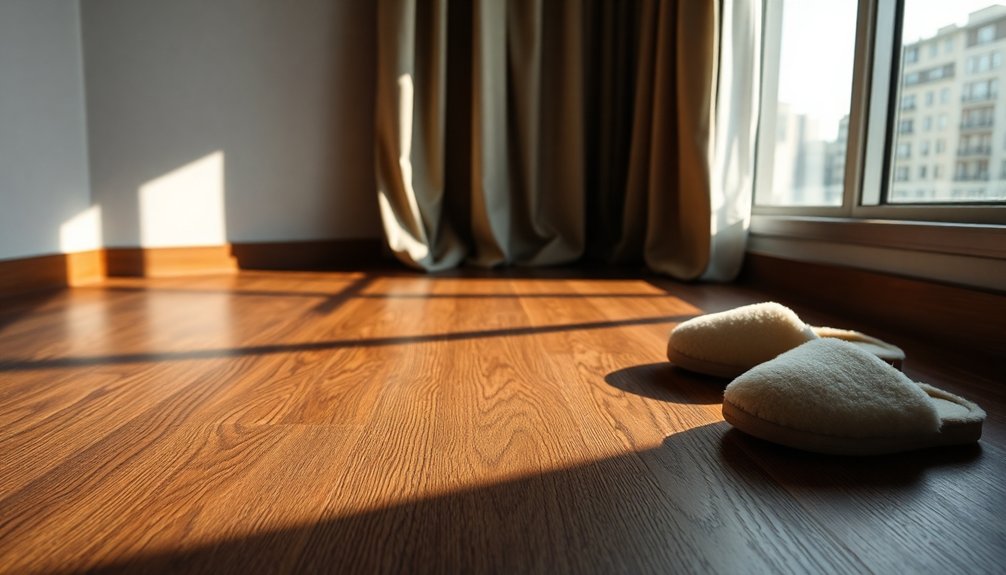
Have you ever wondered where the noise in your apartment is really coming from? Identifying noise sources is essential, as sound can travel through walls, ceilings, and floors.
You’ll want to distinguish between airborne noise, like voices and music, and impact noise, such as footsteps and furniture movement. Common complaints often arise from neighbors, external traffic, or mechanical devices, so assess both internal and external factors.
Pay attention to your apartment’s construction materials; thin walls and concrete floors tend to reflect noise more than carpeted surfaces.
To better understand disturbances, conduct a noise test by noting when and where sounds occur. This insight will help you find effective soundproofing solutions that suit your budget and needs. Additionally, consider how expense categorization can play a role in budgeting for soundproofing improvements.
Testing Floor Soundproofing Effectiveness
How can you effectively gauge your apartment’s floor soundproofing? Start by walking around and listening for noise from footsteps or furniture movement, especially near shared walls or ceilings.
Next, drop a heavy object onto the floor; if it creates a loud noise, your soundproofing may be lacking.
Use a decibel meter app on your smartphone to measure sound levels while playing music or talking at a normal volume, noting differences in various areas.
Inspect for gaps and cracks around the flooring or baseboards, as these can greatly reduce noise.
Finally, inquire about the building’s construction materials—concrete floors often provide better soundproofing than wooden ones, so understanding the soundproofing measures taken during construction is key. Additionally, consider how expense tracking tools can help manage costs related to soundproofing improvements or renovations.
Temporary Soundproofing Solutions
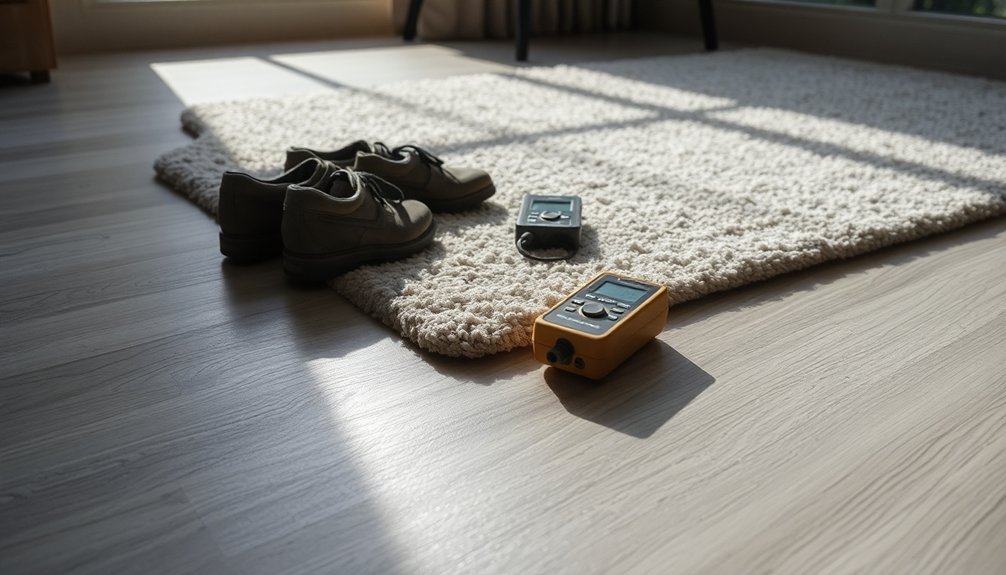
After evaluating your floor’s soundproofing, you might find that some noise still sneaks in.
Fortunately, there are several temporary soundproofing solutions you can try that won’t require permanent changes to your apartment.
These options are great for noise reduction and can enhance your soundproof flooring experience:
- Heavy rugs or carpets to absorb sound.
- Interlocking floor tiles or foam mats under rugs for added dampening.
- Soundproof curtains and window inserts to block external noise.
- Door sweeps and draft stoppers to seal gaps around doors.
Additionally, consider implementing expense management apps that utilize innovative technology to help you manage costs associated with soundproofing solutions.
Permanent Soundproofing Options
When it comes to permanent soundproofing options, the right flooring material can make all the difference.
You’ll want to contemplate installation techniques like adding soundproofing underlayment or decoupling structures to effectively reduce noise transmission. Additionally, understanding the importance of tracking progress in your soundproofing efforts can help you gauge the effectiveness of your chosen methods.
Let’s explore how these choices can transform your living space into a quieter haven.
Flooring Material Choices
Choosing the right flooring materials is essential for effective soundproofing in your apartment. The right options can greatly reduce both impact noise and airborne noise transmission.
Consider these flooring material choices:
- Solid hardwood: Heavy and dense, it minimizes sound transfer.
- Cork: Naturally sound-absorbent, great for dampening noise.
- Luxury vinyl: Offers a practical, stylish solution with soundproofing benefits.
- Concrete with acoustic underlayment: Absorbs impact noise effectively.
Additionally, installing soundproofing underlayment, like mass-loaded vinyl or rubber, can enhance your flooring’s performance.
If you have timber floors, high-density insulation between joists adds mass and helps decouple surfaces, further reducing sound transmission.
These choices create a quieter, more comfortable living environment in your apartment.
Installation Techniques Overview
With the right flooring materials in place, you can take the next step toward creating a soundproof sanctuary in your apartment.
Permanent soundproofing for floors often requires specific installation techniques. Consider adding soundproofing underlayment beneath your flooring to greatly reduce impact sounds. This is especially effective when paired with heavy carpets or rugs.
For more thorough solutions, you might explore adding mass to your floors and using materials like mass-loaded vinyl to block airborne noise. Techniques like decoupling surfaces with isolation clips and resilient channels can also minimize sound transmission.
If you’re tackling complex systems, don’t hesitate to hire professionals; improper installation can hinder your soundproofing efforts. Confirm each step maximizes your apartment’s tranquility.
Evaluating Building Construction
Evaluating the construction of your apartment is essential for understanding its soundproofing capabilities.
Understanding your apartment’s construction is crucial for assessing its soundproofing effectiveness.
Here are some key factors to take into account:
- Building type: Concrete floors usually offer better sound insulation compared to timber floors.
- Soundproofing materials: Look for features like mass-loaded vinyl or acoustic underlayment, which enhance sound isolation.
- Floor thickness: Thicker floors tend to absorb and deflect sound waves more effectively, improving overall soundproofing.
- Compliance with regulations: Verify the building adheres to local soundproofing regulations, such as the UK’s Building Regulations Part E.
Additionally, consider how ethical shopping practices can influence your choice of materials and construction methods, promoting a commitment to sustainability and community well-being.
Communicating With Landlords
When you notice persistent noise disturbances in your apartment, addressing them with your landlord can lead to effective solutions. Start by clearly documenting specific disturbances, noting dates and times to support your claims.
Engage in friendly communication with your landlord, expressing your concerns about the noise levels and discussing potential soundproofing solutions. Emphasize the benefits of soundproofing, like improved tenant retention and increased property value, to motivate landlords to take action.
Suggest cost-effective options, such as adding rugs or acoustic panels, which won’t require extensive renovations. If needed, propose a trial period for temporary soundproofing measures. This approach allows both you and your landlord to evaluate their effectiveness before committing to permanent changes. Additionally, consider discussing how real-time insights into expenses, as offered by tools like FreeAgent, could help in budgeting for any soundproofing enhancements.
Budget-Friendly Soundproofing Tips
If you’re looking to reduce noise in your apartment without breaking the bank, there are several effective strategies you can try.
By utilizing these budget-friendly soundproofing tips, you can greatly enhance your living space:
Enhance your living space with these budget-friendly soundproofing tips for a quieter, more comfortable environment.
- Use heavy area rugs with soundproof underlay to soften hard surfaces and reduce the sound transmission from floors.
- Seal gaps around doors and windows with weather stripping or door sweeps to minimize noise entering your home.
- Consider acoustic panels or sound-absorbing curtains to dampen airborne noise and echo from neighbors.
- Opt for carpets with padding, as they provide better sound insulation than hardwood or tile floors.
Implementing these simple solutions can create a quieter, more comfortable environment without extensive soundproofing measures. Additionally, tracking your spending habits can help you manage the costs associated with soundproofing improvements effectively.
Conclusion
So, if you’re dreaming of a peaceful apartment with floors that could silence a marching band, good luck! Just remember, while you’re testing those soundproofing claims, you might also want to invest in some earplugs and a good set of noise-canceling headphones. After all, who needs tranquility when you can enjoy the symphony of your neighbors’ lives? Embrace the chaos, and if all else fails, consider taking up the drums—at least you’ll fit right in!