
 0
0
 0
0
You can put glass in the freezer, but you need to take some precautions to prevent breakage. Use glass containers labeled as freezer-safe, like borosilicate or tempered glass. Always inspect for cracks or chips before use. Leave a 3cm gap at the top of containers to allow for liquid expansion as it freezes. Avoid placing hot food directly into glass to prevent thermal shock. Some foods, like cooked beans and soups, freeze well in glass. If you want to know more tips on safe glass storage and thawing methods, keep exploring further options!
Understanding Glass Freezing Safety
When it comes to freezing food, you'll want to pay attention to the type of glass containers you use. To guarantee safety, always choose glass containers specifically labeled as freezer-safe, like those made from tempered or borosilicate glass. These materials can withstand freezing conditions without shattering due to thermal shock.
It's also beneficial to take into account how expense tracking tools can help manage your food storage costs effectively. When filling your containers, remember that liquids expand as they freeze. To prevent cracks or chips, leave about a 3cm gap at the top of each container. This space accommodates the expansion and reduces the risk of breakage.
Avoid placing hot food directly into glass containers; rapid temperature changes can cause thermal shock, leading to catastrophic failure. Always let your food cool down before transferring it to the freezer.
Before you use any glass jar, inspect it for cracks or chips. Damaged glass is more prone to shattering, especially under freezing conditions.
Best Practices for Freezing Glass
When freezing food in glass containers, it's essential to select the right type of glass and fill it properly to prevent breakage.
Using heat-resistant glass containers can be beneficial, especially when dealing with temperature variations. You'll want to use wide-mouth jars and leave space at the top for expansion.
Additionally, knowing how to thaw and handle these containers safely can make a big difference in preserving your food.
For instance, understanding expense tracking options can help freelancers manage their food expenses effectively.
Selecting Freezer-Safe Glass
Selecting the right glass containers for freezing is vital for preserving your food safely and avoiding mishaps. Always choose glass that's explicitly labeled as freezer-safe. These containers are designed to handle extreme temperature changes without breaking.
Opt for borosilicate or tempered glass, as both are more resistant to thermal shock than regular glass.
When selecting jars, go for wide-necked jars with an outward taper. This design not only makes it easier to remove contents but also reduces the risk of cracking due to internal pressure during freezing.
Leaving enough room for expansion is important, so make sure to leave at least 3 cm (about 1 inch) of headspace in your glass containers. This space allows liquids to expand as they freeze without causing the glass to crack.
Avoid using narrow-necked jars or older glass containers, as they're more susceptible to cracking under freezing conditions.
Proper Filling Techniques
After choosing the right glass containers for freezing, employing proper filling techniques is key to ensuring their effectiveness. When you freeze food in glass, always leave about a 3cm gap at the top of your containers. This space accommodates liquid expansion, as liquids can expand by approximately 9% when frozen.
Fill jars only to the widest point and avoid overfilling. This helps prevent internal pressure that could lead to cracking during the freezing process. Opt for wide-mouth, straight-sided glass containers for easier removal of frozen contents, minimizing stress on the glass.
Before you start filling jars, make sure to cool food to room temperature. This step reduces the risk of thermal shock, which can cause your glass to break.
When placing lids on jars, do so loosely until the contents are frozen. This allows for expansion. Once the food is completely frozen, you can securely tighten the lids for storage.
Thawing and Handling Tips
Thawing food safely is essential for maintaining its quality and preventing glass breakage. When you freeze food in glass containers, remember to cool it to room temperature first. This step helps prevent thermal shock, which can crack your containers.
Always leave about a 3cm gap at the top of glass containers to allow for any liquid expansion during freezing.
For thawing, opt for gradual methods. Place your frozen glass containers in the refrigerator or submerge them in cold water. These methods minimize stress from rapid temperature changes and reduce the risk of breakage.
Avoid microwaving frozen glass jars directly, as uneven heating can lead to cracking. Instead, use low heat on a stovetop with a lid to warm them gradually.
Make sure you use borosilicate or tempered glass containers labeled as freezer-safe; they're designed to withstand extreme temperature fluctuations.
Foods That Freeze Well in Glass
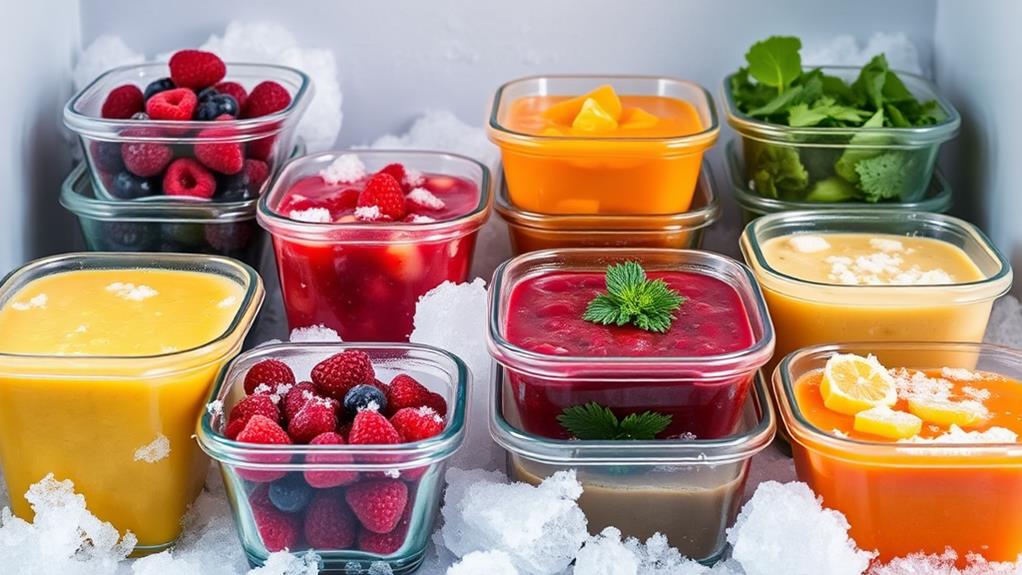
When it comes to freezing food in glass, knowing which containers to use and what foods work best is essential.
Utilizing proper techniques, such as leaving space for expansion, can help prevent breakage and guarantee your frozen goods remain intact.
You can safely freeze cooked beans, fruits, and even soups by following these guidelines, which align with the principles of effective financial management to enhance your food storage strategies.
Let's explore the best glass options and suitable foods for freezing to make the most of your storage.
Best Glass Containers
For those looking to store food safely in glass, choosing the right containers is crucial. Glass containers, like wide-mouth Mason jars, are perfect for freezing because they allow easy access to contents and accommodate the expansion of liquids during freezing.
When you prepare items like cooked beans, fruits, or vegetables, freeze them flat before transferring them to glass containers to maintain ideal texture and quality.
When filling your glass jars with soups or sauces, remember to leave about 3 cm of space at the top. This guarantees there's room for the liquid to expand as it freezes, preventing any cracks or breakage.
Additionally, you can effectively freeze biscuits and baked goods in glass jars after cooking, preserving their delightful flavor and texture for later enjoyment.
Don't forget about storing citrus zest and vegetable scraps! These can be conveniently frozen in glass containers, making them handy for future use in broths and flavoring dishes.
Suitable Foods for Freezing
Many foods freeze well in glass containers, making them an excellent option for preserving your favorite ingredients.
When you're looking to store food safely, choosing suitable foods for freezing is essential. Here are some great options that hold up beautifully in glass:
- Cooked vegetables: Items like peas, carrots, and spinach maintain their nutritional value when frozen in glass.
- Soups and stews: These can be stored in glass jars, but remember to leave a 3cm gap at the top for liquid expansion.
- Cooked meats and poultry: Make sure they're completely cooled before placing them in jars for freezing.
- Baked goods: Bread, biscuits, and pancakes freeze well in glass, making meal prep easier and reducing waste.
Proper Freezing Techniques
Storing food properly in glass requires understanding the best techniques to assure quality and safety. When you're freezing things in glass containers, opt for tempered or borosilicate glass that's specifically labeled as freezer-safe. This assures they're durable enough to withstand thermal shock.
For liquids like soups and sauces, cool them completely before transferring to jars, leaving a 3cm gap at the top to allow for expansion during freezing and thawing.
Fruits and vegetables should be frozen flat initially, which helps maintain their texture and shape when you later thaw them in glass containers.
Baked goods, such as biscuits, can be effectively frozen in wide-mouth jars after cooking. This makes it easy for you to grab portions whenever you need them.
You can also preserve citrus zest and vegetable scraps in glass for later use in broths, maximizing food storage and reducing waste.
Foods to Avoid Freezing in Glass
Freezing food in glass containers can seem like a practical choice, but certain items just don't hold up well under those icy conditions.
Some foods to avoid freezing in glass include:
- High-water content foods: Vegetables like lettuce, cucumbers, and tomatoes lose their texture and become mushy when frozen. This is similar to how ethical shopping promotes environmental benefits by encouraging sustainable consumption patterns.
- Dairy products: Items such as milk and yogurt can separate and curdle upon thawing, making them unsuitable for glass storage.
- Whole eggs: Eggs in their shells are prone to cracking. Instead, beat them and store in a freezer-safe container.
- Fried foods: These may lose their crispiness and texture when frozen, making them a poor choice for glass.
Additionally, certain condiments like mayonnaise and salad dressings can separate and change consistency when frozen in glass.
To maintain food quality, it's best to choose other storage options for these items. By avoiding these foods in glass containers, you can guarantee your frozen meals maintain their intended taste and texture.
Thawing and Reheating Glass Containers
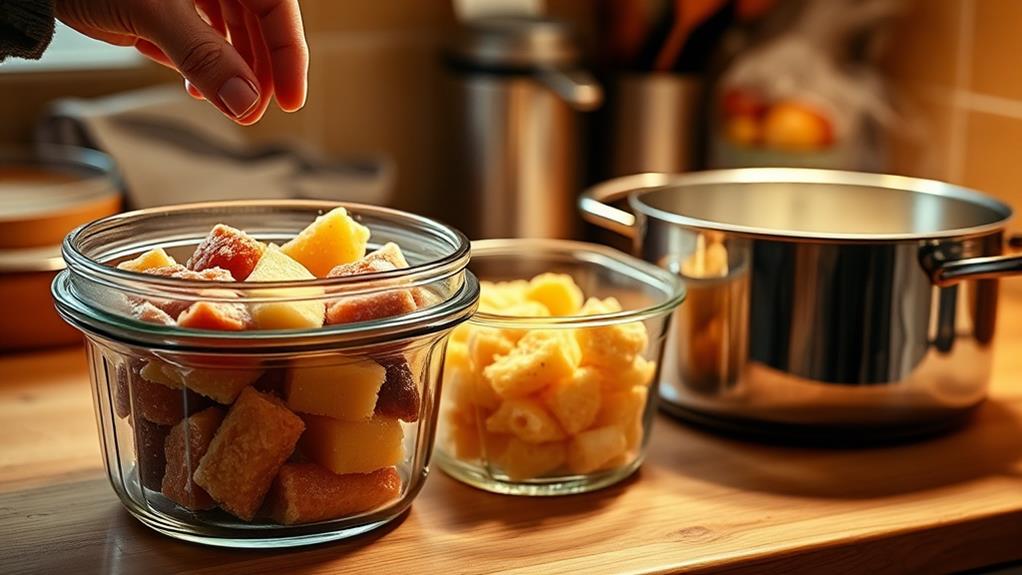
When it comes to thawing and reheating glass containers, it's crucial to handle them with care to avoid any mishaps. To prevent thermal shock, which can crack or shatter your glass, always thaw glass containers in the refrigerator or at room temperature.
If you're in a hurry, you can submerge sealed glass containers in a bowl of cold water, allowing for gradual temperature equalization. It's also worth noting that just like effective expense management apps streamline financial organization, thoughtful handling of glass containers can help prevent costly accidents.
Never plunge frozen glass jars directly into hot water; this sudden temperature change can create stress and lead to breakage. Also, make sure your glass containers aren't overfilled before freezing. Liquids expand when frozen, and if there's no room for expansion, you risk damaging the glass during thawing.
When it's time for reheating thawed food, use low heat and stir the contents to encourage even heating. This method not only helps prevent sticking but also minimizes the risk of glass damage.
Environmental and Health Benefits of Glass
Using glass containers for food storage not only protects your meals but also offers significant environmental and health benefits. By choosing glass over plastic, you're making a positive impact on both your health and the planet.
Furthermore, utilizing sustainable materials in everyday products, like glass, is vital for promoting a circular economy and reducing environmental waste.
Here are some key benefits of using glass containers:
- Sustainability: Glass is made from abundant natural resources like sand and is 100% recyclable, helping reduce environmental waste.
- Chemical-Free: Unlike plastic, glass containers are free from harmful chemicals such as BPA, PVC, and phthalates, ensuring safer food storage without the risk of toxins leaching into your food.
- Odor and Stain Resistant: The non-porous nature of glass prevents absorption of odors and stains, maintaining the purity and quality of the food you store.
- Durability and Hygiene: Glass containers are durable and can last for years. They're easy to clean in soapy water or dishwasher safe, promoting better hygiene.
Conclusion
To sum up, freezing glass containers is safe when you follow the right practices. You might worry about breakage, but using tempered or freezer-safe glass minimizes that risk considerably. Plus, glass is a healthier choice than plastic, as it doesn't leach chemicals into your food. By choosing glass for your freezing needs, you not only protect your meals but also contribute to a safer environment. So go ahead and enjoy the benefits of freezing your favorite dishes in glass!