

 0
0
 0
0
In a frugal family, it’s essential to communicate your feelings about your dad unintentionally wasting your belongings. Use “I” statements to express how these items hold sentimental value for you. Set clear boundaries about what’s off-limits and lead by example, demonstrating responsible use. Encourage discussions on the importance of care, ensuring everyone understands the value of possessions. When conflicts arise, practice patience and understanding. There’s more to explore on fostering a respectful household and encouraging resourcefulness.
Understanding the Importance of Personal Belongings
Personal belongings often carry deep sentimental value, shaping our identities and memories. Understanding this significance helps you respect not just your items but also those of others in your household.
Personal belongings hold sentimental significance, influencing our identities and memories while fostering respect within our homes.
When you appreciate personal belongings, you foster a culture of consideration, which is crucial in any family dynamic. By reusing and repurposing items, you extend their life and utility, which aligns with mindful consumption habits.
Setting clear boundaries regarding personal possessions is essential; it guarantees everyone’s belongings are treated with care. This respect can prevent misunderstandings and promote harmony within your frugal family setting.
Ultimately, valuing personal belongings encourages you to cherish what you have, reducing waste and enhancing your emotional connections to your items. Additionally, leveraging tools like expense management apps can help track spending on personal belongings, ensuring you make informed financial decisions.
Communicating Your Feelings Effectively
Effective communication is key when addressing your feelings about your belongings being wasted. Start by using “I” statements, like “I feel upset when my things are wasted,” to express yourself without blame.
Clearly articulate specific instances where your belongings were misused, so your dad understands the impact of his actions. Choose a calm moment for the discussion, ensuring both of you feel comfortable to talk openly.
Emphasize the value you place on your possessions, explaining they represent time, effort, and money invested. This approach fosters empathy and understanding. Additionally, consider using a budgeting app to help illustrate the financial impact of wasted items, as it can provide insights into spending habits and reinforce the importance of being mindful with belongings.
Finally, be prepared to listen to your dad’s perspective as well, as communicating your feelings effectively every time encourages mutual respect and cooperation on managing shared spaces and belongings.
Setting Clear Boundaries for Shared Items
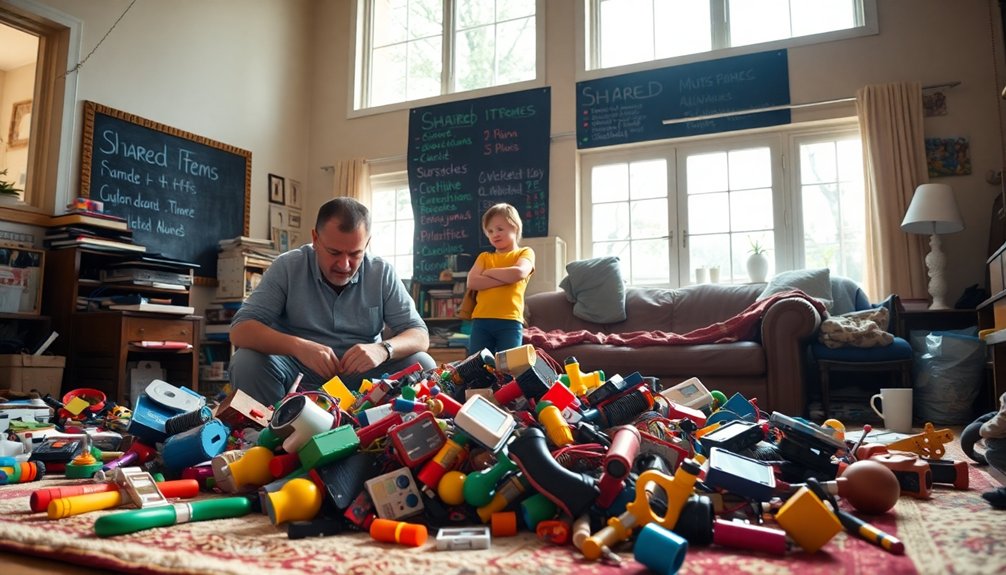
When it comes to shared items, setting clear boundaries can help prevent misunderstandings and conflicts. Start by discussing which items are off-limits for use without your permission. Make sure everyone understands and respects these limits.
Labeling your belongings can also clarify ownership and reduce confusion. Establish a designated area for shared items, outlining specific rules for their use, like how and when they can be borrowed.
Encourage open discussions about caring for shared items, emphasizing that neglect can lead to unnecessary expenses for the family. Additionally, consider implementing expense categorization to track and manage the costs associated with shared items effectively. Finally, set consequences for repeated disregard of boundaries, such as restricting access to those items in the future.
Leading by Example: Demonstrating Responsible Use
You can show responsible use of your belongings by making small repairs instead of tossing things out.
For instance, use duct tape for quick fixes or reuse kitchen baggies to cut down on waste. Additionally, embracing sustainable practices can contribute to a more eco-friendly lifestyle.
Show, Don’t Tell
Modeling responsible use of shared items isn’t just about telling others what to do; it’s about showing them through your actions.
When something gets damaged, grab some duct tape instead of tossing it out. Demonstrate how reusing kitchen baggies cuts down on waste and saves money over time.
Share how spending less on material goods opens doors for family adventures like camping trips or educational outings. Show that frugality can enhance your quality of life, like cutting hair at home with a $10 electric shaver.
Practical Demonstrations Daily
Practical demonstrations of responsible use can transform the way your family interacts with shared items. Every two weeks, make it a point to repair rather than replace household items. Use duct tape for quick fixes and show how reusing kitchen baggies can save money and reduce waste.
Highlight the benefits of multi-functional tools, like that $10 electric shaver for haircuts, to illustrate smart investments. Share your experiences of eating directly from containers to cut down on dishwashing and emphasize the time saved.
Finally, lead by example in budgeting for groceries by growing your own vegetables or hunting game. These daily practices not only promote frugality but also foster a culture of responsibility and resourcefulness in your household.
Encouraging a Mindset of Value and Care

To build a mindset of value and care, start by recognizing the importance of your belongings and how they contribute to your experiences. When you take responsibility for your items, you not only save money but also reflect your family’s values of hard work and resourcefulness. Embracing this attitude can lead to a greater appreciation for what you have and how you use it. Moreover, practicing disciplined savings habits can enhance your overall financial journey and help you achieve long-term financial goals.
Understanding Value in Things
Value is more than just a price tag; it’s about the appreciation and care we give to our possessions. When you distinguish between being thrifty and cheap, you cultivate a deeper respect for your belongings.
Try reusing items like kitchen baggies to see how small actions can extend their lifespan, reinforcing their value. Share stories of creatively repurposing things—maybe using duct tape for quick fixes—to inspire resourcefulness.
Family traditions, like camping trips, emphasize meaningful experiences over material goods, showing that true value lies in shared moments.
Additionally, understanding financial responsibility and practicing delayed gratification can help you recognize the worth of your belongings, motivating you to take better care of them.
Care for Belongings Matters
Recognizing and appreciating the worth of your belongings naturally leads to a mindset that prioritizes care and responsibility. When you learn to value your possessions, you’re less likely to waste them.
For instance, see how some parents choose to repair items with duct tape instead of tossing them away. This practice not only saves money but also teaches you about longevity.
By emphasizing care for belongings, you cultivate respect for your things, similar to how parents encourage saving for meaningful experiences over material accumulation.
Modeling this behavior—like using a $10 electric shaver for haircuts—reinforces frugality.
Ultimately, nurturing a habit of caring for your belongings minimizes waste and reflects the value of hard work and sustainability.
Instilling Responsibility in Family
When you encourage family members to take responsibility for their belongings, it fosters a culture of care and respect within the home.
Establish clear expectations regarding the maintenance of shared items, nurturing a sense of ownership. Regular family discussions about the value of possessions can help everyone understand how proper care extends their lifespan and aligns with frugal values.
Create opportunities to share thoughts on the importance of each item, reinforcing emotional connections. Lead by example, demonstrating careful handling to emphasize that caring for belongings is a collective responsibility.
Organize activities focused on repairing or repurposing items, turning them into bonding experiences while teaching resourcefulness. This approach not only instills responsibility but also provides peace of mind for everyone involved.
Strategies for Managing Frustration and Conflict
Although it can be frustrating to see your belongings wasted, addressing the issue with your dad can lead to a more respectful understanding between you both.
Start by opening a dialogue about your feelings, emphasizing the emotional and financial impact this has had on you over the years. Establish clear boundaries by explaining which items are off-limits, highlighting personal responsibility in shared spaces.
Open a dialogue about your feelings to establish boundaries and foster personal responsibility in shared spaces.
Use humor to ease tensions—share a funny anecdote that reflects your value of frugality. Consider suggesting a designated space for your belongings to prevent misunderstandings.
Finally, encourage a collaborative approach by proposing joint activities that emphasize resourcefulness. This way, you can turn conflict into bonding, strengthening your relationship while managing frustrations. Additionally, you might explore AI-driven tools that can optimize your shopping experience, helping you make more informed purchasing decisions in the future.
Finding Common Ground in a Frugal Household
Finding common ground in a frugal household can strengthen relationships while ensuring everyone feels valued.
Start by discussing the importance of personal belongings and establish mutual respect. Clarify the difference between thriftiness and wastefulness; this helps everyone understand why reusing items matters.
Emphasize shared values like hard work and self-sufficiency to foster unity. Create designated spaces for personal belongings, preventing misunderstandings and promoting responsibility.
When tensions arise, practice patience and understanding; addressing concerns calmly maintains harmony. If someone suggests it’s time to buy a new item, weigh the benefits and consider alternatives first. Additionally, utilizing budgeting apps can help track spending and prioritize financial goals, strengthening the family’s commitment to frugality.
Teaching Lessons About Resourcefulness
Teaching lessons about resourcefulness can be a rewarding experience that shapes how you approach everyday challenges. By repurposing items, like using duct tape for repairs instead of buying new, you demonstrate practical resourcefulness.
Encourage creative problem-solving, such as using a plastic 5-gallon bucket for BB gun target practice, which showcases innovative thinking. Teach the importance of minimizing waste by reusing kitchen baggies and eating directly from food containers, practical ways to conserve resources.
Highlight affordable alternatives, like cutting hair with a $10 electric shaver, fostering independence. Finally, promote viewing financial discipline as a means to prioritize meaningful experiences over material possessions, reinforcing that resourcefulness leads to long-term satisfaction and fulfillment. Utilizing tools like budget management tools can also help in tracking and planning finances effectively.
Building a Respectful and Supportive Environment
Creating a supportive atmosphere at home hinges on open communication and mutual respect. Start by clearly expressing to your dad why respecting personal belongings matters. Use specific examples of things he’s wasted, but do this gently to avoid confrontation.
Involve him in discussions about how to care for family possessions together. This shared responsibility can strengthen your bond and encourage better habits. Suggest solutions like designated storage areas for personal items to minimize misunderstandings.
When he respects your belongings, acknowledge this positive behavior. Reinforcing these actions builds a culture of mutual respect and support, making everyone feel valued. Ultimately, fostering this environment will help you both appreciate each other’s things more. Additionally, implementing loyalty programs can enhance relationships and encourage positive behaviors within the family dynamic.
Conclusion
In the end, managing the challenges of a dad who misuses your things doesn’t have to be a battle. By fostering open communication and setting clear boundaries, you can turn frustration into understanding. Remember, a family that values each other’s belongings is like a well-tuned orchestra, creating harmony in your home. Embrace resourcefulness together, and you’ll not only protect your possessions but strengthen your bond. After all, a little care goes a long way in a frugal family!