
 0
0
 0
0
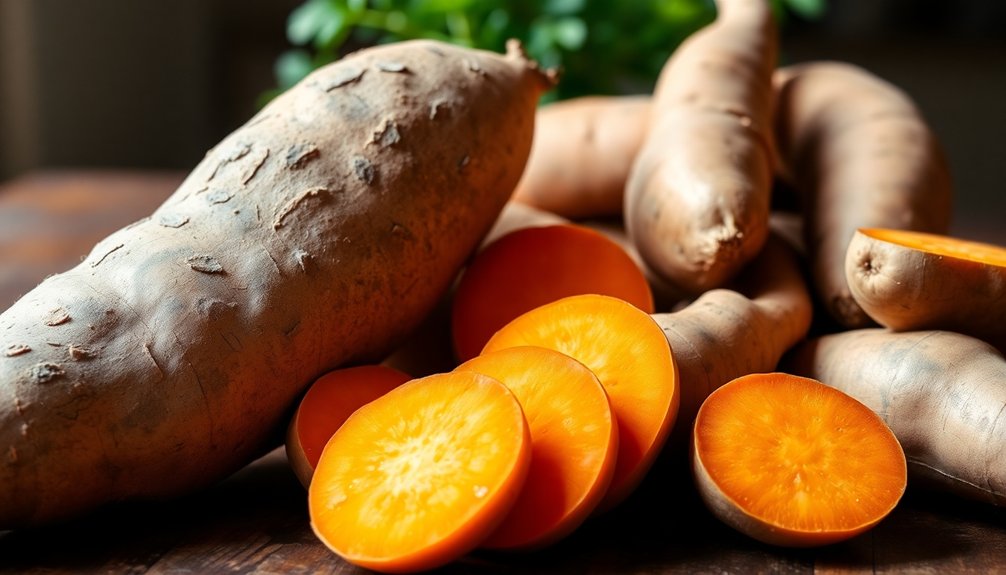
Yams and sweet potatoes aren’t the same thing. Yams belong to the Dioscorea genus, while sweet potatoes are part of the morning glory family. You’ll notice yams have rough, brown skin and can be denser, while sweet potatoes usually sport smooth skin and are sweeter. Additionally, sweet potatoes are often mislabeled as yams in the U.S. There’s much more to explore about their nutritional benefits and culinary uses.
Understanding Yams and Sweet Potatoes
When you plunge into the world of yams and sweet potatoes, you’ll quickly realize that many people confuse the two.
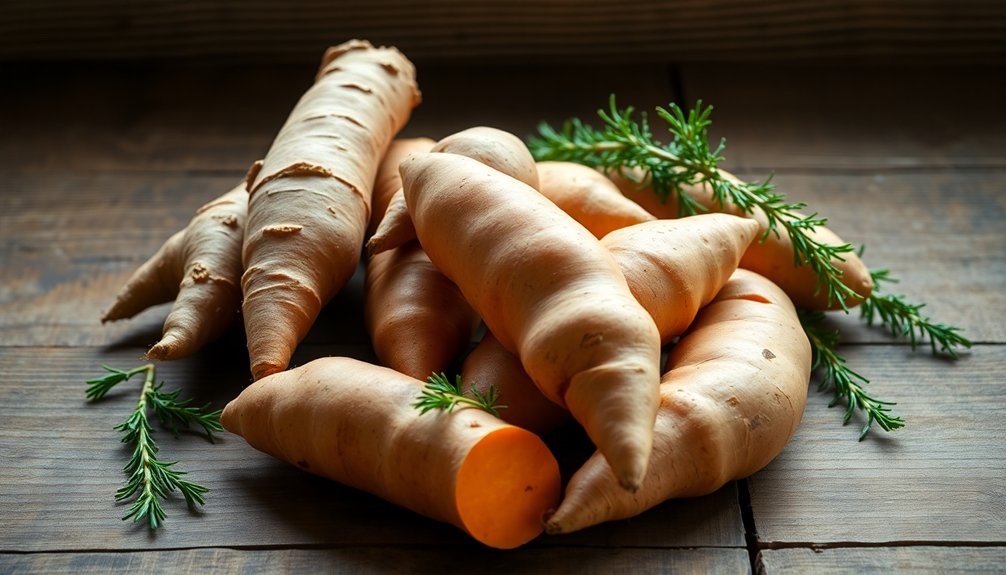
Yams and sweet potatoes differ markedly despite their similar appearances. True yams, which come from the Dioscorea genus, have rough, bark-like brown skin and can feature white or yellowish flesh.
In contrast, sweet potatoes belong to the morning glory family and are often smooth-skinned, showcasing orange, grey, or deep purple flesh.
In the U.S., orange sweet potatoes are commonly mislabeled as yams, which adds to the confusion. Sweet potato growers emphasize the sweeter flavor and versatility of these root vegetables compared to the larger, denser true yams.
Understanding these differences helps you appreciate the unique qualities of both potatoes and yams.
Nutritional Comparison
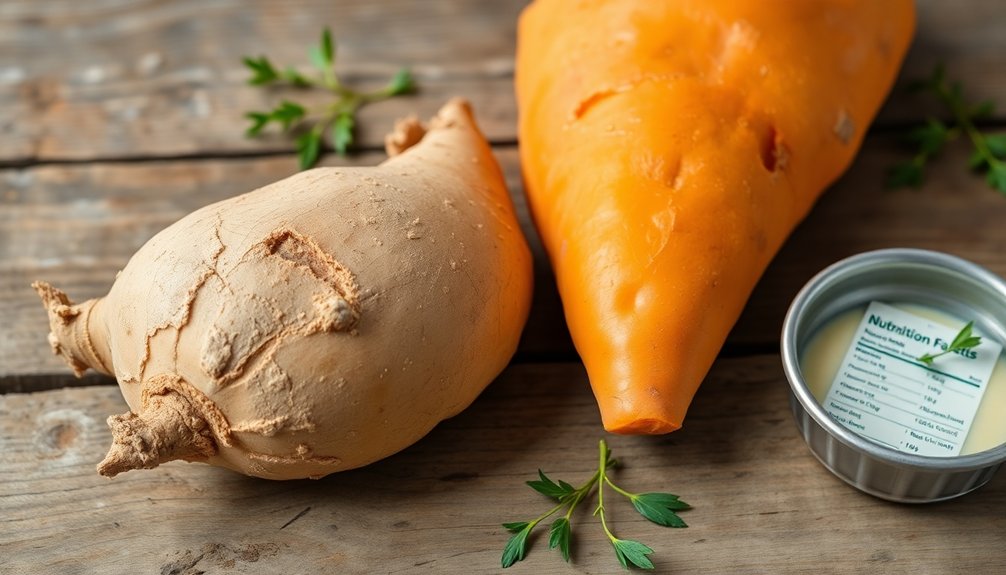
While both yams and sweet potatoes offer valuable nutrients, they differ significantly in their nutritional profiles.
Sweet potatoes shine with higher levels of vitamin C and beta-carotene, making them a nutrient-dense choice. They’re also rich in vitamin A, essential for vision and immune function.
Sweet potatoes are nutrient-dense, packed with vitamin C, beta-carotene, and vitamin A, vital for vision and immunity.
On the other hand, yams boast a greater concentration of copper, important for various bodily functions.
Both yams and sweet potatoes provide excellent dietary fiber, potassium, and complex carbohydrates, supporting a balanced diet.
When it comes to blood sugar, yams have a lower glycemic index than sweet potatoes, indicating they may impact your blood sugar levels less.
Ultimately, your choice might depend on which nutrients you prioritize in your diet.
Culinary Uses and Recipes
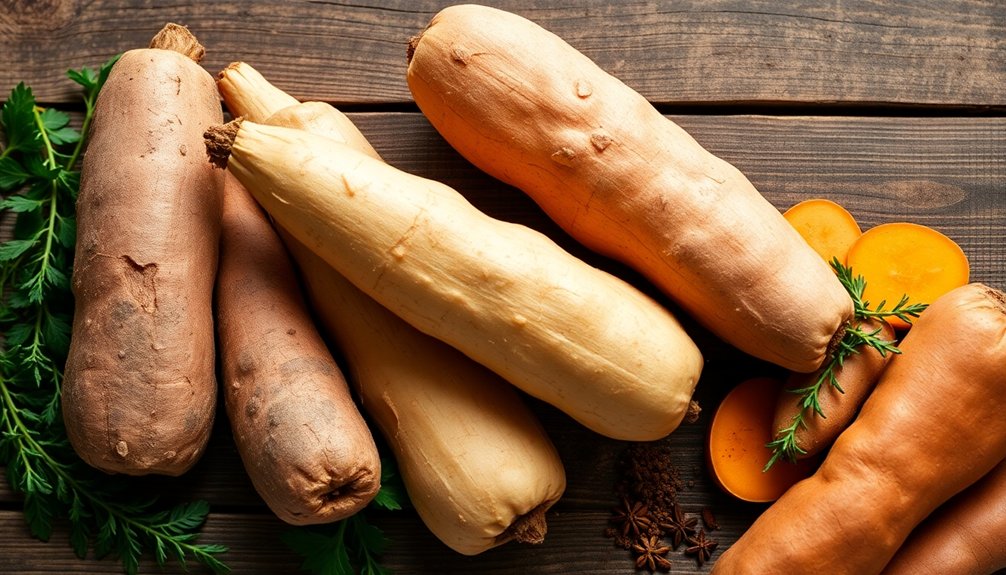
Yams and sweet potatoes each offer unique culinary opportunities that can elevate your meals. Understanding their culinary uses helps you maximize their potential. Here are some ideas to get you started:
- Savory Dishes: Yams shine in savory recipes like yam porridge or hearty stews, where their starchy nature enhances flavor profiles.
- Sweet Dishes: Sweet potatoes are perfect for sweet recipes, such as sweet potato pies, biscuits, or creamy hummus, showcasing their natural sweetness.
- Cooking Times: Remember, yams usually require longer cooking times due to their denser texture, while sweet potatoes can be quickly roasted, mashed, or fried.
Common Misconceptions
Have you ever wondered why so many people mix up yams and sweet potatoes? This confusion often stems from marketing practices that label orange-fleshed sweet potatoes as yams in grocery stores.
True yams, native to Africa and Asia, are markedly different. They belong to the Dioscorea genus, have rough, bark-like skin, and a starchy texture. In contrast, sweet potatoes, which originate from Central and South America, have smooth skin and a sweeter flavor.
The USDA even requires products labeled as “yams” to include “sweet potatoes” for clarity. These misconceptions can affect culinary choices, leading to the incorrect use of yams and sweet potatoes in recipes, which is a shame since both have unique qualities worth celebrating.
Geographic Cultivation and Farming Practices
The differences between yams and sweet potatoes extend beyond their appearance and flavor to their geographic cultivation and farming practices.
Yams thrive in tropical climates like South America, Africa, and the Caribbean, while sweet potatoes flourish in the southern United States.
Here are some key points about their farming practices:
- Soil Requirements: Sweet potatoes prefer sandy, loamy soils for ideal drainage and nutrients, unlike yams, which can adapt to various soil types.
- Crop Rotation: Farmers often use crop rotation with sweet potatoes, planting them alongside soybeans, wheat, and cotton to maintain soil health and manage pests.
- Harvesting Timeline: Sweet potatoes are typically harvested 90-120 days post-planting, using field testing to determine readiness, contrasting with yam harvesting practices.
Conclusion
In summary, yams and sweet potatoes aren’t the same, despite their similarities. Understanding their differences can enhance your cooking and grocery shopping experiences. For instance, if you’re preparing a hearty stew and mistakenly use a yam instead of a sweet potato, you might end up with a dish that’s starchier and less sweet than you intended. Knowing what you’re working with allows you to create delicious meals that truly satisfy your taste buds!