 0
0
 0
0
When your sump pump backs up into the basement, first turn off the electricity at the main breaker to prevent electric shock. Then, assess for structural damage before entering. Wear waterproof boots and gloves, and use a wet/dry vacuum for small water amounts. Start drying immediately to prevent mold growth. Inspect the pump for clogs or mechanical issues, and consider backup solutions to avoid future failures. Keep going to discover essential tips for water removal and restoration.
What To Do First When Your Sump Pump Fails
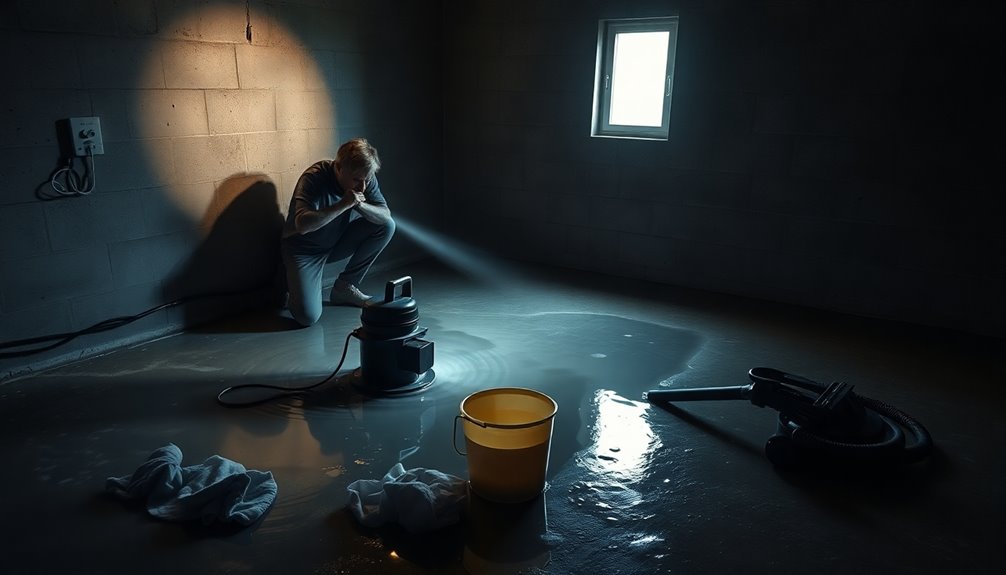
What should you do first when your sump pump fails?
Immediately turn off the electricity at the main breaker to prevent electric shock before entering a wet basement.
Once it’s safe, if there’s only a small amount of standing water, you can use a wet/dry vacuum to remove it.
Don’t forget to wear waterproof boots and gloves for your safety.
To protect your belongings, elevate them off the floor using shelving or cinder blocks.
However, if water levels are rising quickly, it’s essential to contact a professional to assist with water removal and assess any damage.
Finally, document the situation with photos and videos for potential insurance claims, as homeowners insurance may cover damages from the sump pump failure. Regular maintenance, including testing pressure relief valves, can help prevent future sump pump malfunctions.
Safety Precautions Before Entering A Flooded Basement
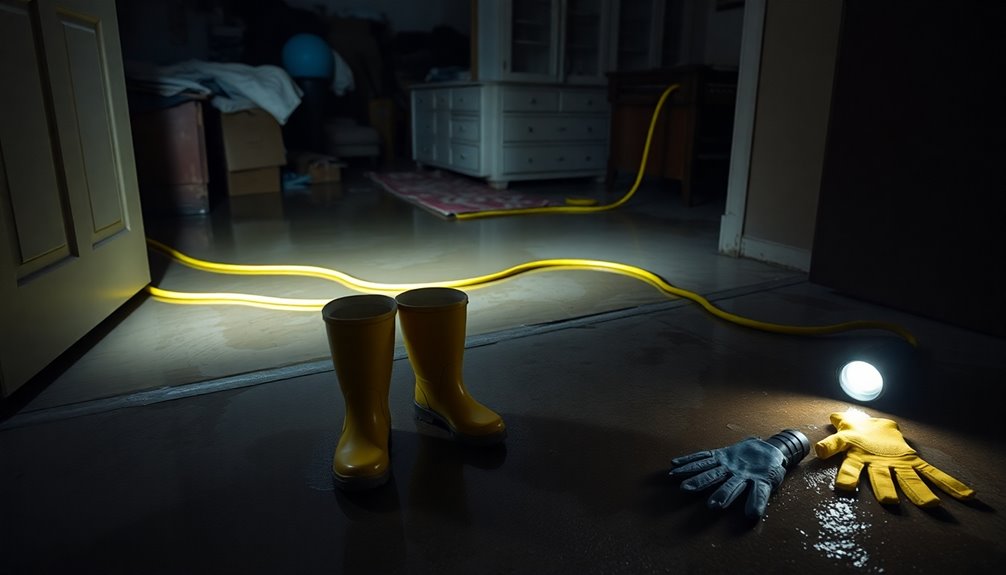
Before you step into a flooded basement, make sure to turn off the electricity at the main breaker to avoid electric shock.
Wearing waterproof boots and gloves is essential to protect yourself from contaminants and help you navigate safely.
Always assess for hazards like structural damage before entering, especially if water levels are near electrical panels or appliances. Additionally, be aware of common causes of backups such as clogged discharge lines, which can exacerbate flooding issues.
Turn Off Electricity
Entering a flooded basement can be dangerous, especially when electricity is involved. Before you step inside, make sure to turn off electricity at the main breaker. This essential step helps prevent electric shock from submerged outlets or cords.
Avoid touching any electrical outlets or appliances that may be in contact with water, as this can increase your risk of encountering electrical hazards. If the water level is near electrical panels, furnaces, or large appliances, don’t enter the basement at all—doing so raises the risk of electrocution.
If the breaker panel is located in the basement, contact a licensed electrician first. Always prioritize your safety before attempting any cleanup efforts in a flooded area.
Wear Protective Gear
Safety is paramount when dealing with a flooded basement, so wearing protective gear is essential.
Before you step into the water, make sure you turn off the electricity at the main breaker to avoid electric shock hazards from submerged outlets and cords. Equip yourself with waterproof boots and gloves to shield against potential contaminants lurking in the floodwater.
If the water level approaches electrical panels, furnaces, or appliances, don’t enter; this greatly increases your risk of electric shock. If your breaker panel is in the basement, contact a licensed electrician to evaluate the situation before proceeding.
Always prioritize safety by thoroughly examining conditions and hazards, as standing water can conceal even more dangers.
Identifying The Cause Of The Sump Pump Backup
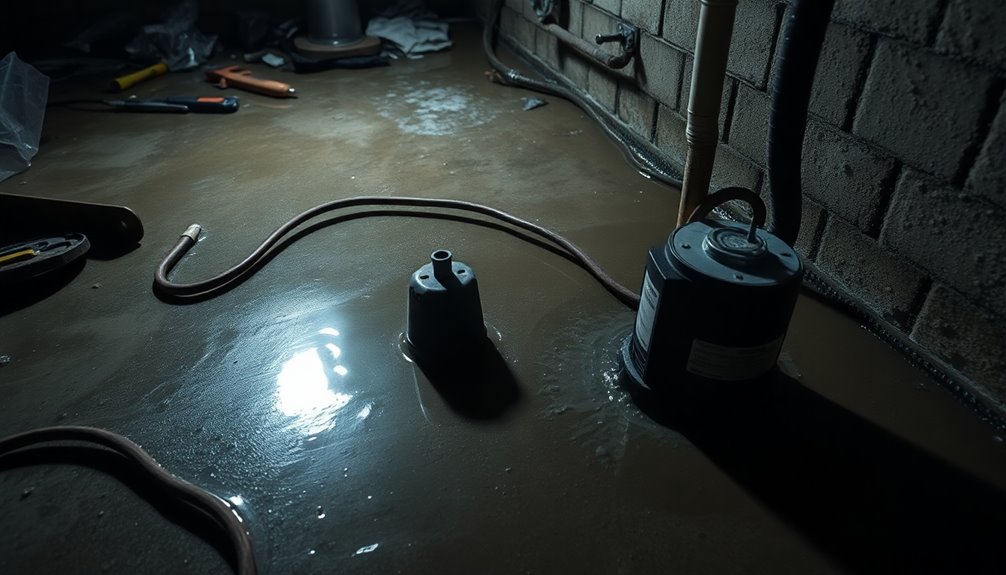
When your sump pump backs up, it’s essential to identify the root cause quickly. Power outages, clogged discharge lines, and mechanical failures can all lead to a malfunctioning pump. Understanding these issues can help you prevent future backups and protect your basement from flooding. Regular maintenance and expense tracking apps can also assist in managing costs related to repairs and improvements.
Power Outages Impacting Operation
Power outages can severely impact your sump pump‘s operation, especially during heavy storms when you need it the most.
Without power, your sump pump may fail to remove water effectively, leading to dangerous accumulation in your basement as groundwater levels rise. This situation can quickly escalate into a serious flood risk.
To combat sump pump failure during power outages, consider investing in backup systems like battery-powered or water-powered pumps. These systems guarantee your sump pump continues to operate even when the electricity is out.
Regular maintenance and testing of your sump pump can also help identify potential issues before they arise, allowing you to safeguard your home and prevent backups when you need protection the most.
Clogged Discharge Lines
Clogged discharge lines can create significant problems for your sump pump, as they hinder its ability to remove water effectively. When these lines are blocked, you’re at risk of experiencing basement floods that can cause extensive damage.
Here are common causes of clogged discharge lines:
- Debris and dirt accumulation
- Ice formation in colder climates
- Improperly extended discharge lines
To avoid these issues, regularly inspect and clean your discharge line. Make sure it extends at least six feet away from your foundation to prevent water pooling near your home.
Watch for signs of a clog, like unusual noises from your sump pump, water backing up in the sump pit, or dampness around the discharge area. Taking these steps can save you from costly repairs.
Mechanical Failures and Wear
Mechanical failures and wear can lead to significant sump pump issues, especially during heavy rainfall. A stuck float switch, for instance, can prevent your sump pump from activating, resulting in water backup in your basement.
If your pump is aging—typically lasting 7 to 10 years—wear may reduce its efficiency or cause complete failure. Clogged discharge pipes can also strain the pump’s motor, leading to overheating and potential breakdown.
Regular maintenance is essential; cleaning the pump inlet screen and checking for blockages can help you identify wear before it becomes a problem.
Watch for signs of a failing sump pump, like unusual noises or deep puddles around your home, to avoid costly water damage.
Immediate Actions To Control Water Ingress
When faced with rising water levels in your basement, taking immediate action is essential to minimize damage and guarantee safety. Start by disconnecting the power to avoid electrical hazards, especially near electrical panels or appliances.
Taking immediate action during rising basement water levels is crucial for safety; start by disconnecting power to prevent hazards.
Then, follow these steps for effective emergency response:
- Use a wet/dry vacuum for efficient water removal of small amounts of standing water.
- Elevate your belongings on shelving or cinder blocks to prevent saturation and damage.
- If water levels rise rapidly, don’t hesitate to call for professional help.
If the weather allows, open basement windows to reduce humidity and improve air circulation. Regular maintenance, including annual cleaning of the dryer vent, can also prevent issues before they arise in other areas of your home.
Your quick actions can make a significant difference in protecting your home from the aftermath of a sump pump failure.
Effective Water Removal Techniques For Your Basement
Flooded basements can be a homeowner’s nightmare, but effective water removal techniques can help you regain control quickly.
Start with a wet/dry vacuum for small amounts of standing water, as it efficiently handles liquids without damaging the motor. For larger volumes, a submersible pump is your best bet; just remember to follow safety precautions.
If the flooding is minimal, manual removal using buckets and mops can work, but be aware it mightn’t reach hidden moisture trapped in the flooring or walls. For significant flooding, consider professional extraction to prevent long-term damage.
After removing the water, use commercial-grade dehumidifiers and high-velocity air movers to dry your basement and prevent mold growth within 24 to 48 hours. Additionally, installing foam board insulation can help control moisture and prevent future water-related issues in your basement.
How To Start Drying Your Basement Quickly
Once you’ve removed the water, start drying your basement right away to stop mold from taking hold.
Use commercial-grade dehumidifiers and air movers to quickly lower humidity and boost air circulation. Additionally, consider using Energy Star rated models as they consume less energy and help maintain optimal humidity levels.
Don’t forget to check for hidden moisture with a moisture meter to guarantee every corner is dry.
Immediate Water Removal Techniques
A swift response is essential for minimizing damage after your basement floods. Start by disconnecting power to the sump pump and any electrical appliances to prevent electric shock.
Then, employ these immediate water removal techniques:
- Use a wet/dry vacuum for small amounts of standing water.
- For larger volumes, position submersible pumps correctly to avoid debris.
- Utilize buckets and mops for any remaining water, but know they mightn’t remove everything.
The sooner you act, the better.
Start drying your basement promptly with commercial-grade dehumidifiers and fans. This helps reduce moisture levels and prevents mold growth within 24 to 48 hours.
Don’t let basement water linger—take action now to protect your home!
Effective Drying Equipment Use
To kickstart the drying process in your basement, you’ll want to act quickly with the right equipment.
Begin by using commercial-grade dehumidifiers to reduce moisture levels, keeping humidity below 60% to prevent mold growth.
Place high-velocity air movers strategically to enhance airflow and speed up evaporation from surfaces, greatly cutting down drying time.
Don’t forget to monitor moisture levels with moisture meters; they’ll help you detect hidden water trapped in walls and flooring before it leads to mold or structural damage.
Start this drying process within 24 to 48 hours after flooding to minimize risks.
Additionally, consider using antimicrobial solutions to sanitize affected areas, further preventing mold and bacteria in the damp environment.
Signs Of Hidden Water Damage After A Pump Failure
When a sump pump fails, hidden water damage can manifest in various unexpected ways, often going unnoticed until it becomes a significant problem.
You must be vigilant for these signs:
- Swollen or discolored baseboards, indicating trapped moisture in your walls.
- Musty odors behind finished walls, suggesting hidden water issues that could worsen.
- Warped flooring, signaling prolonged moisture exposure that may lead to structural damage.
Even if you don’t see visible water, moisture can remain and cause hidden damage.
Rust on metal support beams is another red flag, indicating moisture problems that require immediate attention.
Ignoring these signs could result in severe structural damage, so act quickly to protect your home. Additionally, heat pumps can help reduce moisture in the air, which may alleviate some water-related issues in your basement.
Sanitizing And Disinfecting Affected Areas
After spotting the signs of hidden water damage, it’s crucial to act quickly by sanitizing and disinfecting the affected areas.
Act swiftly to sanitize and disinfect areas affected by hidden water damage to mitigate risks and prevent further issues.
Begin within 24 hours of water intrusion to minimize mold growth and health risks. For non-porous surfaces, mix one cup of bleach with a gallon of water, and scrub thoroughly while wearing gloves and goggles.
However, if you’re dealing with porous materials like drywall or carpeting, it’s often best to remove and replace them entirely.
After cleaning, use commercial-grade dehumidifiers and fans to guarantee the area dries completely, keeping moisture levels below 60% to prevent mold proliferation. Effective communication among household members about the cleanup process can also mitigate further issues.
Regularly inspect the sanitized areas for any signs of mold or mildew growth, using moisture meters to identify hidden moisture.
Inspecting For Mold Growth And Structural Damage
Regularly inspecting your home for mold growth and structural damage is essential, especially after a sump pump backup.
Moisture can lead to serious issues if left unchecked. Here’s what to look for:
- Swollen or discolored baseboards, indicating trapped moisture behind walls
- Musty odors, suggesting hidden mold growth in finished spaces
- Warped flooring, which may require replacement due to prolonged moisture exposure
Don’t ignore signs like white powdery efflorescence on foundation walls or rust on metal support beams, as they can signal significant structural damage.
Early detection can save you from costly repairs and protect your home’s integrity. Additionally, long-term care costs can escalate quickly if home maintenance issues are neglected, impacting your financial planning.
Stay vigilant, and address any issues promptly to maintain a safe, healthy living environment.
Repairing Or Replacing Your Sump Pump System
Addressing mold growth and structural damage is essential, but it’s equally important to focus on your sump pump system, especially after a backup.
Start by disconnecting the power to avoid electrical hazards. Inspect your sump pump for common failure points, like stuck float switches or clogged discharge lines, which may require you to repair or replace it.
If your sump pump is over 7-10 years old, consider replacing it, as older models are more prone to failure during heavy rainfall. Regular maintenance—cleaning the inlet screen and checking for debris—can help extend its life. Additionally, investing in preventive maintenance can help catch minor issues before they escalate.
Furthermore, upgrading to a dual system with both battery-powered and water-powered backup pumps can enhance reliability and guarantee continuous operation during power outages.
Backup Solutions To Prevent Future Failures
To prevent future failures of your sump pump system, you should consider installing backup solutions that can provide peace of mind during heavy rains or power outages.
Here are some effective options:
- Battery Backup: Guarantees water removal continues during power outages, typically lasting up to 46 hours before needing a recharge.
- Water-Powered Pumps: Use municipal water pressure, making them reliable as long as the water supply remains consistent.
- Dual System: Combines battery and water-powered solutions for enhanced reliability, especially essential for homes with valuable storage.
Additionally, don’t forget to maintain your primary sump pump with regular inspections and consider adding moisture alarms or smart flood sensors to alert you before a disaster strikes.
When To Call Professionals For Water Damage Restoration
Even with backup solutions in place, there are times when water damage can overwhelm your sump pump system. If standing water exceeds a few inches, you should call professionals for water damage restoration right away.
This situation poses electrical hazards and structural risks that require specialized equipment to address safely. If floodwater contains sewage or contaminants, it’s essential to seek certified cleanup for your health and safety.
Additionally, if porous materials like drywall or carpeting are affected, professionals can assess the damage and prevent mold growth.
Prompt intervention is critical when your sump pump fails and water levels rise rapidly, especially if you encounter power issues. Don’t hesitate—call professionals to guarantee effective recovery.
Conclusion
In the face of a flooded basement, think of yourself as a skilled captain steering through stormy seas. You’ve weathered the initial chaos, but the journey doesn’t end there. By taking proactive steps and preparing for future storms, you fortify your vessel against rising waters. Just as a captain inspects their ship, so must you check your sump pump and safeguard your home. Don’t wait for the next tempest; take action now and guide your ship to calmer waters.