
 0
0
 0
0
You can usually reuse tea bags 1-2 times, but high-quality teas, especially lighter varieties like green and white, can give you even more flavor for multiple steepings. The first brew is the strongest; subsequent cups will be milder. To enhance your experience, try shorter steeping times and lower water temperatures. Proper storage is key to keeping them fresh. Want to discover factors that influence reusability and learn about the best types of tea?
Why Reusing Tea Bags Is Worth Considering

If you’re looking for ways to save money and reduce waste, reusing tea bags is definitely worth considering. By choosing high-quality tea, you can reuse tea bags and enjoy 1-2 additional steeping times, making your investment go further.
Lighter varieties, like green and white tea, often retain flavor in subsequent brews, letting you enjoy a richer, more economical drinking experience. Plus, reusing tea bags helps minimize waste, aligning with eco-friendly practices. To extend their usability, store used tea bags in a moist medium or refrigerate them, preventing mold or bacteria growth.
You can even get creative—repurpose used tea bags for skincare or gardening, enhancing their value while reducing environmental impact. Incorporating smart financial choices into your routine can further amplify your savings while enjoying your favorite beverages.
How Many Times Can You Actually Reuse a Tea Bag?
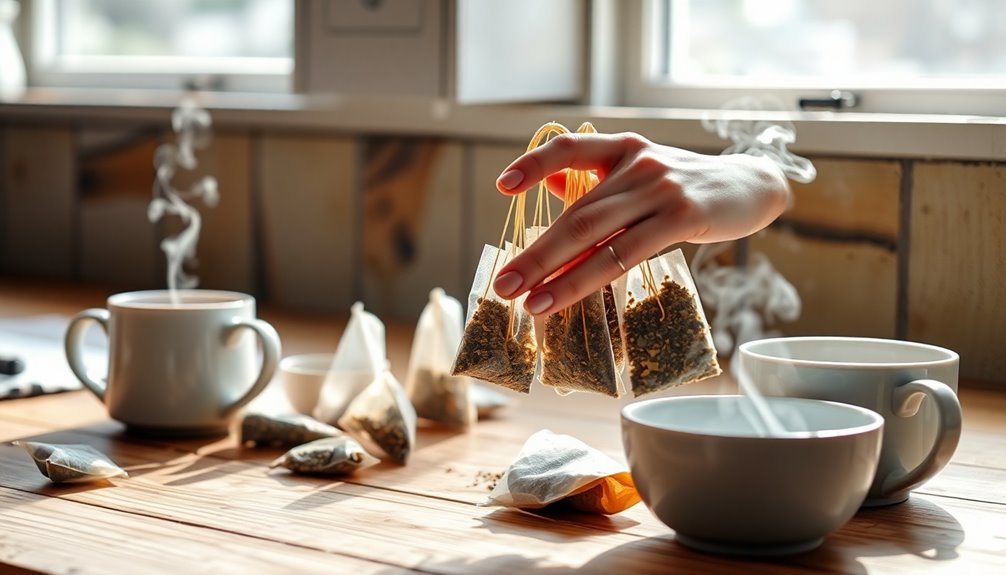
How many times can you actually reuse a tea bag? Generally, you can reuse a tea bag 1-2 times, but some high-quality varieties, especially lighter teas like green and white, may allow for additional steeping while still retaining flavor.
Keep in mind that the strength of reused tea diminishes after the first brew. If you prefer a stronger cup, consider adding a new tea bag to enhance the flavor. Proper storage is key; keeping used tea bags in a moist medium or refrigerating them can help preserve their taste for reuse. Additionally, using budget-friendly brands can provide a cost-effective way to enjoy your favorite teas without breaking the bank.
What Factors Influence Reusability of Tea Bags?
Several factors influence the reusability of tea bags, making it essential to evaluate quality, type, and brewing techniques.
The quality of the tea leaves matters—premium varieties or whole leaf teas tend to maintain flavor better than standard options. When reusing tea bags, consider the type of tea; lighter teas, like green and white, often hold up for multiple infusions, while robust black teas may lose strength quickly.
The quality of tea leaves is crucial; premium and whole leaf varieties offer better flavor retention than standard options.
Your steeping time can also impact reusability; shorter steeping times help preserve flavor for subsequent brews. Additionally, using lower water temperatures prevents over-extraction during second steepings, creating a balanced taste. Master layering techniques can also apply when reusing tea bags to maximize flavor retention.
Ultimately, your personal preferences will guide you, so don’t hesitate to experiment with different teas and methods for the best experience.
The Best Types of Tea for Multiple Infusions
When you’re looking to maximize your tea experience, choosing the right types can make all the difference.
Oolong and pu-erh teas shine with their ability to develop rich flavors across multiple steepings, while high-quality loose leaf teas tend to hold up better than standard bags.
Understanding ideal steeping techniques and flavor retention can help you savor every cup. Additionally, selecting teas that are known for their multiple infusions can enhance your overall enjoyment and value.
Best Quality Tea Types
If you’re looking to get the most out of your tea, opting for high-quality whole leaf varieties is key.
The best quality tea types, like oolong and pu-erh, can deliver distinct flavor profiles with each infusion, making them perfect for multiple re-use. Green and white teas also excel in this area, often retaining flavor longer than darker blends.
If you prefer convenience, pyramid tea bags allow the leaves to expand fully, enhancing flavor extraction and making them suitable for reusing. Premium teas can usually withstand up to three or more infusions.
Experimenting with steeping times and temperatures will help you maximize flavor retention, especially for lighter teas that shine when you re-use your tea.
Optimal Steeping Techniques
To truly enjoy the nuances of your tea, mastering ideal steeping techniques is essential. Knowing which types of tea can withstand multiple infusions will help you make the most of your tea experience.
Here are some prime options:
- Oolong and Pu-erh: Develop complex flavors over three to five steepings.
- Green Tea: Retains flavor for one or two additional steepings, especially high-quality varieties.
- Black Tea: Can be reused if you shorten the steeping time for the second brew.
- Herbal Tea: Varies by blend; some can be infused a second time, while others can’t.
- Steeping Time: Adjust for subsequent infusions to prevent over-extraction of tannins.
This way, you’ll savor every cup while being frugal!
Flavor Retention Factors
While mastering steeping techniques enhances your enjoyment of tea, understanding flavor retention factors is just as important. The type of tea you choose greatly affects how many times you can reuse tea leaves.
Lighter varieties like green and white teas excel at retaining flavor over multiple infusions, while robust black teas often lose their character quickly. High-quality loose leaf and pyramid tea bags, which contain larger tea leaves, also provide better flavor release.
Oolong and pu-erh teas shine for developing complex flavors through several steepings, making them perfect for maximizing your experience. Remember, steeping time and water temperature matter too.
Creative Ways to Repurpose Used Tea Bags
Repurposing used tea bags offers a range of creative solutions that not only enhance your home but also promote sustainability.
Here are some clever ways you can reuse those bags:
- Natural deodorizer: Place tea bags in your fridge or closet to absorb unwanted odors.
- Skincare remedy: Use green tea bags on puffy eyes or irritated skin for soothing relief.
- Garden boost: Add used tea bags to your compost pile to enrich soil and improve plant health.
- Cleaning tool: Utilize the tannins in tea to polish wood furniture and clean glass surfaces.
- Pet odor control: Place dried tea bags in your pet’s area to help neutralize smells.
Incorporating these practices reflects a commitment to mindful spending habits, which not only extend the life of your tea bag but also support eco-friendly practices.
Health and Safety Tips for Reusing Tea Bags
When reusing tea bags, it’s vital to prioritize health and safety to enjoy their benefits without risk.
To prevent mold and bacteria growth, store used tea bags in a shot glass filled with water and keep them refrigerated if you don’t use them immediately. Always check for any off or funky smells, as these could indicate spoilage.
To prevent mold and bacteria, refrigerate used tea bags in water and check for unusual smells before reuse.
Generally, it’s safe to reuse tea bags 1-2 times, but be mindful of how long they’ve been stored for health safety. Opt for green or white teas, as they retain flavor longer and are less prone to harmful bacteria. Incorporating tea meditation into your routine can also enhance the calming effects of your reused tea.
Proper storage methods greatly mitigate health risks associated with reuse, ensuring your tea remains enjoyable and safe.
Eco-Friendly Benefits of Reusing Tea Bags
Reusing tea bags not only saves you money but also greatly reduces waste, making it a simple yet effective eco-friendly practice. By incorporating this habit, you can:
- Minimize waste by cutting down on single-use items that fill landfills.
- Save money by maximizing the use of quality tea leaves through multiple brews.
- Enjoy flavorful beverages, as lighter teas often retain taste over several infusions.
- Choose biodegradable tea bags to enhance sustainability by breaking down naturally.
- Promote mindful consumption, making you more aware of your resource usage and purchasing habits.
- Planning meals effectively can lead to further reductions in waste and promote sustainable practices in your overall consumption.
Adopting these eco-friendly practices fosters a healthier planet while allowing you to enjoy your favorite brews guilt-free.
Conclusion
In a world where every penny counts, reusing tea bags can brew up both savings and sustainability. You might be surprised at how many times you can steep that little bag before it’s spent! By choosing the right tea and knowing how to care for it, you’re not just saving money; you’re also reducing waste. So, next time you sip your tea, remember: with a little creativity, you can turn a simple bag into a green hero!