

 0
0
 0
0
A close walking distance to work is generally considered to be between 0.25 to 1 mile, with 0.5 miles being ideal. This range allows you to enjoy a comfortable 10 to 20-minute walk. Your perception of what’s “close” can depend on your fitness level, age, and personal experiences. Shorter commutes can boost your health and happiness, so finding a job within this distance can be beneficial. Stick around to discover more tips on finding walkable job locations and urban design impacts.
Understanding “Close Walking Distance” to Work

When it comes to understanding “close walking distance” to work, you might find that most people define it as anywhere between 0.25 to 1 mile, with 0.5 miles often considered ideal.
This distance typically allows for a comfortable 10 to 20-minute walk, aligning with the average walking speed of 3 to 4 miles per hour.
Urban planners emphasize that walkable neighborhoods, characterized by this range, not only boost foot traffic but also enhance local economies.
When you have a new account, knowing this ideal distance helps you appreciate the benefits of shorter commutes.
Plus, AI from the post highlights that reducing walking distance can lead to increased job satisfaction and overall well-being, making it a win-win for your daily routine. Additionally, incorporating sustainable gardening techniques in your commute can promote a healthier lifestyle and connect you more with your community.
Factors Influencing Perceptions of Walking Distance
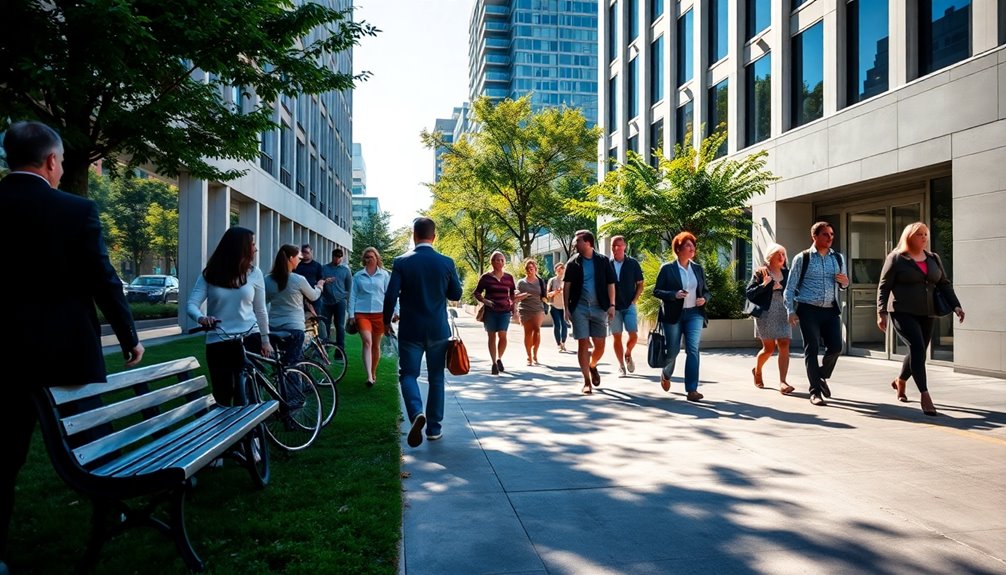
Your fitness level plays a big role in how you view walking distances. If you’re active, a mile might feel like a quick stroll, while others may see it as a challenging trek. Additionally, urban density can affect your experience; in crowded areas, shorter distances might be more acceptable due to better amenities and safety. Incorporating low-cost activities into your daily routine, such as walking or biking to work, can also enhance your overall well-being while reducing transportation costs.
Personal Fitness Levels
Personal fitness levels play an essential role in how you perceive walking distances, as those who are more active often find longer treks manageable.
If you’re committed to fitness motivation strategies, walking can become a rewarding part of your routine. Generally, people view distances of 0.25 to 0.5 miles as acceptable, but this varies based on your fitness level and prior experiences.
Age and health conditions also influence your walking distance perceptions, making it vital to recognize your own limits.
Urban Density Factors
As urban density increases, perceptions of walking distance often shift, making shorter distances feel more manageable.
In high-density areas, you’ll find that amenities and services are closer together, so a walk of about 1,500 feet (0.3 miles) becomes a comfortable daily commute.
Effective urban planning plays an essential role here; pedestrian infrastructure like sidewalks and mixed-use developments enhances your walkability experience.
When these elements are in place, even a mile feels achievable, especially if your commute is under 20 minutes.
Plus, integrating public transport with walkable neighborhoods can further alter how you perceive distance, allowing longer walks to seem less intimidating.
Embracing these density impacts can transform your commuting experience for the better.
Health Benefits of a Short Commute

While many might overlook the daily commute’s impact on health, a shorter journey to work offers significant benefits that can enhance your overall well-being.
Research shows that a commute under 30 minutes is linked to lower stress levels and improved mental health benefits. When you walk or bike to work, you engage in an active lifestyle, burning around 150 calories daily, which aids weight management and reduces the risk of obesity and cardiovascular diseases.
Plus, if your commute is less than 15 minutes, you’ll likely experience increased job satisfaction and happiness, as it frees up time for social activities and hobbies. Additionally, adopting energy-saving habits during your commute can further enhance your overall well-being while contributing to financial savings.
Prioritizing a shorter commute can ultimately lead to a healthier work-life balance and a more fulfilling life.
How Urban Design Affects Walking Distances
Here are some key factors:
- Mixed-use developments create spaces where you can live, work, and shop, reducing long commutes.
- Pedestrian pathways encourage walking by providing safe, accessible routes between destinations.
- Urban amenities like parks, cafes, and transit stops enhance the walkability of your area, making strolls enjoyable.
- Research shows that pedestrian-friendly designs promote healthier commuting habits and boost local economies.
- Incorporating budget-friendly outdoor activities into your routine can further enhance the appeal of walking to work and enjoying the surrounding environment.
Real-Life Examples of Commuting Distances
When you consider real-life examples of commuting distances, it’s clear that many urban dwellers enjoy the benefits of living close to their workplaces. In cities like New York, many residents live within a 20-minute walk, showcasing the high density of jobs and housing.
Distance statistics reveal that a typical “close walking distance” is about 0.5 miles, taking only 10-15 minutes to walk. In fact, a survey found that nearly 40% of workers in metropolitan areas prefer walking if they live within a mile of their office.
These city comparisons highlight how shorter commutes can enhance employee satisfaction, leading to happier workers and better job retention rates. Embracing these real-world examples can inspire your own commuting choices. Additionally, many cities, like those in the Baltic Countries, offer affordable living options that make shorter commutes even more appealing.
Tips for Finding a Walkable Job Location
How can you guarantee your next job location is walkable? Start by evaluating the area’s pedestrian infrastructure and amenities. A great job location shouldn’t only be within 0.25 to 0.5 miles but also offer a pleasant walking experience.
Here are some essential tips:
Explore essential tips for ensuring your next job location is walkable and enhances your daily commute.
- Check walkability scores using mapping tools and apps.
- Assess the density of sidewalks and crosswalks for safety.
- Look for nearby public transit options to complement your walking commute.
- Research local amenities like grocery stores, cafes, and parks within walking distance.
Additionally, consider areas with seasonal fresh produce options nearby, as they can enhance your overall quality of life and work experience, making your daily commute more enjoyable and stress-free.
Alternatives to Walking: When Is It Necessary?
What factors lead you to ponder alternatives to walking? If you live beyond a 10-15 minute walk, it’s time to explore public transit options or biking benefits to shorten your commute.
Terrain can also play a role; hilly areas may make walking impractical. Time constraints often push you toward quicker alternatives, especially if you have a busy schedule.
Weather conditions, like rain or extreme heat, can make walking uncomfortable, prompting you to use public transport instead. Additionally, if you have mobility challenges or need to carry heavy items, transportation alternatives become necessary. In urban settings, ride-sharing convenience or electric scooters can provide effective solutions to guarantee you arrive at work efficiently and comfortably. Engaging in whole foods exploration can also encourage healthier lifestyle choices, similar to how exploring different commuting options can enhance your daily routine.
The Future of Commuting: Trends in Walkability
As people seek alternatives to walking, the concept of walkability is gaining traction in urban planning. Cities are increasingly prioritizing walkability to enhance accessibility and improve residents’ quality of life.
Here are some emerging trends shaping the future of commuting:
- Future infrastructure will emphasize pedestrian-friendly designs, including wider sidewalks and green spaces.
- Community engagement is essential, with residents actively involved in planning walkable neighborhoods.
- Enhanced pedestrian safety measures, such as better lighting and crosswalks, will encourage more people to walk.
- The integration of residential and commercial spaces will foster vibrant, walkable areas that meet daily needs.
- Additionally, the implementation of energy-efficient designs in new developments can significantly reduce carbon emissions and promote sustainable living.
As these trends evolve, expect walkability to become a significant factor in urban development and your daily commuting experience.
Conclusion
So, what’s the real magic number for “close walking distance” to work? While many say it’s about a 10 to 15-minute stroll, the truth is it varies based on factors like your fitness level and urban layout. You might find that a longer walk becomes a revitalizing part of your day. As cities evolve to embrace walkability, embracing your commute could lead to a healthier, happier you. Isn’t it time you explored the possibilities right outside your door?