
 0
0
 0
0
To permanently remove dog urine odors and seal your subfloor, start by using an enzymatic cleaner for at least 30 minutes. After cleaning, use a black light to find any remaining stains. Seal the subfloor with an oil-based primer, like KILZ, to trap odors. Make certain everything is completely dry before installing new flooring. Consider waterproof options for added durability and moisture protection. Stick around for tips on training your pets to prevent future accidents.
Understanding the Impact of Dog Urine on Subfloors
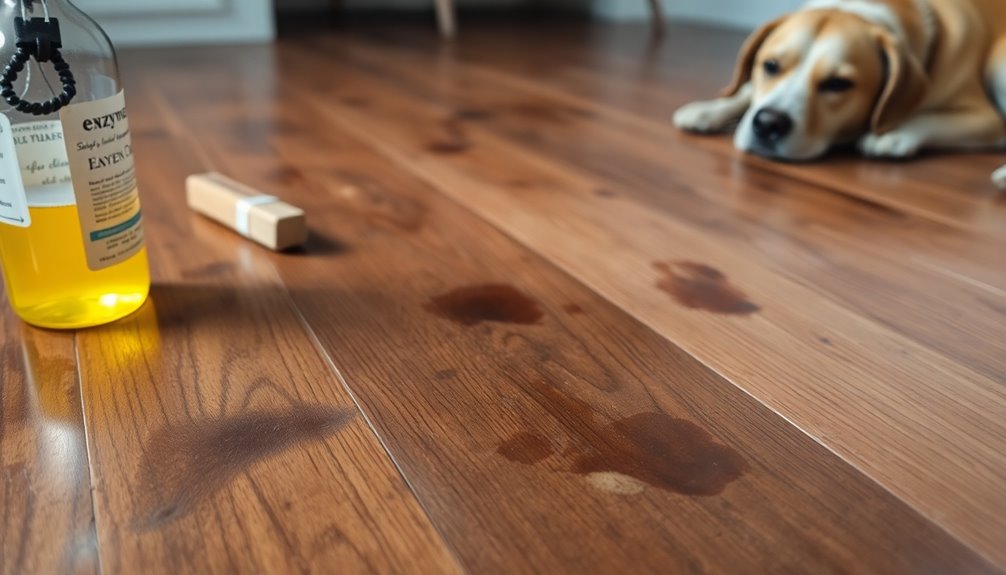
When you have a dog that occasionally has accidents indoors, it’s essential to understand how deeply urine can impact your subfloors.
Pet urine can seep into porous materials like pressed wood, leading to persistent urine odors that linger even after you’ve removed the carpet. This contamination can cause staining and degradation of your subfloor, which might require replacement if not addressed promptly.
You won’t always see these issues, but using a black light will reveal fluorescing stains that indicate where the urine has penetrated.
To effectively treat the affected areas, consider using enzymatic cleaners, as they break down the organic compounds in the urine. Additionally, vacuum sealing allows for minimizing food waste, which can be beneficial when cleaning up after your pet to reduce odors from any leftover food items.
After cleaning, sealing the subfloor with oil-based products like KILZ can lock in any remaining odors, preventing them from resurfacing.
Essential Tools and Products for Odor Removal
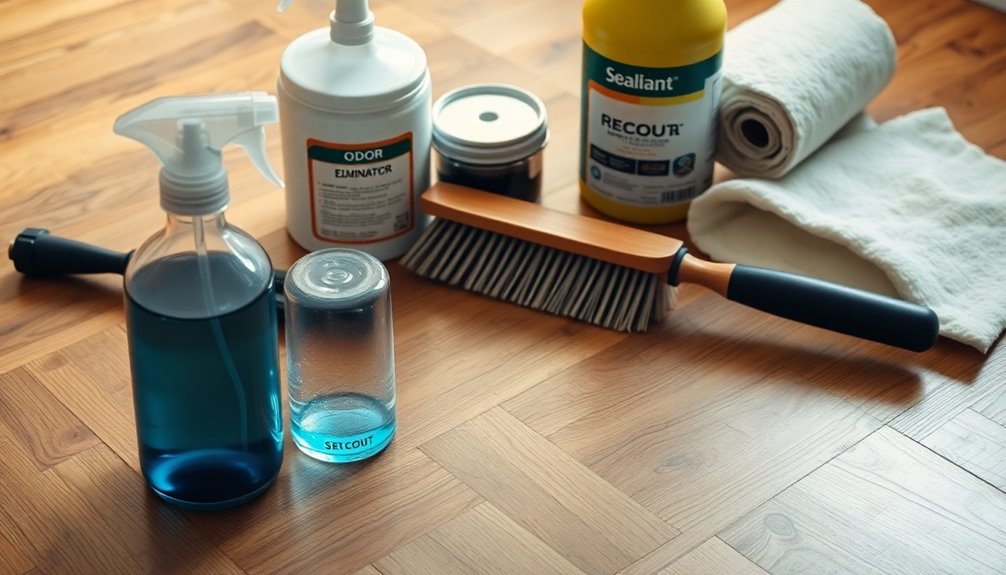
Locating and addressing dog urine odors requires the right tools and products to guarantee effective removal. Start with a good quality black light to pinpoint urine stains, as they fluoresce under UV light.
For cleaning, use enzyme-based cleaners like Nature’s Miracle Advanced Stain and Odor Eliminator or SCOE10X, which break down odor-causing compounds effectively.
To seal odors and stains permanently, consider using Zinsser BIN or oil-based products like KILZ or polyurethane, as they encapsulate lingering smells better than water-based options.
The subsurface extraction method can also help you deep clean carpets, pads, and subfloors, ensuring a thorough approach to eliminate pet odors for good. Additionally, conducting regular billing process reviews can help you stay proactive in managing your cleaning supplies and tools to ensure you always have the right products on hand.
Investing in these tools will make your cleaning efforts more efficient and lasting.
Step-by-Step Guide to Cleaning and Sealing Your Subfloor
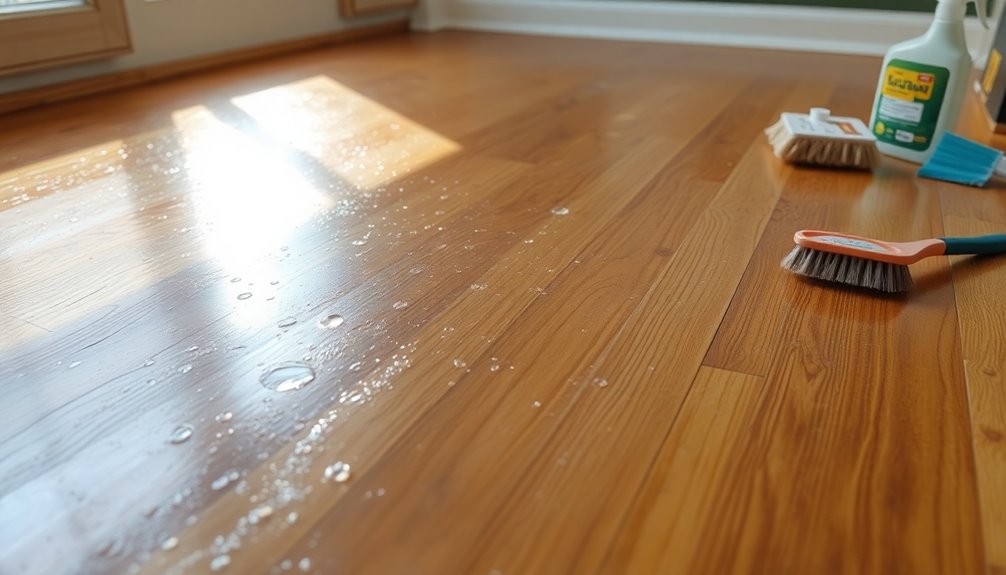
Cleaning and sealing your subfloor can be broken down into a few essential steps that guarantee a thorough and effective process.
Start with cleaning the subfloor using an enzymatic cleaner, letting it dwell for at least 30 minutes to break down urine smell and stains.
Next, identify any remaining stains with a black light to verify no contamination is left.
Once cleaned, apply an oil-based primer like KILZ or Zinsser BIN, designed for odor sealing. Make sure to apply a liberal coat and allow it to dry completely; multiple coats may be necessary for severe contamination.
Finally, confirm the subfloor is completely dry and odor-free before installing new flooring, considering a moisture barrier if needed. Additionally, controlling indoor humidity levels is crucial for preventing future odor issues and ensuring a healthy living environment.
How to Train Your Pets to Prevent Future Incidents?
To effectively prevent future incidents, it’s essential to establish a training routine that reinforces positive bathroom habits.
Start by creating a consistent bathroom schedule, taking your dog out at the same times each day. This helps them learn when it’s time to go. Use commands like “go potty” to build a strong association with the action. Reward your dog immediately after they relieve themselves outside to encourage positive behaviors.
Establish a consistent bathroom schedule and use commands to reinforce positive behaviors in your dog.
- Supervise your dog closely, especially after meals or playtime, to prevent accidents.
- If an accident occurs, clean with enzymatic cleaners to eliminate odors that might prompt repeat behavior. Using budget-friendly cleaning methods can significantly enhance your efforts in maintaining a fresh environment.
- Remember, patience and consistency are key to successful training!
Evaluating Long-Term Flooring Solutions After Odor Treatment
After treating your subfloor, it’s essential to choose the right flooring for the long haul.
Waterproof options like vinyl or tile are ideal, as they’re durable and easier to maintain, helping you avoid future odor issues.
Regular upkeep will also guarantee your new flooring remains in great shape, so you can spot potential problems before they escalate. Additionally, consider using washable electrostatic filters to improve air quality and reduce allergens in your home, promoting a healthier indoor environment.
Consider Waterproof Flooring Options
While tackling the lingering odors from dog urine in your subfloor, considering waterproof flooring options can be a smart move for long-term peace of mind.
Waterproof flooring, like vinyl planks, offers a moisture barrier that prevents odors and pet stains from seeping through. Plus, they’re easy to clean and maintain, making them ideal for pet owners.
- Enjoy a fresher home environment without worrying about lingering smells.
- Reduce the risk of future odor issues, ensuring your space stays inviting.
- Enhance your home’s resale value, showcasing your commitment to maintaining a pet-friendly space.
Investing in waterproof flooring not only addresses current challenges but also secures your peace of mind for years to come.
Assess Durability and Maintenance
When you’re choosing flooring for a space that has dealt with dog urine odors, durability and maintenance should be top priorities.
Options like laminate and vinyl are ideal since they’re less likely to absorb odors compared to traditional carpets.
Regular maintenance is essential, so schedule routine inspections and carpet cleaning in areas your pet frequents to prevent odor recurrence.
Opt for waterproof flooring, as it simplifies cleaning and reduces the chance of persistent odors from accidents.
Before installing new flooring, seal the subfloor with products like KILZ to lock in any remaining odors.
Finally, monitor for moisture or odor after installation; ongoing assessment helps catch potential issues early, ensuring your space remains fresh and inviting.
Maintaining a Fresh Home Environment Post-Treatment
To keep your home smelling fresh after treating dog urine odors, it’s essential to stay vigilant.
Regularly monitor areas where your pets frequent for moisture or lingering odors. Implement routine cleaning with enzyme-based cleaners to maintain a clean environment and eliminate potential odor sources.
Don’t forget to seal any cracks or gaps in flooring and walls to keep odors contained.
- Guarantee proper ventilation to reduce humidity.
- Address any accidents promptly to prevent future issues.
- Regularly check your home for signs of mold or mildew. Additionally, consider using natural oils during your cleaning routine to enhance the effectiveness of odor elimination.
Conclusion
So, you’ve tackled the dog urine disaster and sealed your subfloor—congratulations! You’ve transformed your home into a fresh, odor-free oasis, just in time for your furry friend to celebrate with another accident. Isn’t it ironic how your pup seems to think the world’s a giant restroom? But hey, with training and the right maintenance, you can keep your home smelling great. Just remember, the real challenge might be teaching your dog what a “no-go zone” really is!



Average Rating