
 0
0
 0
0
The 13-year rule suggests you should replace your water heater before it fails. Most heaters last around 10 to 15 years, and waiting too long can lead to unexpected breakdowns, costly repairs, or water damage. By planning your replacement, you guarantee reliable hot water and can take advantage of energy-efficient models that save money over time. If you’re curious about knowing the signs that indicate it’s time for a new heater, there’s more to explore.
The Importance of the 13-Year Rule for Homeowners
As your water heater approaches the 13-year mark, it’s crucial to evaluate its condition and consider a replacement.
This timeframe is critical since water heaters typically last between 10 to 15 years. By the time you hit 13 years, your unit is nearing the end of its economic life.
Proactively deciding to replace your water heater can save you from unexpected failures and costly emergency repairs.
Replacing your water heater proactively can prevent unexpected failures and save you from costly repairs.
While regular maintenance can extend its lifespan, many homeowners opt for a replacement at this stage to guarantee reliability and efficiency.
Waiting until it fails can lead to inconveniences, like losing hot water or dealing with potential leaks.
Planning for replacement before the 13-year threshold can help you avoid stress and complications later on. Additionally, regular testing of components like the TPR valve can prevent unexpected issues and enhance the longevity of your water heater.
How Long Do Water Heaters Typically Last?
You might be surprised to learn that traditional tank water heaters usually last between 10 to 15 years, while tankless models can exceed 20 years. Various factors, like water quality and maintenance habits, play an essential role in determining how long your unit will last. Regular maintenance of thermostats and heating elements is critical for proper function and can significantly extend the lifespan of your water heater.
Average Lifespan Overview
When considering how long water heaters typically last, it’s essential to highlight that traditional tank models generally have an average lifespan of 10 to 15 years, while tankless units can exceed 20 years with proper maintenance.
This average lifespan overview shows that factors like water quality and maintenance play significant roles. For instance, hard water can lead to faster deterioration due to mineral buildup, while regular maintenance, such as flushing the tank and replacing the anode rod, can extend a water heater’s life.
If your water heater was manufactured in 2012, it’s nearing the end of its economic life, making water heater replacement a wise consideration.
Watch for signs like inconsistent temperatures or leaks to anticipate the need for replacement.
Factors Affecting Longevity
Several factors can influence how long a water heater lasts, affecting both its lifespan and efficiency.
Generally, traditional tank water heaters last between 10 to 15 years, while tankless models can exceed 20 years. If your unit was manufactured in 2012, it’s nearing the end of its economic life, making replacement a consideration.
Water quality plays an important role; hard water can cause mineral buildup, greatly reducing longevity. Additionally, the environment where your heater is installed impacts its lifespan.
For best performance, using water softeners and practicing regular maintenance—like periodic flushing and anode rod replacement—can extend your water heater’s life beyond the average expectancy.
Keeping these factors in mind helps you maximize your investment in hot water.
Maintenance Impact on Lifespan
While it might be easy to overlook, regular maintenance plays an essential role in determining how long your water heater lasts.
Traditional tank models typically last 10 to 15 years, while tankless versions can exceed 20 years with proper care. Performing annual tank flushes helps remove sediment buildup, and replacing the sacrificial anode can greatly extend its lifespan.
If you have hard water, consider installing a water softener to reduce wear and tear. As your water heater approaches the 10-20 year mark, think about replacement, as functionality may decline.
Regular inspections and addressing minor issues early can prevent unexpected failures, ensuring your water heater serves you well for years to come.
Signs Your Water Heater May Be Nearing the End?
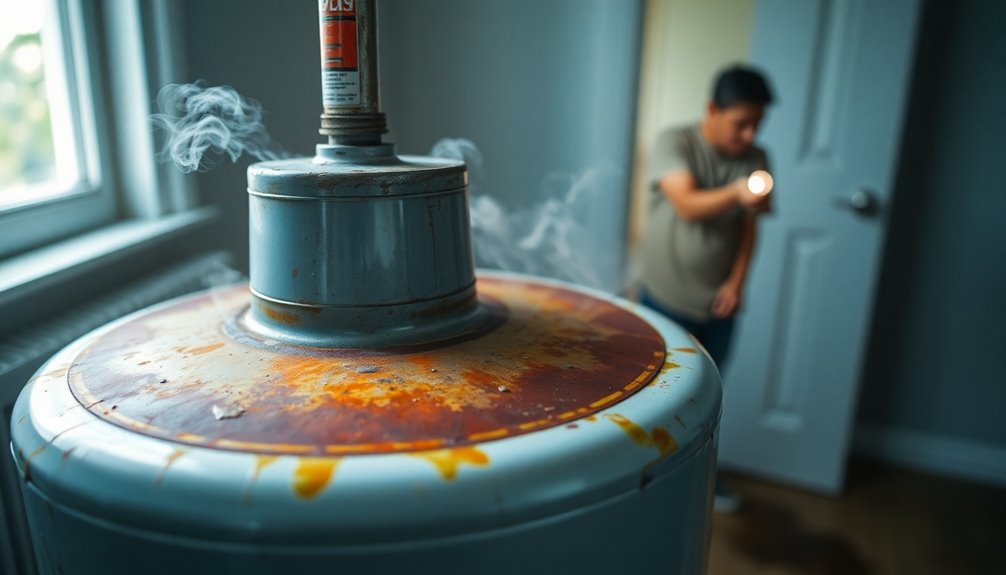
If your water heater is over a decade old, it might be time to pay attention to some warning signs.
Look out for leaks or moisture around the base, as these could indicate serious issues.
Additionally, if you notice inconsistent water temperatures, it’s a strong signal that your unit may be nearing the end of its life. Prompt replacement is crucial to prevent costly repairs and increased repair costs.
Age of Water Heater
As your water heater approaches the 10 to 15-year mark, it’s important to watch for signs that it may be nearing the end of its life.
The age of your water heater plays an essential role in its performance and reliability. If your unit is around 13 years old, it’s likely nearing its economic lifespan.
Look out for inconsistent water temperatures, visible rust or discoloration on the tank, and unusual noises during operation.
While regular maintenance can help extend its life, it won’t prevent eventual replacement.
Waiting for your water heater to fail can lead to inconveniences and potential water damage, so consider proactive replacement as it approaches this vital age to guarantee efficiency and reliability in your home.
Signs of Leaks
Noticing signs of leaks around your water heater can be essential in determining its remaining lifespan. If you see any leaks around the base of the water heater, it’s a clear sign that the tank or seals may be compromised, indicating that replacement could be necessary soon.
Additionally, visible rust or discoloration on the tank suggests internal corrosion, which can lead to leaks and further damage. Pooling water near the heater is another warning sign that should prompt immediate action to prevent water damage.
Inconsistent water temperature might signal sediment buildup, causing pressure issues that can also result in leaks. Regular inspections can help you catch these signs early, allowing you to take proactive measures before a complete failure occurs.
The Risks of Waiting for Your Water Heater to Fail
Waiting until your water heater fails can lead to a cascade of inconveniences and unexpected costs. You might find yourself without hot water during the coldest months, leaving you in a tough spot.
A failed water heater can also cause significant water damage, potentially flooding your home and leading to costly repairs. If you notice signs like leaks, inconsistent temperatures, or unusual noises, you may already have a need to replace it, as these issues can escalate quickly.
Last-minute replacements can be more expensive due to emergency service fees and limited model availability. Instead of waiting, consider proactive measures that allow you to choose a model that fits your needs and avoid compliance issues with upcoming regulations. Regular maintenance, including testing the pressure relief valve, can help identify potential problems before they escalate into a failure.
Benefits of Proactive Replacement Before Failure
Proactive replacement of your water heater can save you from emergency repairs and guarantee you always have hot water when you need it. By upgrading to a newer, energy-efficient model, you’ll also enjoy lower energy bills and improved performance. Taking action now means a smoother installation process and peace of mind, all while avoiding the headaches of a sudden breakdown. Additionally, upgrading can lead to savings exceeding $100 annually on gas bills.
Avoid Emergency Repairs
Replacing your water heater before it fails can save you from a world of hassle and expense. When you proactively replace a water heater, you avoid the inconvenience of being without hot water, especially during peak usage times in the colder months.
Waiting for a failure can lead to emergency repairs that aren’t only more costly but also result in longer wait times for service. Additionally, a failing unit can cause flooding, leading to extensive water damage and expensive restoration work.
Enhance Energy Efficiency
Upgrading to a new water heater not only prevents unexpected failures but also boosts your home’s energy efficiency. By replacing your aging unit, you can enjoy significant savings on utility bills, as newer models use less energy.
For instance, tankless systems can reduce energy consumption by up to 30% compared to traditional tanks. Modern water heaters come equipped with advanced insulation and digital controls, which enhance energy efficiency and minimize standby heat loss.
Additionally, proactively replacing your water heater allows you to take advantage of current energy rebates and incentives before regulations increase costs for compliant models.
Ultimately, a timely replacement helps you avoid higher emergency repair costs and potential property damage from leaks or flooding.
Ensure Consistent Hot Water
When your water heater nears the end of its lifespan, ensuring a consistent supply of hot water becomes increasingly important.
Replacing it before failure can save you from the inconvenience of cold showers, especially during frigid months. You won’t have to worry about unexpected breakdowns disrupting your daily routine.
Additionally, upgrading to a new, energy-efficient water heater can lower your utility bills, as modern models use considerably less energy than older ones.
Waiting for a failure can lead to costly emergency repairs and potential water damage from leaks.
Understanding the New Law on Ultra-Low NOₓ Emissions
As new regulations take effect, understanding Colorado’s HB23-1161 is essential for homeowners considering a water heater replacement.
This law mandates that new water heaters using natural gas must emit ultra-low NOₓ emissions. For units up to 75,000 BTU/hr, emissions are capped at 10 ng/J, while larger models, up to 2 million BTU/hr, can emit up to 14 ng/J.
Consequently, manufacturers will phase out older models that don’t meet these standards. You might face increased costs and limited availability as retailers adjust to these new regulations.
If you wait until your current water heater fails, you could encounter installation delays and a narrower selection of compliant new water heaters. Planning ahead is vital. Additionally, considering environmental impact can help you make more sustainable choices in your home appliance purchases.
What the New Law Means for Your Water Heater Options
With the new emission standards in place, you’ll need to evaluate how they affect your water heater options.
As older models get phased out, your choices might become limited, and prices could rise for compliant units.
Acting now not only gives you access to a wider selection but also helps you lock in current pricing. Additionally, considering long-term savings on energy bills may influence your decision to switch to more efficient models.
New Emission Standards Explained
Understanding the new emission standards set by Colorado’s HB23-1161 can help you make informed decisions about your water heater options. This law requires new natural-gas water heaters to emit ultra-low NOₓ emissions, with strict limits based on BTU output.
As a homeowner, replacing your water heater sooner rather than later is essential, as older models not meeting these standards will be phased out, limiting your choices. Additionally, waiting until the law takes effect could lead to increased costs; estimates suggest that compliance could double replacement prices.
Impact on Model Availability
The new emission standards in Colorado are reshaping the water heater market, greatly impacting the models available to homeowners.
Starting January 1, 2026, older models that don’t comply with the ultra-low NOₓ emissions will be phased out, limiting your options.
Here’s what you should know:
- Only compliant models with strict emission limits will be available.
- Higher replacement costs may arise as manufacturers adjust their product lines.
- Waiting until the last minute could leave you with fewer choices.
- Increased demand might lead to installation delays.
To guarantee you have the right water heater when you need it, consider replacing your unit ahead of the deadline, allowing you to explore all available options.
Cost Implications of Delaying Water Heater Replacement
Delaying the replacement of your water heater can lead to significant financial repercussions.
When you put off replacing your hot water heater, you risk emergency repairs that can exceed $1,400 for both equipment and labor. An older, inefficient unit increases your monthly energy costs, eating away at any perceived savings from postponing the replacement.
Delaying your hot water heater replacement can lead to costly emergency repairs and increased energy bills.
If you wait for your heater to fail, installation delays can arise, leading to higher costs due to busy schedules for installers. Additionally, failure can cause flooding or leaks, resulting in costly repairs beyond just replacing your hot water system.
Finally, with new regulations like Colorado’s HB23-1161, you might face higher prices for new models, making early replacement a financially sound decision. Investing in an energy-efficient appliance like the RTE13 can result in long-term savings and improved performance.
How to Evaluate Your Current Water Heater’s Condition
As your water heater approaches its lifespan of 12 to 15 years, it’s important to assess its condition to avoid unexpected failures.
Regular evaluations can save you from costly repairs and inconveniences. Here’s how to evaluate your current water heater:
- Inspect for leaks: Look for any visible water around the tank’s base.
- Check temperature consistency: Notice if the water temperature fluctuates unexpectedly.
- Listen for unusual noises: Popping or rumbling sounds may indicate sediment buildup.
- Assess its location: If it’s in a space prone to damage, proactive replacement can prevent further issues. Additionally, regular inspections of your water heater can help identify potential issues before they escalate.
Exploring Modern Water Heater Models and Technologies
Modern water heaters come packed with innovative features and technologies that can transform your home’s hot water system.
With options like tankless models, you can enjoy a lifespan of over 20 years, far surpassing traditional tank heaters.
These modern water heaters prioritize energy efficiency, boasting higher energy factor ratings that lower your utility bills and reduce your environmental footprint.
Modern water heaters enhance energy efficiency, lowering utility bills while minimizing your environmental impact.
Many also include smart technology, allowing you to monitor and control the temperature remotely via mobile apps.
Plus, with ultra-low NOₓ emissions, you’ll be compliant with environmental regulations while enjoying cleaner operation.
Enhanced insulation and design further contribute to faster heating times and minimized standby heat loss, ensuring peak performance and efficiency for your household needs. Additionally, regular maintenance tips can help prolong the lifespan and efficiency of your new water heater.
Professional Installation: Ensuring Safety and Efficiency
When you invest in a new water heater, guaranteeing professional installation can be the key to maximizing safety and efficiency. Here’s why you should opt for skilled installers:
- Safety Compliance: Professionals guarantee your unit meets safety standards and local regulations, reducing risks from improper setups.
- Expert Guidance: Experienced plumbers help you select the right model tailored to your specific needs, enhancing performance and efficiency.
- Proper Techniques: They use correct installation methods, guaranteeing secure connections and proper venting to prevent leaks and gas emissions.
- Hassle-Free Disposal: A professional team handles the removal and disposal of your old unit, making the replacement process smoother for you.
Investing in professional installation not only enhances performance but also gives you peace of mind.
Maintenance Tips to Extend the Life of Your Water Heater
Proper installation sets the stage for your water heater’s performance, but regular maintenance is what truly keeps it running smoothly for years.
To extend its lifespan, follow these maintenance tips. First, flush the tank at least once a year to remove sediment buildup, especially if you live in an area with hard water.
Next, check the anode rod periodically; replacing it can prevent corrosion. Keep an eye out for leaks and listen for unusual noises, like popping or rumbling, as these could signal problems.
Additionally, adjust the thermostat to around 120°F to reduce strain on heating elements.
Finally, schedule annual professional inspections to catch any issues early and guarantee your water heater stays in top shape for longer.
How to Choose the Right Replacement Water Heater?
How can you determine the best replacement water heater for your home? Start by evaluating your household’s hot water needs and considering the various types available.
Here are four key factors to help you choose a new water heater:
- Type: Decide between traditional tank, tankless, or heat pump models based on your space and usage.
- Energy Efficiency: Look for units with high energy efficiency ratings to save on utility bills and reduce your carbon footprint.
- Professional Advice: Consult with experts to guarantee the new water heater fits your specific hot water demands.
- Installation: Choose a reputable service provider for proper installation, as this is essential for peak performance.
Taking these steps will help you select the right replacement water heater for your home.
Preparing Your Home for Future Water Heating Needs
As you select the right replacement water heater, it’s also wise to think ahead about your home’s future water heating needs.
Consider installing a water softener to prevent mineral buildup in your new one, which can extend its lifespan and improve efficiency.
Replacing your aging unit before it fails not only saves you from emergency repairs but also allows you to choose from the latest models that comply with new regulations, like Colorado’s HB23-1161.
Replacing your old water heater proactively not only avoids emergencies but also offers access to compliant, cutting-edge models.
Implementing regular maintenance practices, such as annual inspections and tank flushes, can further prolong the life of your water heater.
Conclusion
In the grand symphony of homeownership, don’t let your water heater play the silent note that disrupts the harmony. By embracing the 13-year rule, you’re not just replacing an appliance; you’re orchestrating peace of mind. Proactive replacement saves you from unexpected cold showers and costly repairs. So, take a moment to evaluate your water heater’s performance, and don’t wait for a breakdown to dance your way into a new, efficient model that fits your home’s rhythm.




Average Rating