
 0
0
 0
0
You can safely store meat sauce in the fridge for about 3-4 days. Always refrigerate it within 2 hours of cooking to prevent bacterial growth. For longer storage, freeze it in airtight containers or freezer bags. It’ll keep for up to 3-4 months without significant quality loss. When you’re ready to use it, thaw it properly and reheat to 165°F (74°C). There are plenty of creative ways to use that leftover sauce, too!
How Long Can You Safely Store Meat Sauce in the Fridge?
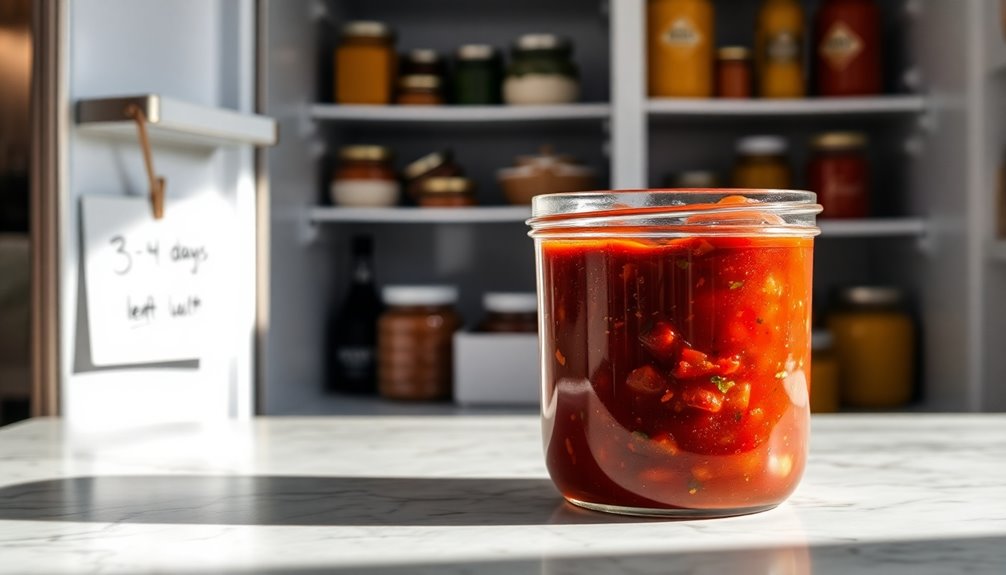
When it comes to storing meat sauce in the fridge, you should aim to consume it within 3-4 days to confirm safety. This timeframe is essential for maintaining the shelf life of your sauce and minimizing the risk of foodborne illness.
Aim to consume meat sauce within 3-4 days for optimal safety and freshness.
If you leave your meat sauce out at room temperature for more than 2 hours, bacteria can grow rapidly, putting you at risk. Remember, ground meats in sauces require extra caution; they need to be refrigerated promptly.
If you’re ever in doubt about the freshness of your meat sauce, it’s best to discard it. Safe practices guarantee you enjoy your meals without worrying about potential health risks associated with spoiled food.
Incorporating meal planning strategies can help you manage your sauce consumption effectively and reduce food waste.
Keep your fridge organized and your sauce safe!
Signs Your Meat Sauce Has Gone Bad
When it comes to meat sauce, you need to be alert for signs that it’s gone bad.
If you notice an unpleasant odor, changes in texture, or even mold on the surface, it’s time to toss it out.
Trust your senses; they can help keep you safe from foodborne illness. Additionally, be aware that food safety guidelines recommend consuming leftovers within a few days to ensure freshness.
Unpleasant Odor Detection
If you notice an unpleasant odor wafting from your meat sauce, it’s a strong indicator that it’s gone bad. This sour or rancid smell is a primary sign of spoilage and differs greatly from the sauce’s original aroma. Trust your sense of smell; if it smells bad, don’t risk it.
Along with unpleasant odor detection, you might also observe color changes, like a greyish tint, which can signal bacterial growth. While slimy textures and visible mold are clear signs of spoilage you should discard immediately, the odor is often the first warning sign.
Texture Changes Observed
Texture changes in your meat sauce can signal that it’s gone bad, so pay attention to what you see and feel. If you notice any texture changes observed, like a slimy surface or grainy appearance, it’s a clear warning sign. These changes often indicate bacterial growth, making the sauce unsafe to consume.
Additionally, if the sauce starts to separate, this suggests that it’s exceeded its safe storage duration. A curdled texture is also a red flag, as it points to spoilage.
Mold Growth Appearance
Noticing mold growth on your meat sauce is a clear sign that it’s gone bad. You might see fuzzy spots or patches, which can be white, green, or black, indicating spoilage.
If your sauce has an off or sour smell, don’t risk it; that’s another strong indicator it’s no longer safe. Changes in texture, like a slimy feel or an overly thick consistency, further signal that it’s time to toss it.
Also, look for visible separation of liquids. Consuming spoiled meat sauce can lead to foodborne illness, so it’s vital to discard any sauce showing these signs.
Always store your meat sauce at a safe temperature to help prevent spoilage in the first place.
The Science Behind Meat Sauce Shelf Life
Understanding the science behind meat sauce shelf life is essential for your safety.
You need to be aware of factors that promote microbial growth, safe storage practices, and effective freezing techniques. Knowing these can help you enjoy your meat sauce without the risk of foodborne illness. Additionally, maintaining financial awareness can help you save money for quality ingredients and proper food storage solutions.
Microbial Growth Factors
When you cook meat sauce, the temperature at which it’s stored plays an essential role in determining its safety and shelf life.
Bacteria thrive in the “danger zone” between 40°F and 140°F, doubling in number every 20 minutes. The presence of ground meats increases the risk of spoilage, leading to potential foodborne illnesses.
To minimize food waste and guarantee safety, refrigerate your sauce within two hours of cooking and consume it within 3-4 days.
Freezing is a great way to extend your meat sauce’s shelf life, halting microbial activity.
Remember to reheat frozen sauce to an internal temperature of 165°F (74°C) to eliminate any harmful bacteria that might’ve developed during storage.
Safe Storage Practices
To keep your meat sauce safe and delicious, it’s crucial to follow proper storage practices right after cooking. Refrigerate your sauce within 2 hours to prevent bacterial growth, as meat sauces are perishable foods.
Ground meats in sauces have a shorter shelf life, so aim to consume them within 3-4 days to maintain food safety. Be aware of the “danger zone,” where temperatures between 40°F and 140°F allow bacteria to double every 20 minutes.
Always store your sauce in airtight containers to minimize exposure to air and moisture. When reheating, verify the sauce reaches an internal temperature of 165°F (74°C) to eliminate any potential bacteria.
Following these steps helps you enjoy safe, homemade meat sauce every time!
Freezing Techniques Explained
Freezing meat sauce is a smart way to extend its shelf life while preserving flavor and texture. You can store it for up to 3-4 months without a significant loss in quality.
To make the most of your freezing efforts, portion the sauce into airtight containers or freezer bags. This prevents freezer burn and aids in meal planning.
Always thaw your frozen meat sauce in the refrigerator, cold water, or microwave—not at room temperature—to minimize bacterial growth.
When you’re ready to enjoy it, reheat the sauce to an internal food temperature of 165°F (74°C) to guarantee safety.
Don’t forget to label your containers with the freezing date to track how long it’s been stored.
Best Practices for Storing Leftover Meat Sauce
Storing leftover meat sauce properly is essential for maintaining its safety and flavor. To prevent bacterial growth, refrigerate the sauce within 2 hours of cooking.
Properly storing leftover meat sauce is crucial for safety and flavor; refrigerate within 2 hours of cooking to prevent bacterial growth.
It’s best to consume it within 3-4 days for ideal safety and quality. If you want to extend its shelf life, freeze it in portioned airtight containers. This way, you can maintain flavor and safety for several months.
When you’re ready to use the frozen sauce, thaw it in the refrigerator to promote gradual temperature control and minimize bacteria proliferation. Always reheat the meat sauce to an internal temperature of 165°F (74°C) before eating to kill any potential bacteria. Additionally, consider conducting periodic audits of your storage methods to ensure optimal safety and quality over time.
Finally, remember to label containers with the freezing date for easy tracking.
How to Freeze Meat Sauce for Long-Term Storage
If you want to enjoy your homemade meat sauce long after it’s cooked, freezing it’s the way to go.
Start by portioning your sauce into airtight containers or resealable bags, ideally in 1-2 cup servings. This makes meal prep easier and prevents freezer burn.
Don’t forget to label each container with the date of freezing; this helps you use the sauce within the recommended 3-4 months for the best quality.
When using ground beef in your sauce, verify that it’s cooked thoroughly before freezing.
For best results, freeze the sauce quickly, and remember to thaw it safely in the refrigerator, cold water, or microwave. Additionally, vacuum sealing can extend shelf life significantly, ensuring your sauce stays fresh and flavorful for longer periods.
This way, you can enjoy your delicious meat sauce whenever you like!
Thawing and Reheating: Keeping Your Sauce Safe
While enjoying your delicious meat sauce after freezing it’s a treat, proper thawing and reheating are essential to guarantee safety.
The safest way to thaw your meat sauce is in the refrigerator, allowing for gradual defrosting and minimizing bacterial growth. If you’re short on time, you can also thaw it in cold water or the microwave, but be sure to cook it immediately afterward.
When you’re ready to reheat, make sure the sauce reaches a minimum internal temperature of 165°F (74°C) to eliminate any potential bacteria. Regular maintenance of air filters ensures better indoor air quality, which can also contribute to overall food safety in your kitchen environment.
Avoid refreezing thawed meat sauce unless it was defrosted in the refrigerator, and always use a clean spoon when serving to prevent cross-contamination.
Your safety is key!
Creative Ways to Use Leftover Meat Sauce
Leftover meat sauce can be a culinary treasure, offering endless possibilities for delicious meals. You can layer it in a lasagna to enhance the flavors, creating a comforting dish.
Another fantastic option is using it as a base for stuffed peppers; just mix the sauce with rice and cheese before baking for a hearty food experience.
Feeling like soup? Transform your meat sauce into a warming dish by adding broth, vegetables, and noodles.
Pizza lovers can spread it over dough as a savory topping, adding cheese and your favorite ingredients.
For a unique breakfast or brunch, mix leftover meat sauce with scrambled eggs, giving your meal a tasty twist. Plus, embracing budget-friendly ingredient choices can help you make the most of your leftover meat sauce while keeping meals economical.
Enjoy exploring these creative options!
Tips for Maintaining Flavor After Freezing
When you freeze meat sauce, it’s essential to take steps to maintain its delicious flavor. Here are three tips to help you achieve that:
- Portion and Seal: Divide your sauce into airtight containers. This minimizes air exposure, preventing freezer burn that can ruin the taste.
- Slow Freeze: Freeze your sauce at a lower temperature rather than opting for rapid freezing. This technique helps preserve both texture and flavor.
- Reheat Properly: Thaw your sauce in the refrigerator and reheat it to a safe internal temperature of 165°F (74°C). This not only guarantees food safety but also helps restore its rich flavor. Additionally, using expense tracking apps can streamline your financial management, ensuring you have the budget for quality ingredients.
Common Mistakes to Avoid With Meat Sauce Storage
Freezing meat sauce can help preserve its flavor, but improper storage can lead to food safety issues. One major mistake is leaving meat sauce at room temperature for more than 2 hours. This allows bacteria to thrive in the danger zone between 40°F and 140°F.
Always cool and refrigerate leftover meat sauce within 2 hours of cooking to prevent spoilage. Many also think meat sauce lasts longer than the recommended 3-4 days in the fridge, increasing the risk of foodborne illness.
Additionally, using non-airtight containers can cause moisture loss and contamination. Don’t forget to label your containers with dates; this helps you track how long the sauce has been stored and avoid consuming spoiled food. It’s important to remember that long-term care costs can accumulate quickly, just like the hidden costs associated with improperly stored food.
Conclusion
By following these guidelines, you can enjoy your meat sauce safely and deliciously, just like a cherished family recipe passed down through generations. Keeping an eye on storage times and signs of spoilage guarantees you won’t be left with a disappointing meal. So, whether you’re savoring a comforting bowl of pasta or crafting a creative dish, remember that your efforts in preservation can turn simple leftovers into culinary treasures. Happy cooking!





Average Rating