 0
0
 0
0
Basin drain pump repair can save you money by tackling common issues yourself. Start by checking for clogs in the impeller or discharge pipe. If the pump won’t turn on, inspect the power supply and float switch. Regular maintenance like cleaning and checking for leaks helps prevent costly problems. If you hear unusual noises or face persistent issues, it might be time to consult a professional. Keep exploring for more tips on how to maintain and upgrade your pump effectively.
Understanding Your Basin Drain Pump
When you think about protecting your home from flooding, understanding your basin drain pump is crucial. This device removes excess water from basements or low-lying areas, preventing costly water damage.
It typically operates automatically, activating through a float switch when water levels rise. To guarantee your pump works effectively, regular plumbing maintenance and repairs are essential. This includes cleaning the pump and inspecting the float switch for proper function.
Knowing the specific model and capacity of your basin drain pump can help you decide when to repair or replace it. By staying informed about its features and requirements, you can tackle any issues before they escalate, keeping your home safe from flooding. Additionally, timely payments for any necessary repairs can prevent larger financial impacts on your budget.
Common Issues and Troubleshooting Tips
Basin drain pumps can encounter several common issues that may hinder their performance. One major problem is clogs in the impeller or discharge pipe, which you can resolve by removing any debris.
Basin drain pumps often face issues like clogs in the impeller or discharge pipe, which can be fixed by clearing debris.
If your pump isn’t turning on, check the power supply and float switch, as a faulty float can keep it from activating. To avoid issues, regular maintenance is key; clean the pump and check for leaks regularly.
If you hear unusual noises like grinding or humming, it might signal worn bearings or an obstruction, requiring further inspection.
Additionally, if the pump frequently cycles on and off, it could be due to incorrect sizing or installation, which needs addressing to prevent premature failure. Implementing streamlined bookkeeping processes can help ensure any maintenance costs are accurately tracked and managed.
Step-by-Step Guide to DIY Repairs
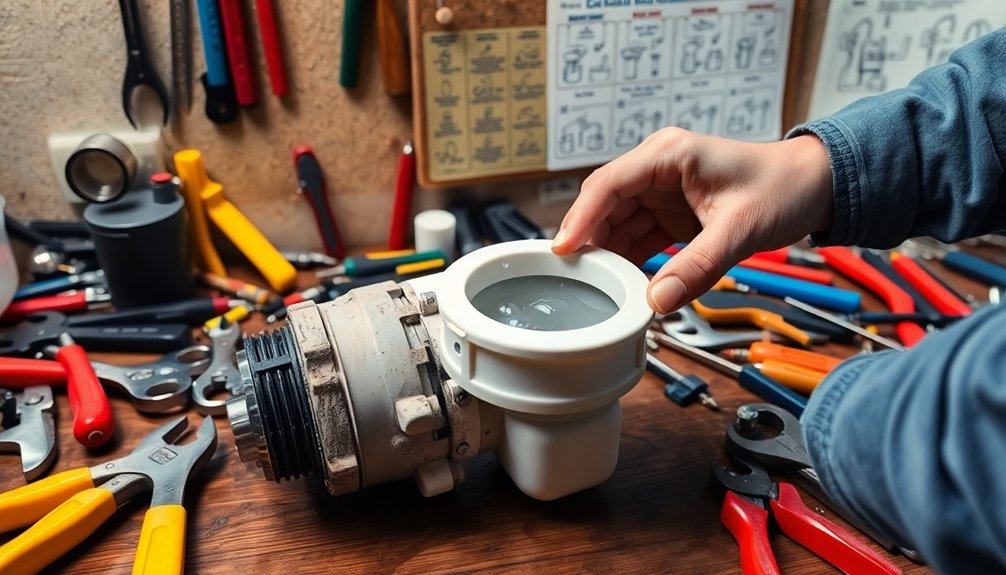
When your basin drain pump isn’t working, it helps to identify common issues first.
Gather the essential tools you’ll need for a smooth repair process.
Let’s walk through a step-by-step guide to get your pump back in action. Using a user-friendly interface can simplify the process of documenting your repair and tracking any related expenses.
Identify Common Issues
If you’ve noticed slow drainage or strange noises coming from your drain pump, it might be time to address some common issues.
Start by checking for clogs; these can often be identified by the symptoms you’ve noticed. Regular cleaning of the pump and its surroundings can help prevent this.
Next, inspect the float switch; a stuck float can keep the pump from turning on, causing water to accumulate.
Don’t forget to check the discharge hose for kinks or blockages, which can hinder water expulsion.
Finally, verify the power supply is working by checking the circuit breaker or GFCI outlet.
Addressing these common issues promptly can save you from costly repairs and replacements down the line.
Essential Tools Needed
To tackle DIY repairs on your drain pump effectively, gathering the right tools is essential.
Start with a plunger, a basic tool every homeowner should have for clearing minor clogs. A crescent wrench is handy for making easy adjustments and securing fittings on various plumbing components during repairs.
For deeper blockages, a plumbing snake is invaluable, allowing you to reach and remove stubborn debris within the drain lines.
Don’t forget a bucket to catch any excess water or debris, keeping your work area tidy.
Finally, make sure to wear safety goggles and gloves to protect yourself from hazardous materials and potential injuries while working on the basin drain pump.
With these tools, you’re ready to tackle your plumbing repairs!
Step-by-Step Repair Guide
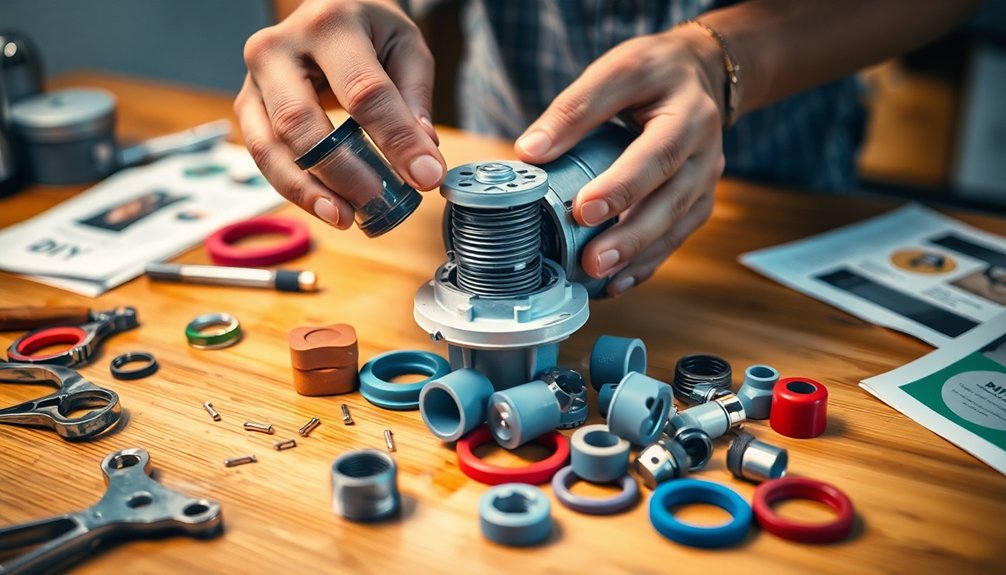
Repairing your basin drain pump can be straightforward if you follow a systematic approach. Start by unplugging the pump and guaranteeing the area is dry for safe access.
Remove any debris from the inlet and outlet ports, as blockages can hinder performance. Next, check the float switch; clean or replace it if it’s stuck or malfunctioning to guarantee the pump activates correctly.
Inspect the pump housing for leaks or cracks. If you find severe damage, you may need to seal it or replace the unit entirely.
Finally, reassemble the pump, secure all connections, and plug it back in to test functionality. By tackling these plumbing repairs, you can save money and keep your basin drain pump running smoothly.
Importance of Regular Maintenance
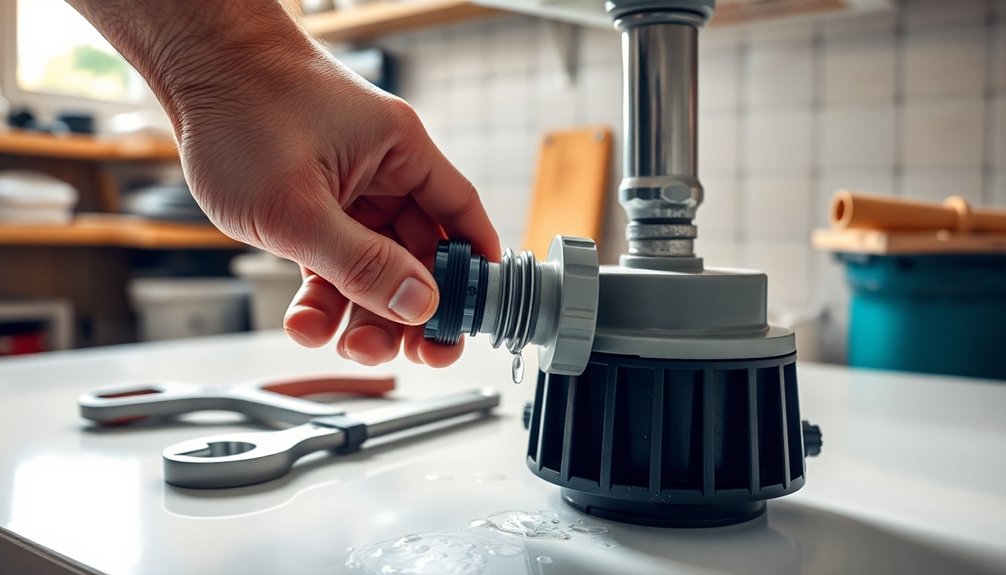
Regular maintenance of your basin drain pump is essential to avoid costly repairs down the line.
By scheduling annual inspections and cleanings, you can catch potential problems early and keep your system running smoothly.
This proactive approach not only enhances the longevity of your pump but also saves you money in the long run. Additionally, cultivating financial health through routine maintenance can prevent unexpected expenses that may strain your budget.
Prevent Costly Repairs
Maintaining your basin drain pump is essential; it can save you from unexpected failures and hefty repair bills. Regular inspections allow you to catch clogs, corrosion, or leaks before they escalate, preventing costly repairs down the line.
By cleaning the pump and its components, you reduce the risk of blockages, ensuring your plumbing system operates efficiently. Monitoring the pump for unusual noises or vibrations can also help you address minor issues promptly, avoiding major repair needs.
Establishing a routine maintenance schedule not only keeps your pump in top shape but can save you money, potentially cutting your repair costs by 10-20%. Proactive care is the key to a reliable and cost-effective basin drain pump.
Enhance System Longevity
While you might think occasional checks are enough, consistent maintenance of your basin drain pump is essential for enhancing its longevity.
Regular upkeep prevents buildup and mechanical failures, saving you from costly plumbing repairs. Schedule annual inspections with a professional plumber to catch early signs of wear, allowing for timely fixes that prevent bigger issues later.
Cleaning the pump and its components regularly avoids clogs, ensuring peak performance and efficient water drainage. By monitoring the pump’s operation and addressing minor concerns immediately, you can prevent water damage and mold growth.
Implementing a routine maintenance schedule drastically reduces the risk of unexpected breakdowns, ultimately lowering your long-term plumbing costs and extending the life of your system.
When to Call a Professional
Knowing when to call a professional for your basin drain pump can save you time and prevent costly repairs.
If your pump’s making unusual noises or vibrating excessively, it’s a clear sign you need a professional plumber to diagnose the issue.
Persistent water accumulation around the pump area, despite your efforts, signals plumbing problems that require expert attention to avoid water damage.
Persistent water buildup around your pump indicates plumbing issues that need professional help to prevent costly water damage.
If you’ve replaced parts but the issue continues, a licensed plumber can identify underlying problems that may not be obvious.
Complex issues like electrical failures or if the pump won’t turn on are best left to professionals.
Finally, if you’re unsure about local plumbing codes, consulting a professional guarantees compliance and avoids potential fines.
Additionally, tracking financial goals related to home maintenance can help you budget for necessary repairs and avoid unexpected costs.
Cost-Effective Upgrades for Your Pump
Upgrading your basin drain pump can be a smart investment that not only boosts performance but also saves you money in the long run.
Consider cost-effective upgrades like a high-efficiency pump, which can cut energy consumption by up to 50%. This means lower utility bills over time.
Installing a pump with a built-in alarm system alerts you to potential issues, helping avoid costly water damage. A larger capacity pump reduces cycling frequency, extending its lifespan.
Adding a float switch enhances efficiency by automatically managing water levels, preventing overflow.
Finally, investing in a durable, corrosion-resistant casing lowers maintenance costs.
These upgrades not only improve your pump’s functionality but also help you save money on repairs and replacements. Additionally, integrating automated savings features can further enhance your financial strategy for managing home maintenance costs.
Conclusion
In the world of plumbing, a basin drain pump can either be a reliable ally or a costly headache. By tackling DIY repairs, you not only save money but also gain confidence in your skills. However, ignoring maintenance can turn a simple fix into an expensive emergency. So, embrace your ability to troubleshoot and repair, but remember that sometimes, calling a professional can be the smartest choice. Balance your efforts wisely, and you’ll keep your pump running smoothly.