 0
0
 0
0
If you’re looking for budget-friendly batting for guinea pig beds, consider using recycled felted wool sweaters or cotton batting. These materials offer softness, insulation, and comfort for your pets. While cotton is affordable, it may not hold up as well with frequent washing. Combining layers, like towels with fleece, can also enhance durability and ease cleaning. Keep exploring to find the best options that suit your guinea pig’s needs and your budget effectively.
Understanding Batting Options for Guinea Pig Beds
When you’re looking to create a cozy bed for your guinea pig, understanding your batting options is crucial.
Cotton and polyester batting are popular choices, offering both comfort and insulation, while feeling soft against your pet’s skin.
Cotton and polyester batting provide a soft, insulated bed for your guinea pig, ensuring comfort against their delicate skin.
For added durability, consider sandwiching the batting between layers of fabric, similar to comforters and quilts.
If you want a semi-waterproof alternative, recycled felted wool sweaters can provide the necessary insulation and comfort as well.
Don’t forget to use waterproof materials for the bottom layer; this helps reduce washing frequency and prolongs the life of your batting. Additionally, using user-friendly interfaces can make it easier to manage your guinea pig’s bedding needs.
Durability and Maintenance of Batting Materials
When choosing batting materials for your guinea pig beds, it’s essential to evaluate factors that affect longevity. Frequent washing can wear out materials like cotton and polyester quickly, so you’ll want to explore cost-effective options that maintain durability. Additionally, considering the user-friendly interfaces of various bedding options can enhance your overall experience in maintaining your guinea pig’s comfort.
Batting Longevity Factors
Although batting materials can provide comfort and warmth for your guinea pig beds, their longevity largely depends on how you maintain them.
Batting durability is considerably affected by the frequency of washing; frequent laundering can degrade the material faster. If you sandwich batting between fabrics, similar to comforters, it can hold up better over time.
Cotton and polyester batting are popular choices, but neither withstands regular washing well. Consider alternatives to batting, like boning for tunnels, which can enhance durability and eliminate the need for foam.
Additionally, incorporating a waterproof bottom layer in your pillow designs can reduce washing frequency, ultimately extending the longevity of your batting material.
Making these adjustments guarantees your guinea pig beds remain cozy for longer.
Washing and Care Tips
To keep your guinea pig beds in top shape, you should pay attention to washing and care techniques. Frequent washing can decrease batting durability, so limit how often you clean items like cuddle cups and hideys.
Always check the manufacturer’s care instructions for specific materials, as they may have unique washing and drying requirements. When you do wash, use gentle, non-allergenic detergents and avoid harsh chemicals to help prolong the lifespan of your batting.
Additionally, consider sandwiching batting between fabrics to enhance durability and reduce wear from laundering. Using waterproof materials as a bottom layer for pillows can also minimize washing frequency and protect the batting from moisture damage, keeping everything fresh longer.
Cost-Effective Material Options
Finding cost-effective materials for your guinea pig beds can make a significant difference in both your budget and your pet’s comfort.
Consider using recycled felted wool sweaters; they’re not only eco-friendly but also semi-waterproof and durable.
Pairing batting with toweling layers can create comfortable pillows while reducing how often you need to wash the batting.
If you prefer synthetic options, look into cotton and polyester batting, but keep in mind they may not hold up well to frequent washes.
Adding a PUL (polyurethane laminate) layer at the bottom makes your bedding waterproof, further extending the life of the absorbent batting.
Cost-Effective Batting Choices
How can you keep your guinea pig cozy without breaking the bank?
Consider using cost-effective batting choices like cotton batting, which is widely available and durable when sandwiched between fabrics.
Polyester batting is another budget-friendly option, but it’s best for projects that won’t need frequent washing.
If you’re feeling crafty, using recycled felted wool sweaters can provide an economical and semi-waterproof bedding solution, offering great comfort and insulation.
Don’t forget to shop smart—buying batting materials in bulk or at discount fabric stores can greatly cut costs.
You can also combine inexpensive materials like toweling and fleece to create comfortable, washable, and budget-friendly bedding for your furry friend.
Additionally, freelancers can benefit from budget management tools to keep track of their expenses and save more on projects.
Environmental Impact of Batting for Guinea Pigs
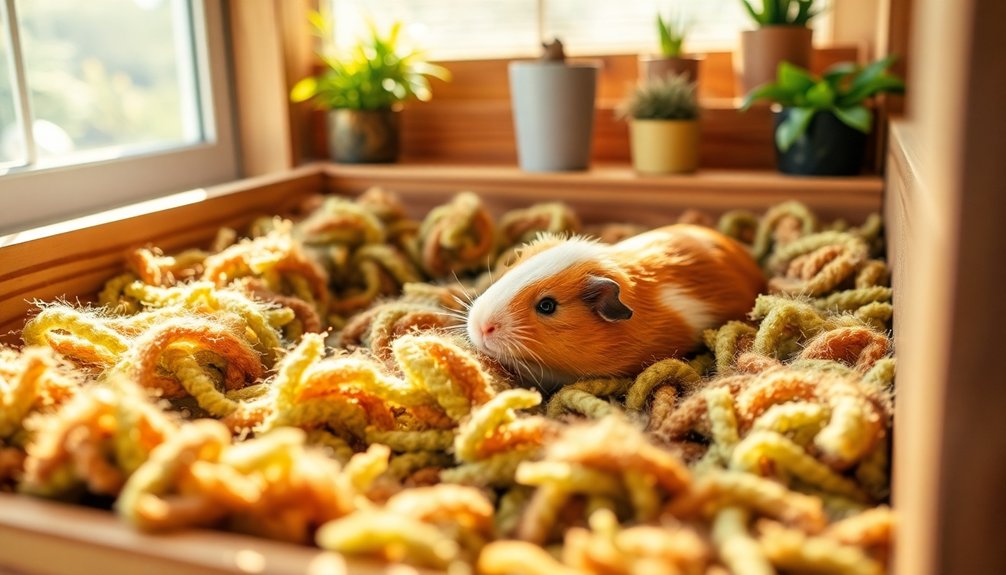
While ensuring your guinea pig stays cozy, it’s essential to contemplate the environmental impact of the batting materials you choose. Many traditional batting options, like cotton and polyester, aren’t biodegradable and contribute to landfill waste, harming environmental sustainability. Their production also consumes valuable resources, including water and energy, which leads to further degradation.
Opting for fleece liners can greatly reduce your environmental footprint, as fleece is reusable, minimizing single-use waste. Additionally, consider using recycled felted wool sweaters for bedding; they offer a semi-waterproof alternative and help reduce waste by repurposing discarded textiles. Sustainable practices in the fashion industry can inspire similar eco-friendly choices in pet bedding.
Comparing Batting With Traditional Bedding
When considering bedding options for your guinea pig, comparing batting with traditional materials like fleece or paper bedding reveals some key differences.
Batting, particularly cotton and polyester, offers a soft, comfortable layer, but it may not hold up as well under frequent washing compared to traditional bedding.
While fleece liners excel in moisture management and absorbency, batting requires additional layers for effective moisture control.
Furthermore, traditional bedding is often single-use, contributing to waste, whereas batting can be reused if layered correctly, making it more eco-friendly. Additionally, opting for sustainable packaging solutions when purchasing batting can further enhance your eco-friendly efforts.
On the cost front, batting is usually less expensive than high-quality fleece liners, making it a budget-friendly option if you’re willing to manage maintenance carefully.
Personal Experiences and Recommendations for Batting
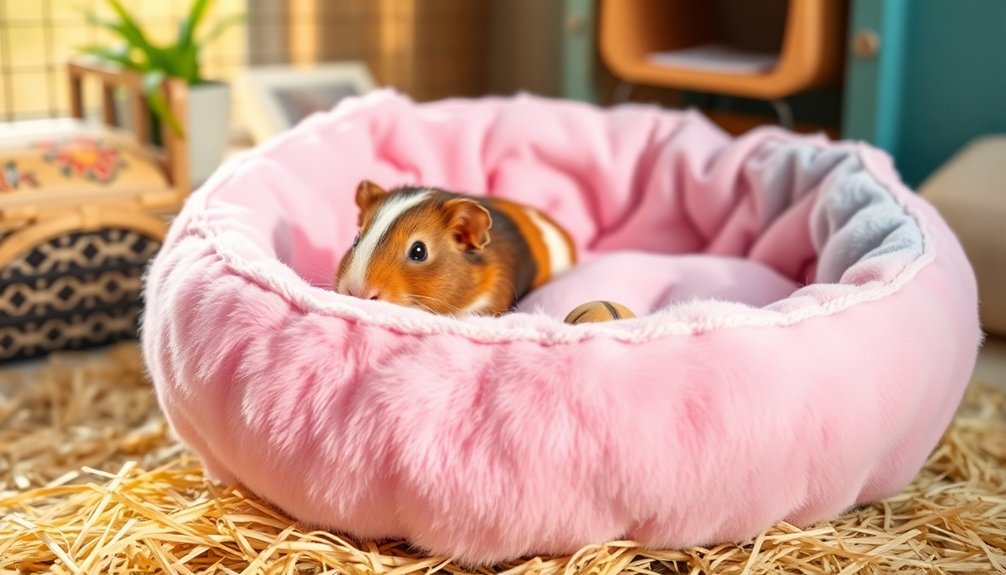
When it comes to choosing affordable batting for your guinea pig’s bed, you’ve got some great options. From my own experience, cotton batting offers the best balance of comfort and durability, while recycled felted wool sweaters can be a clever way to save money. Additionally, considering user-friendly interfaces can enhance your shopping experience and make it easier to compare materials. Let’s share our tips and tricks for finding the best materials without breaking the bank!
Affordable Batting Options
If you’re looking to keep your guinea pig cozy without spending a fortune, there are several affordable batting options you can consider.
Here are some budget-friendly choices that offer comfort and durability:
- Cotton batting – Soft and machine washable, though it may not hold up to frequent washing.
- Polyester batting – A durable alternative that retains its shape better after multiple washes.
- Recycled felted wool sweaters – Semi-waterproof and cost-effective, providing insulation while reducing waste.
- Layering materials – Combining towels and fleece creates a warm, absorbent bedding solution.
These options guarantee your guinea pig stays comfy without breaking the bank, offering a practical mix of absorbency and durability for their bedding needs.
Personal Project Experiences
Occasionally, you’ll find that personal projects can lead to some of the best discoveries for guinea pig bedding.
I’ve experimented with cotton batting, which is soft and budget-friendly but doesn’t hold up well to frequent washing. Layering it with fleece bedding not only enhances comfort but also makes it easier to clean.
I also discovered repurposed felted wool sweaters as a semi-waterproof option, providing moisture resistance and insulation. While foam might seem tempting for comfort, I recommend avoiding it due to slow drying times.
Instead, consider using boning for structured tunnels. Combining these materials has helped me create cozy, functional beds that my guinea pigs love while staying within budget.
Conclusion
In the end, choosing the right batting for your guinea pig’s bed is like picking the coziest blanket for a chilly night. You want something soft, durable, and easy to clean—like that favorite quilt that keeps you snug. By opting for budget-friendly and eco-conscious materials, you’re not just saving money; you’re creating a warm haven for your furry friend. Your guinea pig deserves a comfy space, and with the right batting, you can provide just that without breaking the bank.