
 0
0
 0
0
HVAC isn’t just a “blue collar” job; it demands technical skills and specialized knowledge, increasing your earning potential. Tackling repairs yourself might seem like a money-saver, but DIY errors can lead to costly mistakes and safety hazards. Professional technicians not only guarantee safety but also enhance system efficiency, saving you money in the long run. If you’re interested, there’s more to discover about the real financial and career advantages of the HVAC profession.
Understanding the HVAC Profession: More Than Just Manual Labor
While many people view HVAC work as solely manual labor, the reality is much more complex. HVAC technicians need advanced skills that go beyond basic physical tasks. They must understand intricate systems and solve problems to guarantee efficient operation.
This profession includes various specializations like engineering and sales, requiring continuous education and certifications. Staying current with green technologies and advanced controls not only enhances your expertise but also boosts your earning potential. Additionally, understanding financial goals is crucial for HVAC professionals to ensure they effectively manage their income and plan for future investments.
The ongoing technician shortage means job security and growth opportunities are high, making it an attractive field. So, if you’re considering a career in HVAC, remember it’s as much about knowledge and skill as it’s about hands-on work.
The Importance of Technical Knowledge in HVAC
In HVAC, having strong technical skills is essential for effectively diagnosing and solving complex issues. Certifications can greatly boost your career prospects, opening doors to better job opportunities and higher salaries. While DIY projects might seem tempting, they often come with risks that highlight the need for professional expertise. Additionally, expense tracking tools can provide valuable financial management support for those in the HVAC industry, ensuring that costs are effectively monitored and controlled.
Technical Skills Matter Most
Technical knowledge is essential in the HVAC industry, as it equips you with the skills needed to diagnose and fix complex heating, ventilation, and air conditioning issues.
Mastering technical skills not only enhances your problem-solving abilities but also boosts your employability. With a projected 14% increase in employment for HVAC technicians through 2024, having specialized skills like welding, plumbing, and electrical knowledge can set you apart from the competition.
Continuous education and training can lead to faster salary increases and open doors to advanced positions in controls, refrigeration, and environmental systems.
Certifications Boost Career Prospects
Certifications are a game-changer in the HVAC industry, boosting your career prospects and setting you apart from the competition. When you obtain industry-recognized certifications, you markedly enhance your employability, making you more attractive to potential employers.
Employers often prefer certified HVAC professionals due to their proven technical knowledge and commitment to industry standards. Additionally, specialized training can lead to higher salary potential; experienced technicians can earn between $30 and $40 per hour in certain regions.
To stay competitive in this rapidly evolving field, continuous education and additional certifications in areas like green energy are essential. Programs like those from Northwestern Tech can help you gain the skills needed for certification exams, ensuring you quickly enter the workforce.
DIY Limitations and Risks
While tackling HVAC repairs yourself might seem like a cost-saving option, the reality is that without specialized knowledge, you could be stepping into dangerous territory.
Here are some key risks to take into account:
- Complex Systems: HVAC systems involve intricate electrical components and refrigerants that can be hazardous.
- Safety Hazards: Mistakes can lead to gas leaks or electrical fires, posing serious health risks.
- Warranties at Stake: Improper DIY repairs can void warranties, resulting in unexpected expenses down the line.
- Lack of Current Knowledge: HVAC technology evolves constantly, and professional technicians stay updated through continuous education.
Ultimately, while DIY repairs may be tempting, hiring certified professionals guarantees safety and helps you avoid costly mistakes.
Common Misconceptions About Blue-Collar Jobs
Many people hold misconceptions about blue-collar jobs, often viewing them as low-paying or lacking in career growth. However, HVAC technicians earn competitive salaries, with the average annual income around $43,660.
You might think job security is a concern, but the HVAC industry is projected to grow by 14% through 2024, ensuring strong demand for skilled workers.
It’s also a myth that blue-collar work offers limited advancement; HVAC provides diverse paths in engineering, sales, or management.
Additionally, many underestimate the intellectual challenge of HVAC jobs, which require critical problem-solving skills and technical knowledge. Furthermore, effective savings goal setting ensures that aspiring HVAC professionals can manage their finances wisely as they invest in their careers.
The Risks of DIY HVAC Projects
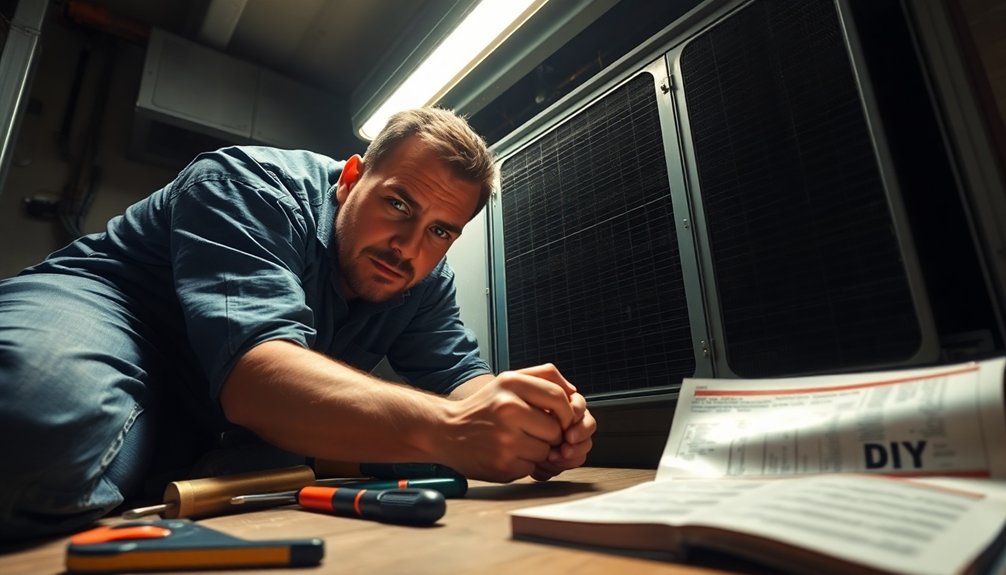
When you take on DIY HVAC projects, you’re exposing yourself to serious safety hazards, like electrical shocks or gas leaks.
A small mistake can lead to costly repairs, often exceeding $1,000 if you need to call in a professional afterward.
It’s vital to weigh these risks before deciding to tackle HVAC work on your own. Additionally, utilizing automated bill payment notifications can help you stay on top of financial responsibilities related to HVAC maintenance and repairs.
Safety Hazards Involved
Attempting DIY HVAC projects might seem like a cost-effective solution, but it can expose you to serious safety hazards. Without proper handling and training, you risk not just your equipment but your health and safety.
Consider these potential dangers:
- Electrical shock from mishandling wiring
- Toxic refrigerants causing harmful exposure
- Increased fire hazards due to improper installations
- Gas leaks leading to health risks or explosions
Moreover, financial repercussions can arise if your insurance won’t cover damages or injuries from these DIY attempts.
It’s essential to weigh the risks against the savings. Sometimes, enlisting a professional is the safest and most cost-effective choice in the long run.
Potential Costly Mistakes
Although DIY HVAC projects might seem like a way to save money, they often lead to costly mistakes that can outweigh any initial savings. Improper installations or repairs can result in system inefficiencies or complete failures, ultimately requiring professional intervention that’s more expensive than hiring a technician from the start.
In fact, about 70% of HVAC issues arise from improper installation, emphasizing the need for expert skills. Additionally, mistakes can void your manufacturer warranties, leaving you responsible for hefty repair costs.
Beyond financial losses, DIY work can also pose serious safety hazards, such as electrical risks or gas leaks, which may lead to injury or property damage.
Hiring a licensed HVAC technician guarantees both safety and system efficiency.
When to Call in a Professional: Key Indicators
How can you tell if it’s time to call in a professional for your HVAC system? Here are some key indicators that suggest it’s time for professional intervention:
- You hear unusual noises like banging or hissing from your unit.
- Different rooms in your home have inconsistent temperatures.
- Your energy bills have spiked unexpectedly, without any change in usage.
- The system frequently cycles on and off, which can lead to further damage.
If you’re experiencing any of these issues, don’t hesitate to reach out to a qualified technician. Additionally, consider the importance of clear payment terms when scheduling your repair to avoid any misunderstandings about costs and services.
Ignoring these signs could lead to bigger problems down the line, potentially costing you more in repairs and energy bills.
The Financial Implications of DIY vs. Professional Services
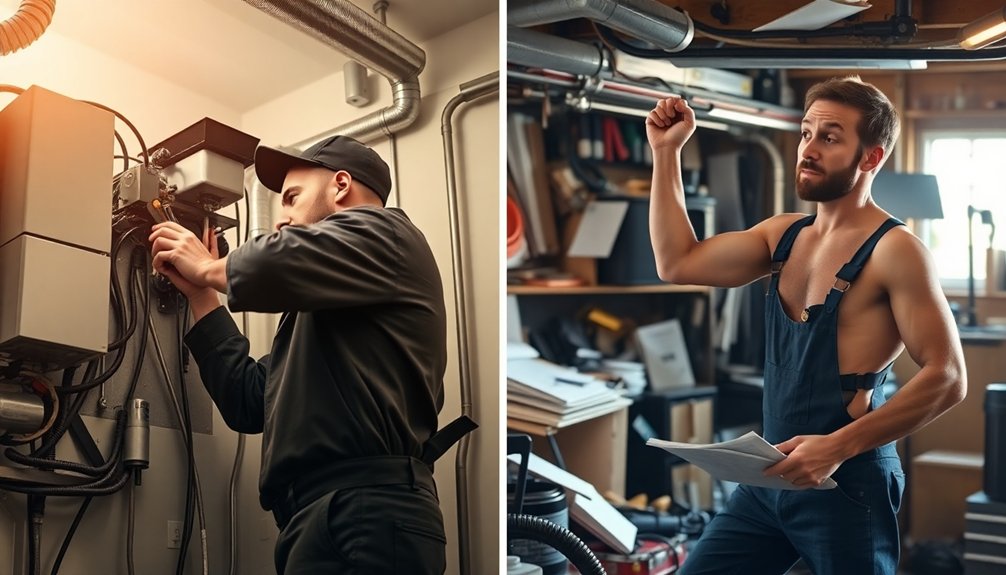
When it comes to HVAC repairs, the choice between DIY and professional services can greatly impact your wallet. While tackling a repair yourself might seem cost-effective, improper installations can lead to mistakes costing thousands of dollars.
Professional HVAC technicians charge between $75 and $150 per hour, but their expertise can save you from future expenses and energy inefficiencies. The average repair costs about $300, and if your DIY attempt goes wrong, you might end up spending more on a professional to fix your errors.
Additionally, many HVAC service providers offer maintenance packages that prevent costly breakdowns, often making them more affordable than DIY efforts that can overlook critical components. Investing in a professional can ultimately save you money in the long run. Using a comprehensive approach to financial management can help you budget better for these services financial management tools.
Skills Development and Career Advancement in HVAC
As you navigate the HVAC industry, honing your skills can open doors to exciting career advancements. With the current technician shortage, investing in skills development is more essential than ever.
Here’s how you can boost your career:
- Explore diverse specializations like sales, engineering, or service management.
- Pursue additional certifications in welding, plumbing, or electrical skills.
- Engage in continuous education for quicker salary increases, potentially earning $30-$40 per hour.
- Discover unique roles such as controls technician or chiller mechanic for enhanced job satisfaction. Additionally, consider utilizing budgeting tools like FreeAgent to manage your finances effectively as you invest in your professional growth.
Long-Term Benefits of Investing in Professional HVAC Services
Investing in professional HVAC services pays off in the long run, not just in comfort but also in savings. When you choose experts, you can enhance system efficiency, potentially slashing your energy bills by 10-30% each year.
Unlike DIY fixes, which might miss underlying problems, trained technicians guarantee proper installation and maintenance, extending your system’s lifespan by an average of 15 years. Regular maintenance can catch small issues before they escalate, saving you up to $500 annually in costly repairs.
Plus, professionals come equipped with the latest tools and technology, improving your home’s overall comfort. With warranties on parts and labor, you gain peace of mind that DIY repairs simply can’t match. Additionally, investing in expert services supports long-term financial stability, ensuring that your home’s HVAC system remains reliable and efficient for years to come.
Conclusion
To sum up, while HVAC work often gets labeled as a “blue-collar” job, it actually demands significant technical expertise and problem-solving skills. Did you know that nearly 80% of HVAC technicians have undergone formal training or apprenticeships? This highlights the importance of professional services over DIY attempts, especially since improper work can lead to costly repairs. So, when in doubt, it’s usually best to call in an expert for your HVAC needs. Your wallet will thank you!