 0
0
 0
0
Transforming your “hell strip” into a beautiful garden is totally within reach! Start by improving soil quality with compost and choosing drought-tolerant, low-growing native plants that comply with local regulations. Use creative design to enhance both aesthetics and functionality while considering foot traffic and pets. Regular maintenance and community engagement can also boost your curb appeal. There’s plenty more to discover, so stick around for tips to create your very own vibrant oasis!
Understanding the Challenges of Curb Strip Gardening
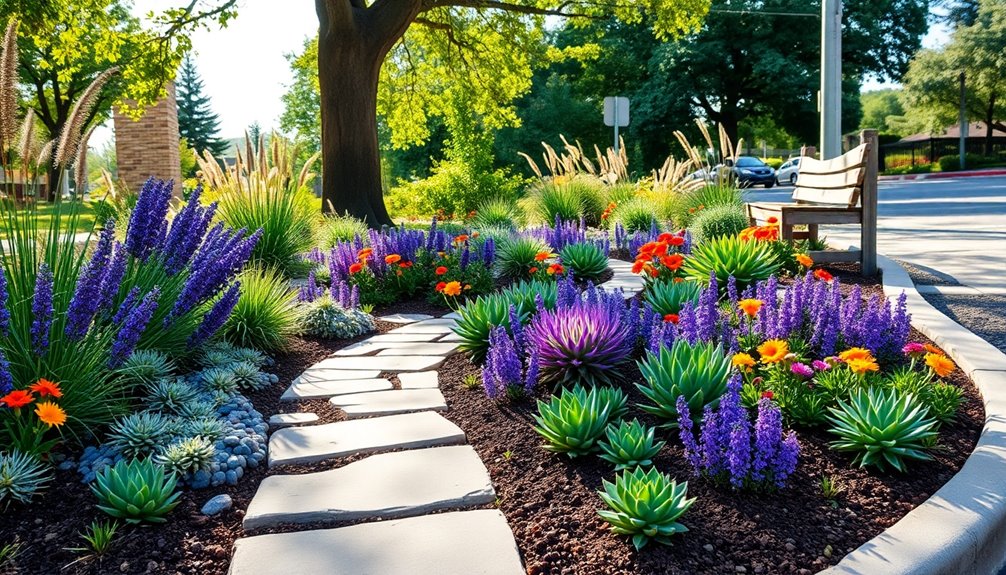
Gardening in curb strips, often called hell strips, can be tough due to several challenges.
The compacted soil in these areas, often plagued by poor quality, makes it hard for plants to establish healthy roots. High foot traffic and pets further exacerbate soil compaction and damage your plants.
Compacted soil in curb strips hinders root growth, while foot traffic and pets worsen the damage to your plants.
You also have to deal with excess salt accumulation from road treatments, especially in winter, which can harm your garden.
Municipal regulations may impose restrictions on the height and type of plants you can use, so careful plant selection is essential.
Opt for resilient species that can thrive in these harsh conditions while complying with local guidelines. Embracing mindful spending habits can help you budget for necessary gardening supplies and plants effectively.
With the right approach, you can transform your curb strip into a vibrant garden space.
Improving Soil Quality for Thriving Plants
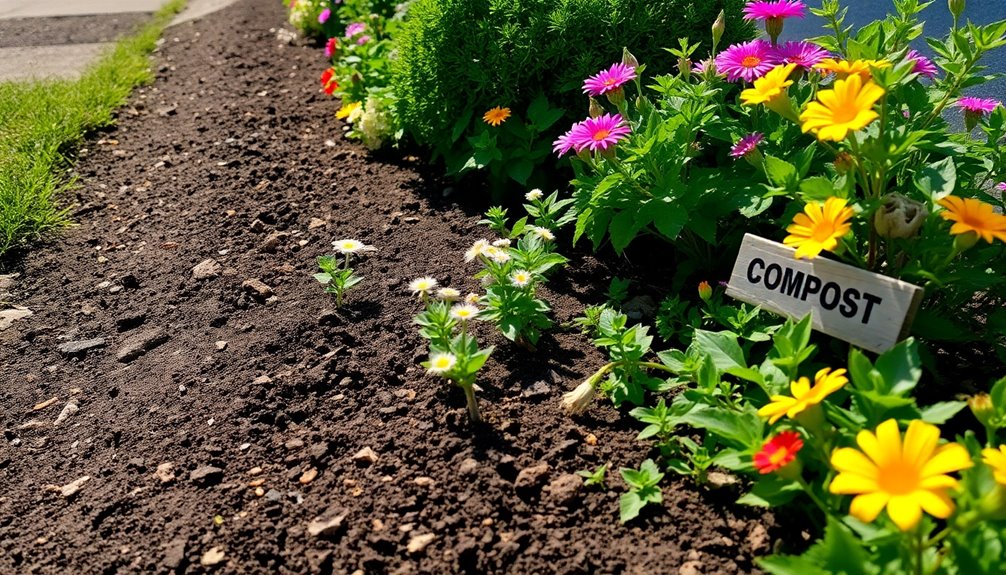
To create a thriving garden in your curb strip, focusing on soil quality is essential. Poor soil, often compacted and lacking organic matter, can hinder plant growth.
To improve this, apply 6 to 8 inches of compost using the scoop & dump method. This technique mixes compost into the compacted soil without damaging soil aggregates. Use shovels to dig and drop compacted soil, disrupting it for better integration of compost.
Avoid rototillers, as they can harm soil health. After preparing the soil, mound it over the planting bed and cover it with mulch. This not only enhances the garden’s appearance but also helps retain moisture, creating a perfect environment for your curbside gardens to flourish. Additionally, implementing a vapor barrier in your garden can help manage moisture levels, ensuring healthier plant growth.
Navigating Local Regulations for Curbside Gardens
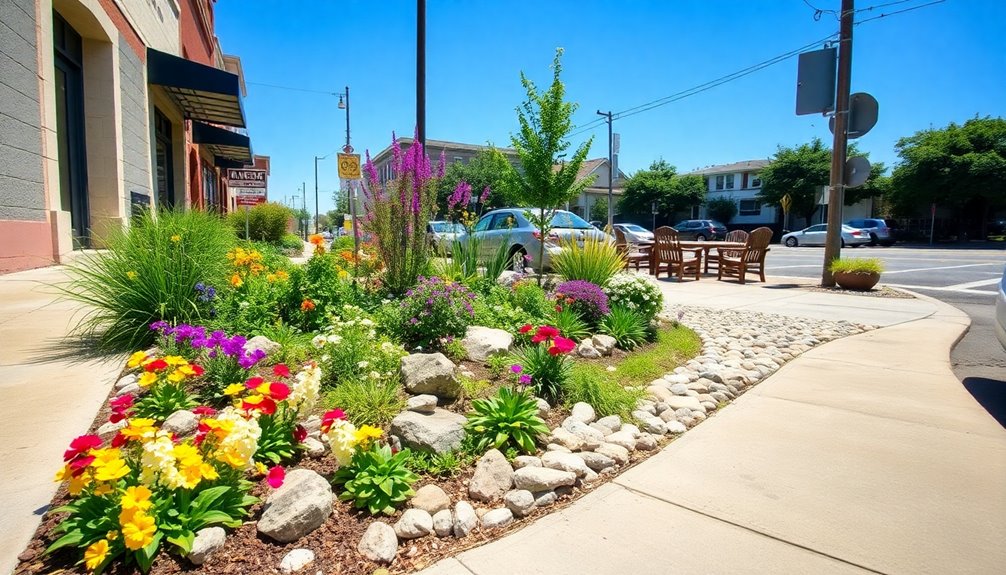
Before you start planting, it’s essential to understand your city’s guidelines for curbside gardens. Engaging with your community and local regulations will guarantee your garden not only looks great but also complies with safety standards. Additionally, taking a pause to reflect on your gardening goals can help you align your efforts with your community’s needs and enhance your overall gardening experience while practicing frugal living.
Understanding City Guidelines
While transforming your hell strip into a vibrant garden can be rewarding, it’s essential to navigate your city’s guidelines first.
Urban curb plantings often fall under municipal guidelines that dictate plant height, usually not exceeding 30 inches. Make sure your plants don’t extend over curbs, sidewalks, or driveways to maintain clear pathways for everyone.
Before planting, you’ll need approval from city forestry personnel regarding tree species and locations. A no-cost Street Tree Planting Permit may be issued if your proposed tree meets local regulations.
Always check local ordinances to avoid fines or the removal of unauthorized plantings. By following these guidelines, you can create a beautiful and compliant curbside garden that enhances your neighborhood.
Community Engagement Importance
Engaging with your community is essential when transforming your hell strip into a garden. Understanding local regulations is vital, as many municipalities have specific municipal guidelines regarding curbside gardens.
For instance, in Lincoln, plants can’t exceed 30 inches or extend over curbs, sidewalks, or driveways. Connect with city forestry personnel to get necessary approvals for tree species and planting sites, ensuring you follow the rules.
Additionally, utilize a utilities locator service to avoid damaging underground utilities while digging. Building strong neighbor relationships through community engagement fosters a supportive atmosphere, where you can share gardening tips and resources.
Choosing the Right Plants for Your Hell Strip
When choosing plants for your hell strip, start by evaluating the sunlight conditions in your area.
Opt for drought-tolerant species that can handle the heat, and consider incorporating native plants to support local ecosystems. Additionally, selecting plants that are environmentally friendly can help reduce water consumption and promote a sustainable garden.
Assess Sunlight Conditions
To create a thriving garden in your hell strip, it’s essential to assess the sunlight conditions, as the amount of direct sunlight your space receives directly influences your plant choices.
For areas with full sun (6+ hours), consider low-growing native grasses like little bluestem or blue grama; they offer drought resistance and visual appeal.
If your hell strip gets partial shade (3-6 hours), groundcovers such as prairie smoke and lamb’s ear will flourish, adding beauty while covering bare spots.
In shady conditions (less than 3 hours of direct sun), opt for plants like Lamium, which adapt well to low light and help suppress weeds.
Always keep local height restrictions in mind to guarantee visibility and safety while selecting your plants.
Select Drought-Tolerant Species
Choosing the right plants for your hell strip means selecting drought-tolerant species that can thrive in challenging conditions.
Consider incorporating ornamental grasses, blanketflower, and lavender, which flourish in poor soil and need minimal water once established.
Groundcovers like creeping thyme and largehead clover not only enhance your curbside garden’s beauty but also help suppress weeds and retain soil moisture.
Mediterranean culinary herbs, such as oregano and thyme, add interest while being resilient to dry conditions.
Be sure to choose plants suited to your USDA Hardiness zone to boost their chances of thriving.
Additionally, native plants like butterfly weed and yarrow attract beneficial pollinators, further enriching your drought-tolerant landscape.
Incorporate Native Plants
Incorporating native plants into your hell strip not only enhances its aesthetic appeal but also creates a sustainable environment that thrives with minimal care. Native plants are adapted to local conditions, requiring less water and maintenance while supporting local wildlife, especially pollinators.
For sunny areas, consider low-growing grasses like little bluestem or blue grama; they offer drought tolerance and visual charm. Groundcovers such as prairie smoke or lamb’s ear stabilize soil and reduce erosion, while Lamium thrives in shadier spots.
Adding vibrant blooms like daylilies and butterfly milkweed in hot, dry locations enhances curb appeal. Remember the “right plant, right place” principle to guarantee your choices align with the specific light, moisture, and soil conditions of your hell strip.
Designing an Aesthetic and Functional Garden Space
While you might think curbside gardens are limited by space and regulations, they can actually be transformed into stunning, functional landscapes.
Start with proper soil preparation to improve compacted, nutrient-poor conditions, using techniques like the scoop and dump method with compost.
When planting, adhere to the “right plant, right place” principle by choosing low-growing native plants and groundcovers that respect municipal height restrictions, ensuring visibility.
For a cohesive design layout, group plants in clusters of threes or fives. Incorporate a variety of species with staggered bloom times to create seasonal interest, keeping your curbside garden vibrant year-round.
Additionally, consider implementing anti-settling pins to stabilize any soil edges, ensuring your plants remain well-supported and visually appealing.
With thoughtful planning, you can craft an aesthetically pleasing and practical garden space that enhances your home’s curb appeal.
Implementing Effective Landscape Edging Techniques
When you’re choosing materials for landscape edging, think about both durability and style.
You’ll want to select options that guarantee proper drainage to keep your garden healthy and vibrant.
With the right edging, you can create defined spaces that not only look great but also make maintenance a breeze. Consider using sustainable materials that align with eco-friendly practices for an added benefit to your garden.
Choosing Suitable Materials
Choosing the right materials for landscape edging not only enhances your garden’s visual appeal but also serves practical purposes.
Opt for durable materials like bricks, stones, wood, or metal to create a defined boundary that keeps soil and organic mulch contained. This helps maintain soil moisture and reduces maintenance needs.
For instance, metal edging is long-lasting and requires minimal upkeep, while wood may need regular treatment to withstand the elements.
Proper installation is key; dig a trench to guarantee the edging is flush with the ground. This prevents tripping hazards and keeps your garden looking tidy.
Ultimately, effective landscape edging seamlessly combines aesthetics with functionality, making your curbside garden both beautiful and easy to care for.
Ensuring Proper Drainage
To guarantee proper drainage in your curbside garden, effective landscape edging techniques are essential. Edging not only defines garden boundaries but also helps manage moisture containment and runoff reduction.
Here are three key techniques to take into account:
- Choose permeable materials: Use stone or wood for edging, allowing for water permeability to facilitate drainage.
- Implement garden bed sloping: Slightly slope your garden bed towards the street to promote water flow away from the sidewalk.
- Maintain your edging: Regularly clear debris and check the integrity of your edging to prevent erosion and guarantee it supports proper drainage.
Incorporating Drought-Tolerant and Native Plants
Incorporating drought-tolerant and native plants into your curbside garden not only enhances its beauty but also promotes sustainability. By choosing plants like Mediterranean herbs and prairie flowers, you’ll greatly reduce water usage, making your garden low-maintenance.
Native plants, such as coneflower and butterfly weed, thrive in local climates, needing less water and fertilizer while attracting pollinators. Groundcovers like creeping thyme can suppress weeds and adapt to poor soil conditions, perfect for “hell strips.”
Meanwhile, low-growing grasses like little bluestem comply with height restrictions and boost biodiversity.
Remember the “right plant, right place” strategy—evaluate sun and moisture levels to guarantee your plants flourish in your curbside garden, creating a vibrant and sustainable landscape. Additionally, implementing energy-efficient designs in your garden planning can further enhance its sustainability and reduce overall environmental impact.
Strategies for Managing Foot Traffic and Pets
Managing foot traffic and pets in your curbside garden can feel challenging, but with the right strategies, you can protect your plants while keeping the space inviting.
Here are three effective ways to manage the situation:
- Plant resilient groundcovers like wild strawberries or creeping thyme to withstand foot traffic while adding beauty.
- Create narrow pathways to direct foot traffic, minimizing damage to surrounding plants.
- Install a visual barrier with low decorative fencing or edging to discourage pets from entering while maintaining the garden’s charm.
Additionally, consider fragrant plants like scented geraniums to deter pets. Regularly maintaining your garden—like weeding and deadheading—ensures it stays tidy while helping you spot any damage early on. To enhance the experience, incorporate budget-friendly recipes for simple meals that can be enjoyed in your garden space.
Seasonal Planting for Year-Round Interest
Creating a stunning curbside garden doesn’t stop at managing foot traffic and pets; it’s also about ensuring your space remains vibrant and inviting throughout the year.
Embrace seasonal planting by incorporating a mix of perennials, annuals, and seasonal bulbs to achieve continuous blooms and visual interest. Select native plants that thrive in your local conditions, enhancing resilience and minimizing maintenance for a sustainable garden ecosystem.
Embrace seasonal planting with a blend of perennials, annuals, and native plants for vibrant, low-maintenance curbside gardens.
Stagger flowering periods with choices like daylilies for summer and asters for fall, extending your garden’s appeal. Don’t forget to include evergreen plants for structure in winter and groundcovers that bloom at different times to fill gaps and suppress weeds. Additionally, consider using budget-friendly cooking techniques to create a garden that not only looks good but also supports your frugal lifestyle.
This thoughtful approach guarantees your curbside garden shines across all seasons.
Essential Maintenance Tips for Curbside Gardens
While your curbside garden can thrive with the right plants, regular maintenance is key to keeping it looking its best. Here are some essential tips to help you maintain your curbside garden:
- Deadhead Flowers: Regularly remove spent blooms to encourage prolonged flowering and enhance your garden’s visual appeal throughout the season.
- Apply Natural Mulch: Use 2-3 inches of natural mulch to conserve soil moisture, suppress weeds, and regulate soil temperature. Don’t forget to reapply mulch as it breaks down to enrich the soil.
- Make Seasonal Adjustments: Incorporate plants with different bloom times to guarantee year-round interest. Engaging with neighbors to share tips and foster community support for your beautiful curbside gardens can enhance your gardening experience and promote community engagement.
Enhancing Pollinator Habitats in Your Garden
A vibrant curbside garden not only enhances your home’s appeal but also acts as a sanctuary for pollinators.
By incorporating native plants, you’ll create rich pollinator habitats that thrive in your local climate. Choose a diverse array of flowering species that bloom at different times to guarantee a constant food supply, promoting biodiversity.
Groundcovers like creeping thyme and largehead clover not only support pollinators but also suppress weeds and retain soil moisture. It’s crucial to avoid pesticides that can harm beneficial insects.
Additionally, varying plant heights—using grasses, perennials, and flowering shrubs—provides shelter and nesting sites, making your garden a welcoming haven for bees, butterflies, and other significant pollinators.
Your efforts will truly make a difference.
Community Engagement and Support for Curbside Projects
Engaging with your neighbors about curbside gardening can transform your street into a vibrant community space. Here’s how you can encourage community engagement and support:
- Familiarize yourself with city regulations to guarantee your curbside gardening projects comply with local guidelines, promoting support from authorities.
- Participate in neighborhood events to raise awareness about the benefits of curbside gardening, such as improved aesthetics and environmental health.
- Create a network of local residents to share gardening tips and resources, which can reduce costs and strengthen community ties while beautifying shared spaces.
Inspiring Neighbors: Transforming Your Neighborhood Together
Transforming your hell strip into a garden can spark inspiration among your neighbors, encouraging them to swap their dull lawns for vibrant displays of color and life.
As your curb-side garden flourishes, it can lead to increased community engagement, inviting others to join in gardening initiatives.
Share tips on using native plants and sustainable gardening practices to enhance neighborhood aesthetics and promote biodiversity.
These transformations can create a ripple effect, as more residents embrace colorful flowers and pollinator-friendly species.
By working together, you’ll not only beautify your street but also foster a sense of pride and connection within your community.
Let your garden inspire others to make their own positive changes, transforming the entire neighborhood into a vibrant oasis.
Conclusion
By transforming your hell strip into a vibrant garden, you’re not just enhancing curb appeal; you’re sowing seeds of beauty and connection in your community. With every bloom, you’re inviting pollinators to dance and neighbors to pause, appreciate, and perhaps join in your blossoming endeavor. Embrace the journey, nurture your plants, and watch as your once neglected space flourishes, creating a tapestry of colors that weaves together the hearts of those who pass by.