

 0
0
 0
0
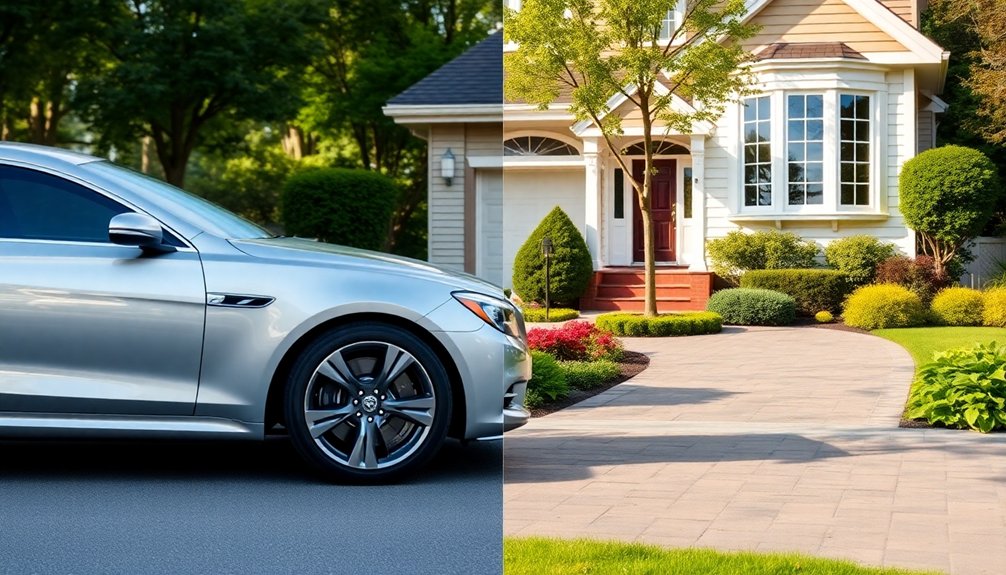
When comparing a car to a house, a home typically appreciates over time, while a car starts to lose value almost immediately. Homes can appreciate at an average rate of 6.5% annually, building equity and providing financial stability. In contrast, cars depreciate by 20% to 30% within the first year of purchase. Prioritizing homeownership over car expenses can greatly improve your financial situation. You’ll discover more about maximizing your investments and financial independence along the way.
Understanding Asset vs. Liability
When it comes to your finances, understanding the difference between assets and liabilities is essential.
An asset, like a house, has the potential to appreciate in value over time, making it a smart investment. On the other hand, a liability, such as a car, typically depreciates quickly, losing significant value right after purchase and continuing to decline annually.
An asset like a house appreciates in value, while a liability like a car quickly loses worth after purchase.
Homes generally appreciate due to limited land availability and historical trends, while cars incur ongoing expenses with no income generation. Excessive investment in liabilities like cars can hinder your wealth accumulation. Prioritizing homeownership allows for financial stability and growth potential, making it vital to recognize what qualifies as an asset versus a liability in your financial planning. Additionally, monitoring savings and investments is crucial for effective financial management and goal achievement.
The Financial Freedom of Homeownership
When you own a home, you’re not just paying a mortgage; you’re building equity over time, which can lead to financial stability.
Unlike renting, homeownership protects you from rising rent prices and gives you the freedom to invest in your property.
Plus, as your home appreciates, you’re creating potential income opportunities that simply aren’t available with a car. Additionally, personalized retirement tools can help you maximize savings and ensure you are prepared for future financial needs.
Equity Building Over Time
While many people view homeownership as a challenging financial commitment, it actually offers a unique opportunity to build equity over time.
Here are four key benefits:
- Appreciation: Home prices generally increase, often averaging 6.5% annually, unlike cars that depreciate quickly.
- Investment: A home can appreciate considerably—buying at $200,000 could yield $220,000 in ten years with smart upgrades.
- Collateral: You can leverage your home’s equity for future investments, providing financial flexibility.
- Higher Returns: Renovations often return about 72% upon resale, far exceeding returns on car purchases.
Stability Against Rent Increases
Owning a home not only offers a sense of stability but also shields you from the financial unpredictability of rising rents.
When you own a house, you eliminate dependence on landlords who can raise rental prices at will. With the average annual rent increase in the U.S. typically hovering around 3-5%, homeownership protects you from this burden.
You can lock in your mortgage payments, providing predictable housing costs compared to fluctuating rent. Plus, since a house is an asset that appreciates in value, it serves as a hedge against inflation.
While rental prices tend to increase over time, your mortgage payments stay consistent, ensuring you enjoy financial freedom and stability for years to come.
Investment Potential and Appreciation
Investing in a home offers a unique opportunity for financial growth that cars simply can’t match. Here’s why homeownership provides greater investment potential:
- Appreciation: Homes typically appreciate in value, averaging 6.5% growth annually.
- Long-term value: A $200,000 home can be worth $220,000 in ten years with proper upkeep.
- Renovation returns: Upgrades like kitchen and bathroom remodels recoup about 72% of their costs, enhancing resale value.
- Longevity: Homes can last for decades, while cars lose significant value within the first year.
The Investment Potential of Real Estate
When you invest in real estate, you’re tapping into a market with strong long-term appreciation trends that can greatly boost your wealth. Unlike cars, which lose value quickly, your home can increase in worth as you make improvements and benefit from the intrinsic value of the land. Additionally, real estate investments often lead to wealth growth through consistent appreciation over time, making them a more financially advantageous choice compared to vehicles.
Long-Term Appreciation Trends
Real estate consistently outperforms many other investment options, with homes appreciating at an average rate of about 6.5% annually. Unlike cars, which lose value quickly, investing in a house offers substantial long-term benefits.
Consider these points:
- Homes can appreciate through proper maintenance and renovations.
- The average home purchased for $200,000 could be worth $220,000 in ten years.
- Real estate investments typically yield better returns than vehicles, which are primarily depreciating assets.
- The intrinsic value of land enhances home value over time, unlike cars that face rapid depreciation.
When you choose to invest in a house, you’re not just buying a property; you’re acquiring a valuable asset with growth potential that cars simply can’t match.
Profit From Home Improvements
While many homeowners might overlook the financial potential of home improvements, making strategic upgrades can greatly boost your property’s value.
By focusing on renovations like kitchen and bathroom remodels, you can profit from home improvements that recoup around 72% of their costs at resale. This is a smart move when buying a home, as well-maintained properties often see significant market value increases over time.
Unlike cars that depreciate rapidly, homes can appreciate in value, allowing you to build wealth through thoughtful investments. With careful planning, your renovations can yield higher returns than vehicle purchases, making real estate a more effective long-term investment.
Land Value Considerations
Understanding the investment potential of real estate requires a keen awareness of land value considerations, as the intrinsic worth of land plays a crucial role in home appreciation. Here’s what you should know:
- Limited land availability guarantees homes generally appreciate over time.
- A well-maintained home can increase by an average of 6.5% annually.
- Home improvements often yield returns of 72% to 77% on your investment.
- Economic factors like high demand drive property values up, unlike cars that depreciate.
Unlike vehicles, homes don’t have a defined end of life, allowing their value to potentially appreciate indefinitely.
Comparing Depreciation of Cars and Appreciation of Homes
When you consider the financial implications of owning a car versus a home, the stark contrast in their value trajectories becomes evident.
Cars depreciate rapidly, losing about 10% of their value right after purchase and continuing to drop 20% to 30% within the first year.
In contrast, buying a house is generally a wise investment, as homes tend to appreciate over time, with values increasing by approximately 6.5% annually.
The average new car costs around $49,000, while the median home price in America is about $420,000, further showcasing the long-term value difference.
Unlike cars, homes can last decades, often yielding significant profits upon resale, especially when you consider the potential returns on home improvements. Additionally, utilizing budget apps can help you manage your finances effectively to ensure you make the most out of your investments.
The Impact of Maintenance and Upgrades on Value
Maintaining a home is key to preserving and even enhancing its value over time. Here are four essential aspects to contemplate:
- Regular maintenance costs help prevent larger issues down the road, ensuring your home stays in good shape.
- Home improvements, like kitchen and bathroom remodels, can recoup 72% to 77% of their costs, boosting your investment.
- Unlike cars, homes don’t have a defined end of life, allowing for continuous upgrades and upkeep.
- A well-maintained older home can still appreciate, especially in desirable areas, offering long-term value over time. Additionally, choosing eco-friendly materials during renovations can further enhance your home’s value while supporting sustainable practices.
Market Dynamics: How Economic Factors Influence Value
When you consider the value of your investments, economic factors like interest rates, supply and demand, and inflation play a vital role.
For instance, high interest rates can make buying a home less appealing, while a limited housing supply often drives prices up.
In contrast, cars lose value quickly, especially within the first year, highlighting how different market dynamics affect each asset’s worth. Additionally, understanding price comparison tools can aid consumers in making informed financial decisions by enabling them to evaluate the best investments over time.
Interest Rates Impacting Value
While rising interest rates often signal economic shifts, their impact on the value of both homes and cars can vary considerably.
If you’re considering whether to buy a house or a car, keep these factors in mind:
- Higher mortgage costs can slow home appreciation, making it more expensive to buy a house.
- Increased auto loan rates discourage buying a car, leading to less demand and quicker depreciation.
- Limited housing inventory may keep home values rising, even with high-interest rates.
- Cars benefit from recycling technologies, but homes maintain intrinsic value due to land scarcity.
Understanding how interest rates affect these markets helps you make informed financial decisions, whether you’re buying a house or considering buying a car.
Supply and Demand Trends
As economic factors shift, understanding supply and demand trends becomes essential for evaluating the value of homes and cars.
In the housing market, intrinsic land value and limited inventory often drive home appreciation, especially in desirable areas. Conversely, cars tend to face rapid depreciation, losing 20% to 30% of their value within the first year.
Economic shifts, like rising mortgage rates, can stall home sales while increasing demand for used cars as budget-friendly alternatives. Additionally, home renovations can enhance resale value, whereas cars typically see diminishing returns due to maintenance costs and changing consumer preferences.
Inflation and Asset Appreciation
Understanding how inflation impacts asset appreciation helps clarify the differences between homes and cars. Here are some key points to evaluate:
- Home Appreciation: Homes typically increase in value by about 6.5% annually, often outpacing inflation.
- Car Depreciation: Cars lose 20-30% of their value in the first year and about 15-18% in subsequent years.
- Intrinsic Value: Land contributes to home value, while cars lack intrinsic value tied to land.
- Market Dynamics: Factors like interest rates and supply impact both markets, but homes usually appreciate more over time.
With inflation benefiting real estate, investing in a home generally offers better long-term financial returns compared to a car, which depreciates quickly with no intrinsic value.
Misconceptions About Investments in Cars and Homes
Many people mistakenly view new cars as wise investments because of their immediate appeal, but the truth is that they lose significant value almost instantly.
When you’re buying a new car, expect it to depreciate by 20% to 30% within the first year. In contrast, the average American home appreciates over time, with values rising about 6.5% in 2017 alone.
As a first-time homebuyer, you’re likely making a smarter investment by choosing a property valued around $420,000 instead of a luxury vehicle averaging $49,000.
While cultural norms may push you toward new cars, understanding that cars are liabilities while homes can generate wealth is essential for your financial future. Budgeting tools can provide valuable insights into your financial decisions and help you prioritize investments that truly appreciate over time.
Don’t let misconceptions steer you wrong.
The Importance of the House-To-Car Ratio

Recognizing the difference between investments in cars and homes can lead you to a valuable metric: the House-To-Car Ratio. This ratio, which stands at 8.57 for the average American, shows that spending on cars is considerably less than on homes.
Understanding the House-To-Car Ratio reveals how much more Americans invest in homes than in cars.
Understanding this can enhance your financial stability. Here are four reasons to evaluate your House-To-Car Ratio:
- Prioritizes housing investments over car expenses.
- Encourages wealth accumulation by reducing liabilities.
- Helps evaluate your financial health through spending habits.
- Promotes responsible financial planning to achieve independence. Additionally, a well-managed expense categorization system can further improve your financial stability by providing insights into spending patterns.
Strategies for Achieving Financial Independence
While steering your financial journey, employing effective strategies for achieving financial independence can make all the difference.
Start by prioritizing housing investments over buying a car. With the house-to-car ratio highlighting the benefits of homeownership, focus on reducing housing expenses and leveraging the appreciation of your home.
Investing in home improvements can further boost your property value, helping you build wealth over time. Avoid high lease payments and credit card debt typically associated with cars; instead, redirect those funds into savings and real estate.
Understanding that cars are depreciating liabilities while homes are appreciating assets is vital. By making informed choices, you’ll enhance your financial independence and set yourself up for long-term success. Utilizing expense tracking tools can significantly aid in managing your financial obligations and investments effectively.
Lifestyle Considerations in Property Ownership
Owning a home offers lifestyle benefits that renting simply can’t match. Here are some key considerations when it comes to property ownership:
- Customization: You can renovate and personalize your space, enhancing satisfaction.
- Stability: Homeownership protects you from rent increases and landlord restrictions, aiding your personal finance planning.
- Community: Living in a purchased home fosters a sense of belonging, boosting your mental well-being.
- Cost-Effectiveness: Avoiding yearly rent payments can lead to reduced living costs and potential property appreciation.
Additionally, investing in a home allows for sustainable practices that can further enhance your financial and environmental well-being.
While a used vehicle might depreciate over time, getting a house can offer lasting value and a more fulfilling lifestyle.
Investing in homeownership not only secures your finances but enriches your living experience.
Conclusion
In the grand showdown of cars versus houses, it’s clear: homes are the superheroes of financial growth, while cars are just the sidekicks that lose value faster than a speeding ticket! Investing in real estate can set you on the path to financial freedom, while a shiny new car might just drain your wallet. So, strap on your cape, prioritize that house over that flashy ride, and watch your wealth soar higher than your favorite superhero!