
 0
0
 0
0
When moving materials 14 miles yourself, costs can add up quickly. Rental truck fees range from $50 to $200 per day, plus mileage charges that hit your wallet hard. Add packing supplies at $150 to $300, and don’t forget fuel costs of $10 to $30. Hidden expenses can negate any savings, making professional movers more appealing. If you want to discover how to save money on your next move, keep going for more insights.
Understanding the Costs of DIY Moving
When you decide to tackle a DIY move, understanding the costs involved is essential to avoid surprises.
Renting a moving truck for a 14-mile journey can set you back anywhere from $50 to $200 per day, plus mileage fees ranging from $0.59 to $1.29 per mile, driving up your total cost.
Renting a moving truck for a short distance can cost you $50 to $200 daily, plus mileage fees.
Don’t forget packing supplies, which can add another $150 to $300 to your moving expenses. Fuel costs for the trip can also run you about $10 to $30.
Additionally, consider lost time from work; longer moves can eat into your paycheck.
While you might save money upfront, hiring professional movers could prevent injuries and ultimately be more cost-effective in the long run. Utilizing a budgeting tool like expense tracking can help you effectively monitor all these costs and make informed financial decisions during your move.
Hidden Expenses in a DIY Move
While you might think a DIY move is straightforward and budget-friendly, hidden expenses can quickly pile up.
Renting a truck for your 14-mile move could cost you between $50 to $200 daily, plus mileage fees that add to your moving costs. Don’t forget fuel expenses, which can run you another $5 to $20.
Packing supplies like boxes and tape could range from $150 to $300, further stretching your budget. If you need extra help, local labor services might charge you about $100 to $200.
Finally, consider potential damages; repairing scratched floors or replacing broken items can surpass the cost of hiring professional movers trained to transport your stuff safely. Additionally, utilizing tools for expense tracking can help you keep tabs on these unexpected costs throughout your move.
Comparing DIY Moving to Hiring Professionals

When you’re weighing the options between DIY moving and hiring professionals, cost is a major factor.
While renting a truck might save you around $1,000 for a local move, consider the time and labor you’ll need to invest.
Balancing these elements can help you decide which route is truly the best fit for your situation. Additionally, utilizing budget apps can help you manage and track your expenses effectively during the moving process.
Cost Analysis Breakdown
Moving costs can vary greatly between DIY approaches and hiring professionals, making it essential to weigh your options carefully.
For a local move of 14 miles, renting a truck usually costs between $50 and $200 per day, plus mileage fees that can push total costs over $200.
In contrast, hiring professionals averages around $1,250, which includes labor and expertise.
Don’t forget about hidden costs with DIY moving, like packing supplies that can add another $200 and fuel expenses of $75 to $150.
While DIY may seem like a way to save money at first glance, the potential for damage and injuries can lead to unforeseen expenses.
Consider moving quotes carefully to make the best financial decision.
Labor and Time Considerations
Opting for DIY moving can quickly turn into a time-consuming endeavor, as sorting, packing, loading, and unloading often stretch beyond a single day.
You might underestimate the time and labor involved, leading to unplanned overtime that disrupts your schedule. Heavy lifting and handling packing materials increase your risk of personal injury, which adds hidden costs of DIY that aren’t immediately apparent.
In contrast, hiring professional movers streamlines the moving process, allowing you to focus on other responsibilities while they handle the logistics efficiently.
By hiring labor-only movers, you reduce the risk of damage to your belongings and minimize stress.
Ultimately, investing time in hiring professionals can save you from frustration and potential medical expenses down the line.
Factors Influencing Moving Costs
Transporting your belongings comes with a variety of costs that can quickly add up, making it essential to understand the factors at play. The average cost of a local move is around $1,250, influenced by home size and the weight of your belongings.
For a 14-mile move, truck rentals for DIY moving can start at $150, while hiring professional movers may set you back about $1,407. Don’t forget fuel costs, which can add an extra $75 to $150, depending on your truck’s efficiency.
Additionally, you might face packing supplies expenses up to $300. These additional costs, combined with potential lost wages from time off work, can greatly impact your overall moving expenses. Understanding your financial health is crucial in budgeting for these unexpected expenses.
Tips for Reducing Moving Expenses
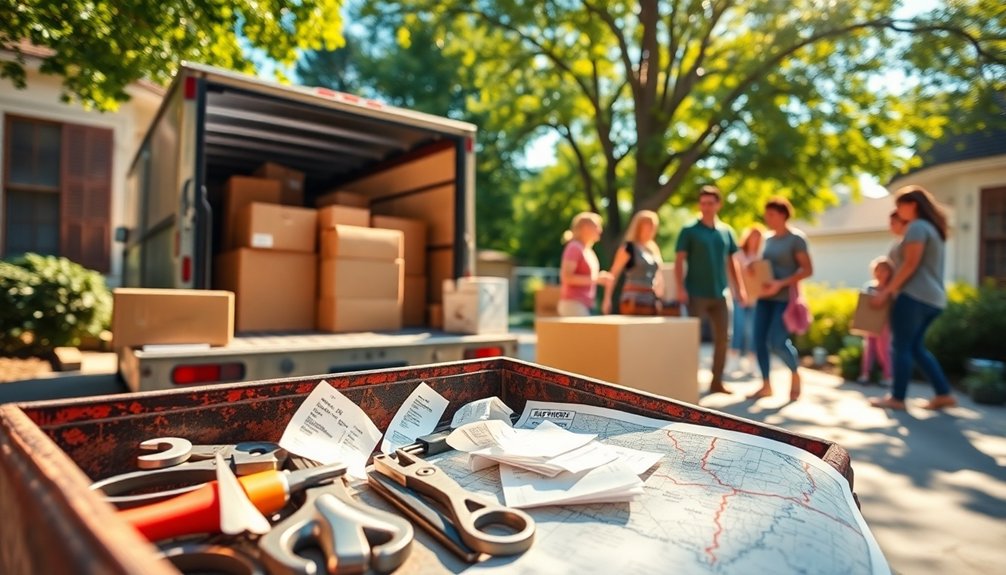
While it might seem overwhelming, there are several effective strategies to cut down your moving expenses.
First, consider renting a moving truck during off-peak times, like mid-week or mid-month, to save money on higher demand rates.
Next, declutter your belongings; this reduces the truck size you need and minimizes costs.
Use free moving boxes from local businesses and gather packing supplies to avoid additional expenses.
Additionally, always compare prices by obtaining quotes from at least three moving companies.
This way, you’ll find the most cost-effective option for your local move. Furthermore, utilizing receipt scanning technology can help you keep track of all moving-related expenses efficiently.
Evaluating Your Moving Options
When considering your moving options, it’s essential to weigh the pros and cons of DIY versus hiring professionals.
A local move of just 14 miles can cost between $150 to $400 for truck rental, plus an extra $150 to $300 for moving supplies. While DIY moving can save you about $1,000 compared to professional movers, don’t forget to factor in gas prices, which can add another $75 to $150.
The physical labor and time involved in a DIY move can lead to lost income and potential injuries. If you prefer a hassle-free experience, hiring professional movers and utilizing packing services might be worth the extra cost, making your move smoother and safer. Additionally, consider using bill tracking apps to manage moving expenses effectively, ensuring you stay within budget throughout the process.
Conclusion
As you stand at the crossroads of DIY moving, picture a sturdy ship sailing across a vast ocean. Each wave represents hidden costs threatening to capsize your budget. By weighing the anchor of your efforts against the winds of professional help, you navigate toward calmer waters. Remember, packing your treasures wisely and charting your course can save you from the storm. Ultimately, it’s about finding the right balance between your sails and the sea, ensuring a smooth voyage ahead.