
 0
0
 0
0
Using a DIY washing machine cleaner not only saves you money but also keeps your machine running smoothly for years. By combining eco-friendly ingredients like white vinegar and baking soda, you eliminate grime and odors while reducing harsh chemicals in your home. Plus, regular maintenance extends your washer’s lifespan and enhances performance. Want to learn more about how to make your own cleaner and the best practices for maintaining your washing machine? Keep exploring!
Why a DIY Washing Machine Cleaner Is a Must-Have?
When you consider the amount of laundry you do, it’s easy to overlook the importance of cleaning your washing machine.
Using a DIY cleaning solution made from vinegar and baking soda is a game-changer. Regularly cleaning your machine prevents soap scum, grime, and detergent buildup, ensuring it runs smoothly.
Plus, this simple solution helps eliminate germs and bacteria in that warm, damp environment, promoting a healthier laundry experience. You’ll also notice a significant reduction in unpleasant odors, leading to fresher-smelling clothes. Additionally, maintaining your washing machine with sustainable practices not only extends its lifespan but also contributes to a more eco-friendly home.
Eco-Friendly Aspect
Many people overlook the impact of their cleaning choices on the environment. By opting for a DIY washing machine cleaner, you can make eco-friendly choices that benefit both your home and the planet. Here’s how:
Consider the environmental impact of your cleaning choices; a DIY washing machine cleaner benefits both your home and the planet.
- Biodegradable Ingredients: Using elements like white vinegar and baking soda guarantees your cleaner breaks down naturally, reducing pollution.
- Plastic Waste Reduction: Making your own cleaner eliminates the need for single-use plastic bottles common in store-bought products.
- Natural Fragrance: Incorporating natural ingredients, such as lemon juice and essential oils, provides pleasant scents without the harsh chemicals found in many cleaners.
- Support for sustainable businesses: By choosing homemade cleaners, you contribute to a socially responsible economy that prioritizes eco-friendly practices and community initiatives.
Basic Ingredients for DIY Washing Machine Cleaner
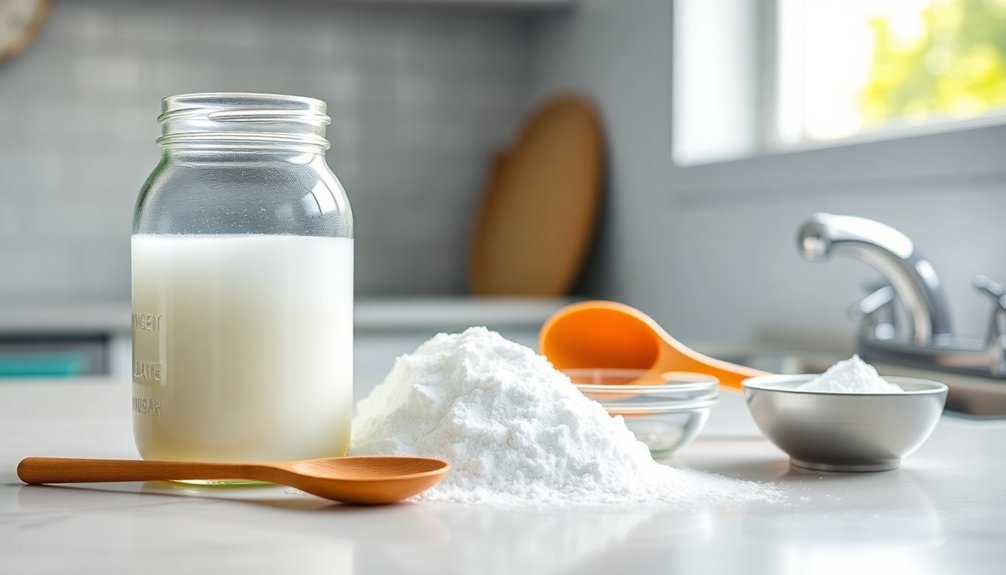
When it comes to making your own washing machine cleaner, you’ll want to gather a few key ingredients. White vinegar, baking soda, and lemon juice are all eco-friendly options that pack a powerful punch against grime and odors. Don’t forget to add some essential oils for a revitalizing scent and added antibacterial benefits! Using these ingredients aligns with conscious consumerism, promoting a sustainable approach to household cleaning.
Eco-Friendly Ingredients Overview
To keep your washing machine fresh and functioning well, using eco-friendly ingredients is the way to go. These natural components not only clean effectively but also protect the environment.
Here are some top ingredients to take into account:
- Vinegar: A natural deodorizer and mild acid, it cuts through grease and mineral deposits.
- Baking Soda: An excellent scrubbing agent, it neutralizes odors and breaks down grime without scratching surfaces.
- Essential Oils: They add pleasant fragrances while providing antibacterial benefits, enhancing your cleaner’s effectiveness.
Essential DIY Components
Creating an effective DIY washing machine cleaner is simple, especially when you choose the right ingredients.
Start with white vinegar, which acts as a natural deodorizer and mild acid, cutting through grease and mineral deposits. Next, add baking soda; it’s an excellent scrubbing agent that neutralizes odors and breaks down grime.
For an extra boost, consider lemon juice, which serves as an acidic stain remover and leaves a revitalizing scent. Hydrogen peroxide is also a powerful disinfectant against mold and mildew, perfect for deep cleaning.
Finally, don’t forget essential oils like tea tree or lavender. They not only lend a pleasant fragrance but also provide antibacterial benefits, enhancing your DIY washing machine cleaner’s effectiveness.
Making Your Own Natural Washing Machine Cleaner
If you want to keep your washing machine fresh and clean without harsh chemicals, making your own natural cleaner is an excellent solution. A simple DIY Washing Machine Cleaner can be created using just a few ingredients. Here’s what you need:
- 2 cups of white vinegar
- 1/4 cup of baking soda
- Optional: a few drops of essential oils (like tea tree or lavender)
Mix the vinegar and baking soda to form a powerful cleaner that breaks down grime and eliminates odors. Regular maintenance with this natural cleaner, ideally once a month, prevents soap scum and bacterial buildup. Vinegar acts as a deodorizer and disinfectant, while baking soda gently scrubs away residues, ensuring your machine runs smoothly and lasts longer. Additionally, practicing consistent savings habits can help you allocate funds for regular maintenance of your appliances, promoting longevity and efficiency.
How These DIY Cleaners Work
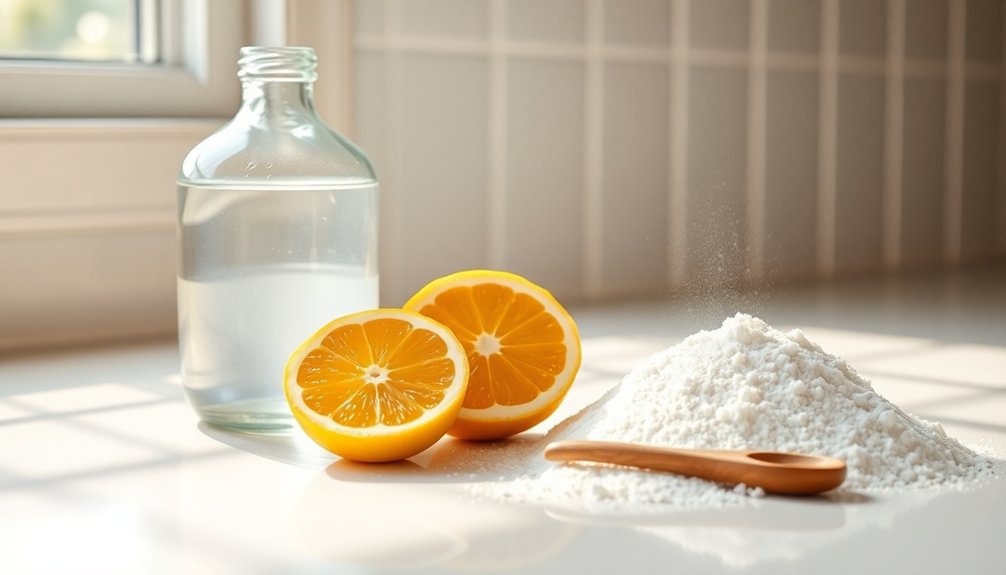
While you mightn’t realize it, the science behind DIY cleaners like vinegar and baking soda is what makes them so effective for maintaining your washing machine.
Vinegar’s acidic nature cuts through mineral deposits and bacteria, while baking soda acts as a mild abrasive to scrub away buildup. When you mix these two ingredients, they create a fizzing reaction that dislodges dirt without the need for scrubbing, making your cleaning process easier and more efficient.
Vinegar and baking soda work together to effortlessly dislodge dirt, making your cleaning routine simpler and more effective.
Their pH balance allows them to work synergistically; vinegar neutralizes baking soda’s alkalinity, enhancing their cleaning power. Regular use of these DIY cleaners not only keeps your machine smelling fresh but also prevents clogs and reduces mechanical issues, ensuring peak performance. Additionally, using these cleaners can help you save money on expense management apps that streamline financial organization.
Best Practices for Mixing Your Ingredients
To get the best results from your DIY washing machine cleaner, it’s essential to mix your ingredients in the right order. Start with baking soda in the drum, then add vinegar slowly to control the fizz. Using hot water enhances the mixture’s effectiveness, so don’t skip that step! Additionally, maintaining budget awareness can help you allocate funds for necessary home maintenance, ensuring your appliances run smoothly.
Correct Ingredient Order
When cleaning your washing machine with a DIY mixture, the order in which you add your ingredients is essential for best results.
Follow these steps to guarantee effective cleaning:
- Start by adding baking soda directly to the washing machine drum. This initiates the cleaning reaction.
- Slowly pour vinegar into the detergent drawer or drum. This prevents excessive fizzing and overflow.
- Use hot water during the cleaning cycle to enhance the reaction between vinegar and baking soda.
Mix small amounts of these ingredients initially to avoid any overflow, especially if it’s your first time using this DIY cleaner.
Allow the mixture to sit for at least 15 minutes before running any cycles to maximize its cleaning power.
Happy washing!
Optimal Mixing Techniques
Mixing your DIY washing machine cleaner effectively can make a significant difference in its cleaning power.
Start by adding baking soda first to the drum; this helps control the fizzing when you pour in vinegar.
Pour the vinegar slowly into the detergent drawer or directly into the drum to minimize any mess.
Using hot water for the cleaning cycle enhances the chemical reaction between baking soda and vinegar, ensuring you tackle grime effectively.
If it’s your first time using this mixture, stick to small amounts to avoid overflow.
Allow the mixture to sit for at least 15 minutes before running the wash cycle, maximizing its cleaning effectiveness and keeping your washing machine running smoothly.
Do’s & Don’ts When Using DIY Washing Machine Cleaners
Using DIY washing machine cleaners can be an effective way to keep your appliance fresh, but there are important do’s and don’ts to take into account.
- Do read your appliance manual for cleaning recommendations.
- Don’t mix different chemicals without understanding their reactions.
- Do use safe, eco-friendly ingredients like baking soda and white vinegar.
Neglecting small parts, like dispensers and filters, can lead to grime build-up that affects performance, so make certain to clean those too.
After cleaning your washing machine, leave the door open to promote airflow and prevent mold growth from residual moisture. Additionally, regular maintenance can help align expenses with long-term objectives related to appliance longevity, ensuring you get the best value from your investment.
Common Questions
What common questions do people have about DIY washing machine cleaners? Many wonder if DIY recipes, like those using vinegar and baking soda, really work. The answer is yes! These solutions are effective in removing grime, detergent buildup, and odors.
You might also question how often to clean your machine regularly; it’s best to do this at least once a month to prevent mold and bacteria growth. For effective washing, use two cups of white vinegar and a quarter cup of baking soda, running your machine on the hottest cycle.
Plus, you’ll appreciate that DIY cleaners save money and help you avoid harsh chemicals, making your home more eco-friendly while keeping your washing machine running smoothly. Regularly monitor due dates for cleaning schedules can help ensure your machine stays in top condition.
Related Posts
If you’re looking to dive deeper into DIY cleaning solutions, you’ll find plenty of related posts that offer more tips and tricks for maintaining your washing machine.
These posts focus on effective cleaning hacks and the benefits of regular cleaning, ensuring your machine runs smoothly.
Here are a few topics you won’t want to miss:
- Eco-friendly ingredients: Discover more natural options for your DIY cleaners.
- Monthly maintenance tips: Learn how to keep your washing machine in top shape.
- Homemade cleaning recipes: Explore simple mixtures for tackling stubborn grime and odors. Additionally, consider using eco-friendly brands that prioritize sustainability to further reduce your environmental impact while cleaning.
Conclusion
So there you have it—making your own washing machine cleaner is not just a way to save a few bucks; it’s practically a rite of passage into the eco-conscious elite. Who needs overpriced commercial cleaners when you can whip up a concoction in your kitchen? Embrace your inner scientist, and remember, if your clothes start smelling like a fresh garden instead of mildew, you’re definitely doing something right. Go ahead, impress your friends with your newfound “cleaning expertise”!