
 0
0
 0
0
When steering through awkward family questions about unequal inheritances, it’s essential to communicate openly and honestly. Share your reasoning behind decisions, like caregiving contributions or special needs considerations. Encourage family discussions to address concerns and minimize misunderstandings. Be transparent about your intentions and document any explanations to clarify your choices. This approach can help ease tensions and promote understanding. You’ll find additional techniques to foster harmony and manage emotions in family conversations ahead.
Understanding the Rise of Unequal Inheritances
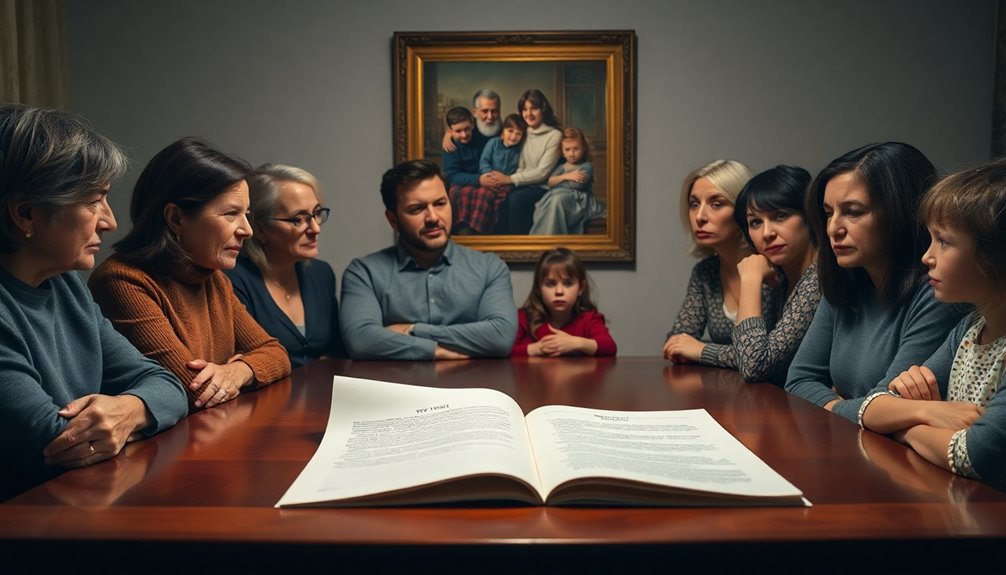
As families navigate the complexities of modern life, you might notice a growing trend towards unequal inheritances. The percentage of individuals leaving unequal inheritances jumped from 16% in 1995 to nearly 35% in 2010, reflecting a shift in family dynamics.
More families recognize that unequal inheritance can be fairer, especially when considering individual circumstances like caregiving contributions and special needs. This approach allows estate planning to address the unique situations of each child rather than applying a one-size-fits-all solution.
As households increasingly rely on inheritances for financial stability, the distribution of assets becomes a crucial decision, ensuring that each family member’s needs are met more justly. Embracing this trend can lead to healthier family relationships and better financial outcomes, while adopting mindful spending habits helps families utilize their inheritances more effectively.
Common Reasons for Favoring One Child Over Another

When it comes to inheritance, many parents consider caregiving contributions and financial needs. If one child has provided significant care or is facing financial struggles, it’s common for parents to adjust inheritances accordingly. Understanding these factors can help you navigate the complexities of family dynamics and expectations. Additionally, recognizing the impact of caregiving contributions can provide insight into why some inheritances may appear unequal.
Caregiving Contributions Justified
Many parents find themselves justifying unequal inheritances based on the caregiving contributions of their children. When one child dedicates significant time and effort to caring for aging parents, it’s natural for family members to feel that this should be recognized in the inheritance.
In fact, surveys show that about two-thirds of individuals support giving more to the child who provided substantial care. This approach acknowledges the emotional and physical labor involved in caregiving, which can often go unnoticed.
Financial Needs Considered
Parents often consider their children’s financial needs when deciding how to allocate their inheritance. This can lead to unequal inheritance, as they seek to support those who face greater challenges.
Here are three common reasons for favoring one child over another:
- Financial Struggles: If one child is facing significant financial difficulties, parents may provide a larger share to help them achieve stability.
- Previous Gifts: Financial gifts given to one child can influence future inheritances, as parents endeavor to balance perceived inequalities.
- Special Needs: A child with medical expenses may require additional resources, justifying a larger inheritance.
Ultimately, financial needs considered can guide parents in making equitable decisions while acknowledging caregiving contributions and unique circumstances.
The Impact of Caregiving on Inheritance Decisions

When it comes to inheritance, your role as a caregiver can play a huge part in the decisions made. Many families recognize the time and effort you’ve invested and may adjust inheritance shares accordingly. Additionally, financial needs can influence these choices, ensuring that everyone is supported fairly based on their circumstances. Engaging in family financial nights can also help facilitate open discussions about inheritance and financial planning.
Caregiving Contributions Matter
While maneuvering through the complexities of inheritance, it’s essential to recognize the significant impact of caregiving contributions on the final decisions. Many families understand that primary caregivers make substantial sacrifices, often justifying a larger inheritance for those who provide care.
Here are three key points to reflect upon:
- Value of Care: Parents may prioritize caregiving roles when determining inheritance, acknowledging the emotional and physical labor involved.
- Family Dynamics: Open and honest conversations about caregiving can help clarify expectations and reduce misunderstandings among siblings.
- Support Recognition: A larger inheritance may reflect not just the care provided but also previous financial gifts received, ensuring fairness among siblings.
Understanding these factors can help navigate potential conflicts and promote healthy family relationships.
Balancing Financial Needs Fairly
Unequal inheritance often reflects the varying financial needs of siblings, especially in light of caregiving contributions. Many families recognize that primary caregivers deserve larger shares, with 63% agreeing this compensates for their efforts.
If one sibling faces financial struggles while another enjoys stability, it’s natural to contemplate unequal distribution. Additionally, if a child has special needs, parents might allocate more resources to guarantee adequate support.
Previous financial gifts also come into play, influencing how parents plan inheritances. Research shows that about 35% of individuals now leave unequal inheritances, highlighting a growing acceptance of customized estate planning.
Ultimately, balancing financial needs fairly can help maintain family harmony and address individual circumstances effectively.
How to Discuss Inheritance Plans With Family?
Discussing inheritance plans with your family can seem intimidating, but open conversations are essential for maintaining harmony.
With 35% of individuals leaving unequal inheritances, it’s vital to engage in discussions about inheritance early. Here are three tips to navigate these conversations:
- Schedule a Family Meeting: Create a safe space for everyone to express their thoughts and feelings about the inheritance.
- Be Transparent: Clearly explain your decisions regarding unequal inheritance to reduce misunderstandings and potential disputes.
- Document Your Reasons: Share the rationale behind your choices, like caregiving contributions, to help family members understand your intentions. Additionally, fostering gratitude for frugal living can help frame these discussions positively, encouraging understanding and minimizing conflict.
Techniques for Explaining Unequal Distributions Clearly
When explaining unequal distributions, it’s crucial to be clear and direct to foster understanding among family members.
Start by articulating your reasons for unequal inheritance, such as financial needs or caregiving contributions.
Consider holding family meetings or individual discussions to openly communicate your estate plans and intentions.
Providing a written explanation or a letter of intent alongside the will can further clarify your thought process behind asset allocation.
Encourage questions from all heirs during these discussions, as this helps alleviate concerns and promotes acceptance of unequal distributions.
Finally, be transparent about your decision-making process, including any prior financial support given to one child, ensuring that all siblings feel valued and informed about the estate plan. Additionally, using tools like expense tracking tools can help clarify any financial contributions you made over the years, providing a clearer picture of the estate’s distribution.
Managing Emotions During Family Conversations
Although confronting the topic of unequal inheritance can be challenging, addressing emotions openly can lead to healthier family dynamics.
To manage emotions during family conversations, consider these strategies:
- Encourage open and honest discussions: Allow everyone to express their feelings without judgment, fostering a supportive environment.
- Provide clear reasoning: Share the rationale behind inheritance decisions to help family members understand your perspective, reducing feelings of unfairness.
- Organize family meetings: Facilitate discussions, possibly with a mediator, to create a safe space for airing concerns and addressing awkward questions. Additionally, integrating principles of frugality and sustainability can help in managing not just finances but also emotional investments in family relationships.
Legal Considerations for Unequal Inheritances
Steering through the legal landscape of unequal inheritances requires careful planning to guarantee your wishes are honored and upheld. Engaging an attorney to draft your will and estate documents is essential, ensuring that the distribution aligns with state laws. Avoid involving your children in this process to prevent claims of undue influence. Clearly document your reasoning for unequal distributions within your estate planning, as this can clarify intentions and minimize conflicts among heirs. Consider including a no-contest clause in your will, which discourages heirs from challenging it by risking their inheritance. Clear communication about your decisions will strengthen the will’s validity and help heirs understand the rationale behind the unequal inheritance. Additionally, ensuring that your estate plan is reviewed regularly can help mitigate potential issues related to legal considerations for unequal inheritances.
Using Mediators to Facilitate Difficult Discussions
Maneuvering discussions about unequal inheritances can be challenging for any family, but using a mediator can make a significant difference.
A mediator provides a neutral space for family members to express feelings and concerns openly, which is essential for effective communication.
Here are three key benefits of engaging a mediator:
Engaging a mediator ensures clarity, reduces emotional tension, and promotes inclusivity in inheritance discussions.
- Conflict Resolution: Mediators are skilled in resolving conflicts, helping clarify misunderstandings about inheritance distribution.
- Emotional Tension Reduction: They facilitate discussions in a way that minimizes emotional strain, promoting a more constructive dialogue.
- Inclusivity: Family meetings led by a mediator guarantee every voice is heard, fostering fairness and understanding regarding inheritance decisions. Additionally, mediators can also encourage community resource sharing, which can help families navigate their financial dynamics and support each other during challenging conversations.
Fostering Family Harmony After Inheritance Decisions
When you navigate the aftermath of inheritance decisions, fostering family harmony becomes essential for maintaining relationships and avoiding conflicts.
Start by encouraging open communication among family members. This allows everyone to process the information and voice their concerns about unequal distributions.
Providing clear reasons for these decisions, such as caregiving contributions or financial needs, helps to mitigate feelings of resentment.
Organizing family meetings can promote transparency and collective understanding, reducing the likelihood of disputes later.
Documenting your intentions in a side letter can also clarify your decisions and express love for all heirs.
If tensions arise, consider seeking a mediator to facilitate discussions, ensuring everyone feels heard and respected in this sensitive process. Additionally, involving all heirs in discussions about financial decision-making can further enhance family cohesion and reduce misunderstandings.
Conclusion
In the end, handling unequal inheritance isn’t just about money; it’s about relationships. The theory that equal distribution equals fairness often falls short when personal circumstances come into play. By addressing the reasons behind your decisions openly and honestly, you can foster understanding and reduce resentment among siblings. Remember, it’s possible to create a supportive family dynamic despite financial disparities. So, embrace the conversation and pave the way for healthier family bonds moving forward.