
 0
0
 0
0
Switching from heat pumps to baseboard heating might seem appealing, but you’re likely to lose out on savings and energy efficiency. Heat pumps extract warmth from the outside air and can save you up to $1,000 annually on energy bills compared to baseboard systems. Plus, they offer both heating and cooling without the fire risks of exposed elements. If you want to find out more about the benefits of heat pumps, there’s plenty more to explore.
Understanding Heat Pumps and Baseboard Heating
When it comes to heating your home, understanding the differences between heat pumps and electric baseboard heating is essential.
Heat pumps provide high-efficiency heat by extracting warmth from the outside air, even in cold weather, making them suitable for various climates.
Heat pumps efficiently extract warmth from the outside air, ensuring comfortable temperatures even in colder climates.
In contrast, electric baseboard heaters rely on electric resistance heating, which means they consume more energy and can lead to higher utility bills, averaging $400-$900 monthly.
If you switch from inefficient systems to heat pumps, you could see significant savings, with average households saving around $370 annually and some up to $1,000.
Plus, heat pumps offer both heating and cooling, unlike electric baseboard heaters, which only heat, enhancing your home’s overall energy efficiency. Additionally, using budget management tools can help you effectively plan for the costs associated with heating upgrades and maintenance.
Energy Efficiency and Cost Savings
Switching to heat pumps not only enhances your home’s comfort but also greatly boosts energy efficiency and cost savings.
By reducing electricity use for heating by up to 75% compared to electric baseboard heating, you can see substantial savings on energy bills. Homeowners typically save around $370 per year, with some even saving close to $1,000 when moving from inefficient systems.
While electric baseboard heating can incur monthly bills between $400 and $900, heat pumps lower these costs greatly over time. They generate three to four times more energy as heat than they consume.
Plus, you might qualify for tax credits or incentives for energy-efficient upgrades, leading to lower long-term operational costs and enhanced overall savings. Additionally, utilizing budget apps for tracking your energy expenses can further enhance financial awareness and promote better decision-making regarding energy consumption.
Environmental Impact of Heating Systems
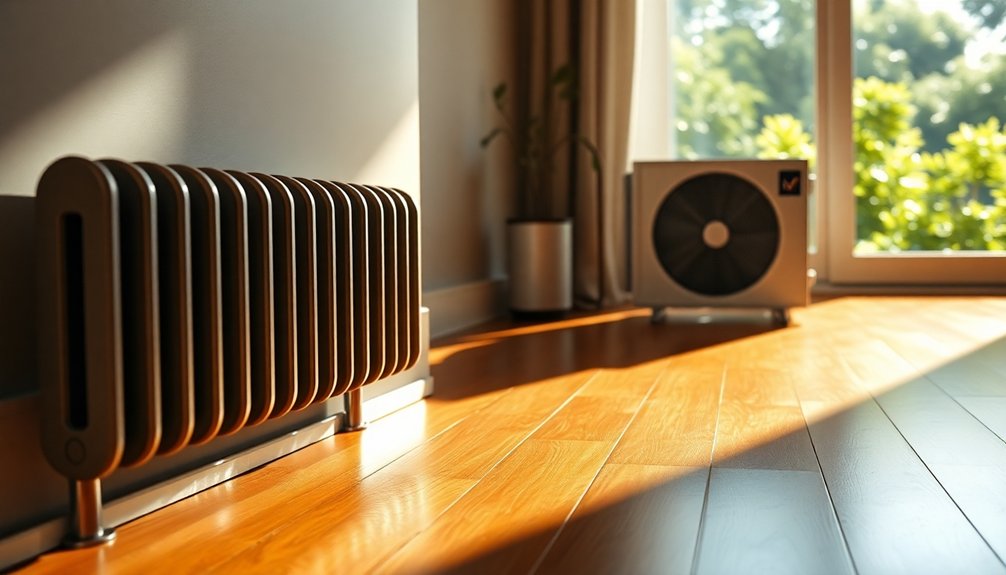
As homeowners seek more sustainable options, understanding the environmental impact of heating systems becomes essential.
Heat pumps greatly reduce carbon emissions by operating with 3 to 4 times the energy efficiency of electric baseboard heating, which often relies on fossil fuels. By shifting to heat pumps, you can align your heating system with sustainability goals, as they utilize renewable energy sources more effectively.
This switch not only decreases greenhouse gas emissions but also helps eliminate health risks associated with gas leaks and combustion heating systems. Additionally, neighborhoods with higher gas usage show increased asthma rates, highlighting how heat pumps can reduce air pollution and create a healthier living environment for you and your community.
Moreover, supporting sustainable businesses through energy-efficient choices contributes to the overall goal of combating climate change and promoting environmental responsibility.
Choosing the Right Heating System for Your Home
How do you choose the right heating system for your home? Start by considering efficiency and energy savings.
Heat pumps deliver three to four times more energy as heat than they consume, making them a smarter choice over electric baseboard heaters. While baseboard heaters are less efficient and can lead to higher electricity bills, heat pumps also offer cooling capabilities, eliminating the need for separate AC systems.
Although the upfront cost of heat pumps might be higher, various incentives can greatly reduce your investment.
Safety is another factor; baseboard heaters pose burn and fire risks.
Weigh these aspects carefully to determine the best heating system that balances efficiency, cost, and safety for your needs. Additionally, understanding financial goals can help you plan your budget more effectively for the investment in a heating system.
Financial Incentives for Upgrading Heating Solutions
When considering an upgrade to your heating solution, it’s important to explore the financial incentives that can make heat pumps more accessible.
Homeowners can benefit from tax credits of up to $2,600 when switching to energy-efficient heat pumps, considerably lowering installation costs. Additionally, utility companies often offer instant cash incentives, like a $1,000 rebate, helping further decrease your upfront investment.
Electrification nonprofits provide valuable resources to assist you in planning and maximizing your savings during this change. Furthermore, utilizing cashback programs can enhance your overall savings on related purchases, making the transition even more economical.
Conclusion
To summarize, switching from heat pumps to baseboard heating might seem counterintuitive, but it can be a smart choice for many homeowners. You might worry about higher energy costs with baseboards, but modern systems are efficient and can save you money in the long run. Plus, their simplicity and reliability can provide peace of mind. Ultimately, it’s about finding the right balance for your home’s needs, so don’t hesitate to explore all your options!