
 0
0
 0
0
Making homemade cat paw balm is a frugal and effective way to care for your furry friend’s paws. By using natural ingredients like coconut oil, beeswax, and calendula flowers, you can easily create a soothing balm that moisturizes and protects against irritation. Simply melt, mix, and pour into containers for storage. This simple recipe can help keep your cat’s paws healthy and happy. Discover more about ingredients, application tips, and community experiences to enhance your paw care routine.
Benefits of Homemade Paw Balm
When you opt for homemade paw balm, you’re choosing a natural and safe alternative to commercial products, giving you full control over the ingredients. This means you can avoid harmful additives while ensuring your cat’s paw pads stay healthy.
Homemade paw balm effectively moisturizes and protects against extreme temperatures, dry conditions, and rough surfaces. With soothing ingredients like shea butter and coconut oil, it helps reduce irritation and promotes healing for dry or cracked paws.
Regular application keeps your cat’s paws comfortable year-round, preventing issues caused by indoor heating or cold weather. Plus, making your own paw balm is cost-effective, allowing you to customize formulas tailored to your pet’s specific needs without breaking the bank.
Key Ingredients for Your Balm
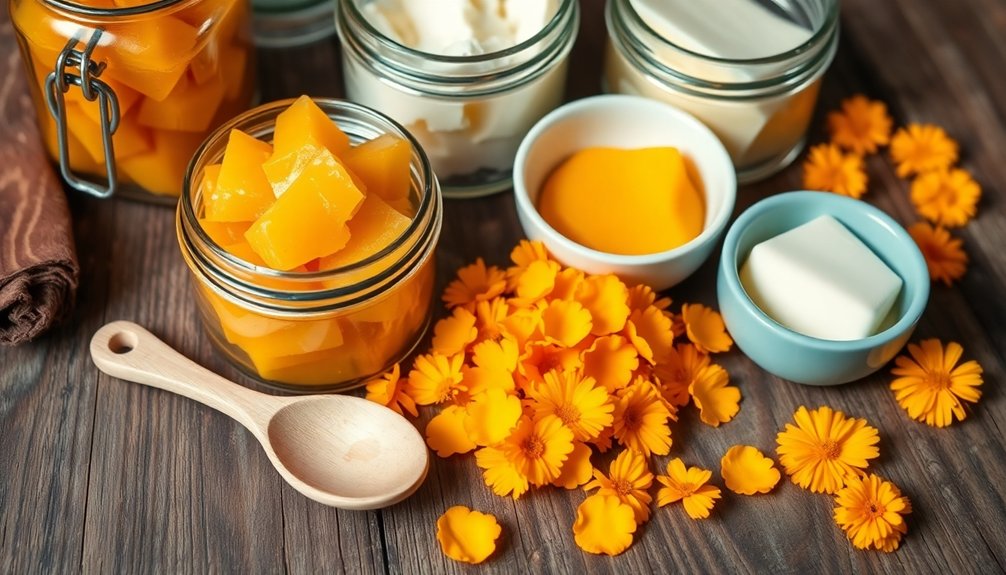
When making your homemade cat paw balm, choosing the right natural ingredients is key to ensuring its effectiveness.
You can enhance the balm with essential oils for added benefits and a pleasant scent.
Let’s explore how these components can work together to keep your cat’s paws healthy and happy.
Natural Ingredients Benefits
If you want to create an effective homemade cat paw balm, understanding the benefits of natural ingredients is essential.
Calendula flowers are fantastic for healing, thanks to their antifungal, antibacterial, and anti-inflammatory properties, making them perfect for soothing your cat’s skin.
Olive oil enhances this by infusing those beneficial properties while guaranteeing the balm has a smooth consistency for easy application.
Beeswax plays a vital role, solidifying your balm and offering antimicrobial benefits that protect against germs.
Together, these ingredients create a pet-safe balm that moisturizes and protects your cat’s paws from harsh weather and rough surfaces.
Essential Oils Options
Incorporating essential oils into your homemade cat paw balm can markedly enhance its soothing and healing properties.
Lavender and chamomile are great choices, providing calming effects for irritated skin. Tea tree oil adds antifungal and antibacterial qualities, helping to keep your cat’s paws healthy. If you want a revitalizing scent, consider peppermint oil, but use it sparingly due to its potency.
Always verify that any essential oils you choose are pet-safe and properly diluted, as some oils can be toxic to cats. Additionally, adding a few drops of vitamin E oil not only moisturizes but also extends the balm’s shelf life by preventing rancidity.
With these ingredients, you can create an effective and safe paw balm for your feline friend.
Step-by-Step Balm Recipe
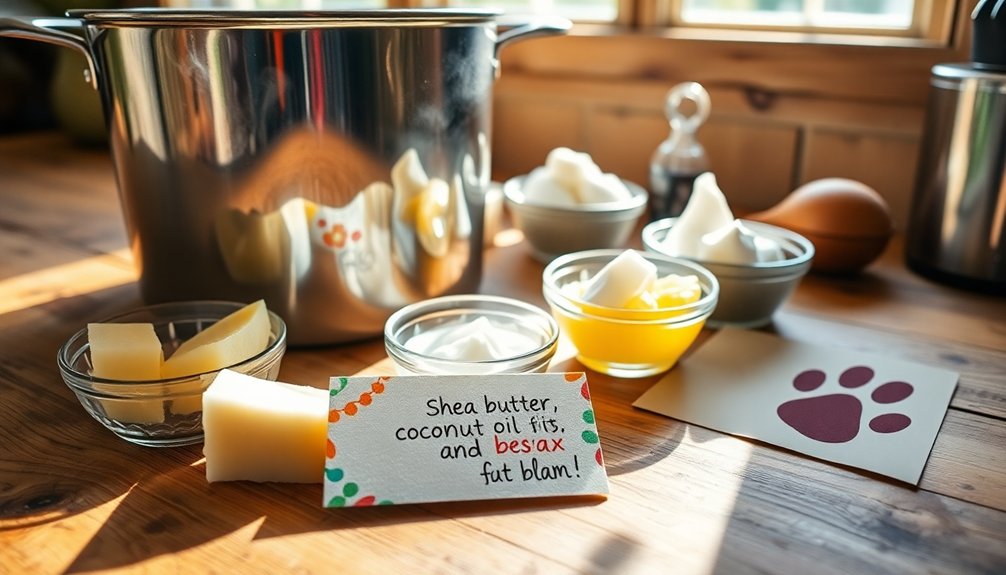
To create a soothing homemade cat paw balm, start by melting 1 cup of a coconut and olive oil blend in a double boiler over medium-low heat, allowing for an easy mixture that’s gentle on your cat’s paws.
Next, infuse a handful of dried calendula flowers in the melted oil for at least 30 minutes to harness their antifungal and anti-inflammatory properties.
Combine the infused herbal oil with ¼ cup of beeswax, melting it over low heat until fully blended to create a smooth balm texture.
Test the salve consistency by placing a tablespoon in the freezer; adjust the oils and beeswax as needed.
Finally, pour the mixture into repurposed containers, cool it, and seal for storage.
Application Tips for Optimal Results
While applying the homemade cat paw balm, use a pea-sized amount for each paw, and aim for 2-3 applications per week to keep their paws moisturized and protected from dryness.
Gradually acclimatize your cat to paw handling by gently massaging their paws, which not only helps them get used to it but also allows you to check for any foreign objects or injuries.
After long walks or outdoor play, reapply the balm to promote healing and protect against environmental stressors.
If you notice excess balm, simply remove it with a dry paper towel or warm washcloth.
Always store the balm in a cool, dry place and check its consistency before each application to verify it helps protect your cat’s sensitive paws.
Seasonal Care for Your Pet’s Paws
As seasons change, your cat’s paws face new challenges that can lead to dryness and cracking. During winter, cold surfaces and snow can be harsh, making it essential to apply balm regularly.
In summer, hot pavement can irritate their paws, so protective measures are vital. Incorporating seasonal grooming into your routine helps monitor your pet’s paw condition, ensuring you catch any issues early.
Regular moisturizing with paw balm not only soothes existing dryness but also promotes overall paw health throughout the year. Don’t forget that indoor heating in colder months can dry out your cat’s skin, so keep that balm handy.
Storage and Shelf Life of Paw Balm
To keep your homemade paw balm effective, store it in a cool, dark place.
With proper storage, it can last anywhere from several months to a year.
Always check for any changes in texture or smell before using it to verify it’s still safe for your cat.
Ideal Storage Conditions
Storing your homemade cat paw balm properly is crucial for maintaining its effectiveness over time. To do this, use airtight storage containers that seal tightly, guaranteeing moisture prevention and contamination control.
Keep your balm in a cool, dry place, away from direct light and heat, which can degrade its quality. Dark cabinets or even the refrigerator are ideal spots for temperature control.
Regularly check the balm’s texture and smell before use; any changes may indicate spoilage. By following these storage guidelines, you can extend your paw balm’s lifespan to several months or even up to a year, depending on the ingredients.
Proper storage helps assure your furry friend’s paws remain protected and pampered!
Shelf Life Expectations
While homemade cat paw balm can effectively soothe and protect your furry friend’s paws, its shelf life depends greatly on how you store it.
With proper storage in a cool, dark place, like dark cabinets or the fridge, your balm can last anywhere from several months to a year.
To guarantee spoilage prevention, keep it in tightly capped containers to avoid contamination and moisture exposure.
Regularly checking for shelf life indicators, such as changes in texture or smell, helps you catch any issues early.
Labeling your tins with the date of creation also aids in tracking freshness, guaranteeing you use the balm within the recommended timeframe.
Your careful storage will keep your cat’s paws happy and healthy!
Community Experiences and Feedback
How have fellow cat owners transformed their pets’ paw health with homemade balms? You’ll find countless paw balm testimonials from users who’ve seen remarkable improvements in their cats’ paw health.
Many appreciate the soothing effects on dry, cracked pads, especially during harsh winter months. In your quest for effective cat skincare strategies, you’ll discover that community sharing tips are invaluable.
Community-shared tips reveal the soothing benefits of homemade balms for dry, cracked pads during winter.
Pet owners frequently exchange success stories and advice on making and applying their own paw balm, creating a supportive dialogue that encourages safe, natural ingredients.
Plus, you’ll love the cost-effectiveness of DIY recipes, allowing you to whip up large batches for a fraction of the price of commercial products.
Embrace the power of community in enhancing your cat’s paw care!
Other Natural Remedies for Paw Care
What if you could enhance your cat’s paw care using simple, natural remedies?
Coconut oil is a fantastic option for paw pad protection, as it moisturizes and offers a pleasant scent while soothing dry skin.
Calendula-infused oils provide antifungal and antibacterial benefits, helping heal irritated paws.
Aloe vera gel is another great choice; it hydrates and calms cracked paw pads for faster healing.
Oatmeal baths can relieve itchy or irritated paws, thanks to their anti-inflammatory properties.
Finally, a mixture of olive oil and beeswax creates a natural balm that nourishes the skin and protects against harsh weather conditions.
These alternative remedies can keep your cat’s paws healthy and comfortable, ensuring they stay happy on their adventures.
Engaging With Pet Care Communities
Have you considered the benefits of connecting with pet care communities? Engaging with these groups can enhance your knowledge of homemade solutions like cat paw balm.
You’ll discover community recommendations for effective recipes and natural ingredients that promote your pet’s well-being. By sharing your experiences, you foster camaraderie with other pet lovers who understand the importance of paw care.
Plus, you can access valuable paw balm testimonials and before-and-after photos that highlight the effectiveness of various recipes. Active participation in forums also keeps you informed about seasonal challenges your pet may face, sparking proactive discussions on protective measures.
Embracing these communities guarantees you’re not just a pet owner but a part of a caring network dedicated to your furry friend’s health.
Conclusion
Creating your homemade cat paw balm not only saves you money but also guarantees your furry friend’s paws stay healthy and happy. Think of it like nurturing a garden; just as plants thrive with the right care, your cat’s paws flourish with the love and attention you give them. By investing a little time in this simple recipe, you’re cultivating a bond with your pet that grows deeper with every soothing application. Your cat will thank you!