

 0
0
 0
0
House hacking lets you turn extra space in your home into income, easing your mortgage burden. While the idea of renting out a room can seem intimidating, overcoming that fear can lead to significant financial benefits, like reduced living expenses and passive income. By setting clear house rules, implementing effective tenant screening, and understanding local regulations, you can create a harmonious environment. Stick around, and you’ll discover more tips on successfully steering your house hacking journey.
Understanding House Hacking: What It Is and How It Works

House hacking is a smart strategy that lets you turn part of your home into a source of income. It’s ideal for first-time home buyers looking to ease their mortgage burden while enjoying their dream property.
By renting out a room or an Accessory Dwelling Unit (ADU), you create a rental property that generates passive income. You can choose between long-term tenants or short-term rentals through platforms like Airbnb, which can yield higher returns.
This approach not only helps cover housing costs but also allows you to build equity over time. Plus, you’ll gain valuable property management experience, making house hacking a win-win situation for those ready to embrace this innovative approach to homeownership. Additionally, taking advantage of community connections can enhance your success in finding reliable tenants.
Why Overcome the Fear of Renting Out a Room?
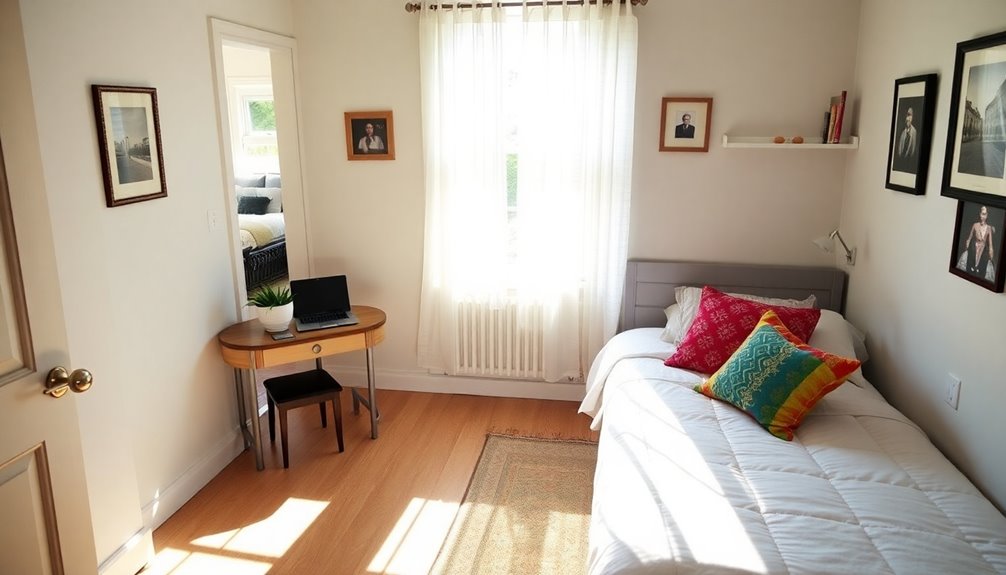
Why let fear hold you back from a potential income stream? Renting out a room can transform your home into a valuable investment property, relieving financial stress by reducing or even eliminating your mortgage payments.
With the median home price soaring, the additional income from rental properties can greatly enhance your financial stability. Plus, sharing your space fosters community and opens doors for networking opportunities.
By using licensing agreements instead of traditional leases, you maintain control over your property management and minimize risks with tenants. Many successful house-hackers started just like you, and their stories prove that overcoming this fear can lead to equity building and lasting financial benefits.
Don’t miss out on the chance to boost your income!
The Financial Benefits of House Hacking for First-Time Landlords

House hacking can considerably lighten your mortgage burden by renting out part of your home, potentially saving you thousands each year. Not only can you reduce your housing costs, but you also have the chance to generate extra income that can enhance your financial stability. This approach not only makes homeownership more affordable but also sets you on a path toward greater financial freedom. Additionally, effective budgeting and saving practices can further maximize your financial benefits from house hacking.
Mortgage Payment Reduction
When you plunge into house hacking, you open the door to significant savings on your mortgage payments. By renting out a room in your house, you can generate rental income that substantially reduces or even eliminates your monthly mortgage payments.
For example, if your mortgage is $1,500, renting a room for $800 can ease that financial burden considerably. The average rent for a room in the U.S. ranges from $700 to $1,200, making it a viable strategy for first-time landlords.
This approach not only saves you thousands annually but also allows you to redirect those funds toward savings, investments, or paying down your mortgage faster. House hacking can transform your financial outlook and enhance your homeownership experience.
Additional Income Generation
Renting out part of your home doesn’t just alleviate mortgage costs; it also opens up avenues for additional income generation.
By becoming a first-time landlord, you could cover up to 30% of your monthly mortgage payments through rental income. Many successful house-hackers report earning between $500 and $1,500 per month, depending on your location and property type.
This extra cash can greatly ease your financial burden, allowing you to invest in upgrades or save for future goals. Plus, the tax benefits associated with house hacking—like deductions on mortgage interest, property taxes, and maintenance—can enhance your overall returns.
With an ROI of 15% to 25% from multifamily properties, house hacking is a smart financial strategy.
Common Concerns About Renting and How to Address Them
What worries you most about becoming a landlord? Many potential landlords fear disruptive tenants or even squatters, which can lead to costly legal battles. To tackle this, familiarize yourself with local regulations and tenant rights; this knowledge can notably reduce risks.
Effective tenant screening is vital for finding responsible renters who respect your property. Additionally, the emotional strain of sharing your home with strangers can be overwhelming. Establishing clear house rules sets boundaries and fosters a comfortable living environment.
If you prefer flexibility, consider using licensing agreements instead of traditional leases to maintain control over tenant arrangements. Engaging with experienced landlords can also provide valuable insights to ease your fears and enhance your house-hacking journey. Moreover, utilizing budgeting apps like YNAB can help you effectively manage your finances as you transition into being a landlord.
Licensing Agreements vs. Traditional Leases: What You Need to Know
Here are some key differences to keep in mind:
- Flexibility: Licensing agreements allow you to maintain greater control over your space and tenant arrangements.
- Tenant Rights: Unlike traditional leases, licensing agreements typically limit tenant rights, making it easier for you to terminate an agreement if necessary.
- Risk Mitigation: These agreements are simpler to dissolve, helping you avoid long-term occupancy by problematic tenants.
- Legal Implications: It’s essential to understand that licensing agreements may not be recognized the same way as rental agreements under local laws.
Additionally, consider the financial impact of adding an extra source of income through house hacking when deciding between licensing agreements and traditional leases for your house hacking journey.
Strategies for Finding the Right Tenants and Easing Your Mind
Finding the right tenants can feel challenging, but with the right strategies in place, you can ease your mind and create a positive living environment.
Start with a thorough tenant screening process that includes background checks and references to guarantee potential renters align with your lifestyle.
Implement a comprehensive tenant screening process, including background checks and references, to ensure compatibility with your lifestyle.
Consider using licensing agreements instead of traditional rental leases for added flexibility and control over tenant rights. This approach reduces long-term occupancy risks.
Engage with local landlords or online communities like BiggerPockets to share experiences and gather effective tenant management strategies.
Finally, set clear expectations upfront to minimize misunderstandings. Additionally, effective planning can mitigate the impact of unforeseen expenses, ensuring a smoother renting experience.
Setting House Rules to Create a Comfortable Living Environment
Setting clear house rules is essential for creating a comfortable living environment where everyone knows what to expect.
By communicating openly and respectfully, you can address concerns before they become bigger issues.
Establishing these guidelines not only fosters harmony but also guarantees that everyone feels valued and respected in their shared home. Additionally, implementing a budgeting app can help manage shared expenses and keep everyone accountable for their financial contributions.
Establishing Clear Expectations
Establishing clear expectations from the start can make a significant difference in creating a comfortable living environment for everyone involved.
Setting house rules helps clarify responsibilities and fosters harmony. Here are some key areas to address:
- Common Areas: Define cleaning schedules and shared expenses to avoid conflicts.
- Noise Levels: Agree on acceptable volumes, especially during late hours.
- Guest Policies: Discuss rules about overnight guests to prevent misunderstandings.
- Personal Privacy: Establish boundaries, like not entering each other’s bedrooms without permission.
Consider drafting a written agreement outlining these rules for all tenants to sign.
This not only serves as a reference point but also helps maintain a respectful and enjoyable living space for everyone.
Communicating Openly and Respectfully
How can open and respectful communication transform your house-sharing experience? By establishing clear house rules, you can set expectations for shared responsibilities, creating a harmonious living environment.
Discuss guidelines for noise levels, cleaning duties, and communal space usage to prevent misunderstandings. Communicating openly about personal boundaries—like guests and quiet hours—fosters mutual respect among housemates.
Regular house meetings are essential; they allow you to address issues collaboratively and adjust house rules when necessary. Providing tenants with a written copy of these rules serves as a helpful reference, ensuring everyone’s on the same page.
How to Prepare for Your First Rental Application Process
While maneuvering your first rental application process may seem intimidating, proper preparation can make it smooth and efficient. Here are four key steps to get you started:
- Gather documents: Collect your rental application forms, background checks, and any additional local requirements to streamline the process.
- Understand local rental laws: Familiarize yourself with regulations that affect your rights and responsibilities as a landlord.
- Set up a dedicated bank account: This helps manage rental income clearly and guarantees compliance with local laws.
- Draft a rental agreement: Create a clear agreement outlining terms to protect both you and your tenants.
Additionally, consider using an expense management app to help track your rental income and expenses efficiently. Following these guidelines will help you feel confident in your rental journey and make you more appealing to potential tenants.
Success Stories: Real Experiences From House Hackers
Once you’ve navigated the rental application process, it’s time to explore the inspiring journeys of those who’ve successfully embraced house hacking.
Many house hackers have slashed their living expenses by renting out rooms, with some saving up to 50% on monthly costs.
Many house hackers reduce their living expenses significantly by renting out rooms, achieving savings of up to 50% on monthly costs.
One young adult bought a triplex, living in one unit while renting out the other two, covering their mortgage and building equity.
These experiences often lead individuals to shift into full-time real estate investing, generating passive income that supports their lifestyles.
Success stories emphasize the significance of thorough tenant screening, showcasing the positive impact of reliable tenants.
Community forums reveal how local house hackers turn properties into thriving rental businesses, highlighting the potential for substantial income. Additionally, many have realized that adopting a financial independence mindset can further enhance their investment journey, allowing them to prioritize long-term goals while managing their rental properties effectively.
Conclusion
Embracing house hacking can feel intimidating, but it’s a chance to transform your living space into a thriving community. By facing your fears and welcoming tenants, you’re not just earning extra income; you’re creating connections and enriching your life. Remember, every successful landlord started where you are now—nervous yet hopeful. So take that leap of faith; you might just discover a rewarding experience that turns your home into a sanctuary of shared stories and support.