
 0
0
 0
0
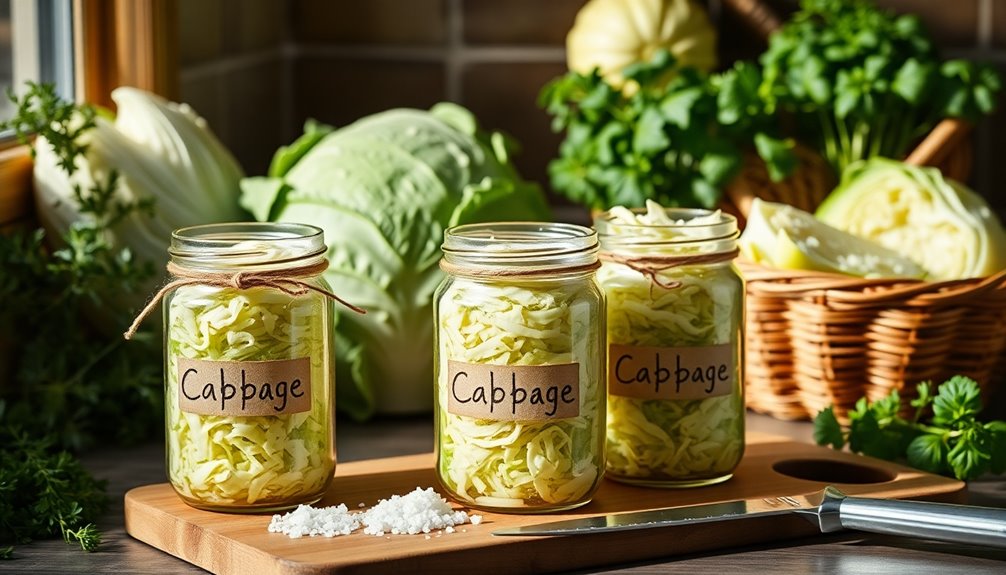
You can preserve cabbage for winter using three easy methods. First, ferment it into sauerkraut for gut health and flavor. Second, freeze it by chopping, blanching for 2-3 minutes, and then storing in airtight bags. Finally, store fresh cabbage in a root cellar with cool temperatures and high humidity for long-term freshness. Each method keeps your cabbage nutritious and tasty. Want to learn more about these techniques? There’s plenty more to explore!
Choose the Best Method: Fermenting Cabbage Into Sauerkraut
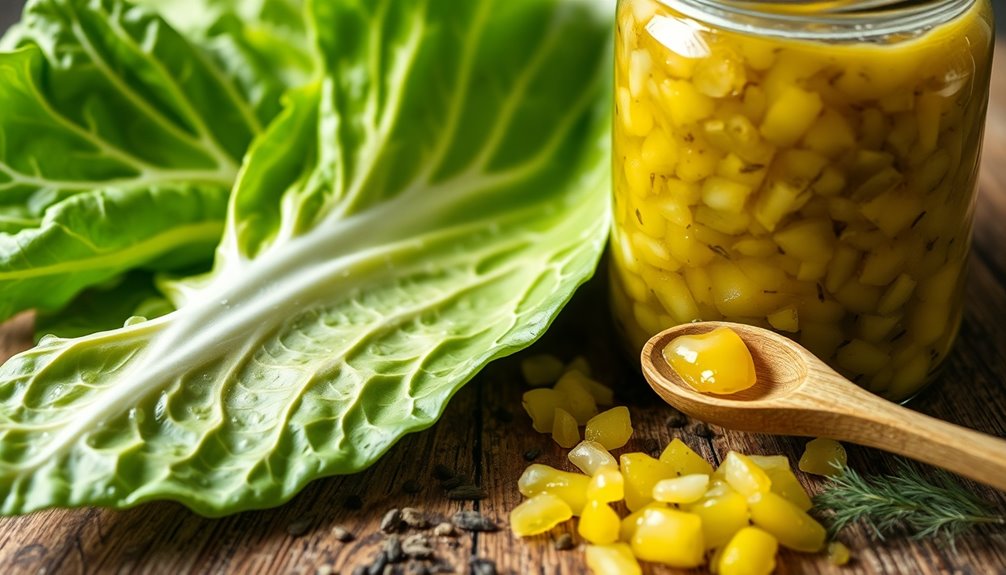
When you want to preserve cabbage for winter, fermenting it into sauerkraut is one of the best methods you can choose. This process not only extends the cabbage’s shelf life but also offers numerous fermentation benefits, like enhanced probiotics that boost your gut health.
You’ll find that making sauerkraut is simple and rewarding. Start with fresh, organic cabbage and explore various sauerkraut recipes to suit your taste. You can add spices, carrots, or even beets for unique flavors.
As the cabbage ferments, it develops a tangy taste that pairs well with many dishes. By choosing this method, you’re not just preserving food; you’re creating a nutritious staple that can brighten your winter meals. Additionally, using a 2% salt brine during fermentation ensures optimal flavor and preservation.
Simple Steps for Freezing Cabbage Without Losing Flavor
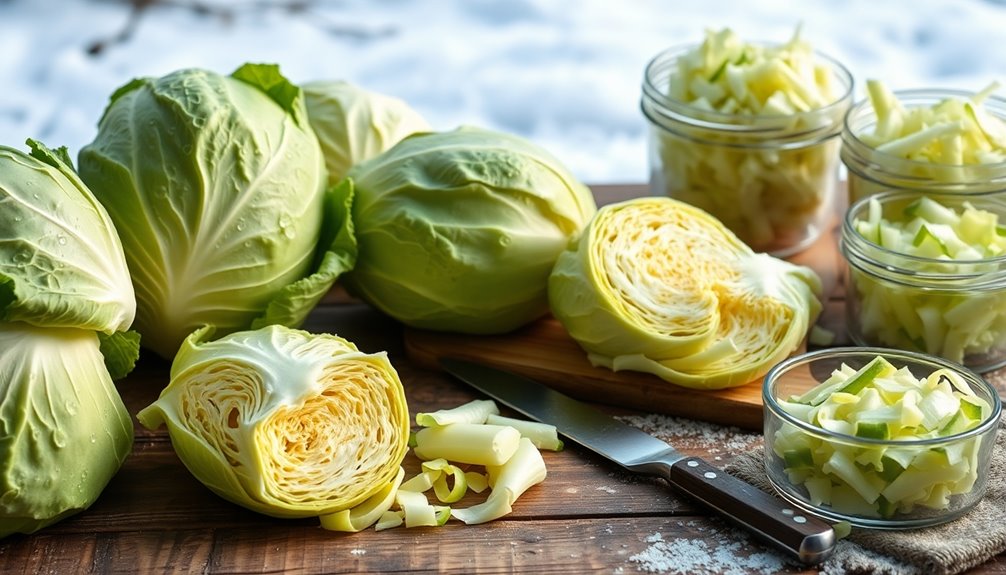
Freezing cabbage is a quick and effective way to preserve its flavor and nutrients for winter meals.
To start, remove any damaged outer leaves and chop the cabbage into your desired size.
Next, use blanching techniques by boiling the cabbage for about 2-3 minutes. This process helps kill enzymes that can cause flavor loss.
Blanching the cabbage for 2-3 minutes effectively halts enzyme activity, preserving its flavor and nutrients.
Immediately transfer the cabbage to ice water to stop the cooking process, ensuring maximum flavor retention.
After it cools, drain and pat dry.
Portion the cabbage into freezer bags or containers, removing as much air as possible to prevent freezer burn.
Label your bags and store them in the freezer. This method keeps your cabbage fresh and flavorful for those cold winter months! Additionally, vacuum sealing extends shelf life significantly, allowing you to enjoy your cabbage well into the winter.
How to Store Cabbage in a Root Cellar for Long-Term Freshness?
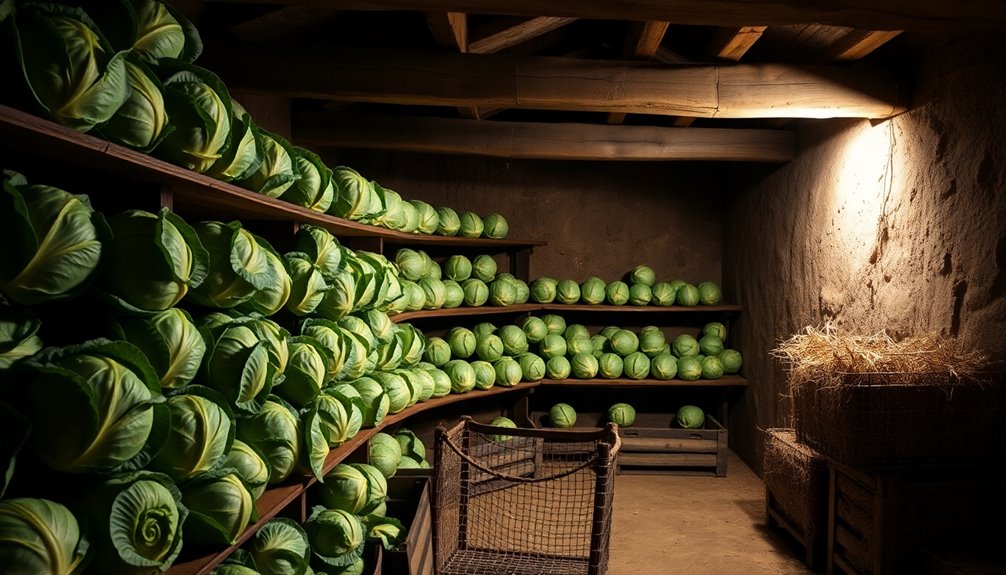
Storing cabbage in a root cellar can extend its freshness well into the winter months. To get started, choose robust cabbage varieties like Savoy or Napa, known for their long shelf life.
Make sure your root cellar maintains ideal conditions—cool temperatures between 32°F and 40°F, high humidity, and good ventilation.
Before storing, remove any damaged outer leaves and avoid washing the cabbage, as moisture can promote rot.
Place the heads in wooden crates or on shelves, ensuring they aren’t touching to allow air circulation.
Check regularly for any signs of spoilage and remove any affected heads immediately. Embracing mindful spending habits can help you appreciate the value of preserving fresh produce and minimize waste.
With proper care, you can enjoy fresh cabbage throughout the winter, perfect for soups, salads, and more!
Conclusion
Preserving cabbage for winter doesn’t have to be complicated. Whether you’re fermenting it into tangy sauerkraut, freezing it for future meals, or storing it in a root cellar, you can enjoy that fresh crunch all season long. So, which method will you choose to keep your cabbage crisp and flavorful? With these easy and frugal techniques, you’ll be set to savor the bounty of your garden throughout the cold months ahead!




Average Rating