 0
0
 0
0
If your dehumidifier’s not collecting water, making strange noises, or failing to lower humidity, it might not be working properly. Drying a room varies based on size and initial humidity but usually takes 1 to 12 hours. A typical unit can remove about 1 pint of moisture per hour per 1,000 square feet. Keeping humidity levels between 30% and 50% helps maintain comfort and health. There are more ways to guarantee your dehumidifier performs efficiently.
Understanding How Dehumidifiers Work
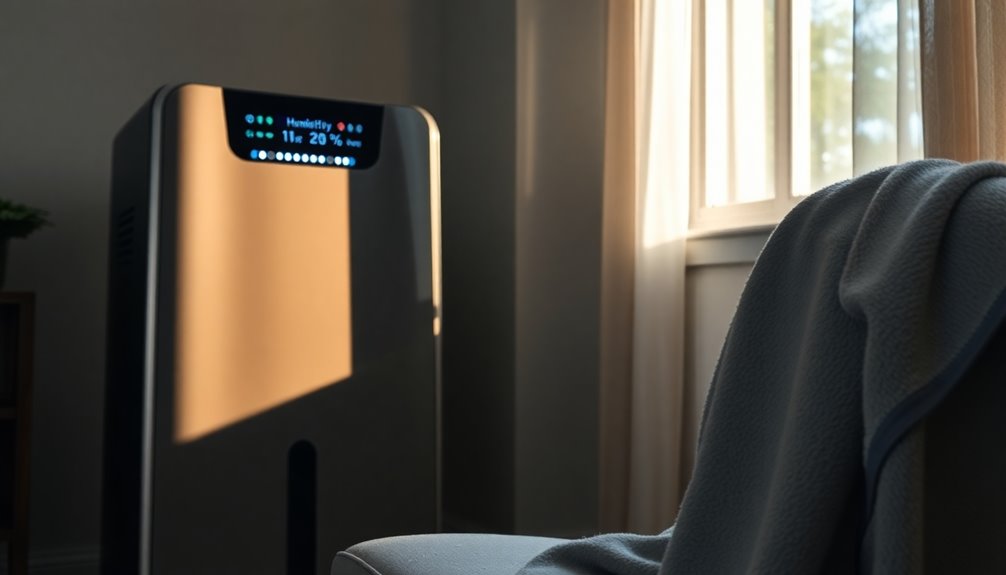
When you want to reduce humidity in your space, understanding how dehumidifiers work can help you use them effectively.
These devices pull humid air over cold evaporator coils, causing moisture to condense and collect as water. This process decreases the humidity in your room while a condenser releases heat back into the air, creating that warm output you notice.
To maximize efficiency, set your humidity settings between 30% and 50% for ideal comfort. With refrigerant dehumidifiers, you can expect a 20-30% decrease in humidity within about 10 minutes of operation. Additionally, using ENERGY STAR models can further enhance energy savings by consuming up to 13% less energy than standard units.
Common Indicators of Dehumidifier Inefficiency
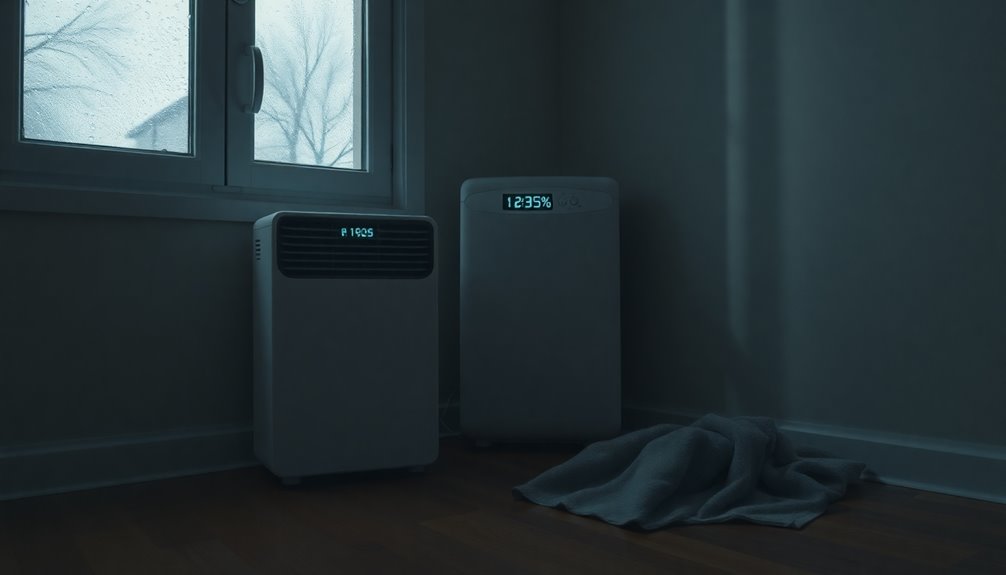
If your dehumidifier isn’t collecting water, it mightn’t be working properly. You should also pay attention to any strange noises or odors, as these can indicate internal problems. Finally, if you notice elevated humidity levels despite the unit running, it’s time to investigate further. Regular maintenance of air filters can help improve overall HVAC efficiency, which may affect the performance of your dehumidifier.
Insufficient Water Collection
Sometimes, you might notice that your dehumidifier isn’t collecting enough water, which can signal inefficiency.
This insufficient water collection often indicates issues like a malfunctioning compressor or low indoor humidity. To troubleshoot, consider these steps:
- Check the humidity settings; aim for 30% to 50%.
- Inspect the water collection tank; verify it isn’t full or clogged.
- Clean or replace the filter to promote airflow and efficiency.
- Monitor the ambient humidity; levels below 30% can hinder performance.
Unusual Noises or Odors
While you might expect your dehumidifier to run quietly and efficiently, unusual noises or odors can signal underlying problems that need addressing.
If you hear loud clanking or grinding, it might indicate a malfunctioning compressor or fan. Strange odors could suggest a clogged air filter or even mold, which can harm air quality and the unit’s efficiency.
Continuous buzzing without the compressor activating may point to a failed humidistat sensor, preventing proper moisture removal.
Additionally, while it’s normal for the unit to emit warm air, excessive noise during this process can indicate inefficiency.
Refer to your troubleshooting guide to address these issues promptly, helping maintain ideal humidity control and extend the life of your dehumidifier.
Elevated Humidity Levels
When indoor humidity levels rise above the comfortable range of 30% to 50%, it often means your dehumidifier isn’t performing as it should.
You might notice several signs of inefficiency:
- Condensation on windows – This indicates excess moisture in the air.
- Damp spots on walls – These can signal that humidity levels are too high.
- Empty reservoir – If your dehumidifier isn’t collecting water after extended use, it may be malfunctioning.
- Mold growth – Increased humidity can lead to mold, compromising air quality.
Monitoring humidity levels with a hygrometer can help you track when they rise, ensuring your dehumidifier operates effectively to combat excess moisture and prevent potential mold issues.
Factors Affecting Drying Time in Rooms

Several factors affect how quickly a dehumidifier can dry out a room.
The size of the space plays an essential role; larger rooms take longer for the dehumidifier to effectively reduce humidity levels.
Ambient humidity levels also impact drying efficiency—higher initial humidity means it’ll take more time to reach the desired moisture level.
Additionally, the dehumidifier’s capacity, measured in pints per day, influences drying speed; units with higher capacity can remove moisture faster.
Don’t forget about air circulation! Improved airflow enhances moisture removal, speeding up the process.
Finally, temperature matters; warmer air holds more moisture, so running the dehumidifier in a warmer environment can greatly accelerate drying time. Regular maintenance of washable electrostatic filters can also contribute to better airflow and efficiency in your HVAC system, enhancing overall moisture control.
Ideal Humidity Levels for Comfort and Health
Monitoring the drying process in your home isn’t just about how quickly your dehumidifier works; it’s also important to maintain the right humidity levels for your comfort and health.
The ideal humidity levels typically range between 30% and 50%. Here’s why it matters:
- Prevents mold growth and maintains air quality.
- Reduces risks of dust mites, mold, and mildew when humidity stays below 60%.
- Improves overall comfort, especially in damp environments, by keeping levels below 40%.
- A hygrometer can help you monitor and adjust humidity control effectively. Additionally, maintaining the right humidity levels can enhance the effectiveness of natural oils used for cleaning and maintenance in your home.
How Long Should It Take to Dry a Room?
When you’re using a dehumidifier, the time it takes to dry a room can vary based on several factors.
Room size, initial humidity levels, and airflow all play a role in how quickly moisture gets removed.
Typically, you can expect noticeable results within a few hours to 24 hours, depending on these conditions. Additionally, using a dehumidifier can enhance accuracy in reducing humidity levels effectively.
Factors Affecting Drying Time
Understanding how long it takes to dry a room depends on several key factors that can greatly influence the drying process.
Here are four main elements to evaluate:
- Initial Humidity Levels: Higher humidity means more moisture for your dehumidifier to extract.
- Dehumidifier Capacity: A high-capacity unit can remove more moisture, speeding up drying in large or humid spaces.
- Ambient Temperature: Warmer temperatures can enhance evaporation, aiding the drying process.
- Airflow: Good ventilation helps circulate air, allowing moisture to escape faster compared to rooms with obstructions.
Typical Drying Duration
While the drying duration of a room can vary greatly, you can generally expect it to take anywhere from 1 to 12 hours with a dehumidifier. This timeframe depends on factors like room size, initial humidity levels, and the unit’s capacity.
A typical dehumidifier removes about 1 pint of moisture per hour for every 1,000 square feet, influencing the drying process considerably. Additionally, warmer air promotes quicker evaporation, so if your space is cool, drying may take longer.
To track progress, keep an eye on the water collection tank to verify moisture is being effectively removed. Aim for indoor humidity levels between 30% and 50% for ideal drying efficiency and comfort.
Signs Your Dehumidifier Needs Maintenance
How can you tell if your dehumidifier needs maintenance? It’s crucial to stay alert for several signs that indicate a problem.
Here are four key indicators to know if your dehumidifier is struggling:
- Increased humidity levels indoors, like condensation on windows or a stickier feel, suggest it’s not working effectively.
- Unusual noises or odors coming from the unit may signal internal issues, such as a clogged filter or malfunctioning fan.
- If the reservoir isn’t collecting water after extended use, it could mean drainage issues or compressor failure.
- A dirty air filter can hinder performance, so regularly check and clean it to guarantee efficient moisture removal.
Additionally, keeping an eye on long-term care costs can help you budget for necessary home maintenance, including dehumidifier upkeep.
Pay attention to these signs to maintain a comfortable environment!
Ways to Improve Dehumidifier Performance
To get the most out of your dehumidifier, you should optimize the humidity settings between 30% and 50%.
Regular maintenance checks, like cleaning or replacing the air filter, can also greatly enhance its performance. Additionally, using a budget-friendly filter can help improve air quality and ensure the dehumidifier operates efficiently.
Optimize Humidity Settings
Are you getting the most out of your dehumidifier? Optimizing humidity settings can greatly enhance its performance. Here are some tips to help you improve efficiency:
- Set the humidity level between 30% and 50% for ideal moisture control; higher settings can reduce effectiveness.
- Regularly check ambient humidity with a hygrometer, as low external humidity can affect performance.
- Keep the air filter clean and unobstructed; a dirty filter hampers moisture collection.
- If water collection is low, listen for the compressor activation sounds—malfunctions can hinder moisture removal.
Regular Maintenance Checks
Regular maintenance checks not only extend the life of your dehumidifier but also guarantee it operates at peak efficiency.
Start by adhering to the filter replacement frequency outlined in the manufacturer’s instructions; a dirty filter can drastically reduce performance.
Next, follow coil cleaning tips to eliminate any buildup and verify efficient moisture removal.
Don’t forget to inspect the drainage system as well.
Keep an eye on your humidity levels using humidity monitoring techniques; aim for a comfortable range between 30% and 50%.
Finally, check the compressor and listen for activation sounds—any irregularities could signal issues that need immediate attention.
Regular upkeep will help you maintain a healthy indoor environment and optimize your dehumidifier’s effectiveness.
The Role of Room Size in Humidity Control
The size of your room plays a significant role in how effectively your dehumidifier can control humidity levels. Here’s what you need to know:
- Larger rooms require more time and capacity to reduce humidity levels.
- Dehumidifiers are often rated for specific room dimensions; using a unit designed for a smaller area in a bigger space can lead to inefficiency.
- The efficiency of your dehumidifier decreases as the room size increases due to the greater volume of air to process.
- Ambient humidity and air circulation are essential; in large rooms with high humidity, you may need multiple units or improved airflow to achieve desired humidity levels efficiently.
- Selecting the right ENERGY STAR-rated model can significantly enhance your dehumidifier’s effectiveness in larger spaces.
Understanding these factors will help you optimize your dehumidifier’s performance.
Troubleshooting Water Collection Issues
Even with the right room size and humidity levels, you might find your dehumidifier isn’t collecting water as expected.
First, make sure your humidity setting is between 30% and 50%. Clean or replace the air filter if it’s dirty, as this impacts moisture collection efficiency.
Ensure your humidity setting is set between 30% and 50%, and keep the air filter clean for optimal performance.
Next, listen for the compressor activation sounds; if you don’t hear it, perform compressor functionality checks.
Place a bucket under the drain and run the unit for at least an hour to see if it collects any condensate.
Finally, consider the ambient humidity; low external levels can limit your dehumidifier’s effectiveness. Additionally, ensure that any exposed pipes in the room are well-insulated to prevent frozen pipes from causing moisture issues.
When to Call a Professional for Repairs?
Wondering when it’s time to call a professional for your dehumidifier?
You should reach out if you notice any of the following issues:
- Your dehumidifier fails to collect water, indicating a potential malfunction.
- Strange noises or odors are coming from the unit, suggesting internal problems.
- Inconsistent humidity levels persist despite the unit running, pointing to performance issues.
- You’re seeing signs of mold growth or the unit isn’t effectively controlling humidity.
Regular maintenance by a pro can greatly extend your dehumidifier’s lifespan and enhance its humidity control. Additionally, understanding the financial impact of energy waste associated with a malfunctioning dehumidifier can help you make informed decisions about repairs or replacements.
Don’t ignore these signs—addressing them early can save you time and money in the long run!
Best Practices for Regular Dehumidifier Maintenance
To keep your dehumidifier running efficiently, regular maintenance is essential.
Start with filter replacement tips; clean or replace the air filter according to the manufacturer’s instructions to guarantee ideal airflow.
Next, use proper coil cleaning techniques by inspecting and cleaning the coils and drain pan regularly to prevent dust buildup and guarantee effective moisture removal.
Regularly inspect and clean the coils and drain pan to prevent dust buildup and ensure efficient moisture removal.
Don’t forget humidity monitoring strategies; maintain levels between 30% and 50% to avoid overworking your unit.
Additionally, conduct routine checks for any unusual noises or odors, which may signal internal issues.
Finally, schedule professional servicing at least once a year to confirm all components are functioning correctly and prolong your dehumidifier’s lifespan.
Regular attention keeps it efficient and effective.
Conclusion
In the dance of humidity and comfort, your dehumidifier should glide effortlessly, turning dampness into dry delight. If it’s struggling, take a moment to troubleshoot and tune up your trusty appliance. Remember, a well-maintained dehumidifier is your ally against musty air and moldy corners. Don’t hesitate to call in the pros if it stumbles in its mission. With patience and care, you’ll create a harmonious haven where freshness reigns and moisture takes a backseat.