
 0
0
 0
0
To stop getting mail for your previous tenant, start by marking misdelivered mail with “Not at this address” and returning it to the mailbox. Communicate with your mail carrier about the issue for better accuracy in future deliveries. Avoid opening mail not addressed to you, as it’s considered mail theft. Use automated notifications for service providers and connect with your neighbors for support. There’s more to mastering mail management and decluttering, so keep going!
Understanding the Importance of Mail Management
When you move into a new home, managing mail effectively is essential to avoid the headaches of misplaced documents or unwanted solicitations.
The U.S. Postal Service handles billions of pieces of mail each year, so notifying them of your change of address is vital. This helps prevent misdeliveries that could lead to legal or financial issues for you and the previous residents.
You should clearly label any mail addressed to former tenants with “Not at this address” or “Return to Sender,” which aids in stopping unwanted correspondence.
Communicating directly with your mail carrier or local postal office can also streamline the process, ensuring they update their records and address any specific mail issues that arise. Additionally, utilizing tools like expense management apps can help keep your financial documents organized, preventing clutter in your new home.
Steps to Stop Mail for Previous Residents
To effectively stop mail for previous residents, you’ll want to mark any misdelivered mail clearly and return it to the mailbox.
Communicating with your mail carrier can also make a big difference, as they can help guarantee future deliveries are directed to the right person. Additionally, consider utilizing automated notifications to streamline your address updates with service providers, ensuring no further mail arrives for the previous tenants.
These simple steps can save you from ongoing mail mix-ups.
Marking Mail Properly
Stopping mail for previous residents involves a few straightforward steps to guarantee the postal service gets the message.
First, when you receive first-class mail addressed to them, mark the outside with “Not at this address” or “Return to Sender.” Be sure to cross out the barcode on the envelope to prevent automated delivery and assure the mail is returned properly.
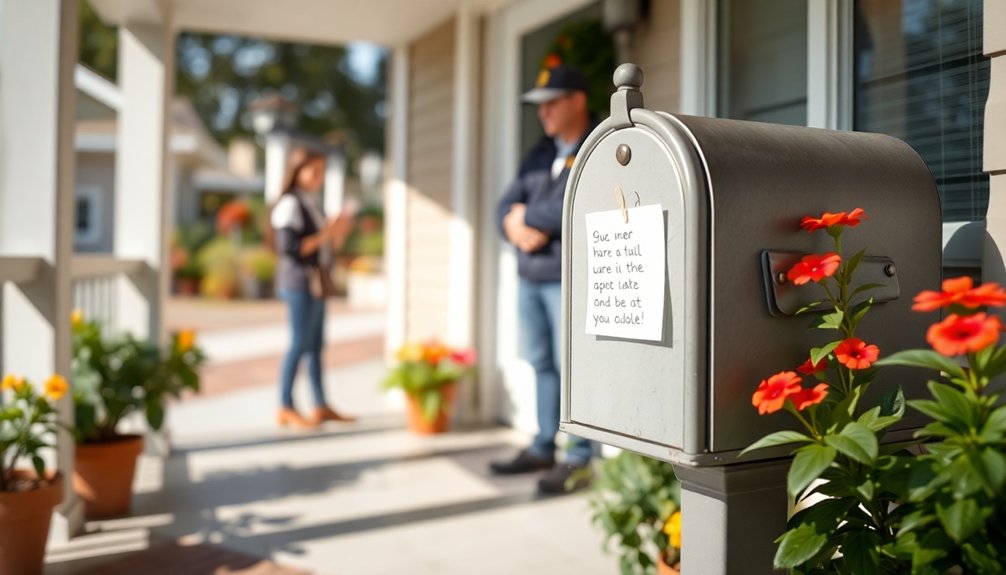
You can also use a sticky note in your mailbox to communicate to the mail carrier that the previous tenant no longer resides there.
Finally, place the marked mail back into any outgoing mailbox. This helps notify the original sender and reduces unwanted deliveries.
Taking these steps makes marking mail properly effective in stopping mail for former residents.
Communicating With Mail Carriers
Communicating effectively with your mail carrier is essential for stopping mail intended for previous residents. Here are steps you can take to guarantee they stop delivering that person’s mail:
- Speak directly to your mail carrier about the previous tenant’s name and address.
- Return any first-class mail you receive for the former resident, marked with “Return to Sender” or “Not at this address.”
- Use a sticky note in your mailbox to inform your mail carrier that the previous resident no longer lives at your address.
- Check in regularly with your mail carrier about ongoing mail issues to keep them updated on the situation.
Communicating With Your Mail Carrier
While it may seem intimidating, talking directly to your mail carrier can greatly streamline the process of stopping mail for previous tenants.
Start by clearly providing the name of the previous resident along with your specific unit number or address. This helps the carrier update their records accurately. Personal communication is effective; mail carriers often remember details and can take immediate action to prevent misdelivered mail.
If your mail carrier seems unresponsive, leave a sticky note in your mailbox with the previous tenant’s name and “Not at this address” for extra visibility.
Regularly check in with your mail carrier to maintain open communication and guarantee any changes in delivery are noted promptly. Additionally, consider scheduling reminders to follow up on any ongoing issues, ensuring that your request is consistently addressed.
Legal Considerations for Handling Mail
Handling mail for previous tenants involves a few important legal aspects you should be aware of.
Here’s what you need to know to stop getting their mail legally:
- Don’t open mail not addressed to you; that’s considered mail theft.
- If you accidentally open first-class mail, tape it closed and write “Not at this address” before you return it to the mailbox.
- Disposing of first-class mail can lead to lost important documents since the sender won’t be notified of the address change.
- Never fill out a change-of-address form for someone else without their consent; it’s illegal and could have legal consequences.
- Consider using a budgeting app to maintain financial control over your expenses while managing the inconvenience of unwanted mail.
Managing Mail for Deceased Individuals

When you receive junk mail for a deceased individual, it’s important to take action to stop it. Start by registering their information on the DMA website to limit bulk mail delivery, but don’t forget to mark first-class mail as “Deceased – Return to Sender” and send it back. This ongoing process guarantees that companies update their records and reduces unwanted mail over time. Additionally, conducting a regular billing process review can help identify other areas where mail can be minimized.
Reporting Junk Mail Effectively
Have you ever wondered how to effectively manage the influx of junk mail addressed to a deceased individual?
To tackle this issue, make sure to follow these steps:
- Register the deceased’s information on the DMA’s Deceased, Do Not Contact page to reduce bulk mail.
- If first-class mail continues to arrive, notify relevant parties to help redirect the mail.
- Write “Deceased – Return to Sender” on the envelope and return it to the mailbox to inform the postal service.
- Keep writing “Deceased – Return to Sender” on any unwanted mail until you notice a decrease in delivery.
Writing “Deceased – Return”
Receiving mail addressed to a deceased individual can be unsettling, but addressing it properly is important to manage the situation.
When you receive such mail, write “Deceased — Return to Sender” on the envelope and return it to the mailbox. This action notifies the postal service of the circumstances and helps stop further deliveries.
Keep marking and returning mail until all relevant senders are informed and the mail stops. If first-class mail continues to arrive, it could contain vital information or legal notices, so stay vigilant.
While registering with the DMA can help reduce marketing mail, you may still need to communicate with the postal service about unresolved deliveries.
Your proactive steps guarantee the situation is handled respectfully.
Stopping Bulk Mail Delivery
Dealing with bulk mail addressed to a deceased individual can feel overwhelming, but taking swift action can greatly reduce the volume.
Here’s how to effectively stop bulk mail delivery:
- Register the deceased’s information on the Deceased, Do Not Contact page of the DMA website to eliminate unwanted marketing mail.
- Write “Deceased — Return to Sender” on any received mail and return it to the mailbox.
- Report persistent bulk mail issues to the postal service; however, expect changes to take about three months.
- Remember that bulk-rate mail isn’t forwardable or returnable, so you can discard it without worry.
Reporting Issues to the Postal Service
If you’ve tried various methods to stop mail for a previous tenant without success, reaching out to the Postal Service is your next step. You can report issues by contacting USPS via phone, mail, or email.
When you do, share specific details about your efforts, like returning mail or using sticky notes, to help resolve the problem. Emphasizing the importance of correct mail delivery can also make your complaint stand out. For immediate assistance, visit your local post office and discuss the ongoing issue with postal clerks or the postmaster. Keeping a record of all mail received for the previous tenant can strengthen your case and enhance your communication with USPS. Additionally, utilizing automated features in expense tracking tools can help streamline your process for managing related expenses.
Dealing With Bulk-Rate Mail
While reporting issues to the Postal Service can help with misdelivered mail, bulk-rate mail presents its own challenges. Here’s how to handle it:
- Recognize that bulk-rate mail isn’t forwardable or returnable, meaning you can’t send it back or redirect it to a new address.
- Feel free to discard any bulk-rate mail addressed to you that doesn’t belong to your household—there are no legal repercussions.
- Be patient; changes to bulk mail delivery can take around three months to take effect as the volume decreases.
- If bulk-rate mail keeps coming, report it to the Postal Service for further investigation. Additionally, remember that budget apps can help you manage the clutter in your financial life by providing insights into your spending habits.
Community Support and Mail Management
As you navigate the challenges of mail management, building a community network can greatly enhance your efforts. By connecting with your neighbors, you can share insights and strategies for handling misdelivered mail.
Encourage your community to report persistent mail issues to the postal service; collective complaints often lead to quicker resolutions. Regularly check to see if nearby residents face similar delivery problems, fostering a sense of responsibility and support.
Utilize community bulletin boards or online forums to post tips about stopping mail for previous tenants, creating a shared resource. Organizing community meetings allows residents to collaborate on solutions, ultimately improving overall mail delivery accuracy in your neighborhood.
Working together, you can tackle these challenges more effectively. Additionally, consider sharing information about personalized tools that can help with managing bills and reminders, as they can enhance overall organizational strategies.
Tips for Effective Mail Handling
Effective mail handling is essential for ensuring that misdelivered mail doesn’t pile up in your mailbox.
Here are some tips to help you manage it effectively:
- Write “Not at this address” on first-class mail envelopes and return them to an outgoing mailbox to let them know about the address change.
- Communicate directly with your mail carrier, providing details about the previous tenant to stop further mail deliveries.
- Tape closed any opened first-class mail and mark it as “Not at this address” to prevent mail theft.
- Use sticky notes in your mailbox to inform postal workers and neighbors about the previous tenant’s mail.
Additionally, adopting conscious consumerism can help you be more aware of the impact of mail and packaging waste on the environment.
Conclusion
In the grand tapestry of your new home, managing mail is a thread that shouldn’t unravel. By following these steps, you’ll weave a seamless changeover, freeing yourself from the clutter of the past. Remember, your mailbox should reflect your life, not someone else’s history. So, take charge, communicate clearly, and watch as the unwanted letters fade away like autumn leaves, making room for fresh beginnings. With a little effort, you’ll master your mail and reclaim your space!