
 0
0
 0
0
Yes, you can run a crude stove without electricity! Crude stoves utilize natural fuels like wood, twigs, or charcoal for cooking. They’re designed to be efficient, allowing you to prepare meals anywhere, whether in emergencies or off-grid settings. These stoves can harness different methods, from rocket stoves to solar ovens. Understanding how to operate and maintain them safely is essential. Keep exploring to discover various techniques and tips for a successful off-grid cooking experience.
What Is Off-Grid Cooking?
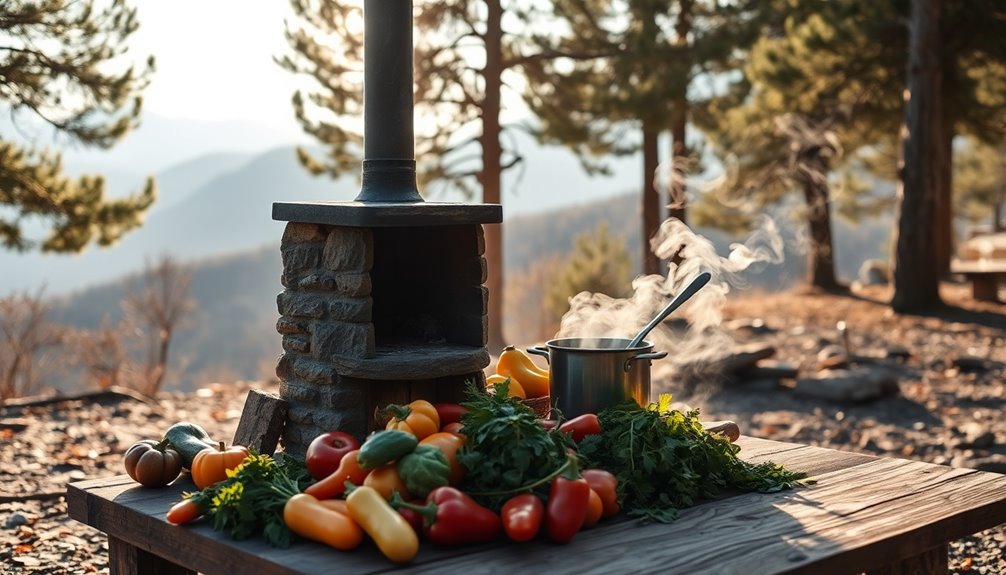
Off-grid cooking means preparing meals without relying on traditional electricity or gas sources. Instead, you can utilize alternatives like solar ovens, rocket stoves, or campfire cooking. Each method offers unique advantages and requires different fuel types.
For instance, solar ovens harness the sun’s energy, while rocket stoves use small amounts of wood efficiently. Safety is vital in off-grid cooking, so always guarantee proper ventilation, especially with flame-based methods, to avoid hazards like carbon monoxide poisoning. Additionally, incorporating methods like vacuum sealing can help preserve food for extended periods, making it easier to cook off-grid without frequent trips for fresh supplies.
It’s wise to familiarize yourself with these techniques before any power outages, guaranteeing you can cook efficiently and safely during emergencies. Engaging with your community and experimenting with these methods can build valuable skills for resilient off-grid living.
Why Use a Crude Stove for Cooking?
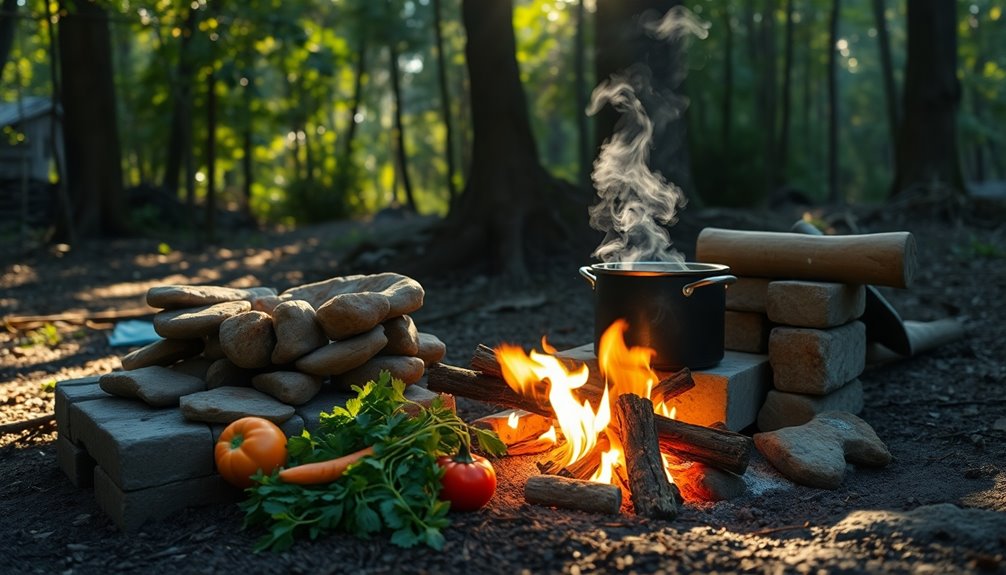
When electricity is unavailable, a crude stove becomes a practical solution for cooking. These stoves provide an efficient and reliable way to prepare meals without the need for power.
Using readily available natural fuels like wood, twigs, or charcoal, you can easily find resources even in off-grid or emergency situations. Crude stoves, like rocket stoves, are designed for high efficiency, consuming minimal fuel while generating intense heat for cooking.
Their portability and lightweight design make them ideal for outdoor cooking or adding to emergency preparedness kits. Plus, by utilizing a crude stove, you promote sustainability, encouraging the use of renewable resources and reducing dependence on fossil fuels. Additionally, incorporating low-cost activities into your off-grid lifestyle can foster gratitude and contentment while maximizing your resources.
Embrace this simple, effective cooking method in your off-grid lifestyle.
Types of Crude Stoves You Can Use
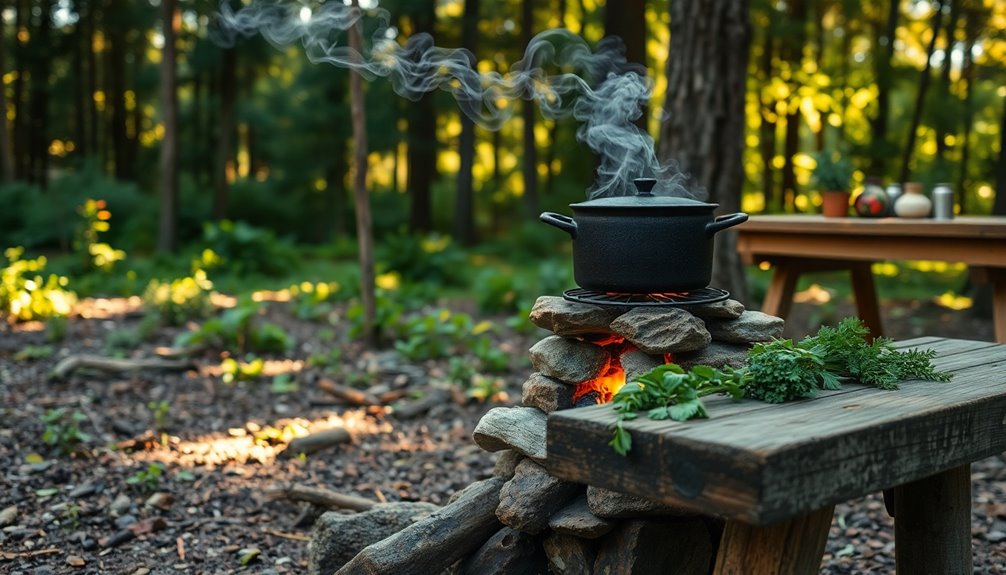
There are several types of crude stoves you can use for cooking, each offering unique benefits for those living without electricity.
Rocket stoves are efficient and eco-friendly, utilizing small twigs and natural materials for fuel.
If you’re looking for something portable, consider tin can or hobo stoves, which you can easily make from recycled materials and use with twigs or charcoal.
A Dutch oven is versatile, great for slow-cooked meals over an open flame or hot coals.
For grilling, campfire setups with a grate over an open flame work well for meats and vegetables.
Finally, solar ovens harness sunlight, perfect for cooking, baking, or dehydrating food, especially in sunny conditions year-round. Additionally, using geothermal systems can provide a sustainable energy solution for cooking and heating needs off-grid.
Benefits of Cooking Off-Grid
Cooking off-grid offers you the chance to boost your self-reliance skills while using eco-friendly methods.
You’ll find that preparing meals without traditional electricity not only reduces your carbon footprint but also equips you for emergencies. Embracing these techniques makes you more resourceful and ready for whatever situation comes your way. Additionally, adopting sustainable living practices in your cooking routine can enhance your overall financial health and reduce waste.
Enhanced Self-Reliance Skills
Off-grid cooking not only expands your culinary repertoire but also markedly enhances your self-reliance skills. By utilizing alternative cooking methods like solar ovens, rocket stoves, and wood stoves, you learn to depend less on electricity.
Mastering these techniques fosters independence, especially during power outages or emergencies. You’ll gain confidence in meal preparation under various conditions, whether using a Dutch oven or a portable propane stove.
Engaging in off-grid cooking encourages resourcefulness, as you optimize available fuels and adapt to your environment. This hands-on experience deepens your connection with nature and sustainability, as you often use natural resources and minimize waste.
Ultimately, these skills empower you to thrive in uncertain situations.
Eco-Friendly Cooking Options
Exploring eco-friendly cooking options not only complements your journey toward enhanced self-reliance but also considerably benefits the environment.
By choosing off-grid cooking methods, you reduce your carbon footprint and embrace sustainability. Here are some compelling advantages:
- Utilizes renewable energy sources like solar power or biomass.
- Rocket stoves save up to 50% more fuel compared to traditional stoves, maximizing efficiency.
- Solar ovens reach temperatures similar to conventional ovens, offering versatile meal prep.
- Supports local resources by using natural materials like twigs and pine needles.
- Fosters self-sufficiency, ensuring food preparation capabilities during outages.
Emergency Preparedness Advantage
When faced with a power outage, having reliable cooking methods at your disposal can make all the difference in maintaining a sense of normalcy and comfort. Off-grid cooking not only guarantees that you can prepare hot meals when conventional appliances fail, but it also grants you greater energy independence.
Techniques like solar ovens or low-fuel stoves help you reduce reliance on traditional energy sources. Practicing these methods before an emergency enhances your family’s preparedness, allowing everyone to manage food resources effectively.
With versatile options like rocket stoves or campfire cooking, you’re ready for various scenarios. Plus, off-grid cooking fosters community resilience, as sharing knowledge and resources strengthens collective emergency preparedness advantage during challenging times.
How to Safely Operate a Crude Stove
To guarantee safety while operating a crude stove, it’s essential to place it on a flat, stable surface.
For safe operation of a crude stove, always ensure it is situated on a flat, stable surface.
Follow these guidelines to guarantee a safe cooking experience:
- Always use the crude stove outdoors or in a well-ventilated area.
- Keep flammable materials, like paper or fabric, at least three feet away from the stove.
- Regularly check the stove for leaks or damage to maintain safety and efficiency.
- Equip your cooking area with essential safety items, including a fire extinguisher and a carbon monoxide detector.
- Never leave the crude stove unattended while in use.
- Consider using expense tracking tools to manage costs associated with off-grid cooking effectively.
Essential Materials for Building a Crude Stove
Operating a crude stove safely sets the stage for effective off-grid cooking, but constructing one requires thoughtful selection of materials.
Start with essential materials for building a crude stove, like cinder blocks, bricks, or stones, to create a sturdy structure that can handle high heat. Use metal containers, such as old pots or cans, as the combustion chamber to hold your fuel and cook food over the flame.
For fuel, gather natural wood, twigs, or charcoal from your surroundings. Don’t forget about ventilation; a chimney or flue made of metal will help direct smoke away, enhancing safety.
Finally, consider adding insulation materials like mud or clay to improve efficiency and retain heat for better cooking methods without electricity. Additionally, incorporating natural energy sources can enhance the stove’s performance and help you reduce reliance on traditional fuels.
Cooking Techniques for Off-Grid Cooking
While off-grid cooking presents unique challenges, it also opens up a world of creative techniques that can be both enjoyable and effective.
You can explore various cooking methods that allow you to warm food without electricity. Here are some popular cooking techniques for off-grid cooking:
- Solar ovens like the Sun Oven for baking and dehydrating food.
- Dutch ovens and cast iron skillets for versatile campfire cooking.
- Rocket stoves that efficiently burn twigs or pinecones.
- Portable propane stoves for precise temperature control.
- Fire pits or BBQ grills for an open flame experience.
Using techniques like these not only enhances your cooking experience but can also lead to reduced energy consumption, allowing you to enjoy outdoor living to the fullest!
How to Choose the Right Fuel Source?
When it comes to choosing the right fuel source for off-grid cooking, you’ll want to contemplate renewable energy options like wood or biofuels. Think about fuel efficiency and how accessible each option is in your area, as these factors can considerably impact your cooking experience. Additionally, engaging with the DIY community can provide you with valuable tips on optimizing your cooking setup for off-grid living.
Renewable Energy Options
Choosing the right renewable energy source for off-grid cooking can greatly enhance your culinary experience and minimize your environmental impact. Here are some options to evaluate for your stove:
- Solar Cooking: Harness sunlight year-round for efficient cooking.
- Rocket Stoves: Use small twigs and natural materials, offering eco-friendly efficiency.
- Portable Propane Stoves: Enjoy reliable heat and precise temperature control for varied cooking needs.
- Wood Stoves: Assess the availability of wood to guarantee a consistent fuel supply.
- Solar Ovens: Invest in a solar oven to reduce reliance on traditional fuels, although it’s weather-dependent.
Evaluate these options based on your cooking style, location, and sustainability goals to choose the best fuel source for your off-grid stove.
Fuel Efficiency Considerations
Selecting the right fuel source for your off-grid cooking setup is essential for maximizing efficiency and minimizing costs.
When considering fuel efficiency, focus on options like wood, propane, or kerosene, as their availability and cost can greatly influence your overall cooking expenses.
Eco-friendly choices, such as a rocket stove, use minimal fuel like twigs or pinecones while providing high heat, making them ideal for sustainable cooking.
Pay attention to the BTU rating of your fuel; higher ratings, like those of No. 2 fuel oil, offer more heat per gallon.
Regularly assess your fuel’s burn time and the amount of food cooked to refine your resource management.
Always prioritize safety by selecting fuels with low emissions, like propane, to guarantee indoor air quality.
Availability and Accessibility
To effectively fuel your off-grid cooking, understanding the availability and accessibility of different fuel sources is vital. Without considering these factors, you might find yourself stranded without the means to cook.
Here are key points to help you choose the right fuel source:
- Local materials: Use twigs or pine needles for rocket stoves.
- Efficiency: Heating oil offers more heat per gallon than natural gas or propane.
- Compatibility: Confirm your fuel matches your cooking method, like propane for portable stoves.
- Safety: Be aware of hazards like open flames and carbon monoxide; ensure proper ventilation.
- Storage: Regularly assess and update your fuel stock to prepare for emergencies.
Choosing wisely keeps your cooking efficient and safe!
Maximizing Efficiency With Minimal Fuel
When you’re off-grid, maximizing cooking efficiency with minimal fuel is essential for sustainable living.
Consider using a rocket stove that burns small twigs and pinecones, generating high heat quickly while consuming little fuel. A solar oven is another excellent option, allowing you to bake or dehydrate food without ongoing fuel costs.
For campfire cooking, a Dutch oven retains heat effectively, enabling you to create slow-cooked meals using fewer resources. You can also make a tin can or hobo stove from recycled materials, efficiently heating small pots with twigs or charcoal.
Regularly evaluating your cooking methods based on available natural materials will help you adapt and save fuel, enhancing your off-grid cooking experience. Additionally, utilizing tools for effective cash flow management can help you budget for off-grid supplies and fuel efficiently.
Common Mistakes to Avoid When Cooking Off-Grid
When cooking off-grid, it’s easy to overlook safety precautions, which can lead to dangerous situations. You also might underestimate the importance of fuel efficiency, risking running out of resources when you need them most. Avoiding these common mistakes can make your off-grid cooking experience much more successful and enjoyable. Additionally, monitoring humidity levels can help prevent moisture issues that may arise from improper cooking methods.
Ignoring Safety Precautions
Cooking off-grid can be an exciting adventure, but neglecting safety precautions can turn that experience into a dangerous situation.
To guarantee your safety while cooking with gas or open flames, keep these tips in mind:
- Always guarantee proper ventilation to avoid carbon monoxide buildup; use a detector.
- Place cooking devices on flat, stable surfaces away from flammable materials.
- Keep a close watch on children and pets to prevent accidents.
- Have essential safety items, like a fire extinguisher and fire blanket, readily available.
- Practice off-grid cooking methods regularly to stay familiar and prepared.
Overlooking Fuel Efficiency
Many off-grid cooks overlook fuel efficiency, which can lead to wasted resources and longer cooking times.
To maximize your cooking experience, consider using low-fuel stoves like rocket stoves that provide high heat output while consuming less fuel. Embrace cooking methods that retain heat, such as Dutch ovens or solar ovens, to reduce cooking duration and save fuel.
Pay attention to your fuel sources; using dry twigs instead of damp wood can boost combustion efficiency. Plan meals that utilize quick-cooking methods or pre-prepared ingredients to cut down on unnecessary fuel use.
Finally, guarantee proper ventilation when using flame-based cooking methods to promote efficient burning and reduce safety hazards like carbon monoxide buildup.
How to Prepare Your Kitchen for Off-Grid Cooking
Preparing your kitchen for off-grid cooking is essential for anyone looking to embrace a more sustainable lifestyle.
Start by prioritizing reliable cooking methods that don’t need electricity. Here’s how to get ready:
- Choose cooking methods: Consider solar ovens, rocket stoves, and butane burners.
- Stock up on supplies: Gather alternative fuels, essential cooking utensils, and easy-to-prepare food options like canned goods and just-add-water meals.
- Organize your space: Create a safe area for open flames and outdoor setups.
- Practice regularly: Familiarize yourself with your off-grid cooking methods to reduce the learning curve.
- Guarantee safety: Install a carbon monoxide detector, keep a fire extinguisher handy, and guarantee good ventilation for flame-based cooking indoors.
Get prepared and enjoy cooking off-grid!
Experimenting With Different Cooking Methods
Once your kitchen is set up for off-grid cooking, it’s time to explore various methods that can elevate your culinary experience.
Experimenting with cooking innovations like solar ovens and rocket stoves helps you find the most efficient techniques for your needs. You can create a crude stove using simple materials like tin cans or bricks, utilizing small twigs or charcoal for effective heating.
Explore innovative cooking methods like solar ovens and rocket stoves to enhance your off-grid culinary skills.
Testing different methods, such as campfire grilling and Dutch oven cooking, allows you to gauge cooking times and temperatures unique to each approach. Regular practice with these alternative methods boosts your adaptability and confidence, making you more prepared for power outages or off-grid living situations.
Embrace the journey and enjoy the delicious results!
Adapting Recipes for Off-Grid Cooking
When you’re adapting recipes for off-grid cooking, you’ll need to tweak cooking times and temperatures to match your methods.
Consider ingredient substitutions that allow for quicker preparation, like using canned foods or just-add-water meals.
These adjustments can make your off-grid cooking experience more efficient and enjoyable.
Recipe Modifications for Cooking
Adapting recipes for off-grid cooking requires creativity and a willingness to experiment, as traditional methods often rely on electricity that you may not have.
Embrace culinary creativity by modifying your cooking techniques and ingredients. Here are some tips to enhance your off-grid experience:
- Use Dutch ovens or solar ovens as electric appliance substitutes.
- Monitor cooking times closely, adjusting as needed for campfires or rocket stoves.
- Opt for easy-to-prepare ingredients like canned goods or just-add-water meals.
- Experiment with alternative methods like reflector ovens or portable propane stoves.
- Consider your available resources and fuel types, as they affect cooking times and techniques.
Ingredient Substitutions for Efficiency
Modifying your cooking techniques opens up new possibilities for ingredient substitutions that can enhance your off-grid culinary experience.
For ingredient efficiency, swap fresh produce for dehydrated or canned options, as they require less cooking time and resources. Utilize low-fuel methods like a rocket stove or solar oven, adjusting cooking times accordingly.
Instead of traditional oils, try using animal fats or homemade alternatives that withstand higher temperatures and boost flavor. Incorporate whole grains or legumes, pre-soaked and cooked in bulk, for nutrient-dense meals that consume minimal energy over longer cooking periods.
Finally, don’t hesitate to forage for wild edibles, which can improve both flavor and nutrition while reducing your reliance on store-bought ingredients.
Safety Precautions for Indoor Crude Stove Use
Using a crude stove indoors can be convenient, but it’s essential to take safety precautions to prevent accidents.
Prioritizing indoor safety will help you enjoy your cooking experience without worries. Here are some key precautions to follow:
- Place the stove on a flat, stable surface away from flammable materials.
- Use the stove in a well-ventilated area to minimize carbon monoxide risks.
- Keep a carbon monoxide detector, fire extinguisher, and fire blanket nearby.
- Avoid long cooking sessions; monitor the process closely.
- Always adhere to the manufacturer’s guidelines for safe operation.
How to Maintain Your Crude Stove for Longevity
After guaranteeing safety while using your crude stove indoors, it’s time to focus on how to keep it in top shape for the long run.
Effective crude stove maintenance starts with regular cleaning of the combustion chamber and chimney to prevent soot buildup and guarantee efficient airflow.
Inspect seals and joints for wear or leaks, as this helps avoid carbon monoxide leakage. Always use high-quality, seasoned wood to minimize creosote buildup, which can damage your stove.
Periodically check and replace worn-out gaskets and insulation to maintain heat efficiency.
Finally, store your stove in a dry, covered location when not in use to protect it from moisture and harsh weather that can lead to rust and deterioration.
Conclusion
In summary, off-grid cooking with a crude stove can be a rewarding experience that connects you with a more sustainable lifestyle. You’ll not only save energy but also explore creative ways to prepare meals. Isn’t it empowering to know you can cook without relying on electricity? By following safety precautions and maintaining your stove, you can enjoy delicious, home-cooked meals while embracing the simplicity of off-grid living. So, why not give it a try?



Average Rating