
 0
0
 0
0
Solar garden lights often die quickly due to poor battery quality, insufficient sunlight, and harsh weather conditions. Low-quality batteries can degrade fast, while inadequate sunlight means they don’t charge properly. Plus, exposure to elements can damage them. To make your lights last, guarantee ideal placement for maximum sun exposure and keep solar panels clean. Regular maintenance and upgrades to better quality models can further enhance their lifespan. There’s much more you can do to boost their durability!
Why Solar Garden Lights Fail: Understanding the Basics
When it comes to solar garden lights, understanding why they fail can save you time and money. One major issue is poor-quality batteries that can degrade after just 300-500 charge cycles, leading to diminished light output.
Understanding the failure of solar garden lights can save you both time and money, especially due to poor-quality batteries.
Inadequate sunlight is another culprit; your solar lights need 6-8 hours of direct sunlight for ideal performance. If they’re in shaded areas, you’re likely to see reduced longevity.
Weather conditions also play a role; lightweight materials can crack or warp under heavy rain or extreme temperatures.
Finally, regular maintenance is essential. Cleaning the solar panels and checking for moisture ingress can prevent common issues and help extend the performance and longevity of your solar garden lights. Additionally, proper storage of these lights during extreme weather can further enhance their durability and lifespan.
Common Reasons Solar Garden Lights Don’t Last Long
Despite their convenience and charm, solar garden lights often don’t last long due to several common issues. You mightn’t realize how these factors affect their performance:
- Insufficient sunlight exposure: Solar lights need 6-8 hours of direct sunlight to fully charge. Positioning them poorly can lead to inadequate illumination.
- Environmental factors: Extreme temperatures and moisture can corrode internal components, reducing functionality.
- Low-quality materials: Cheaper solar lights often degrade quickly due to inferior wiring and solar cells.
Regular maintenance is essential, too. Dust and dirt can accumulate on solar panels, cutting charging efficiency by up to 70%. Additionally, optimizing energy consumption by using energy-efficient models can help extend the lifespan of your solar lights.
The Impact of Battery Quality on Lifespan
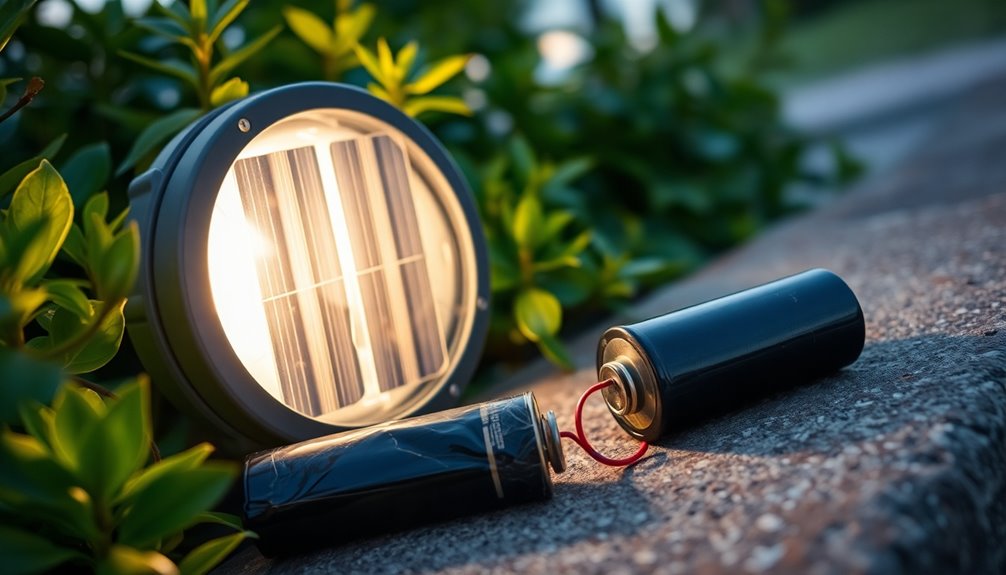
The quality of the batteries in your solar garden lights plays an essential role in determining their overall lifespan. Rechargeable batteries, especially higher-quality NiMH types, can provide a lifespan of 300 to 500 charge cycles.
In contrast, low-quality batteries like NiCd degrade quickly due to memory effects. This degradation affects the performance of your solar lights, as old batteries struggle to hold a charge, leading to dimmer and shorter lighting durations.
Additionally, using larger capacity batteries, such as 12,000mAh, can enhance performance by cycling less deeply and maintaining consistent output. Regularly replacing degraded batteries guarantees your lights operate at their best, maximizing both brightness and longevity. Prioritizing battery quality is key to extending the lifespan of your solar garden lights. Furthermore, using high-quality batteries can enhance accuracy in tracking performance over time.
How Does Sunlight Exposure Affect Performance?
How effectively your solar garden lights perform hinges considerably on their exposure to sunlight. To guarantee peak function, aim for direct sunlight for at least 6-8 hours daily.
Effective performance of solar garden lights relies heavily on sunlight exposure; aim for 6-8 hours of direct sunlight daily.
When lights receive insufficient sunlight, like in shaded areas or cloudy weather, you may only get a few hours of weak light at night.
- Regularly clean the panels to avoid dust and debris, which can reduce energy absorption by 50-70%.
- Adjust the placement of lights seasonally to maintain maximum sunlight exposure.
- Make sure your solar panels are installed at the right angle to enhance charging efficiency.
Additionally, consider that just like cut onions which require proper storage to maintain quality, solar lights also need the right conditions to function effectively.
The Role of Solar Panel Efficiency in Longevity
When you choose solar garden lights, the quality of the solar panels matters greatly for their longevity. High-efficiency panels not only capture more sunlight but also guarantee better performance over time, especially when installed at the ideal angle. Additionally, investing in high-efficiency panels can lead to significant long-term savings on energy costs, similar to the benefits seen with heat pumps compared to oil heating.
Solar Panel Quality Impact
While many factors influence the performance of solar garden lights, the quality of the solar panels stands out as a key determinant of their efficiency and longevity. Higher-quality panels greatly boost energy collection capabilities, allowing for better sunlight conversion. In contrast, poor-quality panels can decrease energy conversion efficiency by 30-50%, leading to shorter illumination times.
- Premium solar panels often come with longer warranties and superior materials.
- Regularly cleaning solar panels can double their runtime by improving energy absorption.
- Investing in higher-quality panels can extend the lifespan of solar garden lights beyond five years, while cheaper options might fail within a year.
Choosing the right solar panel quality is essential for maximizing your garden lights’ performance.
Optimal Installation Angle
The efficiency of solar panels not only hinges on their quality but also on their installation angle. To achieve the ideal installation angle, tilt your panels at about 30 degrees and face them south in the Northern Hemisphere. This positioning maximizes sunlight exposure, enhancing energy collection efficiency.
If your solar panels are in shaded locations, their efficiency can drop by up to 20%, greatly reducing energy stored for nighttime illumination. Remember, proper positioning is essential—avoid obstructions like trees or buildings that can block sunlight.
Additionally, consider making seasonal adjustments to the angle as the sun’s position changes throughout the year. By improving these factors, you can considerably prolong the lifespan of your solar garden lights.
Environmental Factors That Shorten Solar Light Life
Although solar garden lights offer an eco-friendly lighting solution, various environmental factors can considerably shorten their lifespan. Harsh weather conditions, like heavy rain and extreme temperatures, can cause cracks and malfunctions.
Inadequate sealing in low-quality models allows moisture in, leading to corrosion and internal damage. Additionally, if your lights are exposed to freezing temperatures without proper storage, you risk permanent battery damage that affects performance.
- Accumulation of dust, dirt, and pollen on solar panels can reduce energy absorption by 50-70%.
- Rapid temperature fluctuations can compromise material integrity.
- Consistent exposure to moisture may lead to short-circuiting and failure. Regular inspection can help identify and mitigate these risks before they cause significant damage.
Taking these factors into account can help you maximize the longevity of your solar garden lights.
Choosing High-Quality Components for Better Durability
When you’re picking solar garden lights, focusing on premium materials and efficient battery types is key. High-quality casings protect your lights from the elements, while reliable batteries guarantee they shine brightly for longer. Investing in these components means fewer replacements and more durable outdoor lighting. Additionally, choosing energy-efficient systems can lead to significant long-term savings on replacement costs.
Premium Material Selection
Choosing high-quality materials for solar garden lights is essential for guaranteeing durability and performance. By making a premium material selection, you can greatly enhance the longevity of your solar garden lights, protecting them from weather-related damage and corrosion.
- Invest in high-grade plastics or metals for better resistance.
- Choose high-quality solar panels, like monocrystalline or polycrystalline silicon, for improved energy efficiency.
- Look for lights with IP65 ratings or higher for superior protection against dust and water.
These factors contribute to a longer operational lifespan, often exceeding 50,000 hours, and guarantee your lights perform well in various outdoor conditions.
Prioritizing quality materials ultimately leads to a reliable, long-lasting lighting solution for your garden.
Efficient Battery Types
Selecting the right battery type for your solar garden lights is just as important as using high-quality materials. For peak performance and lifespan, consider efficient battery types like Lithium-ion and NiMH batteries.
While Lithium-ion batteries are pricier, they boast greater efficiency and can last 2-3 times longer than NiMH or NiCd options. NiMH batteries, on the other hand, are more eco-friendly and retain capacity better than their NiCd counterparts.
Typically, battery capacities in solar lights range from 600mAh to 12,000mAh; higher capacities provide longer runtimes and reduce cycling frequency, enhancing longevity.
Regularly checking and replacing batteries every 2-5 years guarantees your solar garden lights remain functional and efficient, especially when using compliant, high-quality components.
Maintenance Tips to Extend the Life of Your Solar Lights
To keep your solar garden lights shining brightly for years to come, regular maintenance is essential. Here are some key maintenance tips to extend the life of your solar lights:
- Clean the solar panels regularly with a damp microfiber cloth to remove dust and debris, maximizing sunlight absorption.
- Replace rechargeable batteries every 2-5 years to prevent degradation; opt for high-capacity types like NiMH or LiFePO4 for better performance.
- Inspect the housing of your lights for moisture ingress; seal any openings with dielectric grease to enhance durability against outdoor lighting conditions. Additionally, regular maintenance of solar lights can significantly maximize their efficiency and lifespan.
Optimal Placement for Maximum Sun Exposure
While maintaining your solar garden lights is important for longevity, their placement plays an essential role in guaranteeing they function at their best.
For maximum sun exposure, position your lights in areas that receive sufficient sunlight for at least 6-8 hours daily. Avoid shaded areas like under trees or near tall structures, as they greatly reduce your lights’ ability to absorb solar energy.
Make sure the solar panel faces south in the Northern Hemisphere to enhance charging efficiency. Regularly check for obstructions, such as overgrown plants or nearby lights, that may interfere with their sensors. Additionally, monitoring oil levels in your home can help prevent unexpected shutdowns and failures, just like ensuring your solar lights receive adequate sunlight.
Seasonal Adjustments for Improved Performance
To get the most out of your solar garden lights, you’ll need to make seasonal adjustments. Repositioning lights, cleaning panels, and checking battery health can greatly enhance performance as the seasons change. Additionally, understanding expense categorization can help allocate funds for purchasing high-quality solar lights that last longer.
Optimal Placement Adjustments
As seasons change, adjusting the placement of your solar garden lights can greatly enhance their performance.
To guarantee the best placement adjustments, consider the following key factors:
- Position lights in areas with direct sunlight exposure for at least 6-8 hours daily.
- Adjust the angle of solar panels seasonally to capture the sun’s changing path, especially in winter.
- Regularly check for shading issues from new foliage or structures that could hinder energy absorption.
Seasonal Cleaning Schedule
Establishing a seasonal cleaning schedule is crucial for maintaining the performance of your solar garden lights, especially since dust and debris can greatly reduce charging efficiency.
Aim to clean your solar panels at least once a month; this simple step can boost charging efficiency by 50-70%.
In spring, prioritize cleaning to remove pollen buildup that can hinder light performance.
Come fall, inspect for leaves and other organic matter that may block sunlight.
A deep clean at the start of winter can help prevent moisture buildup, which leads to corrosion.
Don’t forget to regularly check and clean the sensor lens to guarantee peak functionality, as dirt can obstruct its ability to detect darkness and activate the lights properly.
Battery Maintenance Considerations
While maintaining your solar garden lights, paying special attention to battery care can greatly enhance their performance throughout the seasons.
Solar lights rely on rechargeable batteries that store energy, so proper maintenance is vital. Here are some key battery maintenance considerations to keep in mind:
- Regularly check and replace batteries every 2-5 years to prevent capacity loss.
- Store batteries indoors during off-seasons, especially in cold weather, to avoid damage.
- Use high-quality products, like high-capacity 12,000mAh batteries, for longer-lasting power.
How to Troubleshoot Common Solar Light Issues?
Troubleshooting solar garden lights can feel intimidating, but it’s often a straightforward process.
Start by ensuring your solar lights are placed in areas that receive direct sunlight for at least 6-8 hours daily. This maximizes the amount of energy your batteries that store energy can gather.
Next, check the solar panels for dust or debris; a clean panel improves charging efficiency greatly.
Inspect the batteries for signs of corrosion and remember to replace them every 2-5 years.
Conduct a darkness test by covering the solar panel to verify that the light sensors are functioning correctly.
Finally, look for moisture inside the housing and apply dielectric grease on terminals to prevent corrosion, safeguarding your lights from failure.
Upgrading to Better Solar Lighting Solutions for Longevity
If you’re looking to enhance the longevity and performance of your garden lighting, upgrading to better solar lighting solutions is a smart move.
Investing in quality solar lights can dramatically extend their lifespan and effectiveness.
Consider these key features:
- Durable components that withstand the elements
- High-capacity batteries, like 12,000mAh lithium-ion types, for improved charge retention
- Robust IP ratings (such as IP65) for enhanced moisture protection
Conclusion
In the world of solar garden lights, think of your setup like a delicate plant—it needs the right care to thrive. Just as a plant wilts without sunlight and water, your lights suffer from poor placement and low-quality parts. By investing in better batteries, ensuring ideal sunlight exposure, and making seasonal adjustments, you can help your solar lights bloom instead of fading away. So, give them the attention they deserve, and watch your garden shine brightly for years to come.



Average Rating