
 0
0
 0
0
If your gas hot water heater’s struggling, you can easily turn things around without breaking the bank. Start by troubleshooting common issues like sediment buildup or faulty thermostats. Upgrading components like dip tubes and anodes can greatly improve performance. Consider whether a tank or tankless system fits your needs while keeping energy efficiency in mind. Local experts can provide cost-effective installation and repair. Keep going, and you’ll uncover more strategies for a brilliant overhaul.
Understanding Common Hot Water Heater Issues
When your gas hot water heater starts acting up, it can be frustrating and confusing. You might notice an inadequate hot water supply, which often stems from malfunctioning dip tubes or a unit that’s too small for your household needs.
Sediment buildup can create unusual noises while decreasing heating efficiency, signaling the need for maintenance. If you see rust-colored water, it usually points to internal corrosion, requiring you to replace the anode rod or, in severe cases, the entire unit.
Additionally, inconsistent water temperature may indicate faulty thermostats or anti-scald valves that need adjustment. Understanding these common issues can help you address problems quickly and maintain a reliable hot water supply in your home. Regular maintenance practices can enhance overall efficiency of your hot water system, ensuring it operates smoothly for years to come.
Troubleshooting Inefficiencies in Your Current Setup
How can you pinpoint inefficiencies in your gas hot water heater setup?
Start by examining your hot water supply during peak usage times. If you’re in a household with 6-8 occupants, inadequate hot water may indicate common issues like dip tube malfunctions or a faulty recirculation system.
Examine your hot water supply during peak usage; inadequate supply can signal dip tube issues or recirculation system faults.
These problems can disrupt hot water delivery and cause temperature fluctuations. Additionally, check your anti-scald valves, as they can contribute to inconsistencies.
Regular maintenance on sacrificial anodes and dip tubes is crucial to prevent future performance issues. By addressing these areas, you’ll not only enhance the efficiency of your gas water heaters but also guarantee a consistent and reliable hot water supply for your household. Furthermore, utilizing AI-driven tools can help optimize your shopping for replacement parts based on your specific needs.
Upgrading Aging Components for Better Performance
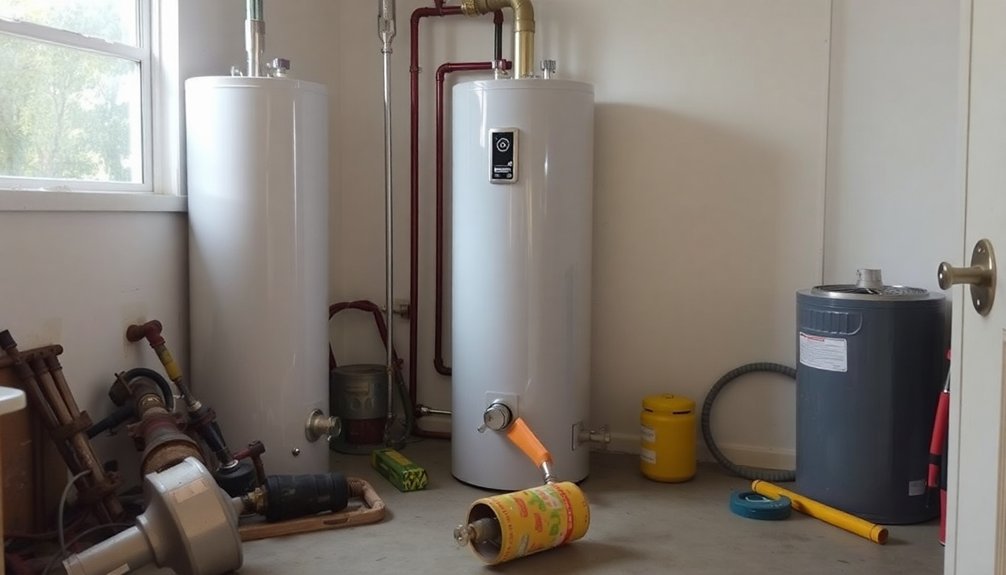
Pinpointing inefficiencies in your gas hot water heater often reveals aging components that need attention. Upgrading these parts can greatly enhance performance and meet your hot water needs.
Consider these essential upgrades:
- Dip Tubes and Thermocouples: Replace these to address temperature inconsistencies and improve hot water delivery.
- Sacrificial Anodes: Regularly replace them to prevent corrosion and extend your heater’s lifespan.
- High-Efficiency Gas Burner: Installing a new burner can speed up heating and reduce energy costs.
- Gas Control Valve: Upgrade to a modern valve for better temperature regulation and safety features.
Additionally, utilizing expense tracking tools can help manage the costs associated with these upgrades effectively.
Exploring Replacement Options: Tank vs. Tankless
Choosing between a tank and a tankless gas hot water heater can greatly impact your home’s comfort and energy efficiency.
Tank water heaters offer a steady supply of hot water, but they can run out during peak usage. In contrast, tankless water heaters provide endless hot water on demand, making them perfect for larger households with simultaneous usage.
While traditional tank systems are cheaper to install, tankless options can save you up to 30% on energy costs over time. Additionally, tankless water heaters last longer with proper maintenance, often exceeding 20 years. Investing in financial literacy resources can help you understand the long-term savings associated with different water heater types.
When considering your water heater needs, think about installation costs and whether your home can accommodate the potential upgrades required for tankless systems during your heater replacement.
The Benefits of Parallel Installation for Hot Water Supply
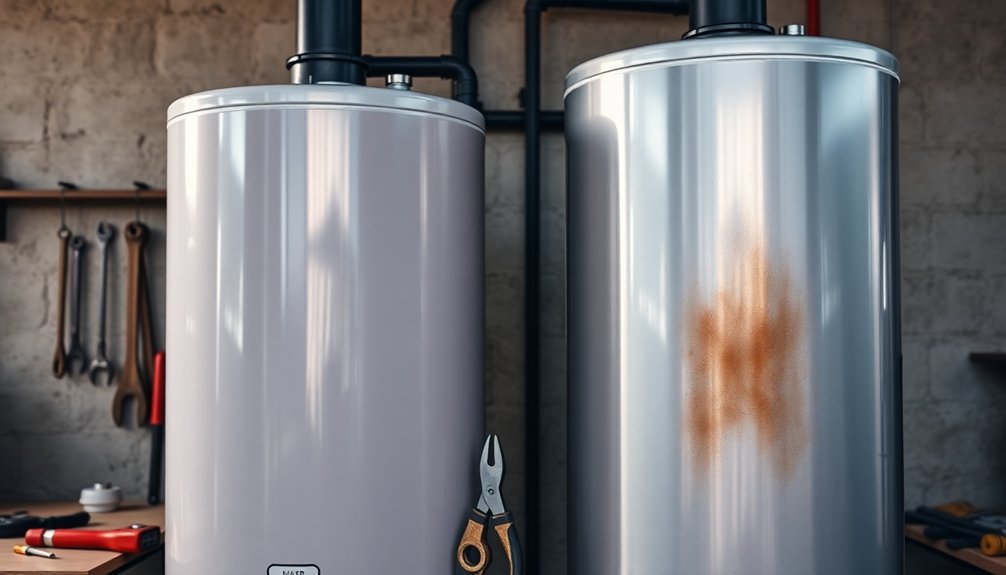
Here are some key benefits you can expect:
- Improved Hot Water Delivery: Enjoy simultaneous use of multiple fixtures without running out of hot water.
- Enhanced Efficiency: Each unit operates independently, reducing the chances of depletion during peak demand.
- Lower Energy Costs: Properly sizing your heaters prevents oversizing, leading to less wasted energy.
- Consistent Temperature: Eliminate fluctuations in water temperature, ensuring a steady supply when you need it.
- Effective Cash Flow Management: Consider utilizing tools like FreeAgent to help track and manage your expenses related to the installation and maintenance of your hot water system.
Importance of Regular Maintenance and Inspections
To keep your gas hot water heater running efficiently and extend its lifespan, regular maintenance and inspections are essential.
Annual check-ups can identify issues like sediment buildup, which can cut your heater’s efficiency and lifespan by up to 50%.
Don’t forget to inspect the anode rod every 3-5 years; replacing it can prevent corrosion and protect your tank from rust.
Flushing your tank yearly removes sediment, improving heating efficiency and potentially saving you 10-20% on energy costs.
Regular inspections of the thermocouple and burner assembly can prevent malfunctions that lead to inconsistent temperatures or system failures.
Scheduling a professional assessment can uncover hidden issues that, if ignored, might result in costly water heater repairs or replacements down the line. Additionally, conducting regular audits of your maintenance practices can help ensure optimal performance and prevent unexpected repairs.
Identifying Signs That Your Water Heater Needs Repair
You need to keep an eye out for common warning signs that your water heater needs repair.
Unusual noises, rust-colored water, or leaks can indicate serious issues that require immediate attention.
Addressing these problems early can save you from costly repairs down the line. Additionally, understanding the importance of expense categorization can help you allocate funds for necessary repairs effectively.
Common Warning Indicators
Recognizing the common warning indicators of a malfunctioning gas hot water heater can save you from costly repairs down the line.
Here are some signs to watch for:
- Rust-colored water – This indicates internal corrosion and may mean you need to replace your tank.
- Unusual sounds – Popping or banging noises often signal sediment buildup or component failure.
- Inadequate hot water supply – If you’re running out of hot water during peak times, it might be due to dip tube issues or poor water heater installation.
- Leaks – Any leaks around the tank or pipes should be addressed immediately to prevent significant water damage.
Stay vigilant for these indicators to keep your gas hot water heater running smoothly.
Proactive Maintenance Importance
While gas hot water heaters are designed to last, neglecting routine maintenance can quickly lead to costly repairs. Proactive maintenance is key to keeping your water heater running smoothly.
Regularly check for rust-colored water, which signals internal corrosion and may require immediate attention. Listen for unusual sounds like popping or rumbling, indicating sediment buildup that needs to be addressed.
You should also monitor the availability of hot water; inconsistent temperatures might mean there’s a malfunction. Inspect for leaks around the tank, as pooling water can lead to significant damage.
Finally, schedule annual maintenance checks to catch potential issues early, ensuring your water heater operates efficiently and prolonging its lifespan by addressing minor problems before they escalate.
Cost-Effective Strategies for Water Heater Overhaul
When evaluating your gas hot water heater’s performance, it’s essential to identify common issues like inconsistent hot water supply or unusual noises, as these can indicate a need for an overhaul or replacement.
Here are some cost-effective strategies to examine:
- Invest in a tankless water heater for continuous hot water and lower energy costs.
- Perform regular maintenance, like descaling and checking sacrificial anodes, to extend your heater’s lifespan and save money on replacements.
- Optimize your system by reconfiguring heaters from series to parallel installations for better performance during peak times.
- Explore local rebates and incentives for energy-efficient upgrades, which can ease the financial decisions related to your overhaul.
Additionally, regularly monitoring your savings and investments can provide funds for necessary upgrades and maintenance costs.
These steps can greatly enhance efficiency and reduce long-term costs.
Leveraging Local Expertise for Installation and Repair
Addressing issues with your gas hot water heater often leads homeowners to contemplate professional help. By leveraging local expertise, you can guarantee a smooth installation or repair process.
Local plumbers bring extensive knowledge about various gas water heater brands, which helps tailor solutions to your specific needs. Their understanding of regional plumbing codes and environmental factors minimizes unexpected issues during service.
Plus, community-focused services often provide quick response times and personalized support. Many local plumbing companies offer transparent pricing and upfront estimates, so you won’t encounter hidden fees.
Engaging with these experts also fosters a supportive network, allowing you to share experiences and gather valuable insights on effective gas water heater solutions. Additionally, timely payments for their services can help maintain financial organization and prevent late fees associated with unpaid bills.
Maximizing Energy Efficiency With Smart Water Heater Choices
Making smart choices about your gas water heater can greatly enhance energy efficiency and lower your utility bills. Here are some options to evaluate:
Making informed decisions about your gas water heater can significantly boost energy efficiency and reduce your monthly expenses.
- High-Efficiency Models: Opt for a high-efficiency gas water heater to cut energy consumption by up to 30%.
- Smart Thermostats: Install a smart thermostat for precise temperature control and better scheduling based on your needs.
- Tankless Water Heaters: Examine a tankless gas water heater for an endless supply of hot water without standby energy losses.
- Heat Pump Water Heaters: Explore heat pump options, which can be two to three times more efficient than traditional systems, saving you up to 60% on heating costs.
Additionally, consider using automated savings tools to help manage the costs associated with upgrading your water heater.
These choices will maximize your water heater’s performance while saving you money.
Conclusion
By taking the time to overhaul your gas hot water heater, you can greatly enhance its performance and efficiency. Did you know that upgrading to a tankless system can save you up to 30% on energy bills? With the right strategies and local expertise, you can transform your heating setup from broken to brilliant, ensuring a reliable hot water supply while saving money. Don’t wait—start your upgrade today and enjoy the benefits of a more efficient system!