
 0
0
 0
0
A ribbon driveway is a smart, eco-friendly choice for paving your driveway. It features two parallel tracks, enhancing drainage and reducing stormwater runoff. Plus, it’s budget-friendly, needing less material than traditional options. You can customize it with various materials like concrete or gravel, and the unpaved center strip can support grass or plants, boosting curb appeal. If you want to learn how to create one yourself, there’s more valuable information ahead.
What Is a Ribbon Driveway and How Does It Work?
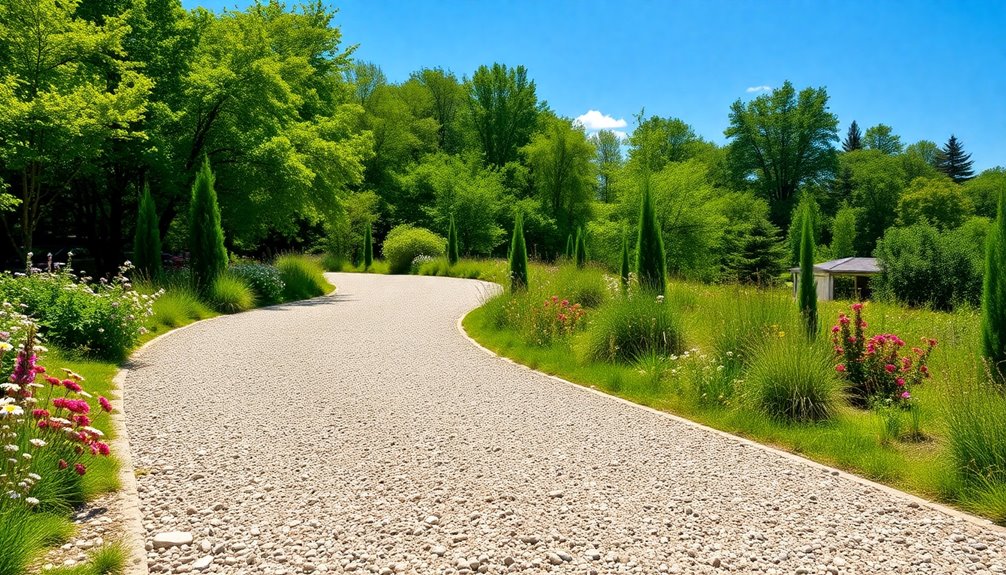
A ribbon driveway is a unique and stylish option that features two parallel tracks made of durable materials, with a central unpaved strip often filled with grass, gravel, or mulch.
This design typically consists of track widths ranging from 18 to 24 inches, and the central strip spacing of 24 to 36 inches allows for creative landscaping choices.
Ribbon driveways promote better drainage, as water flows into the unpaved section, minimizing pooling and flooding risks. They’re flexible, easily curving to match your property’s contours while using less paving material.
Historically popular since the 1920s, ribbon driveways offer a cost-effective and visually appealing alternative to solid driveways, enhancing your home’s exterior with a unique look. Additionally, incorporating drainage solutions can further improve the longevity and performance of your ribbon driveway.
Key Advantages of Choosing a Ribbon Driveway
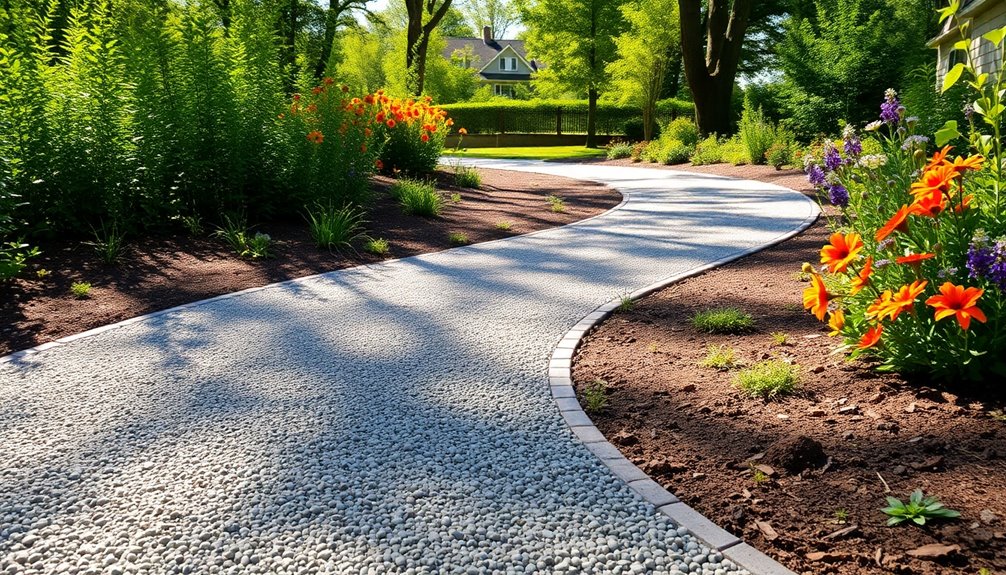
Choosing a ribbon driveway offers you enhanced drainage capabilities, helping to prevent water pooling and flooding around your property. You’ll also find that it’s a cost-effective option, requiring less paving material than traditional driveways. Additionally, opting for eco-friendly solutions like ribbon driveways can contribute to reducing environmental degradation, making them an appealing choice for both functionality and savings.
Enhanced Drainage Capabilities
While traditional driveways often struggle with water pooling and runoff, ribbon driveways excel in enhanced drainage capabilities.
The design features unpaved sections that allow rainwater to flow into the central strip, preventing surface pooling. This not only reduces wear and tear on your tires but also promotes better water absorption.
With their pervious design, ribbon driveways considerably lower the risk of flooding and damage to the driveway structure. The natural permeability of the unpaved areas supports groundwater recharge, making this option eco-friendly.
Plus, the enhanced drainage capabilities contribute to overall durability, making your driveway less prone to cracking and other damage compared to solid driveways.
Embrace a smarter solution for your home’s exterior!
Cost-Effective Material Usage
When you opt for a ribbon driveway, you’re not just enhancing your home’s curb appeal—you’re also making a savvy financial choice.
Ribbon driveways cost less to install compared to traditional solid driveways. By only paving two parallel tracks, you minimize the amount of material needed, allowing you to save considerably on concrete or asphalt expenses.
The central strip can be filled with gravel, grass, or mulch, further reducing costs while providing an attractive look. Additionally, this design is less prone to flooding since it enables better water drainage, eliminating the need for expensive drainage systems.
Best Materials for Your Ribbon Driveway Project
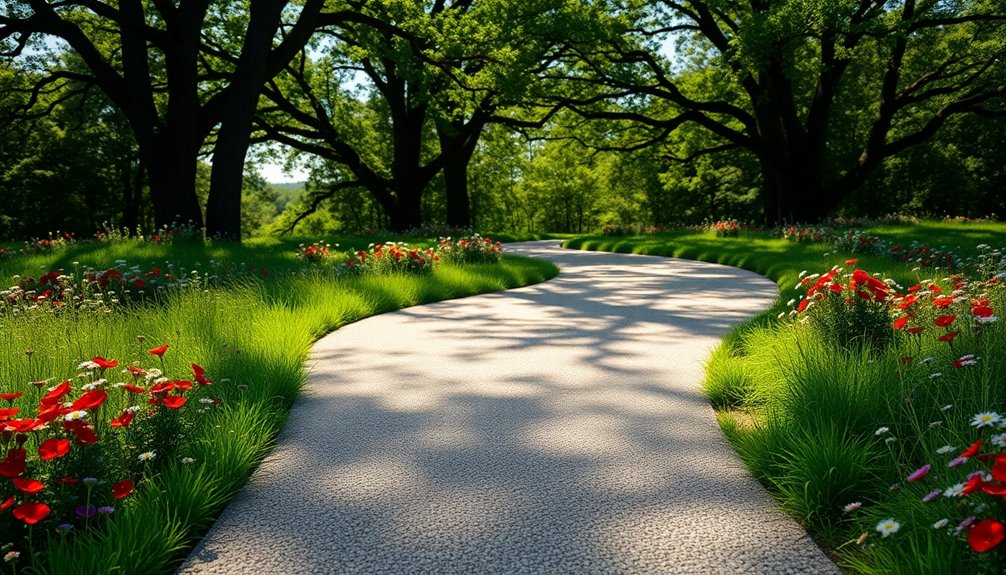
As you plan your ribbon driveway project, selecting the right materials is essential for both aesthetics and functionality. Popular paving materials include concrete, crushed gravel, brick, stone, and cobblestones, offering versatile options to match your style.
Concrete is a classic choice for its durability, while permeable pavers enhance drainage and groundwater recharge, making them eco-friendly. Crushed gravel is affordable and provides effective drainage, though it needs regular maintenance.
For the center strip, consider incorporating grass, low-growing ground covers, or herbs like creeping thyme for added greenery and ecological benefits. Additionally, materials like TRUEGRID pavers can greatly increase the lifespan of gravel tracks, extending durability to about 60 years with minimal upkeep, making your driveway a long-lasting investment. Pervious driveways contribute to reduced stormwater runoff, promoting sustainable practices that benefit local ecosystems and communities.
Essential Site Preparation Techniques for a Smooth Installation
To achieve a smooth installation of your ribbon driveway, proper site preparation is essential. Start by grading the area to guarantee effective drainage, preventing water accumulation in your driveway.
Next, excavate the designated space, ensuring it’s deep enough for your concrete pads and a gravel base to provide stability. Lay down a compacted gravel base to enhance strength and allow for proper drainage between the concrete strips.
Excavate the area deeply enough for concrete pads and a gravel base to ensure stability and effective drainage.
Establish clear, level forms for pouring the concrete pads, ensuring they’re securely positioned to maintain the desired shape and dimensions of your driveway.
If you’re on a budget, consider reusing forms for multiple pours, which can minimize costs and increase efficiency during your DIY installation process. Additionally, be mindful of seasonal temperature fluctuations, as they can impact the curing process of your concrete and overall driveway durability.
How to Design Your Ribbon Driveway for Maximum Curb Appeal?
How can you transform your ribbon driveway into a stunning focal point for your home? Start by mixing materials like concrete for the tire tracks and grass or gravel for the center strip. This adds visual interest and a unique aesthetic.
Keep track widths between 18-24 inches and space the central strip 24-36 inches apart to maintain balance. Incorporating low-growing ground covers, such as creeping thyme or succulents, adds greenery and enhances drainage while reducing maintenance. Additionally, consider installing a moisture barrier to protect the surrounding areas from water damage.
To improve durability, use stabilizing pavers in gravel sections. Finally, design gentle curves that follow your property’s natural contours—this will make your driveway ideas even more elegant and visually striking.
A well-designed ribbon driveway truly enhances your home’s curb appeal!
Maintenance Tips to Keep Your Ribbon Driveway Looking Great
To keep your ribbon driveway looking great, you’ll want to establish a regular cleaning routine and maintain the center strip. Don’t forget to control weeds, as they can quickly detract from your driveway’s appeal. Implementing sustainable gardening techniques can help enhance the overall appearance of your outdoor space. With a little attention, you can guarantee your driveway remains a stunning feature of your home.
Regular Cleaning Routine
Maintaining the appearance and longevity of your ribbon driveway is essential, so incorporating a regular cleaning routine is key.
Start by sweeping or using a leaf blower to remove dirt and debris. For deeper cleaning, a pressure washer works wonders without disturbing surrounding vegetation.
If your driveway has a gravel center strip, rake and replenish the gravel periodically to keep it even and neat.
You’ll also want to implement a weed control strategy—regularly pull or spray weeds in both the paved tracks and the center strip to prevent overgrowth, ensuring your driveway looks its best.
Finally, consider applying a sealant every few years to protect the paved tracks from wear and extend their lifespan.
Center Strip Maintenance
Center strip maintenance is essential for keeping your ribbon driveway looking its best. Regularly mow and water the vegetation in the center strip to promote healthy growth and prevent weeds.
Consider planting low-growing ground covers like creeping phlox, which require minimal upkeep while enhancing visual appeal. Periodically rake and replenish gravel or stones in the central area to maintain a neat appearance.
Additionally, check for any pooling water to guarantee proper drainage in the center strip; adjust landscaping as needed to facilitate water flow.
Finally, if you notice any weeds, manually pull them or use appropriate weed killers to keep the area looking pristine.
With these simple steps, your ribbon driveway will continue to impress.
Weed Control Strategies
Keeping your ribbon driveway pristine involves more than just center strip maintenance; effective weed control is essential too. Here are some weed control strategies to keep in mind:
- Regularly inspect the center strip for weeds and remove them by hand or with a targeted herbicide.
- Lay down landscape fabric beneath the gravel or mulch to inhibit weed growth while allowing water drainage.
- Use ground cover plants like creeping thyme or low-growing succulents, which suppress weeds and enhance your driveway’s aesthetics.
- Mulch the center strip to retain moisture and prevent weed seeds from germinating.
Addressing Common Concerns About Ribbon Driveways
While some homeowners may worry about the practicality of ribbon driveways, these eco-friendly options actually address many common concerns. The design features two parallel concrete strips with a central unpaved area, allowing for improved drainage and minimizing water pooling. This means you won’t have to deal with flooding issues.
Plus, the materials you choose for the tire tracks—like durable concrete or pavers—are easily available, making a DIY ribbon driveway a viable project for many. The overall cost is less than traditional driveways, and while regular maintenance like weeding is necessary, it’s generally less demanding. Additionally, ribbon driveways contribute to reducing stormwater runoff, promoting a more sustainable environment.
With proper grading and drainage, your ribbon driveway can last for years while enhancing your property’s aesthetic appeal.
Cost Considerations: Is a Ribbon Driveway Right for Your Budget?
Considering the practical benefits of ribbon driveways, it’s important to evaluate whether this option fits within your budget. Ribbon driveways typically cost less than traditional driveways, allowing you to use less material without sacrificing style.
Here are some cost considerations to keep in mind:
- Affordable DIY Project: Save on labor costs by installing it yourself.
- Durable Materials: Use concrete or natural stone only in tire tracks to minimize expenses.
- Better Drainage: The unpaved center strip promotes longevity and reduces repair costs.
- Lower Maintenance: Spend less over time with fewer repairs needed.
- Foundation stability is essential for ensuring that your driveway remains intact over time, similar to how pressed pilings provide robust support for homes.
How to Get Started on Your DIY Ribbon Driveway Project
To get started on your DIY ribbon driveway project, you’ll first want to carefully plan its layout. Determine the width of your concrete strips, aiming for 18-24 inches, and space the two parallel tracks 24-36 inches apart for effective drainage and aesthetics.
Next, prepare the site by excavating the area and ensuring proper grading, then lay a compacted gravel base for stability. Use forms to shape the concrete pads, pouring them at a thickness of at least 4 inches.
Fill the gaps between the strips with gravel, grass, or mulch to enhance permeability and visual appeal. Don’t forget to maintain the center strip vegetation and keep the gravel tidy for ideal drainage and a well-functioning parking area. Additionally, ensuring that the materials used are eco-friendly can help promote sustainable sourcing while maintaining your driveway.
Conclusion
In summary, opting for a ribbon driveway not only enhances your home’s curb appeal but also promotes eco-friendliness. Did you know that permeable surfaces like ribbon driveways can reduce stormwater runoff by up to 50%? By choosing this affordable paving option, you’re not just saving money but also contributing to a sustainable environment. So, why wait? Immerse yourself in your DIY project and enjoy the benefits of a beautiful and eco-conscious driveway!