 0
0
 0
0
If you notice water leaking from your hot water heater’s T&P valve, don’t ignore it! This could indicate high pressure or temperature issues. First, test the valve by lifting the lever; it should release water quickly. If it doesn’t, or if leaks persist, you may need to flush the tank, check pressure, or replace the valve. Regular maintenance is essential to prevent future leaks. There are more tips and tricks to tackle this problem effectively.
Understanding the T&P Relief Valve
The Temperature and Pressure Relief (T&P) valve is an essential component of your hot water heater, designed to keep it safe and functional. This pivotal safety device releases water when the internal temperature exceeds 210°F or the pressure surpasses 150 psi, preventing dangerous boiler explosions.
Typically, you’ll find the T&P valve on the top or side of the tank, connected to a discharge pipe that directs released water safely away from the heater. It operates using a spring-loaded mechanism, opening automatically when preset limits are reached.
Regularly testing your T&P valve every 3-6 months is vital to guarantee it’s working properly. Be alert for signs of a leaking valve, such as water pooling under the discharge pipe or moisture around the valve connection. Additionally, maintaining proper expense tracking tools can help you budget for any repairs or replacements needed for your hot water heater.
How Does a TPR Valve Work?
When temperatures inside your hot water heater climb above 210°F or the pressure exceeds 150 psi, the TPR valve springs into action to protect your system.
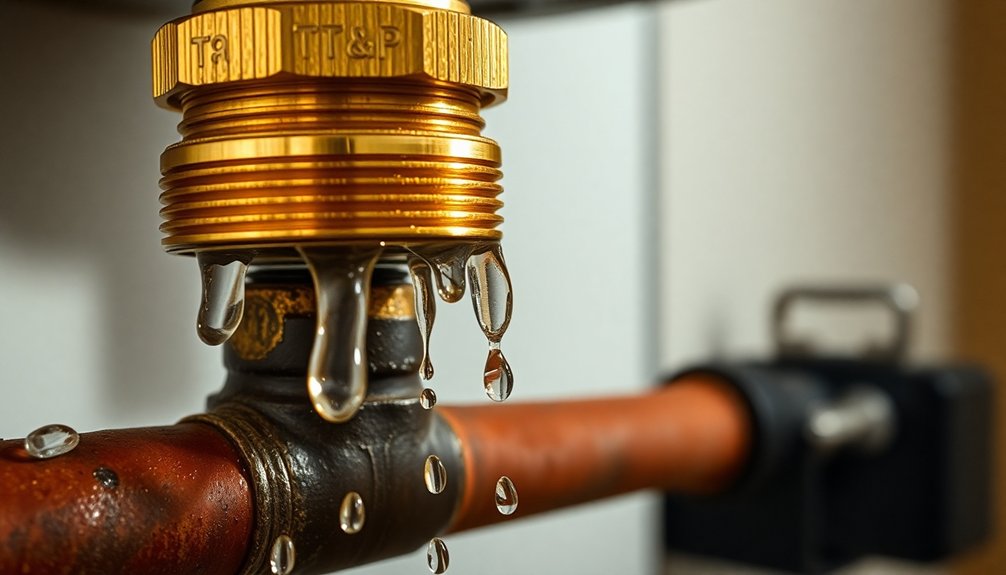
This vital Temperature and Pressure Relief valve features a spring-loaded flapper within a brass casing that opens automatically to release steam and hot water, preventing tank failure or explosion.
If the internal conditions are unsafe, the TPR valve guarantees the excess pressure is relieved. You can manually test the valve by lifting its lever; if it’s functioning correctly, you’ll see a quick release of water.
Regular maintenance every 3-6 months is essential to guarantee the TPR valve operates effectively, minimizing the risk of leaks and maintaining safety in your water heating system. Additionally, understanding the importance of monitoring savings and investments can contribute to your overall financial security while managing home maintenance costs.
Signs of a Leaking TPR Valve
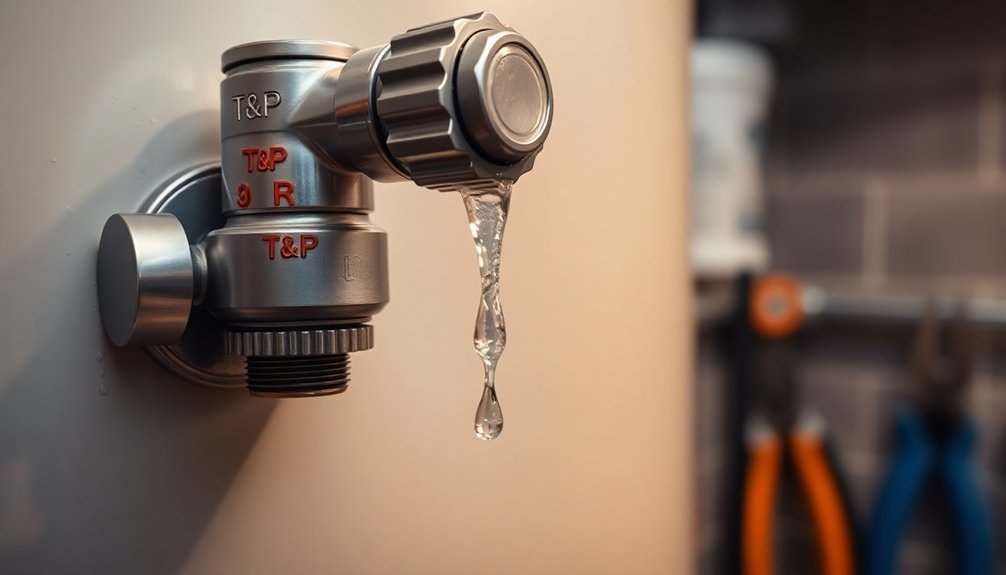
How can you tell if your TPR valve is leaking? Look for water pooling on the floor beneath the discharge tube or drips from the valve outlet itself.
If you notice water seeping around the connection between the valve and the tank, it could indicate corrosion or a faulty seal.
Regularly check for water accumulation, as a leaking TPR valve often signals excessive temperature or pressure inside the tank.
It’s vital to monitor your water pressure with a gauge, especially if it exceeds 80 psi, which can contribute to TPR valve leaking.
If you identify any signs of leakage, addressing the issue promptly is important to prevent potential water damage or safety hazards related to pressure buildup. Additionally, consider implementing sustainable shopping practices to ensure you are using high-quality materials that may prevent future plumbing issues.
Common Causes of TPR Valve Leaks
Several factors can cause your TPR valve to leak, leading to potential issues with your hot water heater.
One common issue is high pressure, which can exceed the normal range of 40-60 psi. When this happens, the TPR valve may open unexpectedly, resulting in leaks.
Additionally, if the temperature is too high—often due to a malfunctioning thermostat—the increased tank pressure can also cause the valve to leak.
Sediment buildup from hard water can clog or corrode the valve, leading to leaks around the valve seat or discharge outlet.
Finally, a defective or worn-out TPR valve might leak even under normal conditions, emphasizing the importance of regular maintenance to prevent these issues. Regular inspections can help enhance financial organization and ensure that your plumbing systems remain in optimal condition.
Solutions for Addressing a Leaky TPR Valve
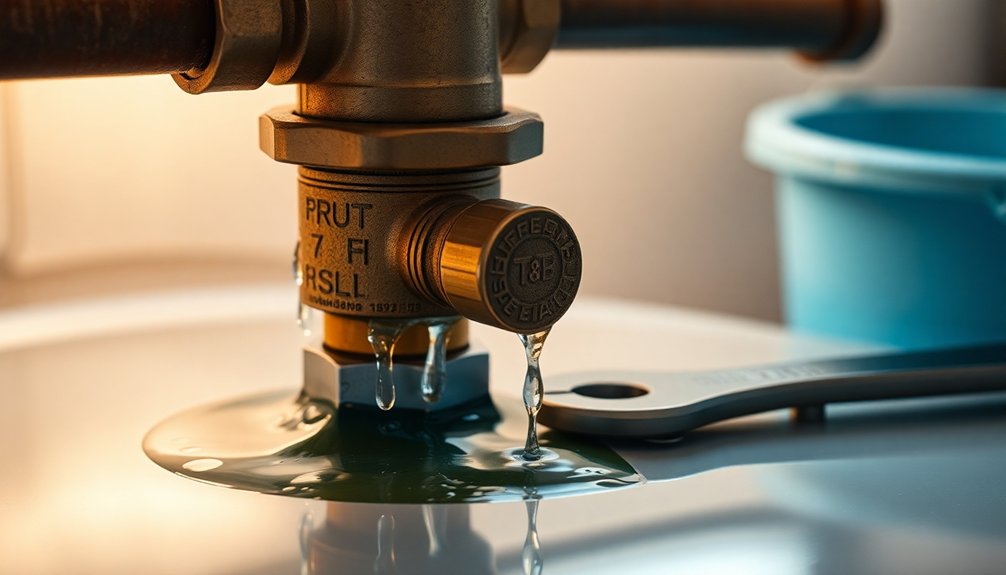
To effectively address a leaky TPR valve, start by regularly testing it every 3-6 months. Open and close the relief valve fully to confirm it reseals properly and doesn’t leak.
Next, flush the tank by pouring out a pailful from the bottom valve at full force to eliminate sediment buildup that can impact valve function.
If the valve still leaks after these steps, you might need to replace it, as a defective valve poses serious safety hazards.
Additionally, check your water pressure; anything above the recommended 40-60 psi can strain the TPR valve. Installing a water pressure regulator can help maintain safe levels.
Keeping a spare TPR valve on hand confirms you can quickly replace a failing valve and minimize water damage. Furthermore, understanding historical data analysis can help you identify patterns in your water usage, which may assist in preventing future leaks.
How to Replace a TPR Valve
Before you start replacing the TPR valve, make sure to prioritize safety by turning off the power supply and letting the tank cool.
You’ll then need to drain some water to create space for a smooth removal process.
Let’s walk through the steps to get your new valve installed correctly and safely. Additionally, streamline your expense tracking process to ensure that any associated costs are accurately recorded and reported.
Safety Precautions First
While replacing a TPR valve can be straightforward, safety precautions must come first to prevent accidents.
Start by turning off the power source to your water heater, allowing it to cool down. This step is vital to avoid burns or injuries during the process.
Next, drain a few gallons of water using the drain valve to lower the water level and relieve pressure.
Once you’ve done that, you can safely unscrew the old valve with a wrench.
After removing it, apply plumbing tape to the threads of the new valve for a secure, leak-free installation.
Finally, once everything’s in place, turn the water supply back on and check for leaks around the new TPR valve to guarantee everything’s functioning properly.
Step-by-Step Replacement Process
Replacing a TPR valve is a straightforward process that can be completed in just a few steps.
First, turn off the gas or electricity to your water heater and let the water cool to avoid burns.
Next, drain a few gallons from the tank using the drain valve to relieve pressure.
With a wrench, carefully unscrew the old valve, watching for any corrosion.
Once removed, apply plumbing tape to the threads of the new valve before installing it to guarantee a proper seal and prevent leaks.
After securing the new valve, turn the water supply back on and check for any leaks by monitoring the valve for dripping or seepage.
You’re now good to go!
Importance of Regular Maintenance
Regular maintenance of your T&P valve is essential for safety and longevity. By testing it every few months and flushing your water heater, you can prevent leaks and extend the valve’s lifespan. Ignoring these tasks can lead to serious issues, so staying proactive is key. Additionally, incorporating timely reminders for maintenance tasks can help ensure that these important checks are not overlooked.
Preventive Safety Measures
To keep your hot water heater running safely and efficiently, it’s vital to prioritize regular maintenance.
Start by testing your TPR valve every 3-6 months to catch leaks early and guarantee it operates correctly. Regularly flushing the tank helps prevent sediment buildup, which can impair valve performance and lead to leaks.
Keep an eye on your pressure gauge, ensuring water pressure stays between 40-60 psi to reduce wear on the TPR valve. Consider installing an expansion tank to manage pressure fluctuations, further minimizing the risk of leaks.
Address any leaks or malfunctions promptly; neglecting them can result in dangerous pressure build-up and costly water damage.
Embracing these preventive safety measures will keep your system safe and reliable.
Prolong Equipment Lifespan
Maintaining your hot water heater isn’t just about safety; it also plays a significant role in extending the lifespan of your equipment.
Regular maintenance of the T&P valve, including testing it every 3-6 months, helps guarantee it functions properly, preventing unexpected leaks.
Flushing the tank periodically removes sediment buildup that can impair the valve’s performance and shorten your water heater’s life.
Keeping the pressure inside the tank between 40-60 psi is essential, as excessive pressure can lead to premature wear on the T&P valve and other components.
Having a spare T&P valve on hand allows for quick replacements, minimizing downtime and potential water damage.
Professional inspections can also save you money by extending your water heating system’s overall life.
Professional Inspection and Safety Measures
While you might feel tempted to overlook minor leaks, having a licensed plumber evaluate your hot water heater is essential for ensuring safety and peak performance.
Professional inspections help identify issues like excessive water pressure, which should stay between 40-60 psi to avoid strain on plumbing systems. Regular checks of T&P valves are vital; neglecting them can lead to dangerous pressure overloads and potential explosions.
Early detection of leaks during these evaluations not only saves you time and money but also prevents extensive water damage. Additionally, consider installing thermal expansion tanks and pressure regulators to manage pressure spikes effectively. Taking these proactive measures enhances your system’s safety and longevity, giving you peace of mind.
Moreover, setting up payment alerts and reminders can help you stay on top of maintenance costs associated with plumbing services.
Community Awareness and Plumbing Safety
Although many homeowners may not realize it, community awareness about plumbing safety plays an important role in preventing leaks and potential water damage.
By regularly testing T&P valves every 3-6 months, you can greatly reduce the risk of issues that lead to costly repairs. It’s vital to educate yourself and your neighbors about the dangers of ignoring leaking T&P valves, which can lead to dangerous pressure buildup and catastrophic failures.
Additionally, discussing the importance of thermal expansion tanks can help alleviate pressure spikes, especially in high-water-pressure areas. Furthermore, understanding financial discipline can motivate homeowners to invest in regular maintenance and repairs, ultimately saving money in the long run.
Conclusion
To sum up, addressing a leaky T&P valve isn’t just about saving water; it’s about ensuring your home’s safety. Did you know that faulty water heaters cause over 300,000 fires annually? By taking action now, you can prevent potential disasters and save money on your bills. Regular maintenance and prompt repairs can keep your home safe and efficient. Don’t wait for a small leak to turn into a big problem—take control today!