 0
0
 0
0
Dealing with an old water heater can feel overwhelming, but it’s a chance to save money and energy. Remember, most heaters last 10-15 years, so if yours is getting old, consider upgrading to an energy-efficient model. You can enhance efficiency by insulating your heater and pipes or adjusting the thermostat to 120°F. Regular maintenance like flushing can extend its lifespan. Plus, there are local incentives in California to help offset upgrade costs. Stick around to discover more tips and tricks!
Understanding the Lifespan of Your Water Heater
When you consider your water heater’s lifespan, it’s essential to know that most conventional models last between 10 to 15 years.
Cheaper models might only survive 5 to 8 years due to inferior materials. If your unit is nearing the 10-year mark, it’s time to think about a replacement to prevent unexpected failures.
Regular maintenance can greatly extend your water heater’s life; draining and flushing the tank annually helps prevent sediment buildup that hinders efficiency.
Watch for signs of aging, like inconsistent temperatures, unusual noises, or visible leaks—these indicate your unit may be nearing its end.
Investing in a high-quality model enhances durability, ultimately saving you money on replacements and improving energy efficiency in the long run. Additionally, conducting regular billing process reviews can help you manage the costs associated with maintenance and replacements effectively.
The Importance of Energy Efficiency
When you choose an energy-efficient water heater, you’re not just saving money on your utility bills, but also helping the environment. These models cut down on energy waste, which means lower costs and a smaller carbon footprint for your home. Investing in efficiency today leads to significant long-term savings and a positive impact on our planet. Additionally, monitoring savings and investments effectively can help you allocate resources towards sustainable upgrades like energy-efficient appliances.
Long-Term Cost Savings
Investing in an energy-efficient water heater not only benefits your wallet but also contributes to a more sustainable environment. By choosing a model with higher combustion efficiency, you can save over $100 annually on utility bills, quickly offsetting the initial investment.
Since water heaters account for 20% to 25% of your yearly utility bills, their efficiency is vital for long-term cost savings. Super-high-efficiency models achieve combustion efficiencies in the high 85% range, greatly reducing energy consumption.
Additionally, proper tank insulation can lower standby heat loss by 25-45%, leading to further savings. Regular maintenance, like draining and flushing the tank, enhances energy efficiency and extends the unit’s lifespan, ensuring you save even more in the long run.
Environmental Impact Reduction
While upgrading to an energy-efficient water heater may seem like an intimidating task, the environmental benefits make it worthwhile.
By investing in a high-efficiency model, you can greatly reduce energy consumption and lower your utility bills. Cheaper water heaters often come with lower Uniform Energy Factor ratings, leading to increased energy usage and higher greenhouse gas emissions. You could save over $100 annually on gas bills by opting for a high-efficiency gas water heater.
Proper insulation of your water heater and hot water pipes can cut standby heat loss by 25-45%, promoting sustainability.
Plus, regular maintenance enhances efficiency and extends the unit’s lifespan, further minimizing its environmental impact through reduced waste and resource use.
Simple Insulation Techniques
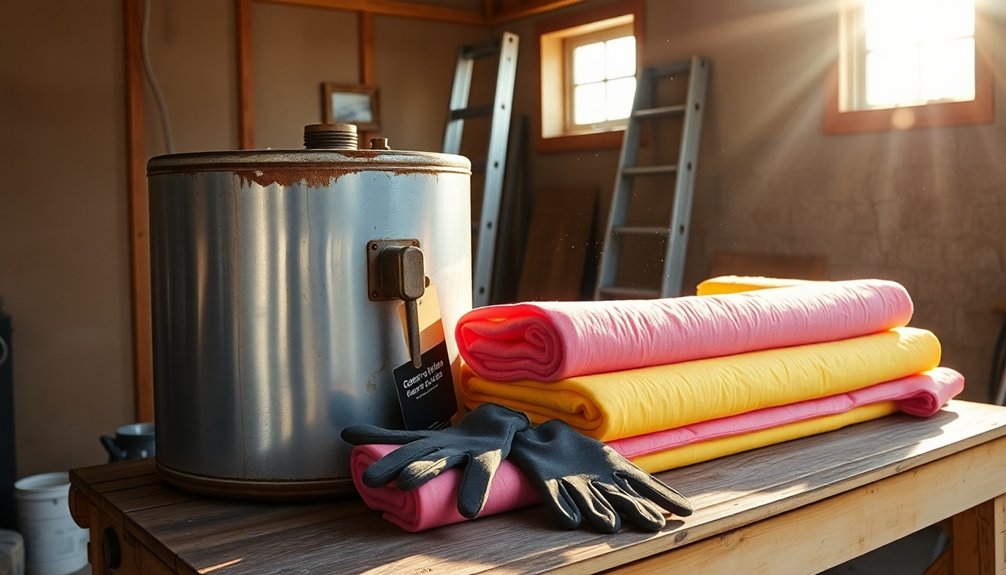
Many homeowners overlook the importance of insulating their water heaters, but doing so can lead to significant energy savings.
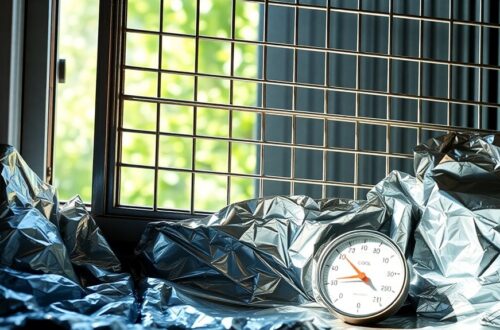
Adding an insulation blanket can reduce standby heat loss by 25-45%, saving you 4-9% on water heating costs. Look for insulation with an R-value of at least 24 to maximize heat retention and efficiency.
Don’t stop there—insulating hot water pipes helps minimize heat loss and reduces your wait time for hot water at the tap, promoting both energy and water conservation. Easy-to-install foam pipe covers work well for the first few feet of both hot and cold pipes.
Finally, regularly draining and flushing your water heater prevents sediment buildup, maintaining efficiency and prolonging its lifespan. Additionally, consider sustainable delivery practices for any replacement parts or materials you may need, as this can further enhance your eco-friendly home improvements.
Setting Timers for Optimal Usage
Setting a timer for your electric water heater can markedly cut down on energy waste and lower your utility bills.
By scheduling it to run only during peak usage times, you guarantee hot water is available when you need it most.
Plus, modern timers are easy to install and adjust, making it simple to optimize your water heater’s performance year-round. Additionally, using a receipt scanning app can help you track expenses related to utility bills, ensuring you stay within your budget.
Timer Benefits Overview
When you set a timer on your electric water heater, you can markedly enhance its efficiency and reduce energy costs.
One of the biggest timer benefits is the reduction of standby heat loss, as it prevents the heater from operating unnecessarily during off-peak times or when your home is empty. By programming your heater to run only during peak usage periods, you optimize energy consumption and minimize energy bills.
Scheduling the water heater to shut off during sleeping hours can lead to substantial savings. Plus, using a timer not only cuts costs but also supports water heater maintenance by reducing wear and tear from continuous operation, ultimately extending its lifespan.
Embrace these benefits for a more efficient home!
Scheduling Water Heater Use
How can you make the most of your water heater’s efficiency? Installing a timer on your electric water heater can dramatically reduce energy consumption.
By programming it to run during peak usage times, you guarantee hot water’s available when you need it, while minimizing standby heat loss during idle hours. This setup can save you up to 4-9% on water heating costs.
Consider programming the timer to turn off during sleeping hours or when the house is empty, optimizing energy efficiency even further. Many homeowners overlook how much a timer can save, often paying for itself within a year.
For best results, use a programmable timer that adjusts based on seasonal changes in hot water demand, keeping your water heater’s operation efficient.
Adjusting Thermostat Settings

Adjusting the thermostat settings on your water heater can lead to significant energy savings and improved safety in your home.
By lowering the thermostat to 120°F (49°C), you can achieve up to 10% in energy savings since many heaters are preset higher than necessary. Each 10°F reduction can cut your water heating costs by 3-5%, making this a straightforward way to boost efficiency.
This simple adjustment not only saves money but also prevents scalding, ensuring safety, especially in homes with children. Many homeowners overlook adjusting thermostat settings, yet a small tweak can greatly enhance performance and potentially save you hundreds over the lifespan of your aging water heater. Furthermore, budget apps can help you monitor these savings and improve your overall financial management.
Don’t underestimate this easy yet effective change!
Regular Maintenance Practices
Regular maintenance practices are essential for ensuring your water heater operates efficiently and lasts longer.
Start by draining and flushing your water heater at least once a year to prevent sediment buildup. This buildup can hinder efficiency and shorten your unit’s lifespan.
Insulating your water heater and hot water pipes minimizes heat loss, potentially saving you 4-9% on water heating costs.
Additionally, check the thermostat setting and lower it to 120°F for energy savings while maintaining comfort.
Consider installing an insulation blanket with an R-value of at least 24 to cut standby heat loss by 25-45%.
Finally, perform regular maintenance checks, like inspecting connections and testing the pressure relief valve, to catch potential issues early and extend your water heater’s life. Timely payments can also help you manage repair costs effectively and ensure you have funds available for necessary maintenance.
When to Consider an Upgrade
Wondering when it’s time to upgrade your old water heater? Here are three key signs that indicate you should consider a higher efficiency model:
- Age Matters: If your water heater is over 10 years old, it’s nearing the end of its lifespan and may be less efficient.
- Rising Bills: Noticeable increases in your utility bills could mean your unit is consuming more energy than necessary, making an upgrade financially sensible.
- Frequent Repairs: If you find yourself calling for repairs often or experiencing inconsistent hot water, it’s a strong signal that your current water heater isn’t performing well.
Investing in a new, energy-efficient water heater can lead to significant savings, often exceeding $100 annually on your gas bills. Additionally, maintaining a structured framework for saving can help you allocate funds towards this investment effectively.
Taking Advantage of Local Incentives
Taking advantage of local incentives can greatly reduce the cost of upgrading to an energy-efficient water heater.
California offers various rebates that can considerably offset your initial purchase costs, with some covering up to $1,500 of the total installation. To verify you’re choosing eligible models, check the California Energy Commission’s list of energy-efficient options.
By upgrading, you could save hundreds on your utility bills each year, enhancing your overall savings. Additionally, local utility companies often have their own incentive programs to further support energy-efficient installations. Furthermore, utilizing cashback programs can further maximize your savings on purchases related to your new water heater.
If you’re considering solar water heating, participating in the California Solar Initiative can also provide valuable rebates, making eco-friendly solutions more affordable.
Don’t miss out on these financial benefits!
Conclusion
In the end, keeping your old water heater running smoothly can save you both money and headaches. By implementing a few simple strategies, you’re not just prolonging its life; you’re also making your home more energy-efficient. Remember, a stitch in time saves nine, so regular maintenance is key. If it’s time for an upgrade, don’t hesitate to explore local incentives. You’ll not only improve your home’s comfort but also lighten your utility bills in the long run!