
 0
0
 0
0
If your landlord prohibits air-drying clothes, first check your lease agreement for any specific clauses regarding laundry practices. Understanding your rights is essential, as many states have “Right to Dry” laws supporting outdoor drying. Communicate with your landlord about the benefits of air-drying and explore indoor alternatives like drying racks or heated airers. You can also build community support for change. To better navigate this issue and learn more about your options, keep exploring available resources.
Understanding Your Rights: The Right to Dry Clothes
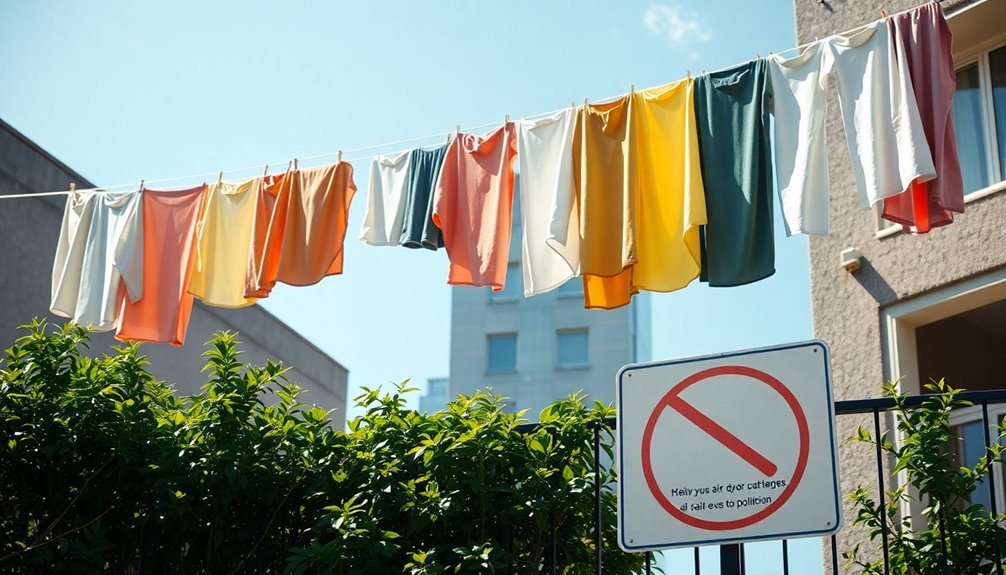
When you want to air-dry your clothes, understanding your rights can make all the difference, especially if you live in a community with restrictive rules.
Many states, like Florida and Vermont, have enacted “Right to Dry” laws that protect your ability to use clotheslines for drying clothes outdoors. These laws often nullify any bans imposed by homeowners associations, allowing you to embrace sustainable drying methods without fear of penalties.
Many states have “Right to Dry” laws that safeguard your ability to use clotheslines, ensuring sustainable drying methods remain accessible.
Additionally, some regions have solar access laws that recognize clotheslines as a valuable tool for harnessing solar energy. It’s essential to be aware of local and state-specific right-to-dry laws, as they empower you to challenge unfair restrictions and advocate for your right to air-dry your laundry. Furthermore, many communities promote sustainable practices to encourage eco-friendly habits like air-drying clothes.
Assessing Your Lease Agreement for Laundry Clauses
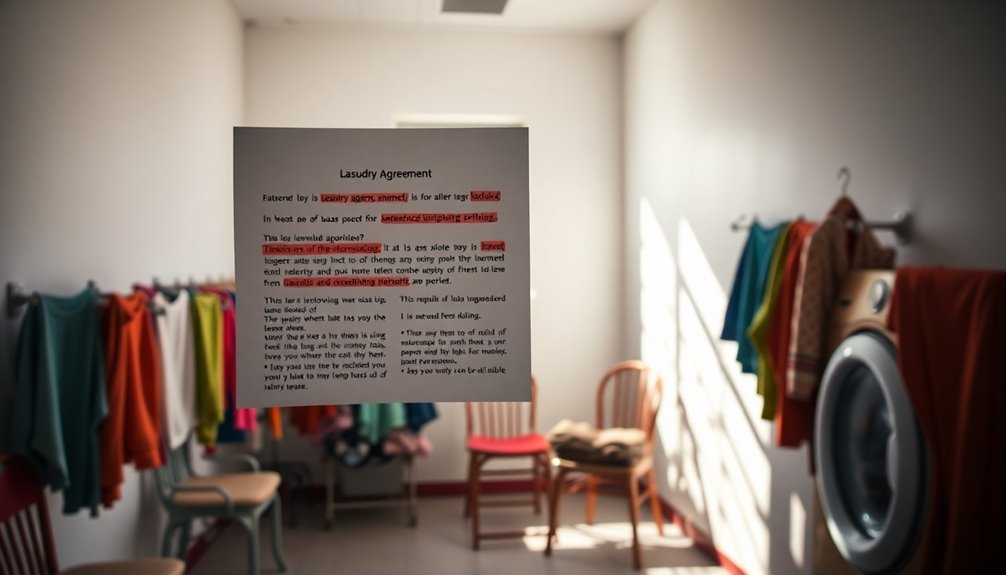
When you assess your lease agreement, it’s vital to pinpoint any laundry-related clauses that could impact how you dry your clothes.
Understanding these terms helps you grasp your rights and the potential implications for your living situation. If your lease lacks clear guidelines, you might’ve grounds to negotiate your right to air-dry laundry without restrictions. Additionally, knowing your rights as a tenant is crucial when discussing these issues with your landlord, especially regarding lease agreement clauses.
Key Lease Terms Identified
Understanding your lease agreement is essential, especially if you want to air-dry your clothes. Start by reviewing your lease for any clauses that address drying clothes, as they may specify prohibitions or allowances for indoor and outdoor methods.
Pay close attention to the wording; overly restrictive language can be challenged under consumer protection laws if it disregards tenant needs. Make sure your lease complies with local laws, which require landlords to provide functional drying facilities.
Document any discussions with your landlord about laundry practices and concerns like mould or moisture, as this can be important later. Familiarizing yourself with tenant rights in your state will empower you, as some laws may support your ability to air-dry clothes despite restrictive lease terms.
Understanding Clause Implications
Reviewing your lease agreement is essential, since it often contains specific clauses that can greatly impact your ability to air-dry clothes.
Pay close attention to these aspects:
- Clauses prohibiting drying clothes indoors due to mould and moisture concerns.
- The reasonableness of such clauses and their potential challenge under Office of Fair Trading guidelines.
- Landlords’ obligations to provide adequate drying facilities to safeguard your health.
- The need to understand your rights and obligations regarding drying clothes to avoid confusion.
Tenant Rights Explained
While managing your lease agreement, it’s important to pinpoint any laundry clauses that could affect your right to air-dry clothes.
Carefully review the document for specific rules regarding indoor drying and the use of clotheslines. Remember, landlords must provide adequate drying facilities to mitigate health risks like mould and condensation.
If your lease is silent on laundry practices, you may have grounds to argue for your tenant rights to air-dry your clothes indoors.
It’s vital to understand that overly restrictive clauses might be deemed unfair under consumer protection laws.
Clear documentation of your rights and obligations can help prevent misunderstandings regarding laundry provisions and guarantee you maintain a healthy living environment.
Engaging With Your Landlord: Tips for Effective Communication
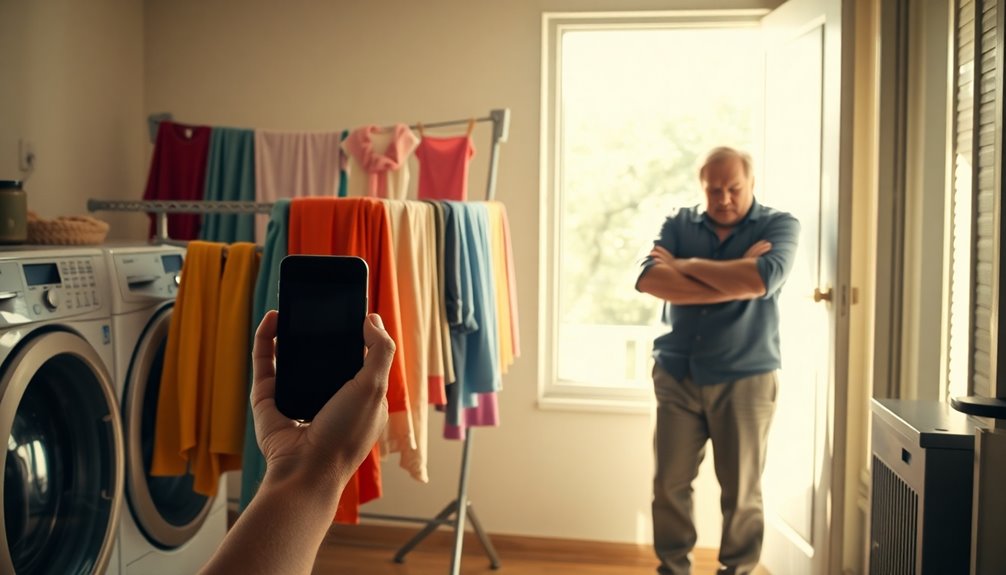
When you’re ready to discuss air-drying clothes with your landlord, it’s essential to be clear and direct about your concerns.
Here are some effective communication tips to engage your landlord:
- Express environmental and cost benefits: Highlight how air-drying reduces energy bills and helps combat climate change.
- Request a meeting: Propose a time to discuss potential solutions, like installing a drying rack or establishing a designated indoor drying area.
- Research bylaws: Familiarize yourself with building regulations and local laws to support your case.
- Gather support: Engage fellow tenants to show collective interest in sustainable practices, which may encourage your landlord to reconsider their stance.
Document all communications for future reference and maintain a respectful dialogue throughout the process. Additionally, emphasize the concept of frugal living by sharing how air-drying clothes can contribute to overall savings in household expenses.
Exploring Alternatives: Indoor Drying Solutions and Best Practices
When it comes to drying clothes indoors, you’ve got several effective strategies at your disposal.
By managing moisture levels and using the right drying equipment, you can create an ideal environment for air-drying without risking mould growth. Additionally, incorporating community resources such as local DIY workshops can provide valuable tips and tools for optimizing your indoor drying solutions.
Let’s explore some practical solutions that will keep your space fresh and your laundry dry.
Effective Indoor Drying Techniques
Effective indoor drying techniques can make a significant difference in how quickly and efficiently your clothes dry.
To optimize indoor drying while controlling moisture levels, consider these strategies:
- Use dedicated drying racks in well-ventilated areas to prevent mould.
- Position racks near windows to harness natural light and airflow.
- Install a drying cupboard or utilize heated airers for a controlled drying environment.
- Open windows regularly for ventilation, even during colder months, to enhance air circulation.
Moisture Management Strategies
To keep moisture levels in check while drying clothes indoors, it’s essential to implement smart moisture management strategies.
Start by ensuring adequate ventilation; open windows or use exhaust fans to reduce humidity. Consider placing a dehumidifier in your drying space to effectively manage excess moisture, preventing condensation and mould growth.
Hang clothes in a well-ventilated room, ideally near a heat source, to speed up the drying process. Avoid drying clothes directly over radiators or in poorly ventilated areas, as this can worsen moisture issues.
Finally, use a drying rack that allows air circulation around your clothes, helping them dry evenly while keeping moisture levels in your home under control.
Building Community Support: Advocating for Change Together
While many residents may feel isolated in their struggle against restrictive laundry regulations, coming together can create a powerful voice for change.
By engaging with neighbors who share concerns about air drying, you can advocate for more lenient bylaws regarding clothes drying.
Here are some effective strategies to build community support:
- Organize community meetings to share experiences and perspectives.
- Propose communal drying spaces to your owners corporation in writing.
- Highlight the environmental benefits of line drying, like reduced energy consumption.
- Research successful case studies from other communities that have amended their bylaws.
Additionally, emphasizing the environmental benefits of reduced energy consumption can strengthen your case for change.
Legal Recourse: What to Do If Your Rights Are Violated
If you’re facing restrictions on air-drying clothes that seem unfair, understanding your legal rights is essential.
Start by reviewing your lease and local laws; many states have “right-to-dry” laws that support your ability to use clotheslines.
Review your lease and local laws; many states uphold “right-to-dry” regulations that protect your use of clotheslines.
If your landlord’s restrictions appear unreasonable or violate these regulations, you might contest them.
Document all incidents and communications with your landlord to provide evidence of their failure to offer adequate drying facilities.
Consider seeking mediation through local housing agencies to resolve disputes amicably.
If that doesn’t work, you can file a complaint with local housing authorities or pursue legal action for violating your rights related to living conditions and reasonable use of your property. Additionally, effective financial planning and monitoring of savings are crucial for managing additional family expenses when disputes arise that require legal intervention.
Future Trends: Changing Attitudes Towards Air-Drying Clothes
Many people are starting to embrace air-drying clothes as a practical and environmentally friendly choice.
With the growing emphasis on sustainability, individuals are increasingly recognizing the benefits of line drying.
Here are some trends shaping attitudes toward air-drying:
- Awareness of electric dryer costs, totaling $9 billion annually in the U.S.
- Advocacy for Right to Dry legislation, protecting your ability to use clothes lines.
- A cultural shift, viewing air-drying as responsible rather than a sign of poverty.
- Increasing demand for communal drying spaces in residential areas.
As these trends continue, more landlords and communities may adopt policies that support solar rights, making air-drying a standard practice for everyone. Embracing these changes can lead to a greener future, as energy-saving habits encourage further reductions in household utility costs.
Conclusion
As you navigate the laundry battle with your landlord, remember that your right to dry clothes is worth fighting for. Will you stand up for your rights, or let the rules dictate your choices? Explore indoor solutions and rally your neighbors—change can start small, but it can grow into something powerful. If you feel your rights are being trampled, don’t hesitate to seek legal recourse. The future of air-drying clothes could be brighter than you think; will you be a part of it?





Average Rating