
 0
0
 0
0
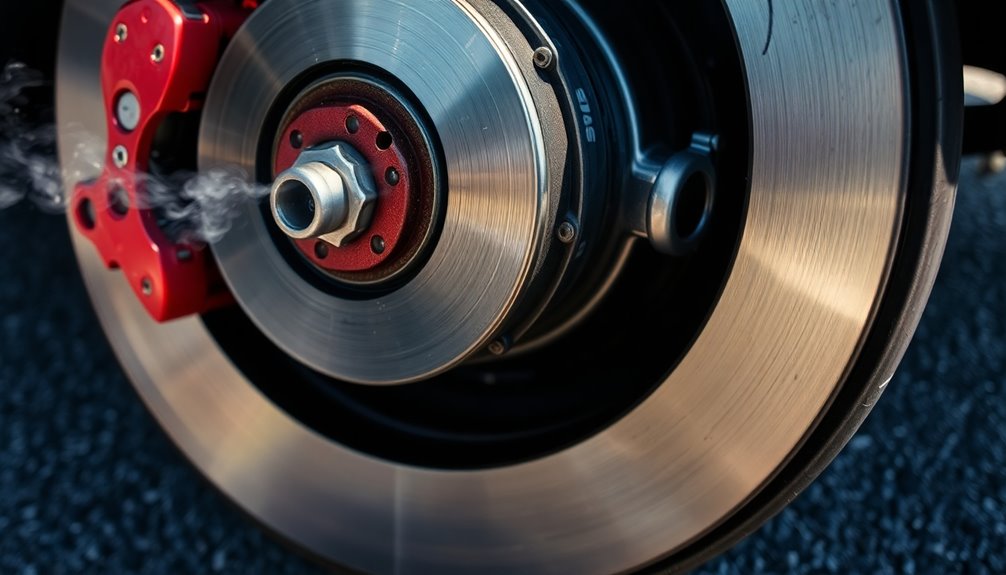
If your brakes make noise at low speeds, it’s often due to worn brake pads, moisture on rotors, or debris between the pads and rotors. High-pitched squeals usually indicate worn pads needing replacement, while metal-on-metal grinding is a serious issue that can damage your rotors. You should pay attention to these sounds and consider maintenance to guarantee safe braking. Discovering the nuances of brake noise could help you maintain your vehicle better.
Common Causes of Brake Noise at Low Speeds
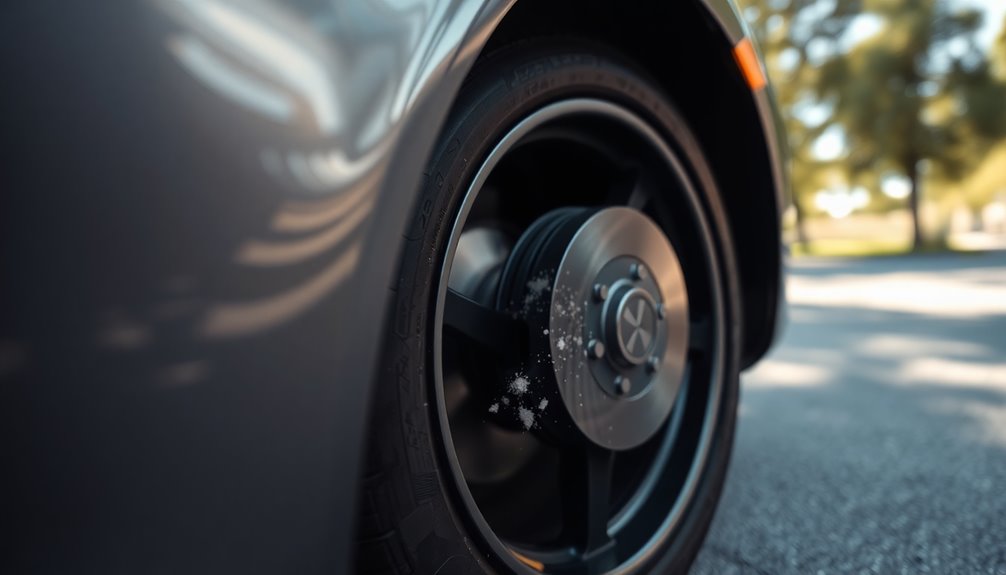
When you hear brake noise at low speeds, it can be frustrating and concerning. One common cause is worn brake pads, which produce high-pitched squeals as wear indicators touch the rotor.
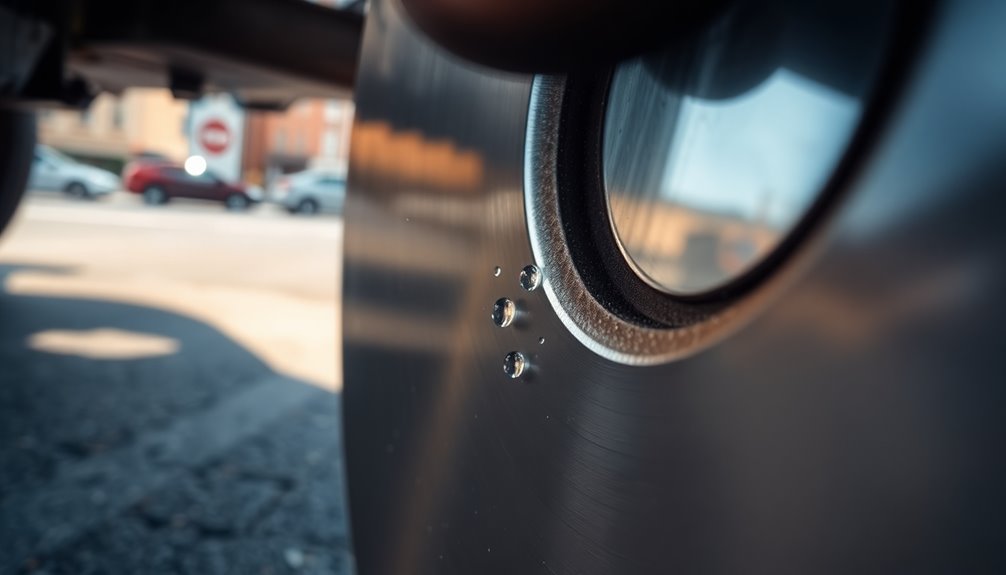
If your vehicle has been parked overnight in damp conditions, moisture buildup or rust on the rotors might cause temporary squeaking or grinding sounds.
Additionally, debris buildup, like dust or dirt, between the brake pads and rotors can lead to scraping noises, signaling a need for cleaning.
Sticking brake calipers may cause uneven wear and high-pitched noises, indicating that a brake inspection is necessary.
Finally, if your pads have glazed from overheating, they can create squealing sounds, requiring replacement to restore ideal braking performance. Using an app for expense tracking can help freelancers manage costs associated with vehicle maintenance effectively.
Understanding High-Frequency Squeals: What They Indicate
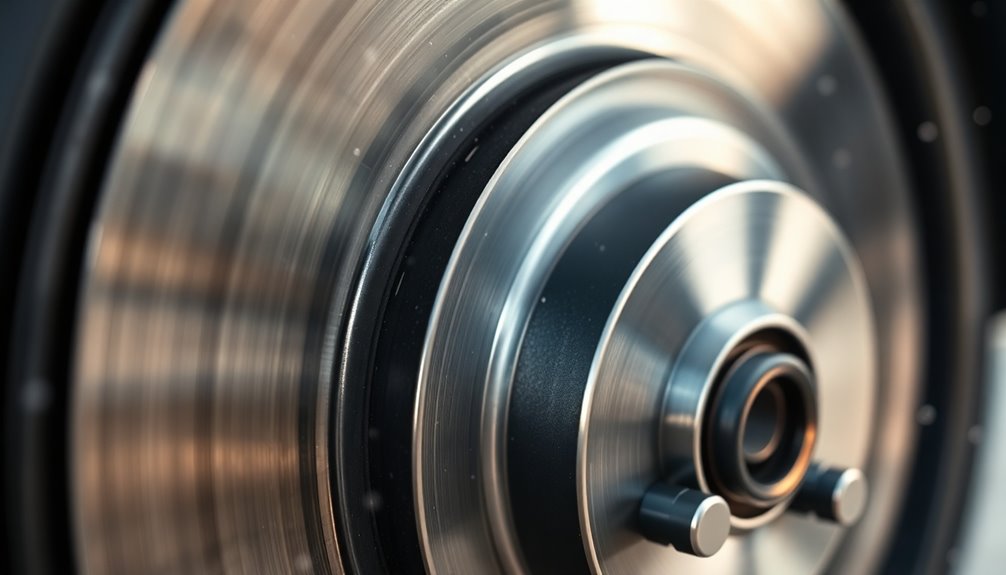
When you hear high-frequency squeals from your brakes, it’s a clear sign that your brake pads may be worn down. This noise isn’t just annoying; it’s a warning that you need to replace the pads immediately to avoid damaging your rotors. Additionally, if your pads have glazed due to overheating, they might also produce a similar sound, indicating a drop in braking effectiveness. Addressing this issue promptly can help you save money on repairs and maintain your vehicle’s overall performance.
Worn Brake Pad Indicators
High-frequency squeals from your vehicle’s brakes can be a critical warning sign.
These sounds often indicate that your brake pads are worn down to 2-3 mm, as the metal wear indicator tab contacts the rotor. Ignoring these high-frequency squeals can lead to severe brake system damage, including costly rotor repairs.
Most modern brake pads come equipped with this wear indicator tab designed to alert you when replacement is necessary.
Additionally, glazing of brake pads, often due to overheating, can also produce a high-pitched squeal and reduce braking effectiveness.
Regularly monitoring brake components for these sounds is essential for ensuring vehicle safety and preventing further wear.
Stay proactive to maintain ideal brake performance and safety.
Importance of Immediate Replacement
Ignoring high-frequency squeals from your brakes can lead to costly repairs down the line. When you hear that high-pitched squealing, it usually means your brake pads are worn down to 2-3 mm. This is a clear sign you need immediate replacement to avoid damaging the rotor, which can be much more expensive to fix.
The squeal occurs when a metal tab, acting as a wear indicator, contacts the rotor. If you ignore this warning, you risk compromising your brake system’s integrity. Additionally, glazed brake pads can produce similar sounds, indicating reduced braking effectiveness.
Regularly monitoring brake noises is essential for maintaining your vehicle’s safety and performance. Don’t wait—address those squeals promptly to keep your brakes in top shape.
Causes of Glazed Pads
While excessive heat is often the main culprit behind glazed brake pads, several factors can contribute to this issue. When brake pads become glazed, they harden and smooth out, diminishing your braking effectiveness and leading to annoying high-frequency squeals.
Here are some common causes of glazed pads:
- Aggressive driving habits, like hard braking
- Inadequate cooling due to poor ventilation
- Low-quality brake components
- Insufficient maintenance and inspection
- Overheating from prolonged use
If your pads are glazed, you may notice longer stopping distances, which can pose safety risks.
To prevent this issue, prioritize regular maintenance and invest in high-quality brake pads to guarantee peak performance and safety on the road.
The Meaning Behind Low-Frequency Squeals
When you hear low-frequency squeals coming from your brakes, it often indicates issues like shim migration or brake pad vibration against the rotor, especially if you have semi-metallic pads.
While these sounds aren’t as urgent as high-frequency squeals, they can signal suboptimal brake functionality that deserves attention. High-quality brake pads equipped with slots and chamfers can help reduce these noises.
If the noise persists, it might distract you while driving, impacting your focus on the road. Regular maintenance and inspection of your braking system are essential for addressing the causes of low-frequency squeals. Additionally, just as heat pumps achieve nearly zero emissions when powered by renewable energy sources, ensuring your brakes are in optimal condition can enhance your vehicle’s overall performance and efficiency.
Moaning Noises: Are Your Brakes in Trouble?
Have you ever noticed a moaning noise coming from your brakes at low speeds? This sound can indicate issues with your brake system that need attention.
While occasional moaning may occur due to moisture during light braking, persistent noises often hint at problems like caliper bushing wear or suspension issues.
It’s vital to address these sounds promptly to maintain ideal braking performance and enhance vehicle safety. Diversification strategies in your maintenance routine can help identify early signs of brake wear.
Here are some key points to take into account:
- Moaning noises can affect brake components’ functionality.
- Listen for sounds during low-speed maneuvers.
- Regular inspection of the brake system is essential.
- Ignoring moaning can lead to severe brake system damage.
- Timely action can prolong the life of your brakes.
Metal-on-Metal Grinding: A Serious Warning Sign
If you hear a metal-on-metal grinding noise while braking, don’t ignore it; this sound is a serious warning sign that your brake pads are completely worn down.
When the friction material is gone, the brake rotor makes direct contact with the backing plate of the pads. This metal-on-metal grinding can severely damage your brake rotor, leading to costly replacements.
Metal-on-metal contact occurs when brake pads are worn down, risking severe rotor damage and expensive repairs.
It also reduces your braking system’s effectiveness, resulting in longer stopping distances. For your serious safety, seek immediate professional inspection and replacement of your brake pads.
Regular maintenance and timely replacement can prevent this grinding noise and guarantee peak braking performance. Additionally, conducting regular billing process reviews can help you stay on top of your vehicle’s maintenance needs. Don’t wait; address this issue to keep your vehicle safe on the road.
Creaking Noises: What Do They Say About Your Suspension?
When you hear creaking noises while driving, it often means your suspension components need attention.
This sound usually points to insufficient lubrication or wear in parts like control arm bushings and ball joints.
Ignoring these noises can lead to bigger issues down the road, so it’s wise to get them checked out. Regular maintenance checks can identify potential problems early, ensuring your vehicle remains safe and reliable.
Suspension Component Wear
Creaking noises in your vehicle can be more than just an annoyance; they often signal underlying issues in your suspension system.
These sounds typically indicate wear and tear on vital suspension components, like:
- Control arm bushings
- Ball joints
- Sway bar links
- Loose hardware
- Insufficient lubrication
If you hear these creaks, it’s important to inspect your suspension. Ignoring them can lead to increased wear, affecting your vehicle’s handling and safety.
Over time, inadequate lubrication can cause these parts to fail, leading to costly repairs. Regular checks guarantee that your suspension remains in top shape, enhancing your driving comfort and preventing further issues with your brake assembly.
Don’t let creaking noises go unchecked; they’re a warning to take action!
Insufficient Lubrication Issues
Though creaking noises may seem minor, they often reveal significant issues related to insufficient lubrication in your suspension system. When lubrication is lacking in components like control arm bushings and ball joints, increased friction can occur, leading to abnormal brake noise and compromised braking performance.
Loose hardware may also contribute to these irritating creaking sounds. Regularly inspecting and lubricating your suspension components is vital for maintaining smooth brake operation and ensuring vehicle safety.
Ignoring these noises can signal deeper problems that might affect your vehicle’s overall performance. By addressing lubrication issues promptly, you can enhance the longevity of your suspension system, reduce noise and vibration, and enjoy a safer, more comfortable driving experience.
Diagnosing Clicks and Clunks in Your Braking System
Have you ever noticed distinct clicks or clunks when you brake at low speeds?
These clicking noises often indicate issues with your braking system that need immediate attention.
Clicking noises when braking can signal urgent issues with your braking system that require immediate attention.
Here are some common causes:
- Loose or improperly seated brake pads shifting in the caliper bracket
- Warped rotors creating rhythmic clicking sounds
- Loose caliper hardware posing serious safety concerns
- Need for a visual inspection of brake components
- Importance of regular maintenance checks to prevent future issues
Addressing these problems promptly can guarantee your safety on the road. Regular maintenance, like inspecting and cleaning gutters, is essential to prevent future issues in various systems. Don’t ignore those clicks and clunks; they can lead to more significant repairs if left unchecked.
Keep your braking system in prime condition for peace of mind.
The Impact of Dust and Debris on Brake Performance
Dust and debris can seriously affect your brakes, causing annoying noises and reducing their efficiency.
When dirt builds up between your brake pads and rotors, it creates a barrier that can lead to longer stopping distances.
Regularly cleaning these components can prevent issues and keep your braking system performing at its best. Additionally, regular maintenance of your vehicle’s braking system can help identify and address potential problems before they escalate.
Dust Accumulation Effects
When brake pads and rotors accumulate dust and debris, you might notice annoying squeaking or scraping noises that signal a decline in braking efficiency.
This dust creates a barrier, hindering contact between pads and rotors, which can lead to longer stopping distances. Additionally, excessive dust build-up can cause vibrations in the brake pedal, indicating uneven wear and negatively impacting overall brake performance.
Ignoring these signs can increase the risk of corrosion on brake components, leading to severe damage.
To maintain your brakes effectively, consider these tips:
- Inspect brake components regularly
- Clean pads and rotors to remove dust
- Monitor for unusual noises
- Address vibrations promptly
- Schedule routine maintenance checks
Debris Removal Techniques
Ignoring the buildup of dust and debris can lead to more serious brake problems. Accumulated particles between your brake pads and rotors can cause noise, reduce braking performance, and result in uneven wear.
Regular maintenance and inspections for debris are crucial; even small bits can create significant issues. If you hear a squeaking or scraping sound, it’s a sign that cleaning is necessary. Excessive brake dust on your wheels also signals friction buildup, prompting immediate attention.
Implementing proper cleaning techniques, like using compressed air or brake cleaning solutions, can effectively remove debris and enhance your brakes’ lifespan. Don’t overlook these steps during brake service to guarantee peak performance and safety on the road.
How Moisture and Rust Affect Your Brake Noise
Moisture and rust can greatly impact your vehicle’s brake noise, especially at low speeds. Overnight moisture can cause a thin layer of rust on your brake rotors, leading to light squeaking when you first apply the brakes.
If this rust buildup becomes excessive, you may experience grinding noises and decreased braking efficiency.
Here are some key points to reflect on:
- Moisture exacerbates brake dust and dirt accumulation.
- Brownish dust indicates moisture exposure on rotors.
- Regular inspections help identify moisture-related issues.
- Cleaning brake components is essential for peak performance.
- Ignoring rust can lead to performance degradation and safety risks. Additionally, controlling moisture in your vehicle can help mitigate rust formation and maintain brake functionality.
When to Seek Professional Help for Brake Issues?
Have you ever wondered when it’s time to call in the pros for brake issues?
Knowing when to consult professionals for brake issues is crucial for your safety on the road.
If you hear high-pitched squealing or grinding noise when applying brakes, it’s essential to seek professional help immediately, as these warning signs often indicate worn brake pads or metal-on-metal contact.
A soft or spongy brake pedal can mean hydraulic problems, which require expert evaluation for your safety.
If your vehicle pulls to one side, it could signal issues with a worn caliper or brake line that need attention.
Additionally, persistent thumping or clicking noises during braking should prompt a thorough brake inspection to fix potential alignment problems.
Don’t ignore these signs—address them promptly to guarantee your braking system functions safely. Regular monitoring of furnace performance is essential for safety and functionality.
Maintaining Your Brakes for a Quieter, Safer Ride
How can you guarantee a quieter, safer ride? Regular maintenance of your brake components is essential.
Start by inspecting your brake pads for wear; built-in wear indicators can signal when they need replacement. Keep your caliper and other brake components clean and free from debris, as this can reduce noise and maintain braking power.
To assure peak performance, follow these tips:
- Lubricate caliper components to prevent sticking.
- Monitor for moisture or rust buildup on rotors.
- Schedule brake maintenance at least once a year.
- Replace brake pads when wear indicators signal.
- Address any noise issues promptly to avoid serious problems.
Conclusion
So, while you might think those squeaky brakes are just your vehicle’s way of serenading you, they’re actually crying for help. Ignoring those sounds could turn your ride into a symphony of grinding metal and costly repairs. Instead of jamming out to brake noise, take action! Regular maintenance keeps your brakes quiet and your wallet happy. Remember, it’s better to hear the sweet silence of well-maintained brakes than the harsh reality of a breakdown.