
 0
0
 0
0
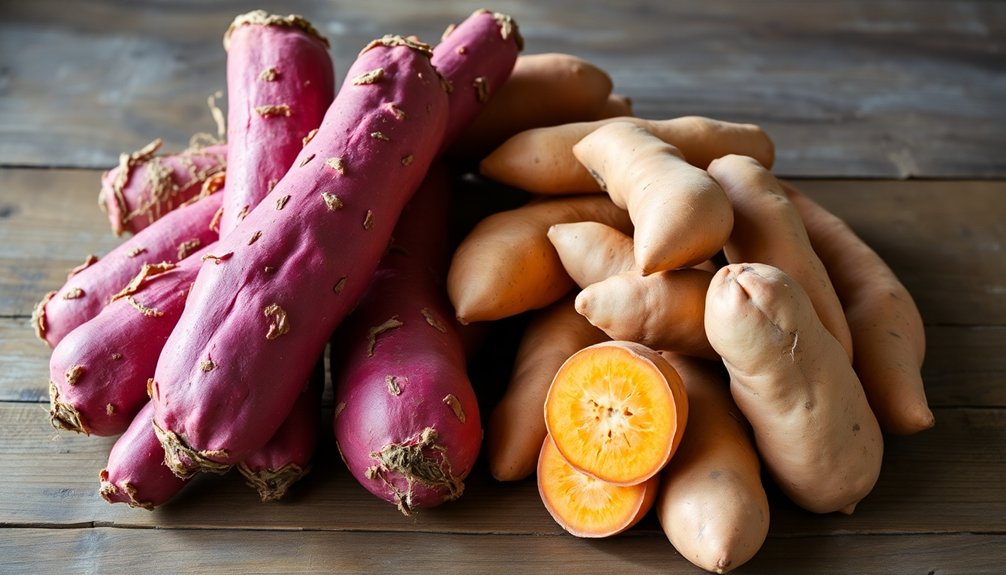
Yams are starchy tubers from the Dioscorea genus, commonly confused with sweet potatoes in the U.S. They have rough, bark-like skin and starchy, white flesh, while sweet potatoes are smoother and sweeter, especially the orange varieties. True yams are less common in supermarkets, often found in specialty stores. They’re used mainly in savory dishes. If you want to uncover more about their differences and uses, there’s plenty more to explore.
Are Yams and Sweet Potatoes The Same?
Are yams and sweet potatoes really the same? The answer is no; they’re quite different.
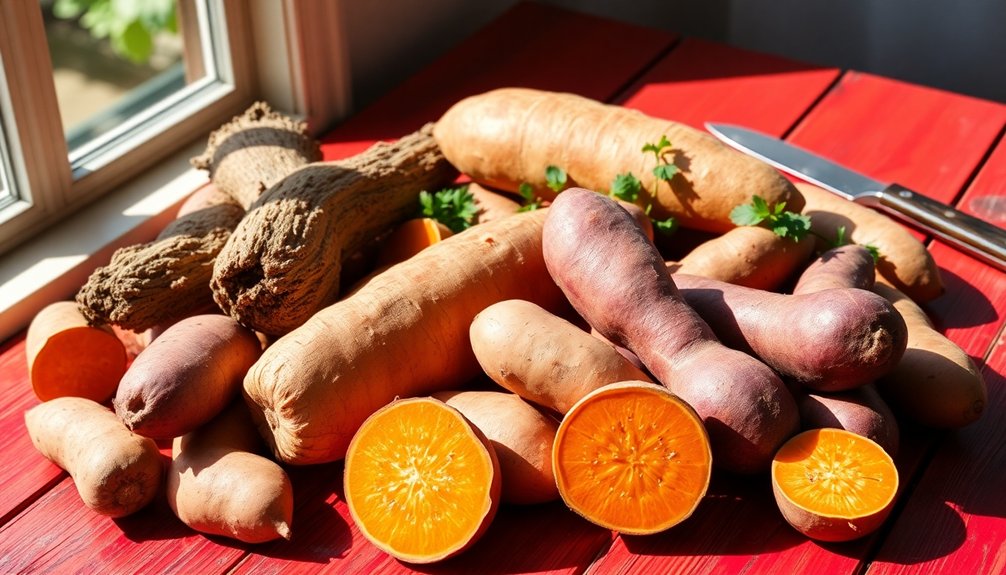
Yams belong to the Dioscorea genus, while sweet potatoes are part of the morning glory family. True yams have rough, bark-like skin and starchy white flesh, whereas sweet potatoes, especially orange sweet potatoes, have smooth skin and a naturally sweet flavor.
In the U.S., people often use the terms yams and sweet potatoes interchangeably, leading to confusion. Many grocery stores label orange sweet potatoes as yams, a practice rooted in a historical naming convention.
Understanding this distinction is important if you want to choose the right vegetable for your dishes, as sweet potatoes are versatile, fitting both savory and sweet recipes, while yams are typically more savory.
Characteristics of Yams
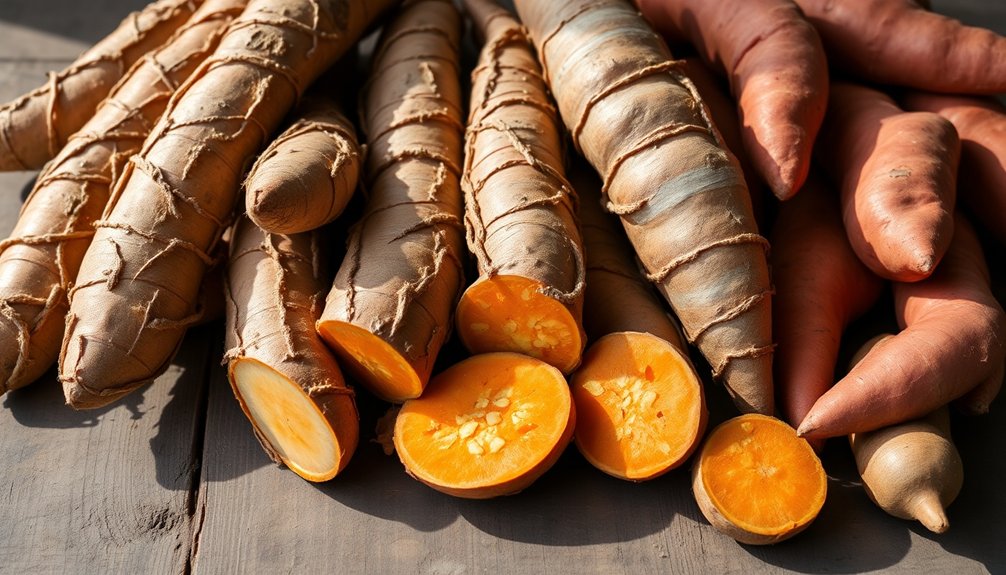
Yams stand out with their rough, scaly, bark-like brown skin, setting them apart from the smoother-skinned sweet potatoes. When you cut into a yam, you’ll notice the flesh is typically white and very starchy, giving it a drier texture that’s quite different from sweet potatoes.
These tubers can grow to impressive sizes, with some varieties reaching lengths of up to seven feet and weighing over 100 pounds! You’ll usually find yams in tropical climates, and they’re not as common in mainstream supermarkets outside these areas.
Unlike sweet potatoes, yams aren’t sweet; instead, they’re primarily used in savory dishes, making them a versatile ingredient in many recipes.
Characteristics of Sweet Potatoes
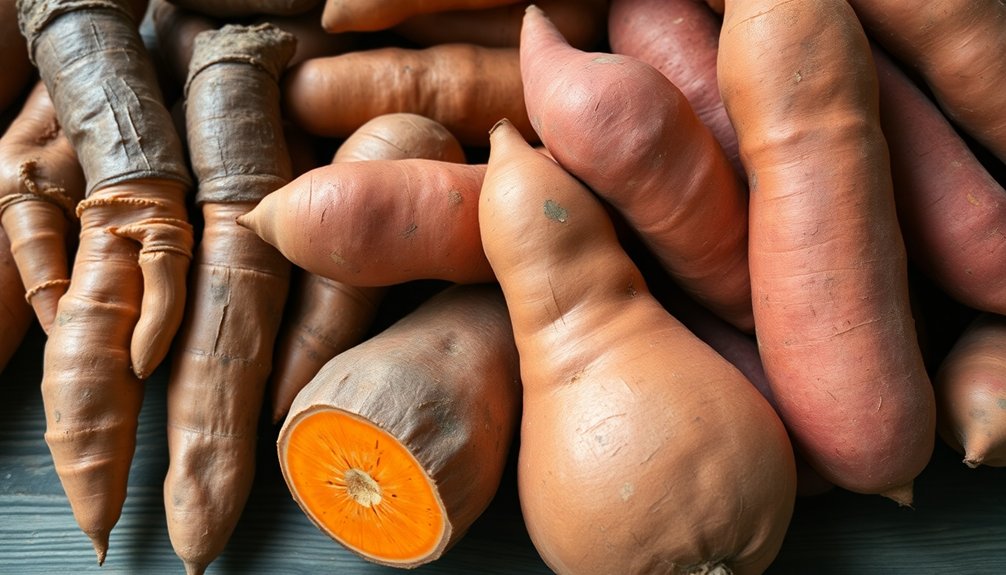
Sweet potatoes boast a delightful creamy to moist texture when cooked, making them a favorite in various culinary creations. They’re known for their sweet flavor, which shines in both savory dishes and desserts like sweet potato pie.
The flesh can range from light yellow to dark orange, with darker varieties being richer in beta-carotene. You’ll find sweet potatoes with reddish skin and others that come in different colors, each offering unique tastes and textures.
Some varieties of sweet potatoes, such as the Beauregard, are starchier yet moist, while others may have a stringy texture. Available in supermarkets, you can easily spot them labeled with specific varieties like Jewel, Garnet, and Okinawan, each adding distinct qualities to your meals.
Which Is More Nutritious?
When it comes to nutrition, sweet potatoes generally take the lead over yams. They boast higher levels of vitamin C and beta-carotene, which are essential for your immune system and eye health.
While yams do contain more copper, contributing to their nutritional profile, sweet potatoes still provide a broader range of benefits.
Both vegetables are excellent sources of fiber, potassium, and complex carbohydrates, promoting digestive health.
Keep in mind that the way you prepare and consume each can impact their nutritional value.
Why Are Sweet Potatoes Called Yams?
Although many people use the term “yam” to describe orange-fleshed sweet potatoes, this common misconception stems from a mix of cultural influences and marketing strategies.
The name “yam” originated from the African word “nyami,” which enslaved Africans used to refer to sweet potatoes. Over time, this term was Anglicized to “yam,” especially due to the resemblance these sweet potatoes had to true yams found in Africa.
In the 1930s, U.S. sweet potato growers began marketing moist orange varieties as “yams” to differentiate them from drier white-fleshed sweet potatoes. This has led to confusion in American cuisine about sweet potatoes vs. true yams, obscuring the distinct characteristics of each vegetable.
Types of Sweet Potatoes
Several types of sweet potatoes offer distinct flavors, textures, and appearances, making them versatile ingredients in various dishes.
One popular variety is the Garnet, which has darker orange to reddish skin and a moist texture, perfect for mashing or baking.
Jewel sweet potatoes are another option, featuring lighter orange skin and flesh, known for their high moisture content.
Beauregard sweet potatoes are the most common in U.S. stores, boasting a starchier yet moist texture.
If you’re looking for something unique, try Okinawan sweet potatoes, with grey skin and vibrant purple flesh.
Finally, Asian or Caribbean sweet potatoes have purplish skins and yellowish-white flesh, prized for their starchy sweetness.
Each variety brings something special to your table!
The Best Sweet Potato Recipes
Have you ever wondered how to elevate your meals with sweet potatoes? These versatile tubers can transform your cooking, whether you’re craving sweet or savory dishes.
Elevate your cooking with sweet potatoes, the versatile tuber perfect for sweet and savory delights.
Here are a few popular varieties you should try:
- Sweet Potato Biscuits: Flaky and buttery, perfect for breakfast or brunch.
- Loaded Sweet Potato Fries: Crispy fries topped with cheese, sour cream, and green onions for a savory twist.
- Sweet Potato Pie: A creamy, spiced dessert that’s a holiday favorite!
For something unique, whip up some Sweet Potato Hummus, blending roasted sweet potatoes with tahini and garlic.
Or, indulge in West African Peanut Stew, combining sweet potatoes with peanuts and spices. Your meals will never be the same!
Where To Find Yams
If you’re looking for true yams, your best bet is to check out specialty grocery stores that cater to African, Caribbean, or Asian cuisines.
Once you’ve found them, remember that proper cooking is vital, since raw yams can be toxic.
To keep your yams fresh, store them in a cool, dark place, just like you’d with sweet potatoes.
Specialty Grocery Stores
Wondering where to find authentic yams? You’ll want to check out specialty grocery stores that focus on African, Caribbean, or Asian foods.
These shops often carry true yams, which aren’t typically found in mainstream supermarkets. When you’re shopping, keep an eye out for:
- Rough, scaly brown skin
- A firm texture that indicates freshness
- Varieties that can grow up to seven feet long!
Don’t forget to ask store staff about the authenticity of the yams, as many products labeled as yams in the U.S. are actually sweet potatoes.
With a bit of exploration, you’ll be able to find the real deal and enjoy the rich flavors of true yams!
Cooking and Preparation
Once you’ve tracked down authentic yams at your local specialty grocery store, it’s important to know how to prepare them safely and deliciously.
Look for yams with rough, scaly brown skin that feels firm to the touch. Remember, yams can be toxic if eaten raw, so you must cook them thoroughly.
Popular cooking methods include boiling, roasting, baking, or frying. Each method brings out different flavors and textures, so feel free to experiment!
Make sure to incorporate spices and seasonings that complement their natural taste. By using these cooking methods, you’ll transform yams into a delightful dish that showcases their unique qualities.
Enjoy your culinary adventure with this versatile tuber!
Storage and Preservation
Finding yams can be a bit of a treasure hunt, as they’re typically available in specialty grocery stores that focus on African, Caribbean, or Asian ingredients.
When shopping, look for yams with rough, scaly brown skin and make sure they’re firm to the touch.
For storage, keep your yams in a cool, dark place, just like you’d with sweet potatoes. This helps maintain their freshness.
Here are some tips for storage and preservation:
- Store in a breathable bag to prevent moisture buildup.
- Avoid refrigeration, which can cause spoilage.
- Use within a few weeks for best flavor and texture.
How To Substitute Yams & Sweet Potatoes
When you’re looking to substitute yams or sweet potatoes in your recipes, it’s important to choose the right alternative based on the dish you’re preparing.
When substituting yams or sweet potatoes, select the right alternative based on the dish for the best results.
True yams aren’t suitable for sweet dishes due to their starchier and less sweet flavor. However, they can replace sweet potatoes in savory dishes thanks to their similar texture and cooking methods.
If you’re roasting or making hashes, consider using white sweet potatoes for their milder flavor and crumbly texture. For baking and roasting, purple sweet potatoes are an excellent choice because of their drier, denser texture.
Just remember, ube, often confused with purple potatoes, are actually true yams and should be recognized accordingly when considering substitutes.
Conclusion
In the vibrant tapestry of food, yams and sweet potatoes each play their unique role, much like two dancers in a beautiful duet. While they may seem similar, their differences add depth to our culinary experiences. Embracing both can enrich your meals and nurture your spirit. So, the next time you cook, remember that these humble tubers not only nourish your body but also connect you to traditions and flavors that tell stories of resilience and warmth.