
 0
0
 0
0
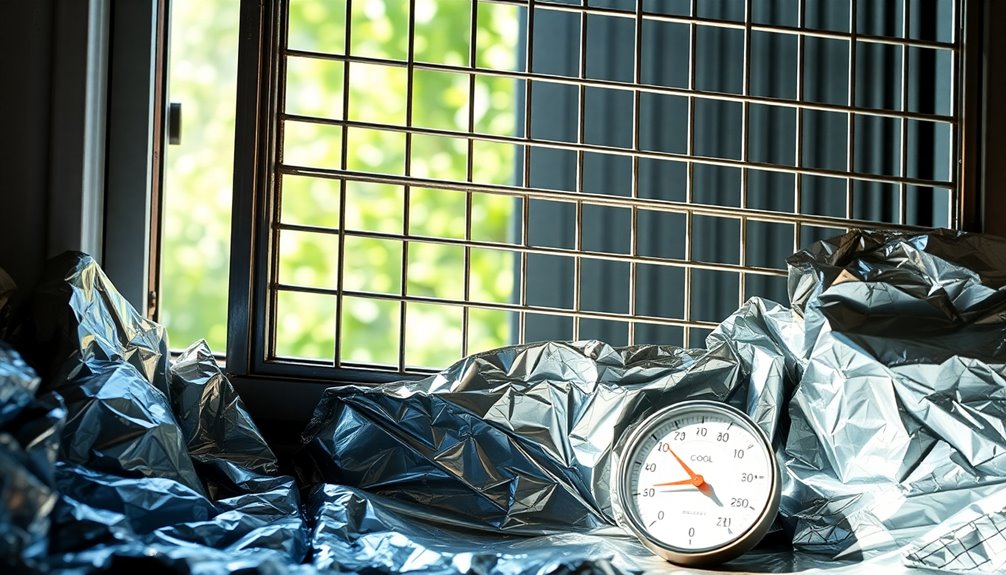
Wrapping your window AC unit in tin foil can actually boost its efficiency. The foil reflects sunlight, reducing heat absorption and potentially lowering your energy bills by 10-15%. Many users report noticeable drops in temperature, making their homes more comfortable. However, while this DIY approach is cost-effective, you might want to evaluate other insulation options for long-term savings. To maximize your AC’s performance, explore more tips and tricks to enhance its efficiency.
Why Consider Wrapping Your AC Unit in Tin Foil?
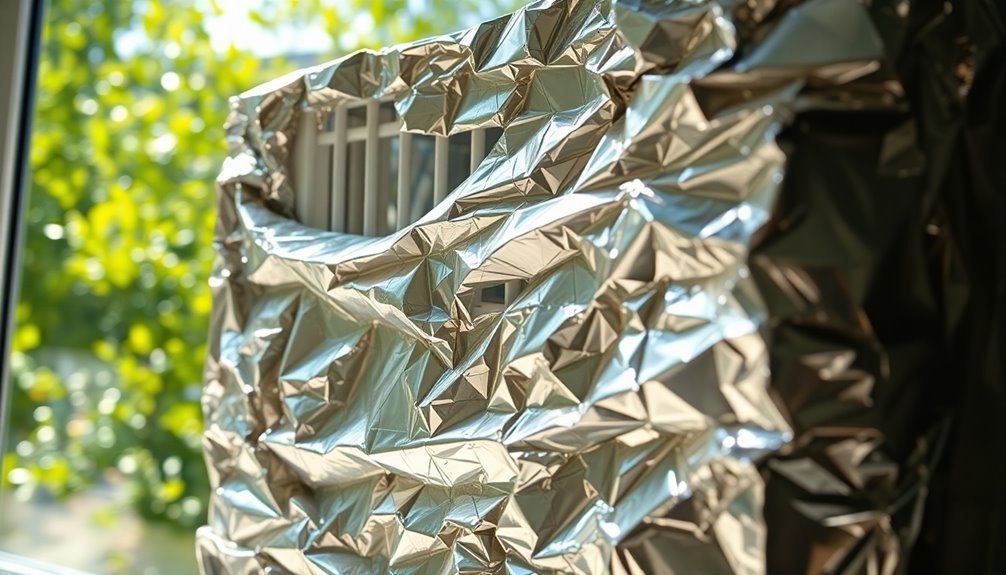
Have you ever considered how much heat your window AC unit absorbs from the sun?
Wrapping your air conditioner in aluminum foil might be a simple yet effective way to lower the temperature around it. By reflecting sunlight, aluminum foil can reduce heat absorption, which enhances the cooling efficiency of your unit.
Some users have reported a drop of up to 10-12°F in the ambient temperature near their AC. This cooling effect can lead to lower energy consumption, ultimately saving you money on electricity bills.
However, keep in mind that while aluminum foil offers temporary benefits, longer-lasting solutions like aluminum composite panels may work better in the long run. Additionally, making improvements to your home’s thermal performance can further enhance your AC unit’s efficiency.
Always consider your local climate when trying this method.
How Does Tin Foil Improve Air Conditioner Efficiency?
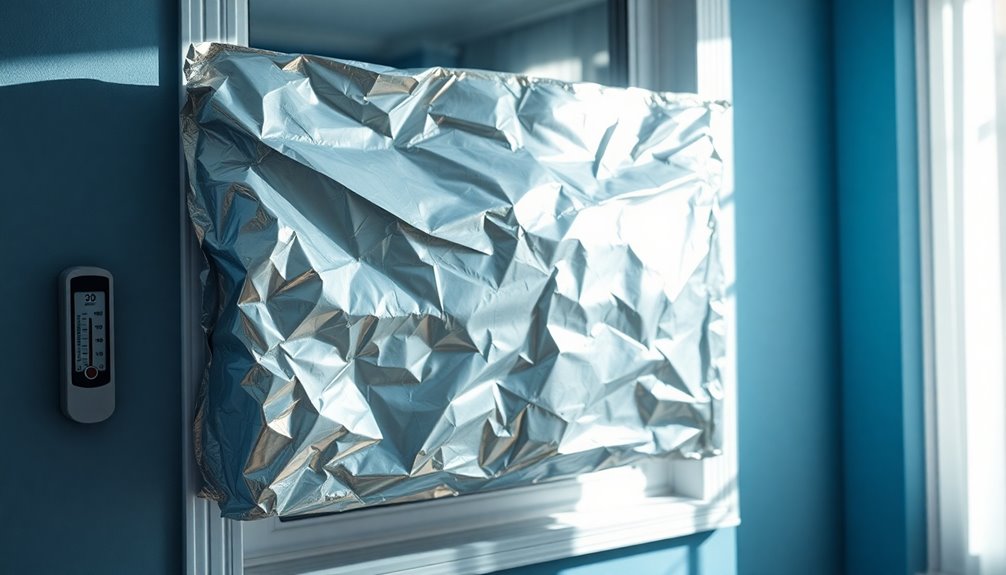
Using tin foil to wrap your air conditioning unit can create a reflective barrier that shields it from direct sunlight. This not only lowers the unit’s temperature but also boosts its cooling efficiency by improving the heat exchange process. As a result, you could see a drop in energy consumption and lower operational costs. Additionally, ensuring that your AC unit is properly sealed can further enhance its efficiency by preventing cool air from escaping.
Reflective Heat Shielding
When you wrap your window AC unit in tin foil, you create a reflective heat shield that greatly boosts its efficiency. This simple modification reduces the heat absorbed from direct sunlight, allowing the AC to perform better.
The reflective properties of tin foil lower the outdoor temperature around the compressor, enhancing heat exchange and increasing cooling capacity. Studies show that a cooler outdoor unit can lead to a 10-15% increase in energy efficiency, which could save you a fair bit on electricity bills during peak usage times.
Enhanced Energy Efficiency
Although many overlook the impact of simple modifications, wrapping your window AC unit in tin foil can greatly enhance its energy efficiency.
The reflective properties of tin foil help deflect sunlight, reducing heat absorption and keeping the outdoor unit cooler. This improved cooling capacity aids in better heat exchange efficiency, which boosts temperature regulation inside your home.
As a result, your air conditioning system faces a reduced heat load, allowing it to maintain comfortable indoor temperatures with less energy consumption. When combined with proper insulation, tin foil can cut energy costs considerably, with potential indoor temperature drops of 10-12°F.
Effective heat management not only saves money but can also extend your AC unit’s lifespan by minimizing wear and tear.
Exploring the Science Behind Heat Reflection
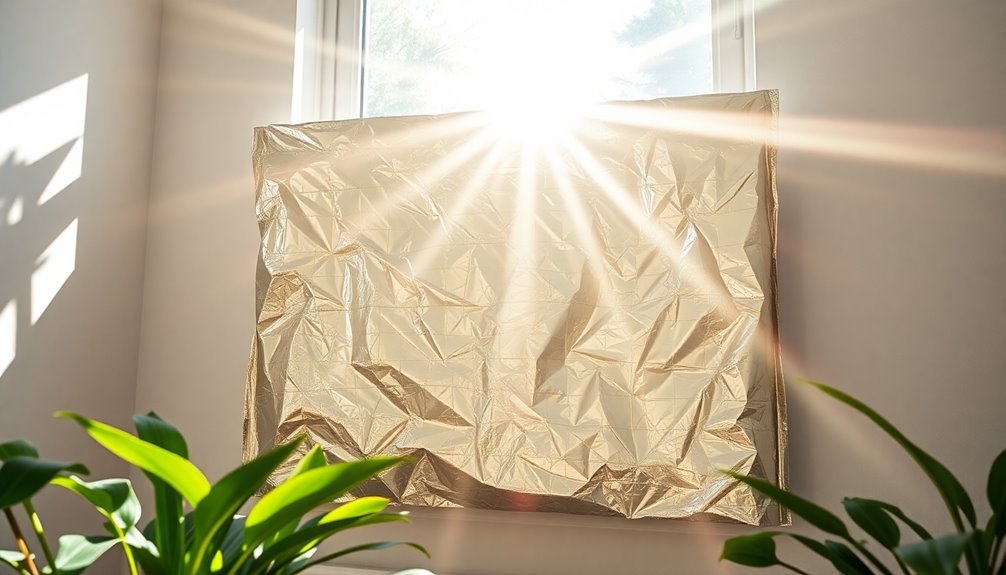
Heat reflection plays an essential role in enhancing the efficiency of window air conditioning units, as it directly impacts how well these systems manage thermal loads.
By applying aluminum foil, you leverage heat reflection principles that reduce heat absorption, lowering the temperature around the compressor. This thermal barrier effectiveness allows your AC to run more efficiently, using less energy.
Applying aluminum foil enhances heat reflection, reducing heat absorption and improving your AC’s efficiency while lowering energy consumption.
Cooler outdoor temperatures further amplify this effect, improving the heat exchange process. Additionally, proper ventilation is critical for achieving ideal cooling, ensuring effective hot air expulsion and preventing indoor heat buildup.
While studies show the potential for cost savings, actual financial benefits can vary based on local climate conditions and your AC’s design.
User Experiences: Real-Life Success Stories With Tin Foil
Ever wondered how simple materials can drastically improve your air conditioning efficiency? User experiences reveal that wrapping your window AC unit in tin foil can lead to impressive cooling improvements.
One DIY enthusiast reported a remarkable drop of 10-12°F indoors after using tin foil as a heat shield. Many users have shared their success stories, noting a consistent 6°F difference between indoor and outdoor temperatures, making their homes more comfortable and reducing energy bills.
While some alternatives like aluminum composite panels have received praise, tin foil remains a popular choice for its accessibility. Monitoring water usage can also lead to significant savings and improved efficiency in other household areas.
Combining tin foil with upgraded insulation materials can enhance these DIY successes, boosting your air conditioner’s efficiency even further.
Comparing Tin Foil to Other Heat-Reduction Methods
When considering ways to reduce heat around your window AC unit, it’s worth comparing tin foil to other materials.
While tin foil can offer some benefits, alternatives like aluminum composite panels or specialized insulation might provide better results for your cooling efficiency. Additionally, using materials that improve energy efficiency can lead to lower operational costs over time.
Let’s explore the effectiveness of these options and how they stack up regarding cost.
Effectiveness of Alternative Materials
Although many DIY enthusiasts have experimented with tin foil as a heat-reduction method for window AC units, the results can be hit or miss.
When evaluating alternative materials effectiveness, you might find that other options outperform foil. Here are three practical heat solutions to examine:
- Aluminum composite panels: These often provide superior heat reduction and durability.
- Corrugated cement board: Users report significant improvements in cooling efficiency.
- R10 foam with aluminum backing: This insulation material shows excellent temperature regulation and enhances AC performance.
Cost Comparison Analysis
How do you weigh the cost of tin foil against other heat-reduction methods for your window AC unit?
While tin foil is a cost-effective option, its material durability and long-term benefits may not match alternatives like aluminum composite panels or corrugated cement boards. These materials often provide better shading and insulation, leading to greater temperature drops around the compressor.
You’ll find that installation simplicity varies too; tin foil is easy to apply, but investing time in higher-quality solutions could yield better results.
Ultimately, consider how much you value immediate savings versus improved cooling efficiency and performance in the long run. The right choice balances cost effectiveness, durability, and the cooling impact you need.
What Other Factors Influence Air Conditioner Performance?
While you might think the size and type of your air conditioner are the only factors affecting its performance, several other elements play an essential role.
Here are three key aspects to evaluate:
- Outdoor Temperature: Cooler surroundings enhance the heat exchange process, boosting efficiency.
- Insulation Quality: Properly insulated windows and doors minimize heat gain, helping maintain comfortable indoor temperatures.
- Humidity Levels: High humidity can make it feel warmer inside, leading to increased energy use to achieve comfort. Additionally, proper insulation techniques can further improve overall energy efficiency and comfort levels in your home.
Guidelines for Proper Installation and Maintenance
To guarantee your window air conditioner operates efficiently, proper installation and regular maintenance are vital.
Start with effective installation techniques: securely mount the unit in the window to prevent air leaks and reduce energy costs. It’s important to inspect and seal any gaps around the unit using weatherstripping or caulking.
For maintenance tips, clean or replace the air filter every 1-3 months to promote optimal airflow and cooling performance. Additionally, schedule professional maintenance at least once a year to check refrigerant levels and clean coils. Regularly using washable electrostatic filters can enhance air quality and reduce long-term expenses.
Finally, follow manufacturer guidelines, using insulation materials like aluminum foil wisely to enhance thermal performance without obstructing airflow. This proactive approach will help maximize your unit’s efficiency and longevity.
Analyzing Cost Savings: Is It Worth the Effort?
Are the potential cost savings from insulating your window AC worth the time and effort? A cost benefit analysis shows mixed results, especially when evaluating user feedback and local climate impact.
Evaluating the cost savings of insulating your window AC reveals mixed results, influenced by user feedback and local climate factors.
Here are three key points to reflect on:
- Energy Savings: Wrapping your unit may reduce heat absorption, lowering your electricity bills.
- Longevity: Some users report that reflective materials enhance efficiency and extend the AC’s lifespan.
- Effort vs. Reward: The effort mightn’t yield significant savings if other insulation methods aren’t used alongside aluminum foil.
In the end, weigh your personal experiences with these factors against the time spent. Additionally, regular maintenance of air filters can lead to significant savings on energy bills.
It’s essential to assess whether the potential savings justify the effort involved in wrapping your AC unit.
Conclusion
So, should you wrap your window AC unit in tin foil? While it might reflect some heat and offer a minor boost in efficiency, the real savings depend on several factors, like installation and maintenance. If you’re looking for a quick fix, it’s worth a try, but don’t expect miracles. Pairing this method with other heat-reduction strategies will likely yield better results. Ultimately, every little bit helps when it comes to keeping cool and saving money!





Average Rating