 0
0
 0
0
To maximize heat resistance and enhance energy savings with window tape, you need to choose high-heat resistant, thick tape with strong adhesive backing. Start by cleaning the window frames to guarantee a tight seal. Apply the tape during mild weather and measure carefully to prevent gaps. Regularly inspect for any signs of wear or lifted edges. By following these tips, you can greatly reduce energy loss. There’s more to learn about enhancing your home’s insulation further.
Understanding Window Tape and Its Benefits
When you think about improving your home’s energy efficiency, window tape mightn’t be the first solution that comes to mind, but it can make a big difference.
Consider window tape for energy efficiency; it’s a simple solution that can significantly enhance your home’s insulation.
This effective sealing solution prevents air leaks around your windows, greatly boosting insulation. By sealing those gaps with window tape, you can reduce energy loss by up to 30%, which translates to lower heating and cooling costs.
It’s a cost-effective retrofit that enhances your existing windows without needing a full replacement. High-quality window tape withstands temperature fluctuations, ensuring durability while maintaining your indoor climate.
Plus, it acts as a barrier against moisture and drafts, contributing to overall comfort and energy savings in your home. Regular reviews of savings and investment performance can help you identify additional areas for improving your home’s efficiency and financial health.
Don’t overlook this simple yet powerful tool!
How Window Tape Enhances Energy Efficiency
When you apply window tape, you’re effectively sealing gaps that often let air slip through. This simple step can greatly reduce air leakage and boost your windows’ insulation performance. As a result, you’ll notice a more comfortable home and lower energy bills. Additionally, utilizing eco-friendly products like window tape can contribute to a more sustainable living environment.
Sealing Gaps Effectively
Sealing gaps around your windows is essential for maximizing energy efficiency, as even small leaks can lead to considerable heat loss. By using window tape, you can effectively seal these gaps, considerably reducing air leaks that account for about 30% of your home’s heating and cooling energy loss.
This simple solution enhances insulation, improving energy efficiency and potentially saving you up to 30% on energy bills. Weather-resistant window tape helps maintain proper airflow control, preventing drafts that compromise indoor comfort during extreme weather.
Plus, high-quality window tape lasts for several years, making it a cost-effective choice for improving window performance without the need for replacements or renovations. By sealing your windows, you also contribute to a smaller carbon footprint.
Reducing Air Leakage
Gaps around windows can considerably impact your home’s energy efficiency, leading to air leakage that drives up heating and cooling costs.
By applying window tape, you can create a reliable seal that effectively minimizes air leakage, potentially cutting energy loss by up to 30%. This simple solution enhances your insulation performance, allowing your home to maintain a comfortable temperature without overworking your HVAC systems.
As a result, you’ll see substantial energy savings reflected in your bills. Window tape also complements other energy efficiency measures like weather stripping and caulking, boosting overall thermal performance.
Plus, investing in quality window tape can extend your windows’ lifespan by preventing moisture damage, ensuring long-term energy efficiency for your home.
Improving Insulation Performance
While many homeowners focus on upgrading windows for better thermal performance, applying window tape can greatly enhance insulation without the need for costly replacements.
By effectively sealing gaps around your windows, window tape helps improve insulation performance, considerably reducing air leaks. This leads to energy savings of up to 30% on energy costs for heating and cooling.
Properly installed tape minimizes heat transfer, which complements the benefits of energy-efficient windows. As a result, you retain warm air during winter and cool air during summer, creating a comfortable indoor environment year-round.
Choosing the Right Window Tape for Your Needs
When you’re looking to enhance your home’s energy efficiency, selecting the right window tape is vital.
Start by choosing a tape with high heat resistance ratings, ensuring it can handle temperature changes without losing adhesion. Look for options specifically designed for window applications, as they offer better durability and weather resistance.
Thicker tapes typically provide improved insulation and sealing capabilities, helping to reduce energy loss. It’s also important to opt for tapes with strong adhesive backing to secure a tight bond to the window frame and glass, cutting down on air leaks.
Finally, check for UV resistance; this feature protects the tape from sunlight degradation, ensuring long-lasting performance and consistent energy savings. Additionally, consider utilizing tools like expense management apps to track your spending on energy-saving materials and improvements.
Step-by-Step Guide to Installing Window Tape
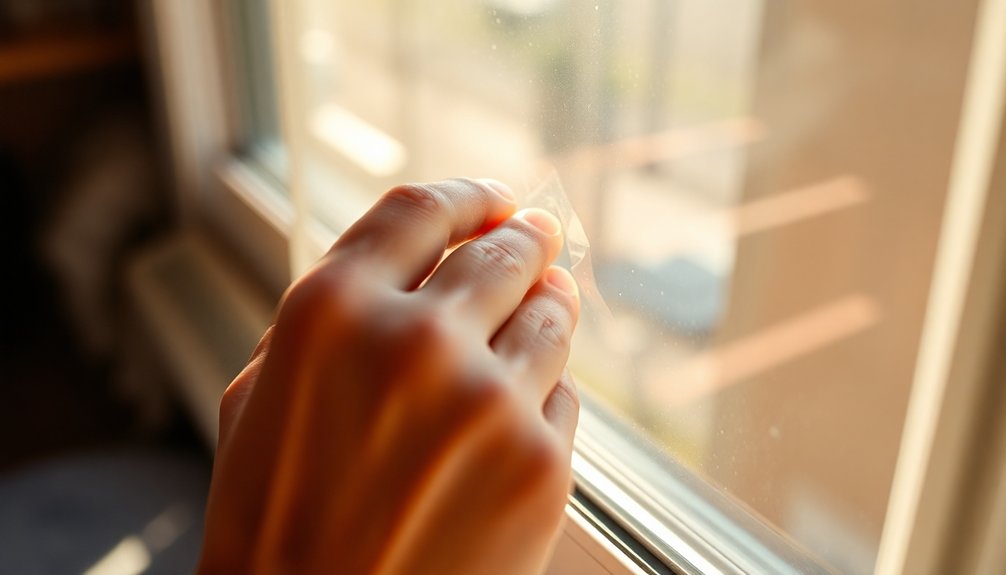
Before you start applying window tape, gather all the necessary tools to make the process smoother.
You’ll want to focus on application techniques to guarantee a tight seal that maximizes energy savings. Tracking expenses effectively can help you allocate funds for home improvements like window insulation.
Let’s break down the steps to get your windows properly insulated.
Gather Necessary Tools
To achieve effective energy savings with window tape, you’ll need to gather a few essential tools.
Start with a measuring tape to accurately measure the gaps around your window. Scissors or a utility knife will help you cut the tape to the right size for a snug fit.
Don’t forget cleaning supplies; a thorough cleaning of the window frame is vital for good adhesion. Dust and debris can hinder the tape’s effectiveness, so make this step a priority.
Once you have your tools and supplies ready, you’ll be set for a smooth installation process.
Regularly check the tape after installation to guarantee it remains effective and free from wear and tear.
Application Techniques Explained
With your tools gathered and the window frame prepped, you’re ready to apply the window tape for energy savings.
Start by thoroughly cleaning the window frame and surrounding area; this guarantees the tape adheres properly and lasts longer. Measure the length of the gaps around the window, cutting the tape for a snug fit.
Next, peel the backing off the adhesive side and carefully press it into the gaps, avoiding air bubbles that can compromise insulation. For best results, apply the tape during mild weather to help the adhesive set effectively.
Finally, inspect your work for any gaps or lifted areas to maximize energy efficiency and reduce heat loss, keeping your home comfortable year-round.
Common Mistakes to Avoid When Using Window Tape
While using window tape can greatly enhance your home’s energy efficiency, there are common mistakes you should avoid to secure peak performance.
First, always clean the window surface before applying the tape; poor adhesion can lead to air leaks and increased energy loss.
Always clean the window surface before applying tape to ensure strong adhesion and prevent air leaks.
Next, make sure you’re using the right type of window tape designed for sealing; using the wrong tape can compromise its insulation benefits and lead to peeling.
Measure and cut the tape accurately to avoid gaps that allow drafts.
Be cautious not to overlap the tape excessively, as this can hinder proper sealing.
Finally, don’t ignore seasonal changes; regularly check and replace the tape as needed to maintain effective insulation during extreme weather conditions. Additionally, adopting financial discipline through consistent monitoring of your energy-saving efforts can enhance your overall savings.
Comparing Window Tape to Other Insulation Solutions
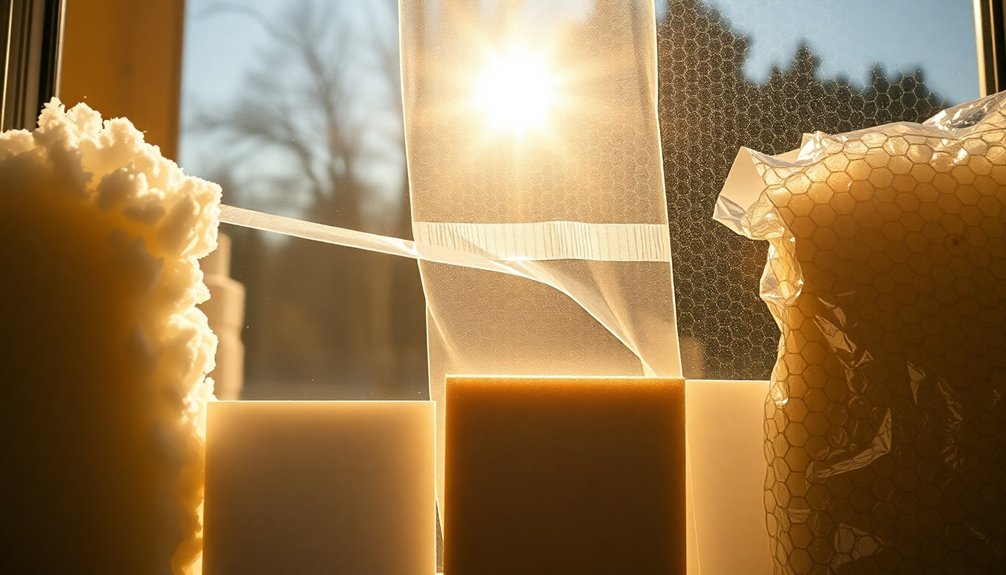
When you consider insulation solutions, window tape stands out for its effectiveness against air leaks and impressive cost savings.
It often lasts longer than alternatives like weather stripping, making it a smart choice for durability.
Let’s explore how it stacks up against other options with respect to performance and longevity. Additionally, utilizing effective expense tracking tools can further enhance your overall savings by optimizing your financial management.
Effectiveness Against Air Leaks
As you consider options for sealing air leaks, window tape stands out as an effective and user-friendly solution.
It’s a quick and cost-efficient way to enhance insulation and boost energy efficiency in your home. Studies show that properly applied window tape can reduce air leakage by up to 30%, which means you’ll see a noticeable drop in heating costs.
Unlike traditional caulking, window tape is easier to apply and reposition, making it ideal for both DIY projects and professional applications.
In colder climates, using window tape alongside other insulation methods, like weather stripping, can greatly improve thermal performance and comfort.
While it may not be a permanent fix, it’s a valuable short-term solution to mitigate energy loss through windows.
Cost Comparison Analysis
Choosing the right insulation solution can be overwhelming, especially with so many options available.
Window tape stands out as a cost-effective choice, typically priced between $5 to $30 per roll. In comparison, foam or fiberglass insulation can set you back $50 to $200 for similar coverage.
By considerably reducing air leaks, window tape can decrease energy consumption by up to 30%, offering financial relief on heating and cooling costs.
Unlike expensive window replacements, this DIY project is easy to apply and doesn’t require professional help.
While window films may cost between $10 to $40 per window, window tape simplifies the process, making it an attractive option for homeowners seeking energy-efficient windows without breaking the bank.
Durability and Longevity Insights
Window tape not only offers a cost-effective solution for energy savings but also boasts impressive durability and longevity.
Designed to create a robust air and moisture barrier, window tape effectively seals gaps that lead to energy loss, with some products lasting up to 10 years or more when properly installed.
Unlike traditional insulation methods like caulk or weather stripping, window tape is quick and easy to apply, making it perfect for DIY homeowners.
Many window tapes feature advanced materials that withstand extreme temperatures, ensuring consistent heat resistance and durability.
Studies reveal that using window tape can reduce heating and cooling costs by up to 20%, providing similar savings to other insulation solutions without the hassle of professional installation.
Maintenance Tips for Prolonging the Life of Window Tape
To guarantee your window tape remains effective over time, regularly inspect it for signs of wear such as peeling or cracking. This helps prevent air leaks that can undermine your insulation and lead to energy loss.
Clean the surfaces where you apply the window tape with a mild soap solution to remove dirt and debris, ensuring better adhesion and longevity. Store your window tape in a cool, dry place to avoid degradation of the adhesive.
It’s best to apply the tape during mild weather, as extreme temperatures can affect its sealing performance. Finally, replace the window tape every few years or as needed, since aging adhesive can diminish insulation and increase energy loss through gaps. Additionally, consider using sustainable packaging solutions to minimize waste while maintaining your home’s energy efficiency.
Real-World Energy Savings From Window Tape
Regular maintenance of your window tape plays a key role in maximizing energy efficiency, but understanding the real-world savings it can provide is equally important.
By effectively sealing gaps, window tape can considerably reduce heat loss, preventing up to 40% of heating energy from escaping through unsealed windows. This improvement in insulation can lower your heating and cooling costs by up to 30%.
Effectively sealing gaps with window tape can cut heat loss by up to 40%, reducing energy costs by as much as 30%.
Not only is applying window tape a cost-effective solution, but it also enhances the performance of single-pane windows, making them operate closer to double-glazed models. Investing in quality window tape leads to immediate energy savings, and over time, you’ll enjoy reduced energy bills and a more comfortable home. Additionally, consistent maintenance of your windows and financial health ensures that you maximize your energy savings while also maintaining a balanced approach to overall expenses.
Additional Insulation Methods to Consider
While window tape is a fantastic start for enhancing energy efficiency, there are several additional insulation methods worth considering. Implementing these strategies can markedly reduce heat loss and improve your home’s comfort.
- Reflective window film: Blocks up to 80% of solar heat, cutting cooling costs in summer.
- Insulating window coverings: Cellular shades create air pockets that retain heat during winter.
- Storm windows: Add an extra layer of protection, decreasing heat loss by 25-50%.
Additionally, consider how sustainable materials can play a role in further enhancing your home’s insulation and energy efficiency.
The Environmental Impact of Using Window Tape
Enhancing your home’s insulation with window tape not only boosts energy efficiency but also has significant environmental benefits.
By sealing gaps around windows, you can drastically reduce air leakage, which accounts for about 30% of energy loss in heating and cooling. This improved insulation leads to lower energy bills and helps decrease your overall household energy consumption.
As a result, you’ll be reducing your carbon footprint since using less energy means fewer greenhouse gas emissions. Plus, window tape is a cost-effective solution that can save you up to 30% on your heating and cooling expenses.
It also promotes environmental sustainability by prolonging your windows’ lifespan, minimizing moisture infiltration, and preventing mold growth. Additionally, employing expense categorization strategies can further enhance your budgeting for home improvements and energy-saving projects.
Conclusion
In the grand tapestry of home energy efficiency, window tape is your unsung hero, quietly weaving warmth into your space. By sealing those pesky drafts, you’re not just saving money, but also embracing a greener future. So, as you roll out your tape, think of it as a shield against the chill, ensuring comfort and savings. With a little care and attention, you’ll find that this simple solution can make a big difference in your energy bills.