
 0
0
 0
0
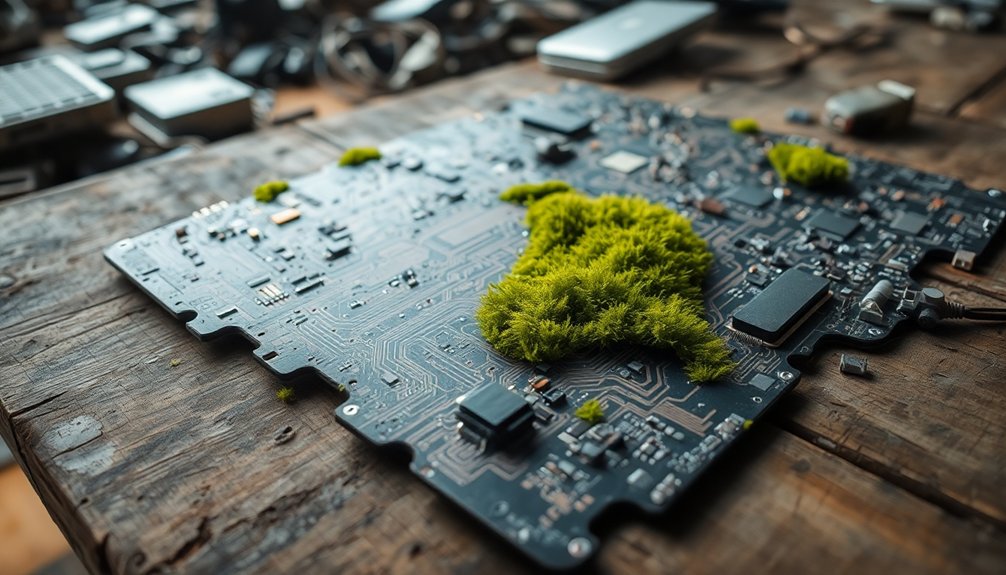
If you’ve got a broken motherboard, don’t toss it just yet! These tech components are packed with valuable materials like gold and copper, making them worth recycling. Motherboard recycling not only helps recover these precious metals but also supports environmental sustainability. Plus, hobbyists can salvage parts for various projects. So, before you consider it e-waste, think about the hidden value. There’s plenty more to uncover about how to maximize that value and what you can do with it.
Understanding Motherboards: The Heart of Your Computer
When you think about your computer, the motherboard is like its heartbeat, keeping everything connected and functioning smoothly. It’s the main circuit board that links the CPU, RAM, storage, and other essential computer components.
With an average lifespan of 5-10 years, motherboards can determine system compatibility and performance, making them crucial for upgrades. When they fail, many people consider them e-waste, but they actually hold a treasure trove of valuable metals like gold and copper. Additionally, the recycling process can recover these materials while also protecting our environment, making it an important practice for enhanced accuracy and organization. By recycling old motherboards, you not only contribute to reducing e-waste but also help in reclaiming precious resources that can be reused in new technologies.
The Value of Precious Metals
When you recycle broken motherboards, you can uncover valuable precious metals like gold, silver, and copper. These metals not only contribute to the overall worth of the boards but can also yield significant profits in the recycling market. Understanding their market value helps you make informed decisions about recycling your old electronics. Additionally, utilizing a savings tracker app can enhance your financial growth by optimizing your investment strategies.
Recoverable Precious Metals
Broken motherboards are treasure troves of recoverable precious metals. Each unit contains about 1.5 grams of gold, primarily in connectors and pins, and 63 grams of copper, along with smaller amounts of silver and palladium.
These valuable materials make motherboard recycling a smart choice, especially since high-grade motherboards can fetch up to $2.50 per pound in the scrap metal market.
While individual consumers might see minimal value, large-scale recycling efforts efficiently extract significant quantities of these precious metals, promoting resource conservation.
By recycling motherboards, you help prevent harmful waste and contribute to a more sustainable environment.
Market Value Analysis
The market value of precious metals extracted from broken motherboards is surprisingly significant, making them a lucrative option for recycling.
Each broken electronic unit contains approximately 1.5 grams of gold, 63 grams of copper, and trace amounts of silver and palladium. The recycling price for high-grade computer scrap can reach over $2.50 per pound, offering a solid return on investment.
As demand for these valuable metals rises, metal recovery from motherboards becomes increasingly appealing. Additionally, salvageable components like capacitors and RAM slots hold extra value for hobbyists and educational institutions.
Motherboard Recycling: A Growing Industry
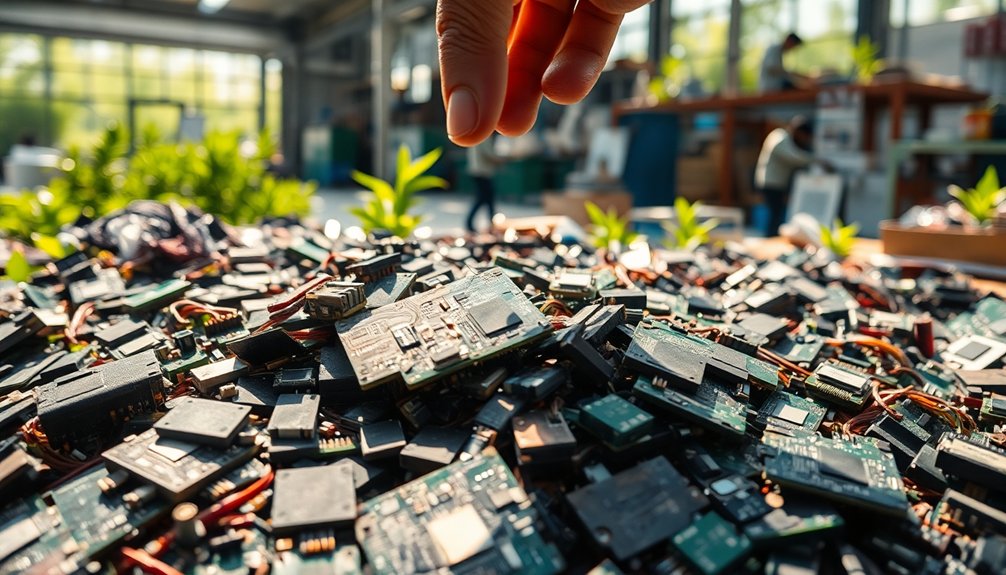
As electronic waste continues to pile up, motherboard recycling emerges as an essential industry focused on recovering valuable materials like gold, silver, and copper.
Motherboard recycling is crucial for reclaiming precious metals and combating electronic waste.
This growing field plays a vital role in sustainable practices and resource recovery, preventing electronic waste from filling landfills.
Consider these key aspects of motherboard recycling:
- Valuable metals: High-grade motherboards can yield about $2.50 per pound in scrap value.
- Community engagement: Local collection events raise awareness about proper recycling and its benefits.
- Economic opportunities: Recycling supports both environmental protection and local economies.
Additionally, tracking progress in recycling efforts helps communities understand their impact on reducing electronic waste and promoting sustainability.
Factors Affecting the Value of Broken Motherboards
When it comes to broken motherboards, several key factors determine their value.
The age and model greatly influence what you can get, as older or rare boards are often worth more.
Additionally, the condition of the motherboard and the current market demand for recycled materials play essential roles in setting prices. Furthermore, understanding ethical shopping practices can help you make informed decisions about recycling and reusing electronic components.
Age and Model Impact
Understanding how age and model affect the value of broken motherboards can greatly enhance your recycling efforts. Here are some key factors to take into account:
- Older Models: Motherboards from the 1960s-1980s often contain more precious metals, increasing their worth.
- High-End vs. Standard: High-end motherboards typically have valuable metals like gold and palladium, making them more valuable than standard consumer-grade boards.
- Market Trends: The demand for specific components and fluctuations in precious metal prices can directly impact the recycling value.
Condition and Wear Factors
The condition of a broken motherboard plays an essential role in determining its value, especially since intact components can greatly boost its worth.
Boards that have minimal damage and retain valuable metals, like gold-plated connectors and copper traces, are particularly appealing to recyclers. If you’ve got scrap motherboards with damaged electronic components, their worth drops markedly.
Remember, older models often yield higher gold recovery potential, which can enhance value despite their condition. Additionally, if you’re recycling multiple units, you might get better offers due to bulk advantages.
Ultimately, the condition and presence of precious metals in your broken motherboards directly influence how much you can earn from them.
Market Demand Trends
Market demand for broken motherboards can greatly influence their value, alongside the condition and salvageable components we’ve already discussed. Several factors drive this market demand:
- Valuable metals: Components like gold, copper, and silver considerably increase worth.
- Old motherboards: Older models often have a higher potential for gold recovery.
- Bulk quantities: Selling in bulk attracts better pricing due to economies of scale.
High-grade motherboards can fetch up to $2.50 per pound, especially during technological advancements or shortages in raw materials.
As market trends shift, you’ll find that the age, model, and condition of your broken motherboards directly impact their resale value, making awareness of these factors essential for maximizing profit.
Maximizing the Value of Your Defective Motherboard
While you might think a broken motherboard is just junk, it can actually be a hidden treasure trove of valuable materials. Your computer’s motherboard contains precious metals like gold, silver, and copper, which can be recovered during recycling.
With scrap motherboards fetching about $2.50 per pound, it’s worth recycling for cash. Before you recycle, properly remove batteries and personal data to enhance security and comply with local regulations.
You can also salvage components like capacitors and RAM slots to increase their value, supporting creative projects. Partnering with certified recyclers and participating in local recycling events can maximize your returns while promoting community engagement in electronics recycling. Additionally, consider checking for cashback programs that may offer rebates on electronics recycling services.
Don’t let your defective motherboard go to waste!
DIY Options: Extracting Value From Broken Motherboards
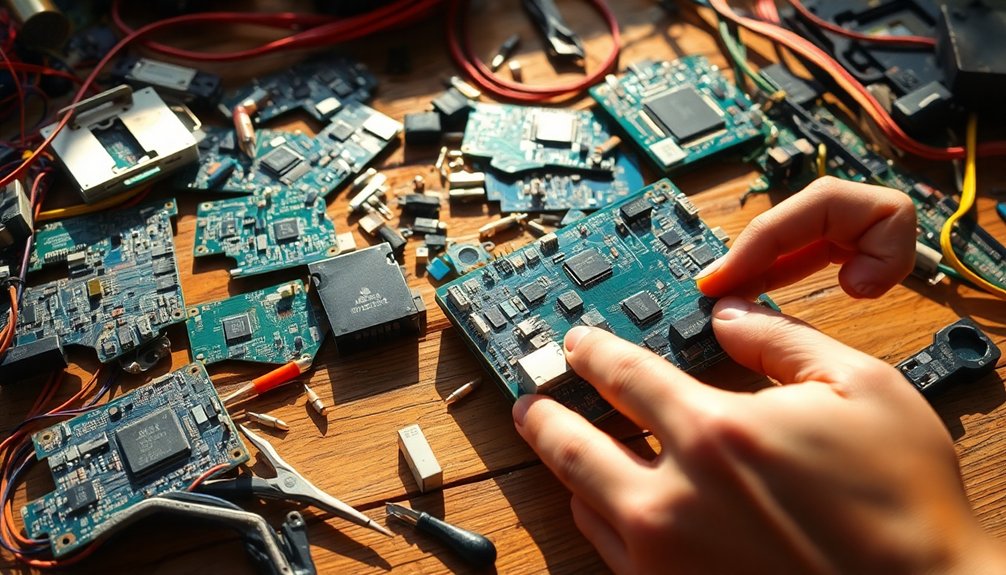
Broken motherboards can be a goldmine for DIY enthusiasts looking to extract value and learn new skills. By salvaging valuable metals and components, you can turn old tech into treasure. Here are some options to get started:
- Extract gold fingers: Remove gold-plated connectors for precious metal recovery.
- Salvage computer parts: Take out capacitors, heat sinks, and RAM slots for reuse in your projects.
- Recycle materials: Shred the board to separate metals like copper and aluminum.
Using simple tools like heat guns makes component removal easier, but remember to prioritize safety when handling chemicals. Additionally, understanding expense categorization is crucial when budgeting for the tools and materials needed in this rewarding DIY journey.
Online forums and YouTube tutorials are great resources to guide you through effective techniques in this rewarding DIY journey!
Real-World Value: Case Studies of Repurposed Broken Motherboards
As you explore the potential of repurposing broken motherboards, you’ll find inspiring case studies that highlight their real-world value.
Artists are transforming these electronics into unique art pieces, showcasing creativity while reducing waste.
Educational institutions also benefit by salvaging components for hands-on learning in technology courses, turning broken motherboards into valuable teaching tools.
Individuals like John demonstrate the environmental impact of recycling, preventing nearly one pound of e-waste from reaching landfills.
Community initiatives, such as local collection events, raise awareness about the importance of recycling broken motherboards, leading to higher recovery rates of valuable metals like gold and copper.
These efforts not only preserve resources but also contribute to a more sustainable future. Additionally, supporting local businesses that engage in e-waste recycling promotes community sustainability and reduces carbon emissions associated with long-distance shipping.
Green Tech Solutions: Pioneering the Future of Motherboard Recycling
Green Tech Solutions is revolutionizing motherboard recycling by leveraging cutting-edge technologies to extract valuable materials from e-waste. They focus on environmental sustainability while recovering precious metals like gold, silver, and copper.
Here’s how they’re making a difference:
- Effective Recovery: Extracting approximately 1.5 grams of gold and 63 grams of copper from each motherboard.
- Certified Partnerships: Collaborating with certified recyclers to guarantee responsible handling of materials.
- Public Awareness: Educating consumers on the economic and environmental benefits of motherboard recycling. Additionally, their efforts align with the increasing trend of using expense tracking tools to manage costs associated with recycling and e-waste disposal.
Conclusion
In the world of tech, broken motherboards aren’t just scrap; they’re hidden jewels waiting to be uncovered. With precious metals and recycling options, you can transform what seems like trash into treasure. So, don’t toss that faulty board in the landfill—consider its potential! By maximizing its value through DIY projects or recycling, you’re not just benefiting yourself; you’re also playing a part in a greener future. Isn’t it time to see the gold in your electronic waste?