 0
0
 0
0
To slope your shower ceiling effectively, aim for a minimum of 2 inches per foot to manage condensation and prevent water damage. Use a level, measuring tape, and chalk line to mark your slope accurately. Prepare your shower area by checking the existing structure for any moisture issues. Use framing lumber and cement backer board for support, and make certain a central point from which to slope outward. Interested in additional tips and techniques? There’s plenty more to explore!
Understanding the Importance of Ceiling Slope in Showers
When designing a steam shower, understanding the importance of ceiling slope is essential, as it directly impacts your comfort and the shower’s functionality.
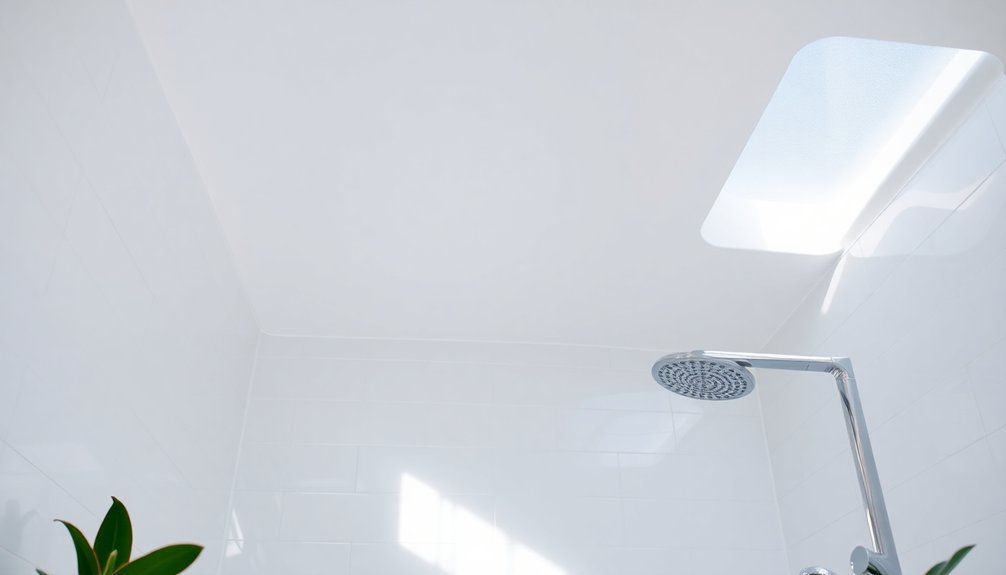
To effectively manage condensation, the ceiling slope should be a minimum of 2 inches per foot. This slope directs condensation down the walls, enhancing user comfort and minimizing water damage in your shower stall.
Ignoring these guidelines can lead to significant performance issues, which may require costly redesigns. The TCNA Handbook emphasizes that proper sloping not only guarantees functionality but also contributes to the longevity of your steam shower installation.
Plus, you can maintain aesthetic appeal by sloping from a center point, guaranteeing your shower looks great while still performing well. Additionally, monitoring savings and investments can help fund future home improvement projects, ensuring your shower remains a valuable asset.
Tools and Materials Needed for Slope Installation
When installing a sloped shower ceiling, you’ll need a few essential tools and materials to get the job done right.
A level, measuring tape, and a chalk line are vital for achieving the correct slope, while framing lumber and cement backer board form the foundation.
Don’t forget safety gear to protect yourself while working with these materials! Additionally, employing expense management apps can help track costs effectively during your DIY project.
Essential Tools Overview
To successfully slope a shower ceiling, you’ll need a few essential tools and materials that guarantee precision and safety throughout the installation process. Here’s what you should gather:
- Level: Confirms accurate slope measurement.
- Saw: A circular or reciprocating saw is vital for cutting materials.
- Stud Finder: Identifies structural framing to secure modifications.
- Safety Equipment: Protects you from debris—goggles, gloves, and a dust mask are must-haves.
With these essential tools, you’ll not only enhance the functionality of your shower but also create a beautiful space.
The right tools make all the difference in achieving a perfect slope, making sure your hard work pays off in the end.
Recommended Material Choices
Achieving the right slope for your shower ceiling requires careful selection of materials and tools that work together seamlessly.
Start with a measuring tape and a level to guarantee the ceiling slopes a minimum of 2 inches per foot, as recommended by the Tile Council of North America. You’ll need high-quality cement backer board for a solid surface that can handle the slope.
Use a chalk line to guide your cuts, and a saw to achieve the desired angle. When it’s time for tile installation, apply thinset mortar evenly with a trowel for a secure bond.
Finally, integrate waterproofing materials, like the Schluter Kerdi system, to prevent moisture issues from condensation on your beautifully sloped ceiling.
Preparing the Shower Area for Slope Adjustment
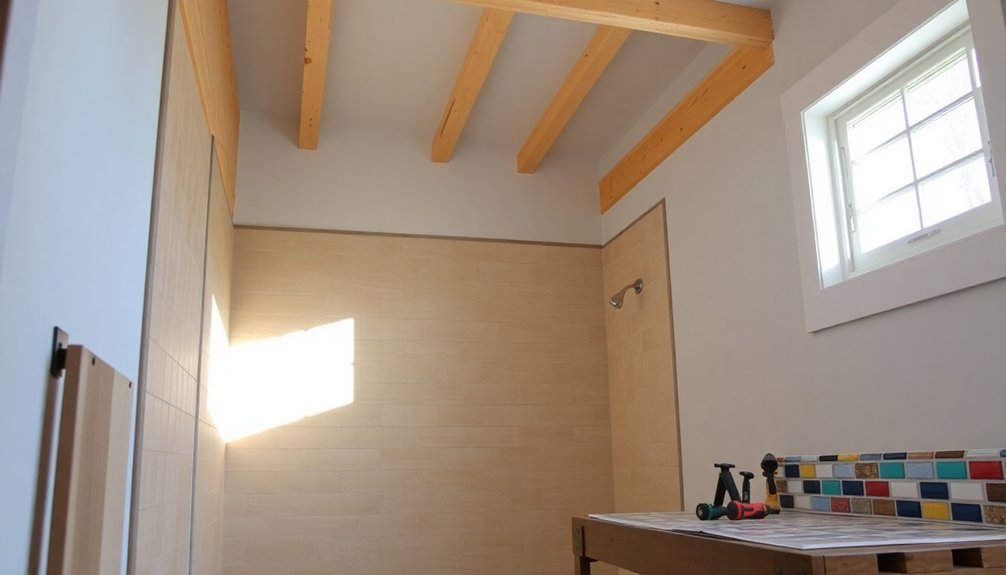
Start by evaluating your existing ceiling structure to determine its current pitch. You’ll want to plan your slope design carefully to guarantee you achieve the recommended minimum of 2 inches per foot for proper drainage. This initial evaluation is essential for a successful shower upgrade. Additionally, implementing proactive monitoring of due dates for any upcoming plumbing expenses can help you stay organized throughout your renovation process.
Assess Existing Ceiling Structure
Evaluating the existing ceiling structure is essential before making any slope adjustments for your steam shower. You need to assess the ceiling’s integrity to guarantee it can handle changes without compromising safety.
Start by measuring the height and dimensions, aiming for a slope of at least 2 inches per foot to prevent condensation issues. Look for signs of any moisture problems, like water damage or mold, that could impact your new slope’s effectiveness.
Reinforce framing where needed, especially at corners, to maintain structural soundness. Familiarize yourself with the TCNA Handbook guidelines to ensure your modifications comply with best practices.
- Protect your investment
- Create a safe environment
- Enjoy a luxurious experience
- Prevent future repairs
Plan Slope Design
As you prepare to adjust the slope in your shower area, it’s essential to pinpoint the center of the ceiling, which will serve as the highest point for your design.
Establish a slope of at least 2 inches per foot toward the walls to guarantee proper drainage. Check that the existing ceiling structure is sturdy enough to support this sloped design and reinforce any weak areas if necessary.
Use a level to mark your desired slope on the ceiling, drawing guidelines from the center point to the edges for precise cuts.
Keep the type of tiles and overall design aesthetic in mind, as a well-executed slope enhances both functionality and visual appeal before installation.
Planning the Slope: Measurement and Marking
When planning the slope for your shower ceiling, it’s essential to guarantee proper drainage, so measuring and marking accurately is critical.
Start by measuring the height at the center point, making sure it’s at least 2 inches per foot toward the edges. Use a level and straight board to draw a guideline along the wall, maintaining consistency across the ceiling surface.
Mark reference points every foot around the perimeter to visually guide your installation. Double-check your measurements to avoid costly redesigns.
- Avoid the frustration of leaks.
- Enjoy a beautifully finished shower.
- Save money with DIY installations.
- Feel proud of your craftsmanship.
Incorporating expense tracking tools can further enhance your budgeting for DIY projects.
With careful planning, you can guarantee a successful slope for your shower ceiling.
Techniques for Achieving the Correct Slope
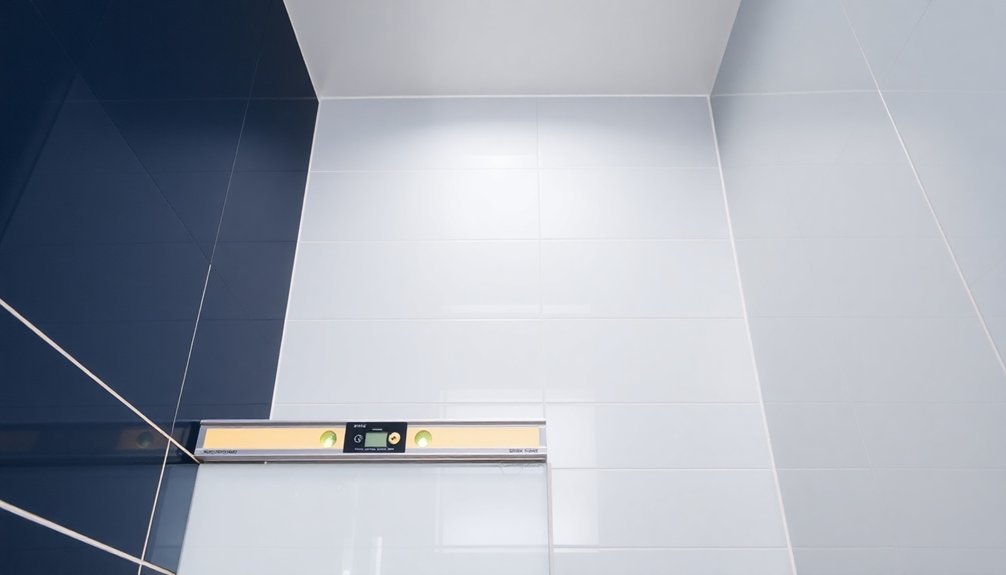
With the slope accurately planned and marked, it’s time to focus on techniques for achieving that correct angle in your shower ceiling.
First, confirm your slope is at least 2 inches per foot to prevent condensation in your steam shower. Start by determining the highest point of the ceiling and measure downwards to create a slope line for tiling.
Use a level and straight board to maintain a consistent slope, checking your measurements regularly for accuracy. A center point can be beneficial, allowing the ceiling to slope outward and reducing runoff on the walls.
Always adhere to industry standards, like those from the TCNA Handbook, to confirm your installation’s longevity and functionality. Utilizing expense categorization tools can also help streamline your budgeting process for home improvement projects.
Finishing Touches After Slope Installation
After installing the sloped ceiling, it’s essential to focus on the finishing touches that guarantee both aesthetics and functionality.
Start by painting the ceiling to avoid any mess during the caulking process. Once it’s dry, apply caulk where the ceiling meets the tiles to create a watertight seal, choosing a color that matches your grout lines for a seamless look.
Allow the tiles to dry overnight before grouting, ensuring a strong adhesion. When grouting, use a float to push grout into the spaces between tiles, and keep a clean sponge handy to wipe away excess.
Incorporating clear payment terms ensures that any related purchases during your renovation are handled efficiently and without dispute.
- Enjoy a beautifully finished shower
- Feel confident in your DIY skills
- Breathe easy knowing there are no leaks
- Relish the satisfaction of a job well done
Troubleshooting Common Slope Issues
How can you guarantee your sloped ceiling effectively prevents condensation and enhances your shower experience?
First, verify the ceiling slopes a minimum of 2 inches per foot. If you notice water dripping, it likely means the slope is insufficient or poorly designed, prompting a redesign to meet industry standards.
Check for any flat spots or level areas, as these can cause condensation to pool. Sloping from a central point can improve both the ceiling’s performance and aesthetics.
Additionally, evaluate your installation against the TCNA Handbook recommendations; deviating from these standards might lead to long-term issues.
If condensation persists, consider a redesign to achieve the proper slope, verifying your steam shower remains durable and comfortable. Furthermore, implementing sustainable and ethical shopping practices for your materials can enhance both your project’s value and environmental impact.
Conclusion
By mastering the art of sloping your shower ceiling, you’re not just saving on tile costs; you’re creating a space that’s both functional and stylish. Imagine stepping into a beautifully designed shower where water flows seamlessly away from the walls, preventing unsightly mold and damage. With the right tools and techniques, you can transform your DIY project into a stunning success. So, are you ready to take the plunge and elevate your shower experience?