
 0
0
 0
0
When comparing AWD and FWD, you’ll find that all-wheel drive isn’t less safe; in fact, it enhances traction and stability, especially in poor conditions. However, AWD does consume more fuel and leads to higher maintenance costs compared to FWD. If you’re in milder climates, FWD might be the more economical choice. For those who need superior grip on slippery roads, AWD is a solid option. There’s more to weigh before making your decision.
Key Differences Between AWD and FWD
When choosing between All-Wheel Drive (AWD) and Front-Wheel Drive (FWD), it’s essential to understand their key differences.
AWD delivers power to all four wheels, enhancing traction in challenging driving conditions like snow or rain. This feature boosts performance and stability but often comes with higher maintenance costs due to its complexity.
In contrast, FWD powers only the front wheels, typically offering better fuel economy—averaging up to 30 MPG compared to AWD’s 25 MPG. While FWD can struggle in slippery conditions, it provides a simpler, more cost-effective option for everyday driving.
Ultimately, your choice depends on the balance between safety, performance, and fuel efficiency that best suits your needs. Additionally, regular reviews of savings and investments can support informed decision-making related to your vehicle choice and financial planning.
Safety Benefits of All-Wheel Drive
While driving in adverse weather can be challenging, All-Wheel Drive (AWD) systems greatly enhance safety by providing improved traction and stability on slippery surfaces.
With AWD, power is distributed to all four wheels, which greatly reduces the risk of losing control during sudden maneuvers or steep inclines.
Studies reveal that vehicles equipped with AWD have lower accident rates in winter conditions compared to Front-Wheel Drive (FWD) vehicles, making them a safer option in colder climates.
The enhanced grip of AWD also results in shorter stopping distances on slick roads, which is vital in emergencies. Additionally, opting for vehicles with sustainable packaging solutions can further contribute to overall eco-friendly driving practices.
Cost Considerations: Maintenance and Fuel Efficiency

Considering the long-term costs associated with vehicle ownership, it’s essential to weigh the financial implications of All-Wheel Drive (AWD) versus Front-Wheel Drive (FWD) systems.
AWD vehicles typically come with higher purchase prices and maintenance costs due to their complex drivetrain, which requires more upkeep and specialized repairs. In contrast, FWD models are generally more affordable and offer better fuel efficiency, averaging around 30 MPG compared to AWD’s 25 MPG.
While AWD provides improved traction in adverse conditions, it doesn’t offset the increased expenses related to fuel consumption and potential repair costs. Ultimately, if you prioritize lower maintenance and fuel costs, FWD may be the more economical choice for your needs. Additionally, using personal finance tools can help you track these costs effectively, ensuring you make informed decisions about your vehicle ownership.
Performance in Adverse Weather Conditions
After evaluating the cost implications of AWD and FWD, it’s important to contemplate how these drivetrains perform in adverse weather conditions.
AWD systems provide superior traction and handling in slippery winter conditions, distributing power to all four wheels for better control. This means you’ll experience enhanced acceleration and stability on slick roads, making AWD a safer choice if you often drive in challenging weather.
In contrast, FWD vehicles struggle with traction on steep or slippery surfaces and typically require proper winter tires to maximize performance.
While AWD improves safety and handling, it can come at the cost of fuel efficiency, as these systems tend to be heavier than their FWD counterparts. Additionally, understanding your financial spending plans can help you make informed decisions about the long-term costs of vehicle ownership.
Which System Is Right for You?
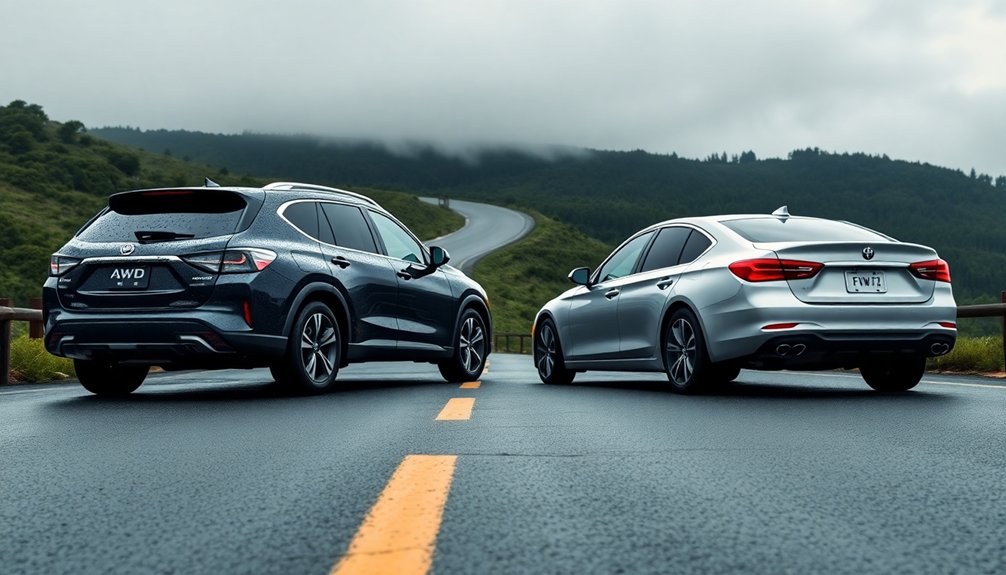
How do you decide between all-wheel drive (AWD) and front-wheel drive (FWD) when choosing a vehicle? It really depends on your driving habits and needs:
- Weather conditions: Choose AWD for snow and rain; FWD for milder climates.
- Fuel efficiency: FWD vehicles often achieve better MPG, around 30, compared to AWD’s 25.
- Maintenance costs: FWD systems are usually less complex, leading to lower upkeep.
- Driving terrain: If you tackle off-road or rugged paths, AWD provides superior traction.
- Budget: Consider the initial price and long-term costs associated with maintenance and fuel.
Additionally, understanding your spending habits can help you make a more informed decision regarding your vehicle choice.
Ultimately, weigh safety, performance vehicles, and practicality to determine which system is right for you.
Conclusion
In the end, choosing between AWD and FWD boils down to your lifestyle and driving needs. If you often find yourself traversing snowy roads or tackling off-the-beaten-path adventures, AWD might just be the perfect fit. However, if you’re cruising through city streets and want to save on fuel, FWD could be your best buddy. Coincidentally, the right choice could lead to safer, more enjoyable drives for you. So, what’ll it be? Your perfect ride awaits!