
 0
0
 0
0
When it comes to the great wall debate, you should prime before texturing. Priming creates a sticky surface, ensuring better adhesion and reducing the risk of peeling. It also helps identify any imperfections that need fixing before you apply the texture. By sealing the drywall, you achieve even absorption, leading to a more consistent finish. Plus, it saves on material costs in the long run. There’s more to discover about priming practices and their benefits.
The Importance of Priming Before Texturing
When you’re preparing to texture a wall, priming first is essential to achieving the best results.
Priming creates a sticky surface that improves texture adhesion, reducing the risk of peeling or flaking over time, especially in damp areas like kitchens and bathrooms.
It guarantees even absorption of texture, leading to a uniform finish on new drywall and patched spots.
By highlighting imperfections, primer allows you to make pre-emptive repairs for a smoother, more professional look.
Many texture product manufacturers emphasize the importance of priming based on extensive testing, proving it leads to fewer issues during the application process.
Plus, a primed surface enhances texture visibility, preventing the original wall color from showing through and elevating your overall aesthetic.
Additionally, monitoring your financial health through effective goal tracking can enhance your overall home improvement projects by ensuring you allocate sufficient budget for quality materials and labor.
Enhancing Texture Adhesion With Primer
To enhance texture adhesion, applying primer to your drywall is essential. Primer creates a sticky surface that allows texture to grip effectively, reducing the risk of peeling or flaking over time. Not only does it seal the drywall, but it also guarantees even absorption of texture materials, preventing a patchy look, especially on new or repaired areas.
Additionally, priming before texturing reveals small imperfections, allowing you to make pre-emptive repairs for a smoother finish. A well-primed surface provides an even base color, improving depth perception of textures while guaranteeing the original wall color doesn’t peek through. Following what manufacturers recommend by priming before texture application leads to better results and minimizes issues like cracking or peeling later on. Furthermore, utilizing advanced receipt scanning technology can enhance the overall efficiency of managing home improvement expenses.
Achieving Even Absorption on Drywall
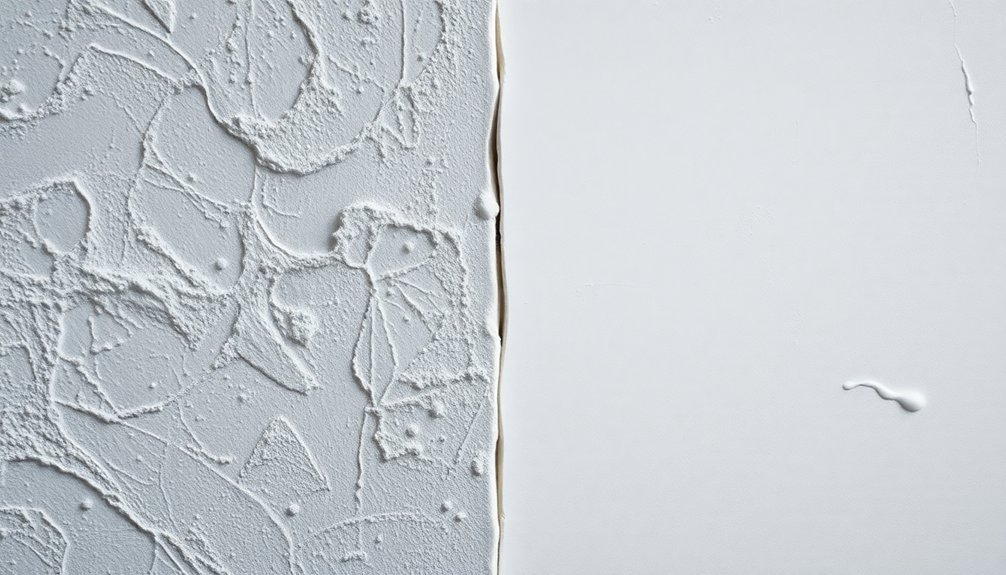
To achieve a smooth and professional finish on your drywall, consistent absorption is essential.
By priming the surface, you can prevent patchy appearances and guarantee an even texture application across the entire wall.
This simple step not only enhances the look but also contributes to the longevity of your finish. Additionally, clear payment terms can help ensure that your materials and services are paid for promptly, allowing you to focus on achieving the best results.
Consistent Texture Application
Achieving a consistent texture application on drywall hinges on proper preparation, particularly through the use of primer.
When you prime first, you set the stage for a smooth, even surface that enhances the bonding of the texture. This guarantees your walls look professionally finished, without any unsightly imperfections.
- Enjoy a flawless finish
- Avoid cracking and peeling
- Mask imperfections with ease
- Enhance the bonding for longevity
- Achieve satisfaction with every stroke
Preventing Patchy Appearances
When you prime your drywall before applying texture, you greatly improve the chances of achieving a uniform appearance.
Priming seals the drywall surface, ensuring consistent absorption of texture materials, which is key to preventing patchy appearances. An even application of primer not only reduces the risk of cracking or peeling but also highlights imperfections, allowing for repairs before texture is added. This preemptive approach leads to the best results in your final finish.
Without priming, varying absorbency can create an uneven texture that’s tough to fix later. By using primer, you establish a consistent base color, preventing the original wall color from peeking through and enhancing the overall visibility of the texture you apply.
Identifying Imperfections for a Flawless Finish
When you apply primer, you’ll start spotting surface flaws like dents and uneven spots that need attention. Tackling these imperfections before adding texture is essential for a polished look and prevents issues down the line. Utilizing tools like expense tracking software can help you manage costs associated with repairs and ensure your project stays within budget.
Spotting Surface Flaws
Spotting surface flaws is essential for a flawless finish, as even minor imperfections can mar the overall appearance of your drywall.
Priming helps reveal these issues, enabling you to address them before applying texture. Ignoring them can lead to a finish you’re not proud of.
Here’s what to look for:
- Small dents and dings that disrupt the smoothness
- Uneven spots that create visual distractions
- Cracks or peeling that may worsen with texture
- Areas where the primer hasn’t adhered properly
- Uneven texture application that highlights flaws
Importance of Pre-Repairs
Before you plunge into texturing your drywall, identifying and repairing imperfections is essential for achieving a flawless finish.
Priming before texturing highlights small flaws like dents and dings, making it easier to spot uneven spots that need fixing. By addressing these imperfections beforehand, you guarantee that the final textured surface maintains a professional appearance without visible flaws after painting.
Taking the time to evaluate and repair the surface can greatly enhance the longevity and aesthetic quality of your walls. When you tackle imperfections before applying primer and texture, you not only prevent future visibility of issues but also contribute to a more visually appealing and uniform result.
Prioritizing these pre-repairs sets the stage for a successful texturing project.
Enhancing Overall Appearance
To achieve a flawless finish on your drywall, it’s crucial to enhance the overall appearance by identifying and fixing imperfections early on.
When you prime first, it allows you to spot dents and uneven spots that need attention.
Here’s how this process benefits you:
- Highlights tiny flaws for easy repairs
- Guarantees even absorption of texture
- Prevents patchy appearances
- Enhances the visibility of your final texture
- Preserves the integrity of your walls over time
Improving Aesthetic Appeal of Textured Surfaces
While you may overlook the importance of priming, it plays a crucial role in enhancing the aesthetic appeal of textured surfaces.
When you always prime before texturing, you guarantee better adhesion, reducing the risk of peeling and flaking. This leads to a longer-lasting finish that looks great.
A well-primed surface absorbs texture evenly, minimizing patchiness and creating a uniform appearance that elevates your walls.
Plus, primer reveals small imperfections, allowing for preemptive repairs that result in a smoother finish.
By providing a consistent base color, primer enhances the visibility of the texture, making it pop, especially with light colors or contrasts.
To achieve the best results, always recommend priming first to maintain that integrity and aesthetic appeal over time. Additionally, budgeting tools can help ensure you allocate resources effectively for home improvement projects.
Manufacturer Recommendations on Priming Practices
Understanding manufacturer recommendations on priming practices is essential for achieving best results when applying textured surfaces.
Priming your drywall before texture application guarantees better adhesion and durability, preventing issues like peeling or flaking over time.
Here are some key benefits to take into account:
- Seals the drywall, promoting even absorption.
- Prevents a patchy appearance on new or repaired surfaces.
- Reveals imperfections for preemptive repairs.
- Enhances texture performance based on extensive testing.
- Essential in moisture-prone areas like kitchens and bathrooms.
- Additionally, following proper sustainable practices can help reduce waste associated with home improvement projects.
Community Opinions on Priming Techniques
Why do so many professionals emphasize the importance of priming before texturing?
Community discussions reveal that priming considerably improves adhesion and creates a uniform appearance on drywall surfaces. Many contractors argue that skipping primer can lead to inconsistent texture absorption, complicating your finish.
Priming also helps uncover imperfections in the drywall, allowing you to make necessary repairs before applying texture for a flawless result. Additionally, in high-moisture areas like kitchens and bathrooms, priming can prevent issues like peeling and cracking.
The consensus is clear: priming is a quick, easy step that enhances the overall success of the texturing process, showing minimal drawbacks regarding time and cost. It’s a small investment for a professional-looking finish. Furthermore, priming can promote financial awareness by ensuring that you allocate your budget effectively for home improvement projects.
Evaluating Cost and Efficiency in Priming and Texturing
Priming plays a significant role not just in enhancing the quality of your texture but also in optimizing costs and efficiency.
By choosing to prime first, you can save on material costs and labor, providing more value for your investment.
Here’s what you should consider:
- Reduced texture mud usage: Priming seals surfaces, minimizing waste.
- Lower overall costs: Contractors charge less for priming than texturing.
- Improved job efficiency: Experienced contractors work faster with proper priming.
- Fewer issues: Priming decreases mottling and uneven drying.
- Clear communication: Understanding costs prevents disputes and confusion.
When you weigh these factors, priming can be a smart choice that enhances the texture while keeping costs manageable. Additionally, utilizing budgeting apps can help you track project expenses effectively, ensuring that you stay within your financial limits.
Conclusion
In the great wall debate, it’s clear that priming first sets you up for success. While some might argue that texturing before priming saves time, it actually risks uneven adhesion and a less polished look. By priming, you guarantee an even surface that enhances texture and boosts durability. Plus, following manufacturer recommendations can save you headaches down the line. So, don’t skip the primer—your walls will thank you with a flawless finish that lasts!