 0
0
 0
0
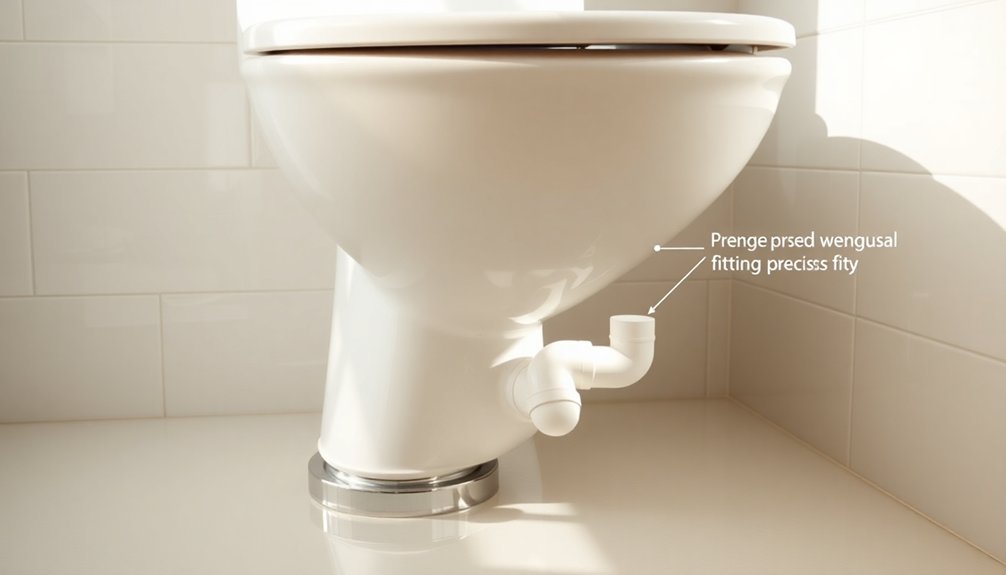
When installing your toilet, aim for the 90-degree elbow to be positioned about 1 to 3 inches from the toilet flange. This distance helps guarantee efficient drainage and reduces the risk of clogs by maintaining proper alignment. Remember that achieving the right slope is vital, especially in tight spaces. If you want to explore more about toilet installation and best practices, there’s plenty more information to help you get everything just right.
Understanding Toilet Flange Placement
When it comes to toilet installation, understanding toilet flange placement is vital for a successful setup. You need to make certain the center of the toilet flange is positioned 12 inches from the wall. This placement allows for standard toilet installation and guarantees adequate clearance for the 90-degree elbow fitting.
Additionally, confirm the flange is level and securely attached to the subfloor; otherwise, you might need to worry about leaks and misalignment with the drain pipe. The flange should be flush with the finished floor surface to maintain a tight seal with the toilet.
Proper alignment directly above the drain is critical for smooth waste flow, preventing clogs caused by sharp bends. Utilizing comprehensive budget management tools can help freelancers manage costs associated with home improvement projects effectively.
The Role of the 90-Degree Elbow
When you’re installing a toilet, the 90-degree elbow plays an essential role in both space-saving design and flow efficiency. You need to contemplate how this fitting affects installation alignment to guarantee proper drainage. Getting these factors right not only helps avoid clogs but also maximizes the use of your bathroom space. Additionally, proper installation can enhance financial management by reducing potential repair costs associated with plumbing issues.
Space-Saving Design Benefits
In tight plumbing configurations, a 90-degree street elbow can be a game changer, offering significant space-saving benefits.
Its compact design allows you to save both vertical and horizontal space, making it perfect for installations with limited room.
If you’re dealing with low ceiling clearance, this elbow helps maintain a lower height from the floor to the pipe, which is vital.
By using a 90-degree elbow, you can achieve proper alignment with the drain pipe, essential for effective drainage and preventing backups.
While a long sweep elbow might promote smoother flow, it takes up more space—so if you’re looking for practicality in constrained environments, let’s know how a 90-degree elbow can be your best option.
Flow Efficiency Considerations
Although a 90-degree elbow can fit snugly into tight spaces, its impact on flow efficiency shouldn’t be overlooked. For ideal flow path optimization, you should make certain that the elbow maintains a downward drainage slope of ¼ inch per foot. This slope promotes efficient drainage and helps prevent backups.
When considering elbow selection, long sweep elbows are generally preferable for drainage applications, as they allow for a smoother flow path and reduce turbulence, minimizing the risk of clogs. While a standard 90-degree elbow might save space, it can create flow restrictions and lead to waste accumulation.
Consequently, carefully balancing space constraints with flow efficiency is essential for a well-functioning plumbing system.
Installation Alignment Importance
Proper installation alignment of a 90-degree elbow is essential for ensuring effective drainage, as misalignment can lead to clogs and backups in your plumbing system.
Use proper installation techniques to place the elbow at the ideal distance from the toilet flange, maintaining a downward slope of ¼ inch per foot.
When you’re working with a 90-degree street elbow, alignment is key to saving space while ensuring that waste flows smoothly.
Employ alignment tools to verify that the elbow’s angle is correct and free from sharp bends.
Don’t forget to dry fit the elbow before securing it; this allows you to make adjustments easily.
Keep these troubleshooting tips in mind to optimize your plumbing setup and avoid future issues.
Importance of Proper Alignment
When installing your toilet, proper alignment between the flange and the drain pipe is key to ensuring efficient drainage. If the 90-degree elbow is positioned incorrectly, it can lead to clogs and leaks that create ongoing maintenance issues. Keeping the flange securely fastened and aligned minimizes the risk of waste getting trapped and keeps your plumbing system running smoothly. Additionally, utilizing expense categorization tools can enhance overall operational efficiency by preventing costly mistakes in other areas of your business.
Drainage Efficiency Considerations
Verifying your drain pipe aligns correctly with the toilet flange is essential for effective drainage and preventing backups.
You should maintain a drainage slope of ¼ inch per foot to facilitate ideal waste flow. Using a 90-degree street elbow can help achieve the necessary connection while conserving space, especially in tight joist configurations.
Avoid sharp bends, as they can trap waste and create clogs, hampering your system’s performance. When installing near a joist, position the elbow correctly to prevent height issues and support proper drainage.
Don’t forget to dry fit all components before securing them—this step verifies that your alignment and slope are adequate, ultimately enhancing the efficiency of your plumbing system.
Flange Positioning Importance
Achieving effective drainage doesn’t stop with the correct slope and elbow placement; it also heavily relies on the proper positioning of the toilet flange.
You need to guarantee the flange is aligned directly above the drain pipe for a smooth shift. Misalignment can lead to backups and leaks, so pay attention to:
- Flange height adjustment for proper fit
- Flange material choices that resist corrosion
- Flange installation tools for secure attachment
- A level flange to maintain toilet stability
- A downward slope of ¼ inch per foot
Taking these factors into account will help you avoid clogs and guarantee efficient drainage.
Proper flange positioning is critical for a reliable and lasting toilet installation.
Challenges in Tight Joist Spaces
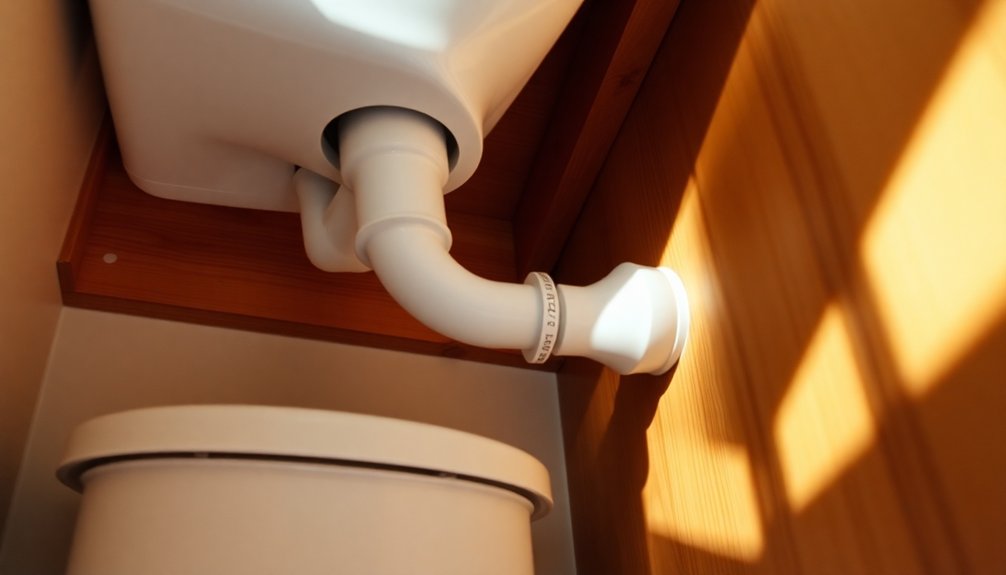
Installing a toilet flange in tight joist spaces presents unique challenges that require careful consideration.
When working with 2×7 joists, you face tight space challenges that limit your plumbing fitting options. The compact 90-degree street elbow is often your best bet, as it conserves both vertical and horizontal space.
However, achieving a downward slope of ¼ inch per foot is vital for proper drainage, and limited room can complicate this. You’ll want to avoid sharp bends that can trap waste, so opt for smoother fittings like long sweep elbows when possible.
Achieving a ¼ inch per foot slope is crucial; opt for smoother fittings to prevent waste traps.
To guarantee everything aligns correctly, dry fit your components before securing them. This installation planning strategy will help you navigate the constraints effectively. Additionally, utilizing advanced receipt scanning technology can streamline the management of any expenses related to your plumbing project.
Best Practices for Installation
Here are some key toilet installation tips to keep in mind:
- Position the 90-degree elbow at least 12 inches from the toilet flange.
- Ascertain a downward slope of ¼ inch per foot using drainage slope guidelines.
- Opt for a street elbow if space is limited for better elbow fitting techniques.
- Dry fit all components before securing them to check for alignment.
- Pre-drill the tile for the flange installation to secure closet bolts properly.
- Incorporating timely payments into your financial organization strategy can help prevent costly mistakes during installation.
Expert Recommendations for Optimal Flow

To guarantee ideal flow in your toilet drainage system, it’s essential to take into account the placement of the 90-degree elbow in relation to the toilet flange.
Ideally, the elbow should be no more than 3 to 4 feet from the flange to prevent clogs. Using a long sweep elbow instead of a standard type enhances drainage, allowing for smoother waste flow.
Remember to maintain a downward slope of ¼ inch per foot from the flange to the drain pipe. Avoid sharp bends by making certain the elbow isn’t placed too close to the flange.
For the best results, consult a licensed plumber to verify proper alignment, especially when selecting flange materials and using the right installation tools. Additionally, conducting regular billing process reviews can help ensure that plumbing services are promptly invoiced, improving overall cash flow.
Conclusion
In summary, placing your 90-degree elbow just right from the toilet flange guarantees smooth flow, prevents clogs, and keeps your bathroom functional. Remember, a little distance can make a big difference, just like careful planning leads to successful installations. So, whether you’re tackling tight joist spaces or aiming for perfect alignment, follow best practices, heed expert advice, and enjoy the peace of mind that comes with a job well done. Your toilet will thank you!