
 0
0
 0
0
Maggots in your compost bin can create a smelly mess, but you can tackle them effectively. Start by aerating the compost to prevent excess moisture. Use natural solutions like boiling water or vinegar to eliminate the larvae. For severe cases, consider insecticides, but follow safety instructions. To prevent future infestations, avoid adding protein-rich food and cover your bin tightly. If you’re unsure about your compost management, there’s more to explore on keeping it healthy and maggot-free.
Understanding Maggots in Compost
While maggots might seem alarming at first glance, understanding their role in your compost bin can change your perspective.
These maggots in compost are primarily the larvae of flies, like black soldier flies, thriving in moist, nitrogen-rich organic waste. Their presence signals active decomposition, as they assist in breaking down materials that microorganisms might find challenging, enhancing the composting process. However, if you notice an abundance of maggots, it could mean your compost is too wet and has too many green materials. To strike a balance, aerate your compost regularly and manage moisture levels. Embracing these decomposers not only reduces organic waste but also offers a nutritious food source for your chickens or livestock. Utilizing expense tracking tools can also help in managing costs associated with maintaining your composting system effectively.
Natural Methods to Eliminate Maggots
If you’re looking for natural ways to tackle maggots in your compost bin, boiling water and vinegar are great options. Pouring boiling water directly on them will eliminate the pests instantly, while a vinegar spray can saturate and kill them over time. Both methods are effective and safe, letting you keep your composting process going strong. Additionally, using sustainable practices in your composting efforts can further enhance the health of your garden ecosystem.
Boiling Water Treatment
When maggots invade your compost bin, using boiling water can quickly and effectively eliminate them. This natural method works because the high temperature kills maggots instantly upon contact.
To implement this technique, carefully pour boiling water directly over the affected areas of your compost pile. Make sure to saturate the area thoroughly to reach all the maggots hiding within.
Not only is boiling water safe and environmentally friendly, but it also avoids introducing harmful chemicals into your composting process. If you notice maggots reappearing, repeat the treatment, as their rapid lifecycle may lead to reinfestation.
Just be cautious to avoid scalding yourself, and let the compost cool before adding any materials back in to promote healthy decomposition.
Vinegar Application Method
To effectively combat maggots in your compost bin, consider using a vinegar application method. Spray white vinegar directly onto the affected areas, saturating the maggots. This disrupts their environment and helps eliminate them naturally.
Let the vinegar sit for 30 minutes to an hour, allowing it to work its magic and kill the pests. Vinegar is a safe alternative to harsh chemicals, making it ideal for maintaining an organic compost process.
After treatment, be sure to aerate your compost and manage moisture levels to prevent future infestations. Regularly monitoring your compost conditions will minimize maggot presence and keep your compost ecosystem healthy.
Embrace this simple, effective method to maintain a thriving compost bin!
Chemical Solutions for Severe Infestations
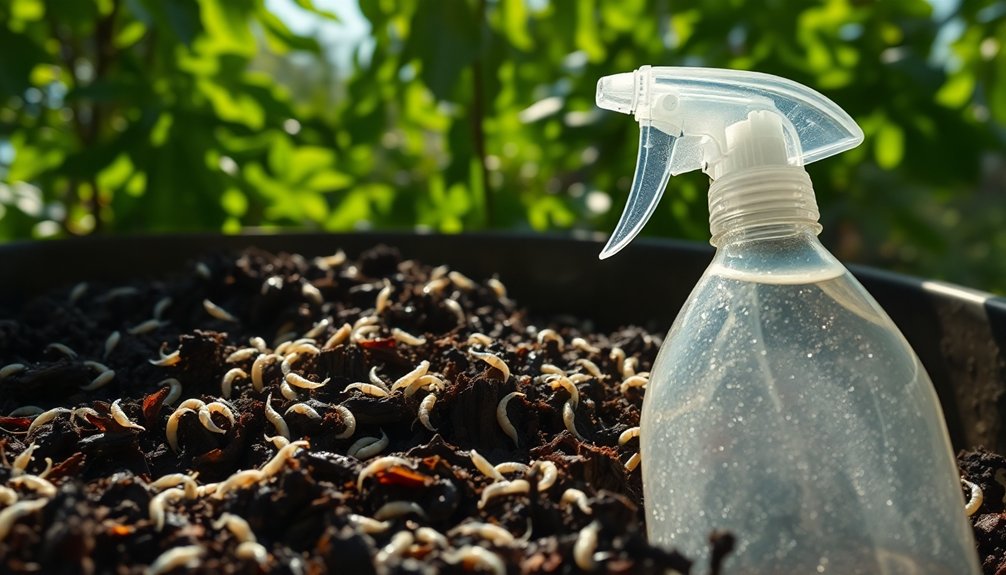
Chemical solutions can be effective for tackling severe maggot infestations in your compost bin. If natural methods have failed, consider using insecticide sprays specifically designed to kill insects. Always follow the label instructions carefully to guarantee safety and effectiveness.
Alternatively, you can create a bleach solution by mixing one part bleach with nine parts water and pour it over the affected area. Just be cautious to avoid harming beneficial organisms in your compost.
Remember to apply chemical solutions in well-ventilated areas to minimize risks to yourself and pets. Wear gloves and a mask to protect against potential harmful effects. Use these chemical interventions as a last resort to control the maggot infestation effectively. Additionally, employing timely reminders for compost maintenance can help prevent future infestations.
How to Prevent Maggots From Infesting Your Compost Bin
Preventing maggots from infesting your compost bin starts with maintaining the right balance of materials.
Combine nitrogen-rich greens with carbon-rich browns to keep moisture levels in check. Here are some tips to help you achieve that balance:
- Mix vegetable scraps with dried leaves.
- Aerate your compost pile regularly for airflow.
- Cover your compost bins with a tight lid or mesh screen.
- Steer clear of protein-rich foods like meat and dairy.
- Monitor moisture levels and add dry materials, like shredded newspaper.
Additionally, maintaining proper financial organization can help you allocate resources for quality composting materials.
The Role of Maggots in Decomposition
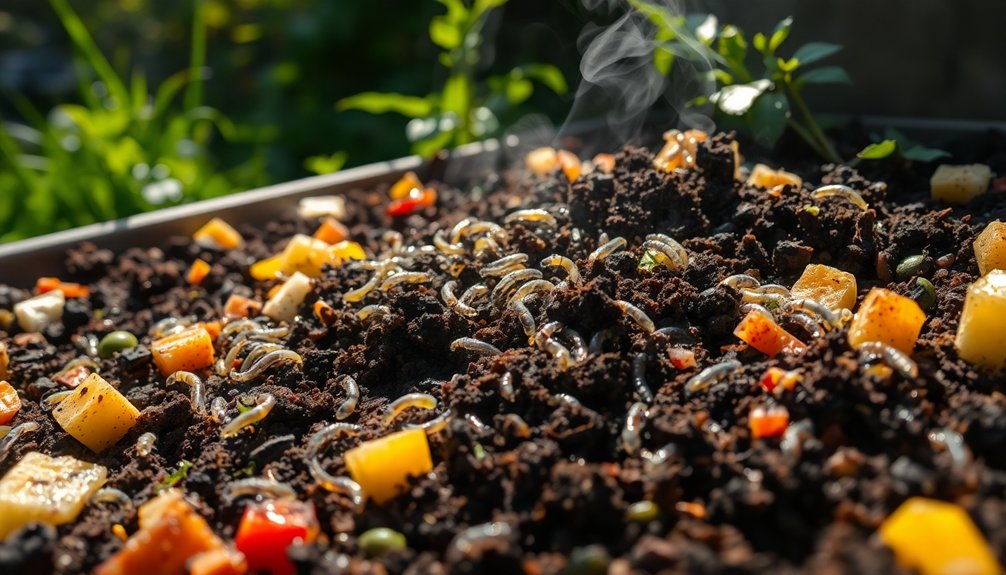
While some may find maggots off-putting, they actually play an essential role in decomposition. These larvae, primarily from black soldier flies, excel at breaking down organic matter that microorganisms struggle with.
Their presence in your compost indicates active decomposition, thriving in nitrogen-rich environments to speed up the breakdown of waste. In fact, maggots can reduce organic waste volume by up to two-thirds in just one day!
As effective decomposers, they also contribute to nutrient cycling, enriching your soil with essential nutrients once they die and decompose. Additionally, their role in the composting ecosystem supports the balance of various organisms, enhancing the overall health of your compost bin.
Plus, their life cycle supports the composting ecosystem, with adult flies emerging to aid in pollination and serve as food for other wildlife.
Embrace maggots—they’re nature’s little helpers!
Managing Compost Temperature and Moisture Levels
To effectively manage your compost, you need to keep an eye on both temperature and moisture levels, as they play a critical role in the decomposition process.
Aim for a compost pile temperature between 130°F and 160°F to accelerate decomposition and deter maggots.
- Regularly check moisture levels, keeping them around 40-60%
- Turn the compost every few weeks for aeration
- Incorporate dry brown materials like leaves or straw
- Use a compost thermometer to track temperature changes
- Avoid over-watering to prevent attracting flies
In addition, understanding financial reporting can help you budget for composting materials and tools effectively.
When to Seek Professional Help
If you notice a severe maggot infestation in your compost bin, it’s time to think about getting professional help.
Continuous maggot problems despite your DIY efforts can signal deeper issues that need expert attention.
Additionally, if you detect foul odors, it’s essential to address the potential health risks before they escalate. Regular billing process reviews can help identify and rectify underlying issues contributing to persistent infestations.
Severe Infestation Signs
A severe infestation of maggots in your compost bin can quickly become a serious concern, especially when you notice a strong, foul odor indicating anaerobic conditions.
If you see:
- Large clusters of maggots writhing in decaying food waste
- Multiple fly species buzzing around the bin
- An overwhelming stench of decay permeating the air
- Consistent reappearance of maggots despite your best maintenance efforts
- An influx of other pests, like rodents, drawn by the smell
It’s time to seek professional help.
Ignoring these signs can lead to further complications and health risks. Don’t wait until your compost bin becomes a breeding ground for disease-carrying flies; act swiftly to reclaim your composting space.
Health Risks Involved
Maggots may not directly harm you, but their presence signals unsanitary conditions that can attract disease-carrying flies.
If you find maggots in your compost, it’s essential to act quickly. Health risks arise when improper compost management leads to foul odors and other pests, which can negatively affect your well-being.
If you’re dealing with a significant maggot infestation, especially in food waste, consider consulting pest control professionals. This is particularly important if you have a compromised immune system or allergies, as maggots can pose additional health risks in these cases.
Ineffective DIY Solutions
While DIY solutions like boiling water or vinegar might seem effective at first, they often fall short against significant maggot infestations. If you’re facing a persistent problem, it’s time to seek professional pest control.
Relying on ineffective methods can worsen the situation, as maggots reproduce rapidly, overwhelming your compost bin.
Consider these signs that indicate you need expert help:
- Recurring maggot appearances
- Unpleasant odors that linger
- A sudden spike in compost temperature
- An influx of flies around your bin
- Difficulty maintaining proper compost balance
Professional pest control can provide targeted treatments and advice for creating a healthier compost environment, preventing future infestations.
Don’t let maggots take over—get the help you need!
Tips for Maintaining a Healthy Compost Environment
To maintain a healthy compost environment, it’s essential to keep a close eye on several key factors.
Regularly aerate your compost by turning it to promote oxygen flow, preventing unpleasant odors and discouraging maggots. Aim for a balanced mix of green (nitrogen-rich) and brown (carbon-rich) materials to optimize decomposition and reduce excess moisture.
Cover your compost bin with a well-fitting lid or window screen to allow airflow while keeping flies out, as they’re beneficial for the process but can lead to maggot issues.
Monitor moisture levels carefully; if your compost is too wet, add more dry materials like leaves.
Finally, avoid protein-rich foods like meat and dairy, which attract flies and increase the likelihood of maggot presence. Additionally, maintaining a balanced mix of materials can further enhance the composting process and reduce the risk of pest infestations.
Transforming Maggots Into a Resource for Your Garden
If you’ve found maggots in your compost bin, don’t despair; these little creatures can actually be a boon for your garden.
Black soldier fly larvae are efficient decomposers that transform organic waste into nutrient-rich compost.
Consider these benefits:
- They markedly reduce organic waste mass.
- They’re a high-protein food source for chickens and fish.
- Their presence attracts beneficial insects for pollination.
- They boost microbial activity, speeding up decomposition.
- Managing compost conditions can turn them into an asset.
- Their role in ethical sourcing practices encourages sustainable waste management and promotes a healthier ecosystem.
Conclusion
To sum up, tackling pesky maggots isn’t just about removal; it’s about creating a composting community where decomposition thrives. By maintaining moisture and temperature, you can cultivate a healthy habitat that discourages infestations. Remember, these little larvae play a pivotal role in breaking down organic matter, so embrace their benefits. With a bit of diligence and dedication, you’ll transform your compost bin into a flourishing feast for your garden, fostering fabulous future growth!