 0
0
 0
0
Using a regular car jack for oil changes can be risky. These jacks often lack the stability needed during maintenance tasks, making accidents more likely. Always use jack stands alongside your jack to guarantee safety. If your vehicle has enough clearance, you might skip the jack altogether, simplifying the process. You’ll want to know the right jacking points and tools for a successful oil change. There’s so much more to learn about safe oil changes and vehicle maintenance.
Understanding the Risks of Using a Regular Car Jack for Oil Changes
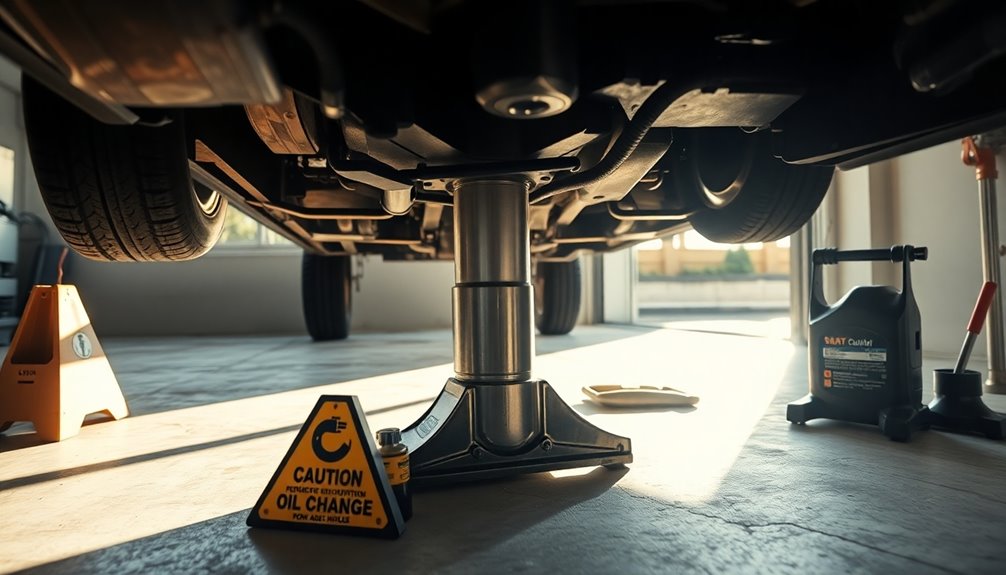
While you might think a regular car jack is sufficient for an oil change, it’s vital to understand the risks involved.
Regular jacks, like scissor or hydraulic floor jacks, aren’t designed for stable, long-term support. Relying on them alone poses a serious threat, especially since hydraulic jacks can leak and collapse.
Scissor jacks are meant for emergencies and can easily slip, increasing the risk of accidents while you’re working underneath your vehicle.
You shouldn’t attempt an oil change without using jack stands, which provide the necessary stability and security.
Safety protocols emphasize that no jack should be trusted on its own, so always prioritize your safety by incorporating jack stands during any maintenance tasks. Additionally, ensuring proper maintenance of your vehicle can help identify potential issues before they become hazardous.
Essential Safety Equipment for DIY Oil Changes

When you tackle a DIY oil change, having the right safety equipment is vital to protect yourself and guarantee a smooth process.
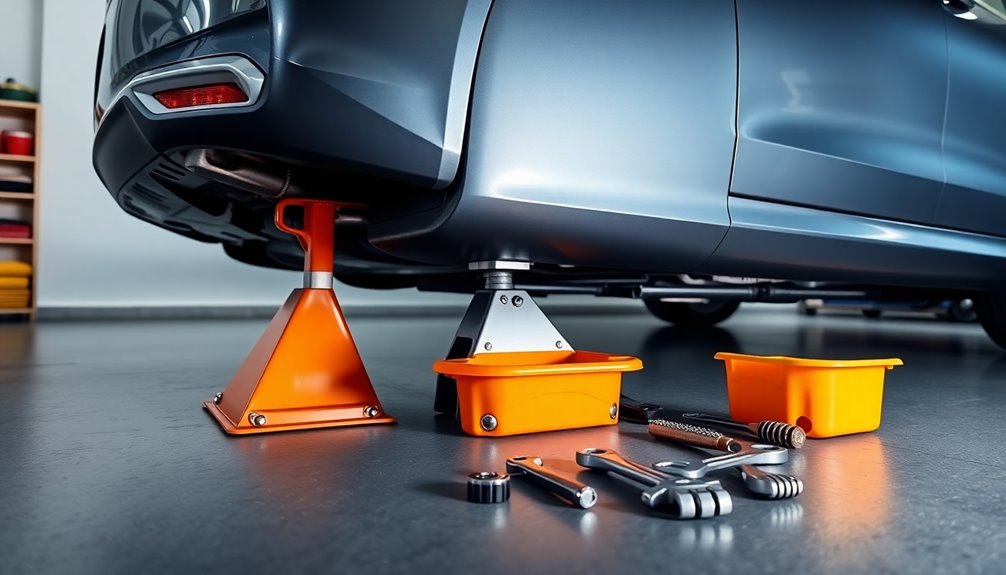
Always use jack stands in conjunction with your tire jack to provide stable support while you’re working underneath your vehicle. Relying solely on a jack isn’t safe; hydraulic floor jacks can leak and collapse, while scissor jacks may slip or fall over.
Using jack stands greatly reduces the risk of accidents and injuries during your maintenance tasks. By incorporating proper safety equipment, you not only safeguard yourself but also create a safer environment for future DIY enthusiasts. Additionally, ensuring that your tools are well-maintained can enhance the longevity of your equipment and prevent unexpected failures during your oil change.
Step-by-Step Guide: Using a Tire Jack to Change Oil Safely

Before you start your oil change, make certain to prepare your workspace properly to guarantee a safe and efficient process.
Park your vehicle on a level surface, engage the parking brake, and chock the rear wheels. Next, consult your owner’s manual for the correct jacking points to avoid damaging your vehicle while using a tire jack.
Once raised, immediately place jack stands under the vehicle for secure support. Use an oil filter wrench to remove the old oil filter and a drain plug wrench to release the used oil, ensuring you have a drain pan ready. Proper maintenance of your vehicle, including regular oil changes, can help prevent issues that may arise from neglecting engine care.
After changing the oil, check the oil level with the dipstick and inspect for leaks around the oil filter and drain plug before lowering the vehicle.
Evaluating Alternatives: Can You Change Oil Without a Jack?
If your vehicle has good ground clearance, you mightn’t need a jack to change the oil.
With just a few simple tools like a socket wrench and an oil pan, accessing the drain plug can be straightforward.
This approach not only saves time but can also make the process more efficient. Additionally, using expense tracking apps can help you manage costs associated with DIY maintenance.
Vehicle Ground Clearance Benefits
While some vehicles make oil changes a breeze without a jack, others require extra tools for safe access.
If you own a vehicle with high ground clearance, like a Subaru, you’ll likely find it much easier to change your oil. You can often slide an oil pan directly under the car to catch the draining oil, saving you time and effort. No need for a jack or jack stands in these cases!
However, for vehicles with lower ground clearance, you’ll typically need those tools to safely reach the oil drain and filter.
Always assess your vehicle’s ground clearance before attempting an oil change without a jack to guarantee you can do it safely and efficiently.
Simple Tools Required
Changing your oil can be straightforward with just a few essential tools, and you mightn’t even need a jack.
If your vehicle has higher ground clearance, you can save time and money by skipping the jack entirely. All you really need are some simple tools: a socket wrench to remove the drain plug, an oil pan to catch the old oil, and a funnel to pour in the new oil without spills.
With these tools, you can effectively complete the oil change while ensuring safety. Just make sure you have proper access to the oil drain and filter.
Accessing Drain Plug Easily
Accessing the oil drain plug can be surprisingly simple, especially with vehicles that have higher ground clearance. For models like Subarus, you can often change your oil without using jacks or ramps.
Just slide an oil pan under your vehicle and use a socket wrench to remove the drain plug. It helps to have a warm engine, as this allows for quicker oil drainage, making your task even more efficient.
Most standard oil change tasks require only basic tools, so you won’t need specialized equipment. Engaging with fellow DIY enthusiasts shows many successfully change their oil without jacks, proving that accessing drain plugs easily isn’t only practical but also quite achievable for most car owners.
Importance of Proper Jacking Points and Vehicle Stability
Understanding the importance of proper jacking points is essential for guaranteeing your safety when working on your vehicle.
Using incorrect locations can lead to damage, instability, or even accidents while you’re performing maintenance tasks. Always consult your vehicle’s owner’s manual to identify the designated jacking points, typically found on the pinch weld or frame. This guarantees proper support and safety.
Using the wrong jacking points can cause damage and accidents; always refer to your owner’s manual for safe locations.
It’s also important to use jack stands alongside your car jack, as they provide stable support and prevent the vehicle from collapsing during your work.
Remember, leaning into the engine bay while the car is raised can shift the weight and compromise stability if the jack or stands aren’t positioned correctly. Additionally, ensuring that your vehicle is on a level surface can help maintain stability and prevent any accidents during your oil change.
Prioritize safety to make your DIY oil change a success.
Common Tools Needed for an Effective Oil Change
An effective oil change requires a handful of essential tools that can make the process smoother and more efficient.
First, you’ll need a tire jack to raise your vehicle, but don’t forget jack stands for safety. An oil filter wrench is vital for removing the oil filter without damaging it, ensuring a proper seal on the new one.
To easily loosen the oil drain plug, grab a drain plug wrench—it simplifies the process considerably. You’ll also need a drain pan to catch used oil and prevent spills.
Finally, having a socket wrench and a funnel on hand can streamline your oil change and reduce frustration. With these tools, you’re well on your way to a successful oil change! Additionally, ensure that you understand local regulations regarding oil disposal to maintain environmental compliance.
Troubleshooting: What to Do If You Encounter Issues During an Oil Change
When you’re performing an oil change, unexpected issues can arise that might derail your progress.
If you struggle to loosen the drain plug, try using a breaker bar or penetrating oil to break the seal. If the oil filter won’t budge, an oil filter wrench or rubber strap wrench can give you the grip you need.
Should you notice the oil draining too slowly, check for blockages in your drain pan or oil line and reposition the vehicle for better drainage.
In case of spills, use absorbent materials like oil-dry or kitty litter to clean up and avoid slipping hazards.
Finally, if you see a significant drop in oil levels, inspect for leaks around the filter and drain plug. Additionally, during your oil change, ensure that you maintain clear payment terms with any service providers to avoid misunderstandings about costs associated with maintenance.
Benefits of Regular Oil Changes for Engine Health
Regular oil changes are essential for keeping your engine running smoothly and efficiently. By maintaining proper lubrication, you not only enhance performance but also greatly extend your engine’s lifespan. Ignoring this simple task can lead to costly repairs and reduced efficiency down the line. Additionally, regular maintenance is crucial for preventing major repairs and ensuring the longevity of your vehicle.
Engine Longevity Benefits
Maintaining your engine’s health is essential for its longevity, and one of the simplest ways to achieve this is through consistent oil changes.
Regular oil changes help eliminate sludge and metal shavings that build up in the engine bay, ensuring cleaner and more efficient operation. By maintaining proper lubrication, you reduce friction and wear on engine components, greatly extending your engine’s life.
Neglecting oil changes can lead to costly mechanical failures; studies show that regular maintenance can boost engine lifespan by up to 50%. Fresh oil also contains additives that protect against corrosion and oxidation, enhancing overall engine health.
The minimal cost of oil changes pales compared to potential engine repair expenses caused by neglect.
Improved Performance Efficiency
While you mightn’t think about it often, keeping up with your oil changes can greatly enhance your engine’s performance efficiency.
When you change the oil regularly, you remove harmful deposits, preventing sludge and metal shavings that can hurt performance. Fresh oil provides better lubrication for your engine components, which means improved fuel efficiency and peak performance.
Neglecting to change the oil can lead to increased wear and tear, resulting in decreased horsepower and slower acceleration over time.
By maintaining consistent oil change intervals, you not only extend your engine’s life but also guarantee it operates smoothly, enhancing your driving experience and reliability.
Engaging the DIY Community: Tips and Experiences From Other Car Enthusiasts
Engaging with the DIY community can elevate your oil change experience, as fellow car enthusiasts often share invaluable tips and insights.
Many emphasize the importance of using jack stands alongside your regular car jack for safety, since a jack alone can be unstable. You’ll find that some vehicles, like Subarus, have enough ground clearance, letting you skip the jacking altogether.
Basic tools, such as a socket wrench and an oil pan, are all you really need to make oil changes straightforward and accessible. Additionally, establishing a maintenance schedule can help ensure that your vehicle remains in optimal condition between oil changes.
Conclusion
In summary, while you can use a regular car jack for oil changes, it’s essential to prioritize safety. Did you know that nearly 50,000 injuries occur each year from improperly using jacks? Don’t become a statistic! Always make sure your vehicle is stable and secure before getting under it. By following the right steps and using the proper equipment, you can keep your engine healthy and enjoy the satisfaction of a job well done. Happy wrenching!