
 0
0
 0
0
When living in small spaces, storing your Japanese shikifuton effectively can make all the difference. Fold or roll your futon when not in use, and store it in a dry, ventilated area to prevent mold. Utilize vertical closet storage or breathable bags to keep your futon organized and dust-free. Regularly airing it out is a must for freshness. Discover more creative solutions and tips to enhance your living space and maximize your futon’s lifespan.
The Importance of Proper Futon Storage for Small Spaces
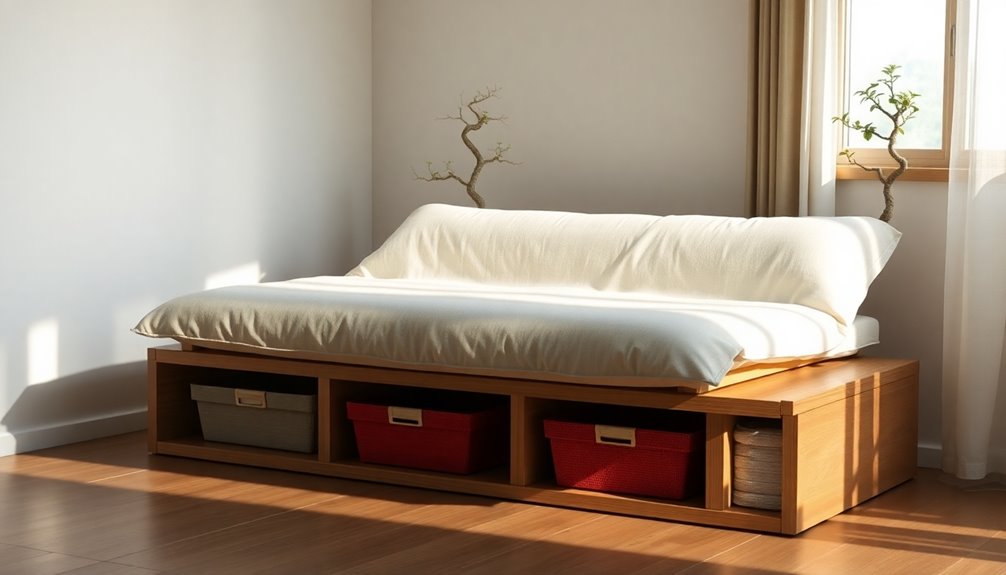
When you live in a small space, proper storage of your shikifuton becomes essential to maintaining a healthy and comfortable environment.
Effective futon storage prevents mold and mildew by reducing humidity, helping to keep your futon in top shape. Folding or rolling your shikifuton when it’s not in use maximizes your limited space and prevents damage from prolonged sleeping positions.
Consider using traditional Japanese oshiire closets, which are perfect for hiding futons and promoting a minimalist look. Storing your futon in breathable materials or bags protects it from dust, allergens, and pests, ensuring you have a fresh sleeping area. Regularly airing out your stored futon and checking for moisture can greatly enhance its lifespan and improve your sleep quality. Additionally, implementing detailed billing statements can help ensure that any related costs for futon maintenance are clear and transparent, promoting better financial management in your small living space.
Creative Storage Options for Your Shikifuton
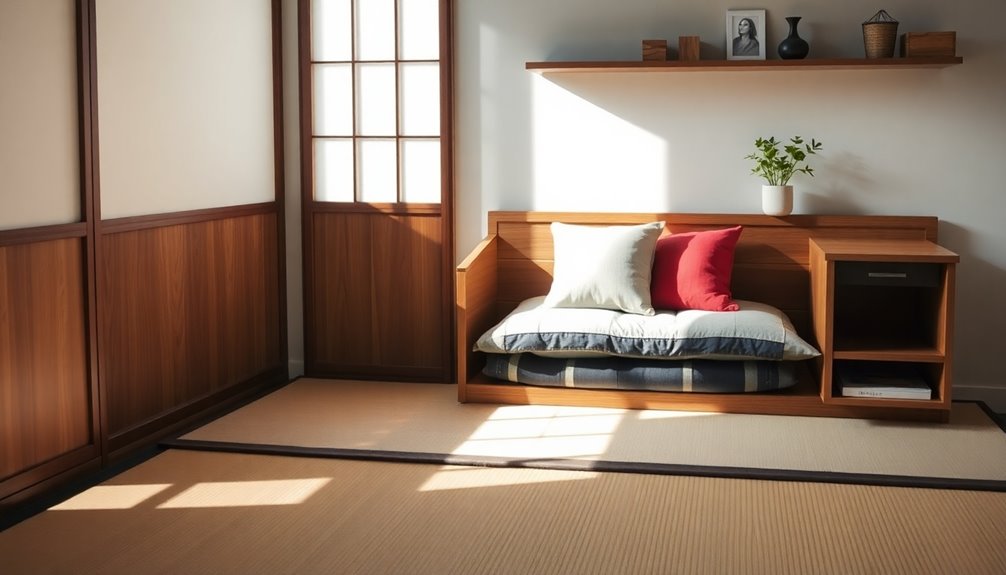
When it comes to storing your shikifuton, you’ve got some clever options. Consider utilizing vertical closet storage to save space, or try outdoor ventilation techniques to keep it fresh. Breathable storage bags can also protect your futon while making it easy to transport when needed. Additionally, using expense tracking apps can help you budget for any storage solutions you may require.
Vertical Closet Storage Solutions
If you’re looking to maximize space while keeping your shikifuton neat and protected, vertical closet storage solutions like an oshiire are ideal.
These traditional Japanese storage spaces let you fold your futon in thirds and tuck it away alongside pillows and blankets, keeping everything organized and safe from dust.
Utilizing vertical storage not only hides your futon from guests for a cleaner aesthetic but also preserves its shape over time.
In modern spaces lacking traditional closets, consider tall shelving units or wall-mounted racks to maintain a tidy appearance.
Employing breathable covers within your vertical closet storage can help prevent mold and moisture buildup, ensuring your shikifuton stays fresh and ready for use whenever you need it.
Outdoor Ventilation Techniques
To keep your shikifuton fresh and in great condition, outdoor ventilation techniques are essential.
Use outdoor drying racks to allow fresh air to circulate, releasing trapped humidity. When you store your shikifuton outside, pick a shaded, dry area to avoid direct sunlight, which can fade the fabric, while still enjoying natural airflow.
Hanging your shikifuton on a clothesline for a few hours helps eliminate odors and refreshes the material. If you have a breathable storage bag, consider using it to protect your shikifuton from dust while it airs out outdoors.
Regularly airing out your shikifuton can prevent mold and mildew buildup, extending its lifespan and maintaining its comfort, making your Japanese futon storage much more effective.
Breathable Storage Bags
Maintaining your shikifuton’s freshness doesn’t stop at outdoor ventilation; using breathable storage bags is a smart way to protect your bedding during storage.
These bags help prevent moisture buildup and odors, ensuring your futon stays fresh.
- Designed with handles for easy transport
- Keeps your futon’s shape and prevents mold
- Compact size fits under beds or in closets
- Some options reduce size by up to 80%
- Ideal for maximizing space in small living areas
Opting for breathable storage bags, like the EMOOR Futon Storage Bag, contributes to your bedding’s longevity.
With their effective design, you can store your shikifuton worry-free, knowing it’s protected from the elements and ready for use whenever you need it.
Maximizing Space: Utilizing Multi-Functional Furniture

When living in a small space, embracing multi-functional furniture can make all the difference in maximizing your room’s potential.
Consider a tatami sofa bed, which easily transforms from a stylish seat to a cozy sleeping area. Storage beds with built-in compartments are another great option, allowing you to access your shikifuton and bedding essentials while keeping everything organized.
Traditional Japanese storage methods, like oshiire closets, conceal your bedding, enhancing aesthetics and optimizing space. Rolling storage bags also come in handy, making shikifutons easy to transport and compact when not in use. Incorporating sustainable materials into your furniture choices not only benefits the environment but also aligns with an eco-friendly lifestyle.
Preventing Damage: Best Practices for Storing Your Futon
Properly storing your shikifuton is essential for preserving its quality and extending its lifespan. To prevent damage, follow these best practices for effective futon storage:
- Always fold or roll your futon when not in use to maintain its shape.
- Store it in a dry, ventilated area to reduce mold and mildew risk.
- Use a breathable futon storage bag if space is limited, protecting it from dust and pests.
- Regularly air out your futon to keep it fresh and free from odors.
- Avoid direct sunlight during storage to prevent fading and fabric degradation.
- Consider incorporating reusable products like breathable futon storage bags to enhance protection and sustainability in your storage solutions.
Keeping Your Futon Fresh: Maintenance Tips and Tricks
To keep your shikifuton fresh, regularly air it out and inspect it for wear. Using breathable storage materials guarantees it stays dry and comfortable between uses. Additionally, regularly inspect stored produce to ensure that it remains fresh and free from spoilage, as this practice can help maintain overall cleanliness in your living space.
Regular Airing Out
Airing out your shikifuton regularly not only keeps it fresh but also prevents moisture buildup that can lead to mold and odors.
To maintain a clean and comfortable sleeping environment, follow these tips:
- Air out your futon in a well-ventilated area on sunny days.
- Aim for at least once a month, or more often during humid seasons.
- Fold your futon to allow free air circulation—lay it flat or hang it over a railing.
- Use sunlight to help kill bacteria and reduce humidity in the fibers.
- Be mindful of your futon’s material; cotton and polyester can handle a few hours of sun, while down-filled futons need careful handling.
Incorporating these practices will extend your futon’s life and enhance your sleep quality.
Use Breathable Storage Materials
After airing out your shikifuton, the next step in maintaining its freshness is choosing the right storage materials.
Opt for breathable storage materials like cotton or linen, as these fabrics allow air circulation and prevent moisture buildup. Avoid plastic bins or bags since they trap humidity, which can lead to mold and mildew.
Instead, consider using breathable futon bags designed specifically for storage; these will protect your futon from dust while ensuring proper ventilation.
You can also enhance breathability by incorporating natural materials like bamboo or wood in your storage environment.
This combination won’t only keep your futon clean and odor-free but also preserve the integrity of the fabric over time.
Inspect for Wear Regularly
While enjoying the comfort of your shikifuton, it’s important to keep an eye out for signs of wear. Regular inspections can help you catch issues early, ensuring your futon stays in great shape.
Here are key aspects to monitor:
- Check for fraying fabric or broken seams.
- Look for moisture and odors to prevent mold.
- Air out your futon every few weeks to keep it dry.
- Rotate it every few months for even wear.
- Follow the manufacturer’s care instructions for cleaning.
Proper maintenance not only keeps your shikifuton fresh but also enhances its lifespan.
Embracing Minimalism: The Cultural Significance of Futon Storage
In the heart of Japanese culture, the practice of futon storage reveals a deep appreciation for minimalism and efficient living. By neatly folding and storing your shikifuton in oshiire closets, you not only free up valuable space but also promote a clean, organized environment that aligns with traditional values.
This daily ritual embodies simplicity and mindfulness, encouraging you to embrace a clutter-free lifestyle. Utilizing vertical storage for your futons transforms small homes into multifunctional spaces, enhancing aesthetic appeal without sacrificing functionality. Additionally, adopting mindful spending habits can further support your minimalist journey by reducing unnecessary purchases and fostering a focus on quality over quantity.
Ultimately, futon storage symbolizes a cultural commitment to serenity and well-being, allowing you to create a harmonious living space that reflects the beauty of Japanese interior design. Embracing this practice can greatly elevate your home experience.
Conclusion
In the dance of small living, your shikifuton deserves a thoughtful partner. Just like a skilled dancer effortlessly moves through a crowded space, you can create harmony in your home by mastering the art of storage. By embracing creative solutions and multi-functional furniture, you not only protect your futon but also cultivate a serene atmosphere. Remember, a well-stored futon isn’t just a necessity; it’s a celebration of minimalism, turning your small space into a cozy haven.