 0
0
 0
0
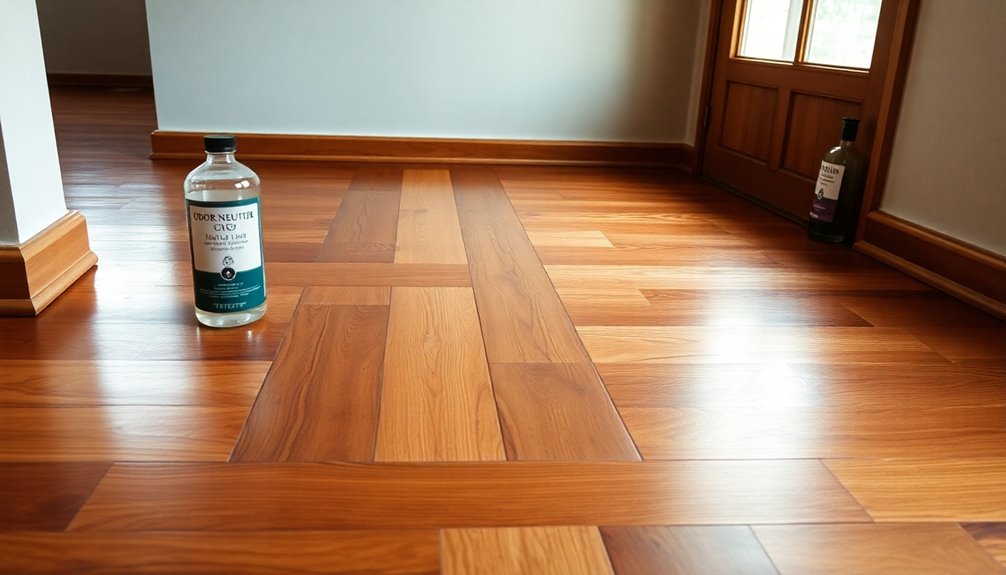
To eliminate cat urine smells from your subfloor before laying new flooring, you need to use a high-quality subfloor odor neutralizer. Start by thoroughly cleaning the area with enzymatic cleaners that break down urine compounds. After drying, apply a liberal coat of an oil-based primer to seal in odors. Don’t forget to guarantee proper ventilation throughout the process. There are more tips and tricks to tackle stubborn odors effectively, so keep exploring your options.
Understanding Cat Urine Odor and Its Impact on Subfloors

When it comes to cat urine odor, understanding its composition and impact on subfloors is essential for effective remediation.
Cat urine contains uric acid crystals that can penetrate your subfloor, leading to a lingering cat urine smell that standard cleaning methods often can’t fix. Even if you can’t see urine spots, they may fluoresce under black light, helping you identify all affected areas.
Humidity changes can amplify the odor, making it important to address it before laying new flooring. Proper ventilation in the laundry area is crucial for preventing mold growth, as it helps maintain humidity levels that could otherwise contribute to lingering smells.
Enzymatic cleaners can break down uric acid, but severe cases might need several applications.
Finally, sealing the subfloor with oil-based primers or sealers after cleaning is critical to prevent future odor penetration and guarantee long-lasting results.
The Importance of Using a Subfloor Odor Neutralizer

Using a subfloor odor neutralizer is essential for tackling the stubborn smells left by cat urine, especially since standard cleaning methods often miss the deep-rooted issues.
Enzyme cleaners specifically target the organic compounds in cat urine, effectively breaking them down and neutralizing the odor instead of just masking it. Properly applying a subfloor odor neutralizer not only removes immediate smells but also prevents your pets from returning to the same spot due to lingering scents. Additionally, maintaining cleanliness to deter little red ants can further enhance your home’s environment, preventing other unwanted odors and pests.
After cleaning, using a high-quality primer like Zinsser B-I-N Shellac based can seal in any remaining odors, creating a barrier against future smell penetration. This process greatly improves indoor air quality and minimizes health concerns associated with prolonged exposure to pet odors.
Steps to Prepare Your Subfloor for Treatment

To effectively treat your subfloor for cat urine smells, start by removing any old flooring completely.
Next, clean and inspect the subfloor thoroughly to identify any affected areas.
This step sets the stage for a successful odor-neutralizing treatment. Additionally, ensure you are aware of the importance of regular maintenance to prevent future odor issues.
Remove Old Flooring Completely
Start by completely removing all old flooring, including carpets and padding, to gain full access to your subfloor. This step is essential to effectively address pet urine issues.
After you’ve cleared the area, use a shop vac to remove dust and debris, ensuring a clean surface for treatment.
Next, inspect the subfloor for any visible stains or signs of moisture penetration that could indicate lingering cat urine odors. Pay special attention to these areas, as they may need extra cleaning.
Use enzymatic cleaners specifically designed for pet urine to break down odor-causing compounds.
Finally, allow the subfloor to dry completely before laying new flooring, preventing any trapped moisture or odors beneath your new material.
Clean and Inspect Subfloor
Begin by thoroughly cleaning and inspecting your subfloor to effectively tackle any lingering cat urine odors.
Start by removing all carpet and padding, allowing direct access to the subfloor. Use a shop vac to eliminate dust and debris, ensuring a clean surface for treatment.
Next, apply an enzymatic cleaner specifically designed for pet urine, soaking the affected areas to reach the depth of the original urine penetration.
Let the subfloor dry completely before applying a sealant, as moisture can trap odors.
Once dry, consider using an odor-killing primer like Zinsser BIN for sealing the subfloor; its oil-based properties provide superior odor-blocking capabilities.
This step is essential before progressing with your new flooring installation.
Identify Affected Areas Thoroughly
While you might think you’ve found all the cat urine stains, a thorough inspection is essential to guarantee no odors linger.
Use a black light in a darkened room to uncover hidden stains; urine will fluoresce under UV light, revealing areas you may have missed.
Remove all carpet, padding, and furniture to access the subfloor fully. Check for any moisture or lingering odors, as these can indicate deeper penetration of urine.
Once identified, apply an enzymatic cleaner, like Nature’s Miracle, directly to the affected areas, allowing it to soak in and break down the urine compounds.
Finally, seal the subfloor with an oil-based primer, such as Kilz or Zinsser BIN, to prevent any residual odors from seeping through after new flooring is installed.
Recommended Products for Cat Urine Odor Removal
When you’re dealing with stubborn cat urine odors, choosing the right products is essential for effective removal. Start with enzymatic cleaners like Nature’s Miracle, which break down urine components and eliminate odors instead of masking them.
Choosing enzymatic cleaners like Nature’s Miracle is key for effectively eliminating stubborn cat urine odors.
For sealing in any remaining smells after cleaning, consider using Zinsser B-I-N Shellac based primer or Kilz oil-based primer; both offer durable barriers against lingering odors.
A mixture of vinegar and baking soda is another powerful option—combine one part vinegar with three parts water for mopping affected areas. If you need extra stain removal, hydrogen peroxide at a 3% concentration can also be effective when paired with baking soda. Additionally, utilizing mindful spending habits can help you budget for these necessary cleaning products without straining your finances.
These products will help you tackle those persistent cat urine smells effectively.
How to Apply Subfloor Odor Neutralizers Effectively
To effectively apply subfloor odor neutralizers, start by thoroughly cleaning the area and treating any stains with enzymatic cleaners. Once the surface is prepped, use a liberal coat of an oil-based primer to seal in odors effectively. Remember to maintain proper ventilation throughout the process to guarantee the best results. Additionally, it’s important to conduct moisture testing to ensure that any underlying moisture issues are addressed before laying new flooring.
Surface Preparation Steps
Before you apply a subfloor odor neutralizer, it’s crucial to prepare the surface properly to guarantee maximum effectiveness.
Start by thoroughly cleaning the area, removing all debris, dust, and any remnants of pet urine with a shop vac or damp cloth. This guarantees effective adhesion and penetration of the treatment.
For deeper odors, consider using a mixture of hydrogen peroxide and baking soda as an initial treatment; let it sit for several hours to enhance odor neutralization.
Afterward, apply a liberal coat of an oil-based primer like Kilz or Zinsser BIN directly onto the subfloor, ensuring even coverage.
Don’t forget to ventilate the area by opening windows and using fans to help dissipate fumes and speed up drying time.
Recommended Application Techniques
Applying a subfloor odor neutralizer effectively requires careful attention to detail, especially after you’ve prepared the surface.
Start by using a high-quality enzymatic cleaner specifically designed for pet urine. Apply it generously to soak through the affected areas, ensuring ideal odor breakdown.
Once applied, cover the treated areas with plastic wrap to prevent evaporation, allowing the cleaner to penetrate deeply for several days or even weeks, depending on the severity of the odor.
After treatment, seal the subfloor with an oil-based primer like Kilz or Zinsser BIN to lock in any remaining odors.
Remember to follow the manufacturer’s instructions for application and curing times, and keep the area well-ventilated to avoid inhaling strong fumes.
Common Mistakes to Avoid During the Cleaning Process
While tackling cat urine odors, it’s essential to avoid common mistakes that can undermine your efforts.
Here are some pitfalls to watch out for:
- Ignoring affected areas: Small spots can lead to persistent odors, so treat every affected location.
- Using standard cleaning products: These won’t effectively break down odor-causing compounds like enzymatic cleaners will.
- Neglecting drying time: Rushing this step can trap moisture, increasing odor retention and promoting mold growth.
- Applying a thin sealant layer: A liberal application is important to prevent future odors from seeping back.
- Skipping ventilation: Good airflow is crucial for maintaining indoor air quality and enhancing the effectiveness of your odor removal products.
Additionally, practicing budgeting and saving can help you allocate funds for high-quality cleaning products that are more effective in eliminating odors.
Avoid these mistakes, and you’ll be on your way to a fresh-smelling space!
The Role of Sealing in Preventing Future Odors
After addressing common mistakes in the cleaning process, sealing your subfloor becomes an important step in preventing future odors.
A breathable sealer is vital as it locks in any remaining odor particles while allowing moisture to escape. For superior odor sealing, opt for a high-quality oil-based primer like Zinsser BIN, which outperforms water-based options. Additionally, ensuring the subfloor is properly insulated with foam board insulation can further prevent moisture buildup that contributes to odors.
A breathable sealer effectively traps odor particles while permitting moisture escape; choose an oil-based primer like Zinsser BIN for optimal results.
Apply the sealer in liberal coats to guarantee thorough coverage, effectively protecting your new flooring from potential smells.
Remember, regular maintenance and reapplication may be necessary to uphold long-term odor control.
Alternative Solutions for Persistent Odor Problems
When dealing with persistent cat urine odors, exploring alternative solutions can make a significant difference in restoring your space. Here are some effective methods to take into account:
- Enzymatic cleaners: Specifically designed to break down pet urine and eliminate odors effectively.
- Vinegar and baking soda: A natural remedy; mix one part vinegar with three parts water for mopping, and use baking soda to absorb residual smells.
- Hydrogen peroxide: Apply to stained areas to lift both stains and odors, but test on a small area first.
- Commercial concrete sealers: After cleaning, these prevent future odor penetration while allowing moisture to escape.
- Professional cleaning services: If all else fails, these experts can guarantee your subfloor is thoroughly treated for persistent odors.
- Additionally, consider using proper storage techniques for any cleaning solutions to maintain their effectiveness over time.
Tips for Maintaining a Fresh Smelling Home After Treatment
To keep your home smelling fresh after treating cat urine odors, it’s crucial to implement a consistent cleaning routine.
Regularly clean areas where your pets frequently urinate using enzymatic cleaners, as they effectively break down odor-causing substances. To neutralize odors between deep cleaning sessions, incorporate odor-absorbing materials like activated charcoal or baking soda in those areas.
Additionally, maintain proper ventilation by opening windows and using exhaust fans to help dissipate odors and humidity that can worsen unpleasant smells.
Consider using air purifiers with HEPA filters to improve indoor air quality and reduce lingering pet odors. Washable filters can also capture allergens and contribute to a fresher indoor environment.
Finally, train your pets to avoid marked areas and reward them for using designated bathroom spots, ensuring a fresher home environment.
Conclusion
With the right approach, you can banish stubborn cat urine smells and reclaim your home’s comfort. Think of your subfloor as a blank canvas, ready for a fresh start. By using effective odor neutralizers and sealing your floors, you’re not just treating a problem; you’re breathing new life into your space. Embrace this transformation, and soon you’ll enjoy a fragrant, inviting home where every step feels like walking on sunshine.



Average Rating