
 0
0
 0
0
To stop your clothes from feeling stiff after air drying, use the right amount of a gentle, low-residue detergent to prevent buildup. Add ½ cup of white vinegar during the rinse cycle; this natural fabric softener breaks down residues. Make sure to shake out your clothes before hanging them to dry, and avoid overloading the washing machine for better rinsing. For more tips on softening your fabrics, there are plenty of effective techniques to explore.
Why Do Clothes Get Stiff After Air Drying?
Air drying your clothes can sometimes leave them feeling stiff and uncomfortable. This stiffness often stems from detergent residue and mineral deposits from hard water that cling to fabric fibers.
When you overload the washing machine, your clothes can’t move freely, leading to poor rinsing and soap accumulation that hardens during air drying. Additionally, low humidity can exacerbate this stiffness, as moisture evaporates from your fabric, resulting in a rigid texture.
Overloading the washing machine restricts movement, causing soap buildup and stiffness in air-dried clothes. Low humidity worsens this effect.
To combat this, try shaking out your clothes before hanging them up to dry. This simple action helps loosen the fibers, allowing them to relax and reducing the likelihood of stiff clothes once they’re dry. Using eco-friendly cleaners during your laundry process can also help minimize detergent residue, promoting a softer finish for your garments.
With these tips, you’ll enjoy softer garments after air drying.
The Role of Detergent in Fabric Stiffness

While you mightn’t realize it, the type and amount of detergent you use can significantly impact how your clothes feel after drying.
Using too much detergent can leave a soapy residue on your fabrics, making them feel stiff and rough. To avoid this, opt for a gentle, low-residue detergent that rinses out more effectively.
Remember, overloading your washing machine can restrict the movement of clothes, preventing adequate rinsing and contributing to stiffness. If you have hard water, it can react with certain detergents, causing mineral deposits that further enhance that stiff texture.
For the best results, stick to the manufacturer’s suggested detergent amount and consider running an extra rinse cycle. Expense tracking apps can also help manage your finances if you decide to invest in better laundry products, but it’s essential to address the detergent first. Fabric softener can also help, but it’s essential to address the detergent first.
How White Vinegar Can Help Soften Clothes
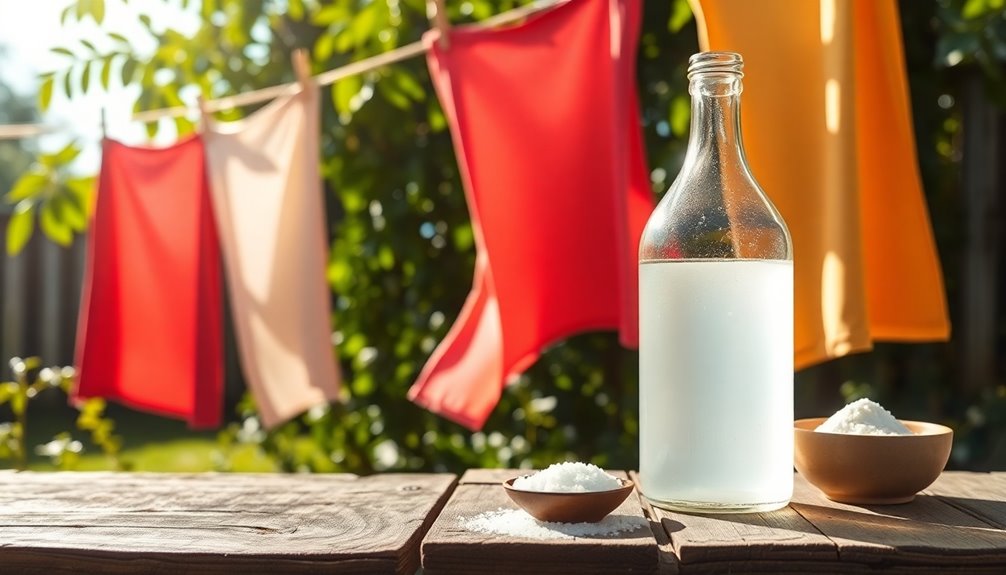
Detergent residue and hard water can leave your clothes feeling rough and stiff, but there’s a simple solution: white vinegar.
This natural fabric softener breaks down those pesky residues and mineral build-up that contribute to stiffness. Just add ½ cup of distilled white vinegar to the fabric softener compartment or during the final rinse cycle, and you’ll notice your clothes feel much softer against your skin.
The acetic acid in white vinegar relaxes fabric fibers, making them more comfortable. It’s safe for most fabrics like cotton, linen, and denim, although you should avoid using it on delicate items or with bleach.
The acetic acid in white vinegar softens fabric fibers, ensuring comfort while being safe for most materials.
Regular use helps prevent future stiffness from hard water, enhancing your overall fabric care. Additionally, incorporating frugal living strategies into your laundry routine can lead to even greater savings and efficiency.
Choosing the Right Detergent for Softer Fabrics
Choosing the right detergent can make all the difference in achieving softer fabrics. Opt for a gentle, low-residue detergent to prevent soap buildup that can lead to stiffness after air drying.
Look for options labeled “low-suds” or “fragrance-free” to minimize soapy film on your clothes. It’s important to use only the recommended amount of detergent; too much can make fabrics rough.
Consider plant-based detergents, as they often rinse better and help keep your clothes soft without needing a fabric conditioner. Additionally, regular inspections for pilling can help maintain the softness and appearance of your garments over time.
Finally, always check the fabric care labels for specific washing instructions and recommended detergents, ensuring you maintain ideal fabric care and softness.
With these tips, you’ll enjoy softer clothes after every wash!
Effective Air Drying Techniques for Softness
To achieve the softest results when air drying your clothes, it’s essential to employ effective techniques that promote ideal fabric care.
Here are some tips to enhance softness during the drying process:
- Air dry outdoors on a windy day to relax fibers.
- Use indoor fans to circulate air and reduce drying time.
- Hang clothes with adequate space between them for better airflow.
- Incorporating gentle fabric care products can further enhance the softness of your fabrics during the drying process.
The Benefits of Shaking Clothes Before Drying
Shaking your clothes before hanging them to dry can make a real difference in their texture.
This simple action loosens the fibers, reducing stiffness and allowing for better airflow, which enhances softness.
Plus, it helps remove wrinkles and guarantees your garments dry evenly. Additionally, incorporating clear payment terms in your billing processes can similarly improve customer satisfaction and streamline transactions.
Reduces Fiber Stiffness
When you shake your clothes vigorously before hanging them to dry, you help loosen the fibers, making them softer and more comfortable to wear. This simple step can greatly reduce stiffness and enhance the overall feel of your fabrics.
- Shaking clothes breaks up clumped fibers, allowing them to relax.
- Air-drying after shaking can lead to improved softness compared to line drying without this step.
- It also helps remove wrinkles, minimizing the need for ironing.
Enhances Air Flow
By shaking your clothes before hanging them to dry, you not only loosen the fibers but also enhance air flow around each garment. This simple technique reduces stiffness, allowing the fabric to dry more evenly and quickly.
As you shake out your garments, you promote better circulation of air among the fibers, which prevents them from clumping together. The action of shaking also helps dislodge any leftover detergent or mineral deposits that might contribute to stiffness, ensuring your clothes feel softer.
Plus, this practice minimizes wrinkles and creases, giving your garments a smoother appearance. For the best results, make sure to shake your clothes right after washing, keeping them in a relaxed state while they dry.
How to Use Baking Soda in Your Laundry Routine
Using baking soda in your laundry routine can transform your wash by softening hard water and enhancing detergent performance.
Just add ¼ cup directly to the wash drum with your regular detergent, and you’ll notice your clothes feeling softer and cleaner.
For even better results, consider pairing it with a vinegar rinse to reduce residue and boost fabric softness. Additionally, regular laundry maintenance, such as using vinegar rinse can help maintain appliance efficiency and prolong their lifespan.
Softening Hard Water Effectively
Though hard water can wreak havoc on your laundry, there’s an easy solution: baking soda. It neutralizes the minerals in hard water, helping to prevent that annoying chalky residue on your fabrics.
By using baking soda, you can enhance the effect of your detergent and keep your clothes soft. Here’s how to incorporate it into your routine:
- Add ¼ cup of baking soda directly to the washing machine drum before loading clothes.
- Combine baking soda with vinegar during the rinse cycle for added softness and freshness.
- Reduce the amount of detergent to avoid excessive soap residue on fabrics.
With regular use, baking soda not only softens your laundry but also maintains fabric integrity, preventing the stiffness caused by hard water.
Enhancing Detergent Performance
To enhance your detergent’s performance, adding baking soda to your laundry routine can make a noticeable difference.
Just ¼ cup of baking soda helps neutralize hard water minerals, allowing your detergent to work more effectively. This prevents residue buildup that can lead to stiffness in your fabrics.
By creating a more alkaline environment, baking soda breaks down dirt and grease, ensuring cleaner clothes. It’s safe for most fabrics, so you can use it with both regular and delicate loads.
Using baking soda also eliminates odors, leaving your clothes fresher. This is especially beneficial for heavy fabrics like towels and jeans, as it helps maintain their softness and absorbency.
Give it a try for softer, fresher laundry!
The Importance of Load Size When Washing
When you overload your washing machine, it can hinder proper agitation and rinsing, leading to stiff, uncomfortable clothes.
To guarantee your laundry stays soft, consider these tips:
To keep your laundry soft, remember to fill the washer only ¾ full and sort by fabric type.
- Fill the washer only ¾ full to allow for adequate movement.
- Sort clothes by fabric type to prevent heavier items from weighing down lighter ones.
- Use a second rinse cycle for large or bulky loads to remove detergent residues.
Managing load size is vital for effective washing. Smaller loads improve water circulation and enhance detergent effectiveness, reducing the likelihood of stiff clothes after drying. Additionally, maintaining a clean HVAC system can contribute to a healthier indoor environment, which ultimately supports indoor air quality and comfort throughout your home.
Alternatives to Traditional Fabric Softeners
If you’re looking to soften your clothes without relying on traditional fabric softeners, there are several effective alternatives you can try.
Distilled white vinegar works wonders by breaking down detergent residues, leaving your fabrics soft and fresh.
For an eco-friendly option, use wool dryer balls in the dryer; they reduce stiffness and static without harmful chemicals.
You can also add baking soda to your wash to soften hard water, enhancing detergent performance.
Mixing Epsom salt with essential oils can break down fiber bonds in heavier fabrics while adding a pleasant scent.
Finally, toss aluminum foil balls into the dryer to minimize static cling, especially for synthetic materials.
Try these alternatives for softer, fresher laundry! Additionally, using high-efficiency filters in your home can improve indoor air quality, making your laundry experience even more enjoyable.
Tips for Maintaining Softness in Cotton and Other Fabrics
To keep your cotton and other fabrics soft after air drying, try a few simple techniques. Adding vinegar to the rinse cycle and shaking clothes before hanging can make a big difference. Additionally, using a dryer sheet or fabric softener can help reduce stiffness after line drying, similar to how thawed half-and-half can restore texture when used in cooking and baking. Let’s explore more air drying methods and fabric softening solutions that help maintain that cozy feel.
Air Drying Techniques
Air drying your clothes can be a game-changer for maintaining their softness, especially with cotton and other fabrics. By using effective air drying techniques, you can enhance fabric softness during the drying process.
Here are some tips to keep in mind:
- Shake your clothes vigorously before hanging to loosen fibers and prevent stiffness.
- Utilize airflow: Set up indoor fans to create circulation, speeding up drying and minimizing fabric stiffness.
- Hang in the bathroom: This area retains moisture, helping maintain softness compared to overly dry spots.
Fabric Softening Solutions
Maintaining the softness of your cotton and other fabrics doesn’t have to be a chore. One of the best fabric softening solutions is adding ½ cup of distilled white vinegar to the rinse cycle. It breaks down detergent residues and leaves your clothes feeling soft.
Choose a gentle, low-residue detergent to avoid soapy buildup, and consider using mild, plant-based options. Incorporating wool dryer balls during the drying process can fluff your clothes while reducing drying time and stiffness.
When air drying, hang clothes evenly spaced and shake them out before hanging to loosen fibers. You can also use natural fabric softener sprays to prevent wrinkles and enhance softness while they dry.
How to Troubleshoot Stiffness in Specific Fabrics?
While line drying is eco-friendly, it can sometimes leave your clothes feeling stiff, especially for certain fabrics. Here’s how to troubleshoot stiffness for specific materials:
- Cotton: Use a vinegar rinse to break down residues and soften fibers.
- Jeans: Add fabric softener during the wash cycle and wear them to loosen the fabric.
- Towels: Shake them out before folding and wash in smaller loads to maintain fluffiness.
For sweaters, air dry flat to avoid stretching; a fabric shaver can help with rough texture.
With fleece, using fabric softener and avoiding ironing will keep it soft.
Conclusion
So, there you have it! Who needs a fancy dryer when you can turn your clothes into cardboard masterpieces? With a sprinkle of vinegar and the right detergent, you can achieve that delightful “crunch” everyone’s been raving about. But if you’d rather not reinvent your wardrobe as a sculpture, just follow our tips, and keep your clothes soft and cozy. After all, who wants to feel like they’re wearing a starched tablecloth?





Average Rating