 0
0
 0
0
Cleaning your water jugs is a smart way to guarantee safe drinking water while saving money. Start with a simple rinse and use mild dish soap or natural solutions like vinegar and baking soda for regular cleaning. For deep disinfection, mix bleach with water and let it sit before rinsing thoroughly. Remember to dry your jug properly to prevent mold. Maintaining your jug can extend its lifespan and cut costs. You’ll uncover more tips to maximize your cleaning efforts.
The Importance of Clean Water Jugs
When you consider your health and hydration, clean water jugs play an important role in preventing bacterial growth and guaranteeing safe drinking water.
Regularly cleaning your jugs helps eliminate musty odors and unpleasant tastes caused by contaminants. This enhances your overall drinking experience and keeps you safe from waterborne illnesses.
The CDC recommends sanitizing your water containers to maintain hygiene, especially in shared settings. Using a simple cleaning solution like vinegar or baking soda can effectively prevent mold and extend the life of your jugs, saving you money in the long run. Additionally, maintaining clean water jugs contributes to enhanced accuracy and organization in your overall health and wellness routine.
Initial Rinse: Preparing Your Jug for Cleaning
To prepare your jug for cleaning, start by pouring out any remaining water, ensuring you have a clean slate.
Next, fill the jug with warm water for the initial rinse. This warm water helps loosen any gunk or residue trapped inside.
Grab a bottle brush and scrub the interior thoroughly, focusing on the corners and crevices where grime tends to hide.
Once you’ve scrubbed well, rinse the jug again with warm water to remove all debris. Think of this initial rinse as a quick shower for your jug, setting the stage for a deeper clean later on.
If necessary, repeat the rinsing process to make sure your jug is ready for the cleaning solution you’ll choose next. Additionally, consider using sustainable packaging solutions for any cleaning products you purchase, as this reduces overall waste.
Selecting Your Cleaning Solution
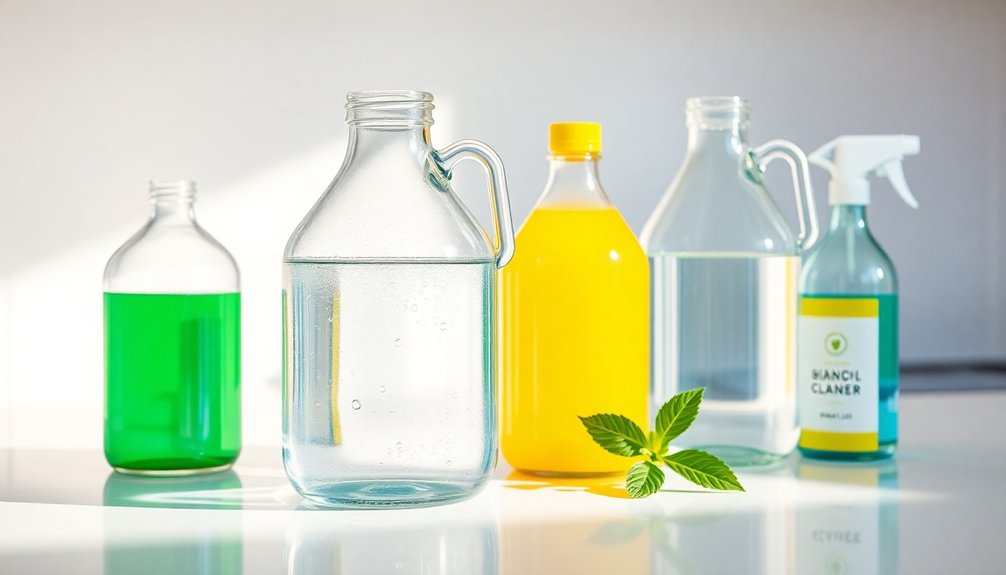
After your jug is prepped and rinsed, it’s time to choose the right cleaning solution.
For regular cleaning, mix mild dish soap with warm water; this effectively removes residue without leaving a strong scent.
If you’re dealing with odors or light stains, white vinegar is an excellent option. Combine it in a 1:3 ratio with water for a natural disinfectant and deodorizer.
For a gentle abrasive, consider baking soda; mix two tablespoons in warm water and let it sit to tackle faint odors.
Alternatively, hydrogen peroxide and distilled vinegar can serve as effective bleach substitutes, ensuring you maintain a chemical-free environment.
Choose the solution that best suits your needs for a clean, fresh water jug. Additionally, just as budgeting apps for beginners can help you manage your finances effectively, selecting the right cleaning solution can ensure a cost-efficient and eco-friendly cleaning process.
Deep Disinfection With Bleach
While maintaining a clean water jug is essential for your health, deep disinfection with bleach is an effective way to eliminate harmful bacteria and viruses.
To get started, mix one teaspoon of household bleach with one gallon of water. Make certain the solution contacts all surfaces inside the jug. Allow the bleach solution to sit for 5 to 15 minutes to guarantee proper disinfection.
Mix one teaspoon of bleach with a gallon of water, ensuring all surfaces are covered. Let it sit for 5 to 15 minutes for effective disinfection.
After that, rinse the jug multiple times with clean water to remove any bleach residue, as ingesting bleach can be harmful. The CDC recommends this method regularly, especially in high-usage settings. Additionally, timely payments for the cleaning supplies you need can help you maintain your budget while ensuring your health is prioritized.
Finally, air dry the jug completely to prevent moisture buildup, which can lead to mold and mildew growth. Your clean water bottle deserves this care!
Natural Odor Removal Using Baking Soda
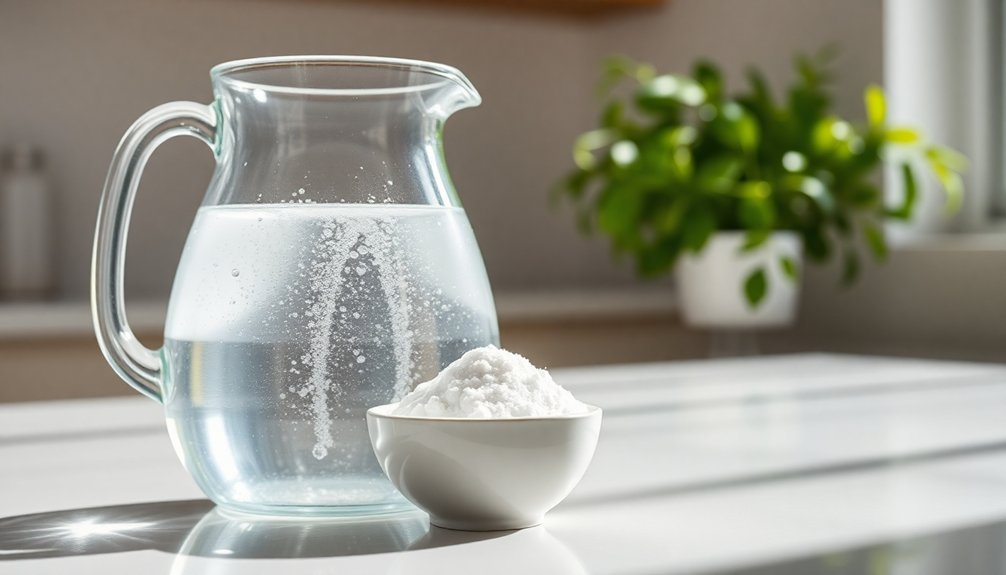
If you’ve noticed lingering odors in your water jug, baking soda is a simple and effective solution. This natural deodorizer works by absorbing and neutralizing unwanted smells, making your jug fresh again.
To use it, mix two tablespoons of baking soda with warm water, pour the mixture into your clean water jug, and let it sit for a few hours. The alkaline nature of baking soda effectively breaks down acidic odors, especially musty or stale smells. Additionally, using baking soda is an eco-friendly option that helps reduce waste associated with harsh chemical cleaners eco-friendly option.
After the wait, just rinse the jug thoroughly. Not only is baking soda safe and non-toxic, but it’s also cost-effective, ensuring you can maintain a clean, odor-free water jug without harsh chemicals.
Regular use can keep your water tasting fresh every time.
Cleaning the Cap and Spout
Cleaning the cap and spout is just as important as washing the jug itself. Make sure you use the right materials and scrubbing techniques to get into those hard-to-reach areas. Additionally, consider using a tool like expense tracking tools to manage the costs associated with maintaining clean water supplies efficiently.
Essential Hygiene Practices
Have you ever considered how essential the cap and spout are to the hygiene of your water jug? To maintain a clean bottle, clean it regularly, ensuring that these components are spotless.
Start by soaking the cap and spout in the same cleaning solution you use for the jug. This helps eliminate bacteria buildup. Use a small brush or an old toothbrush to scrub those hard-to-reach nooks and crannies, where germs love to hide.
After scrubbing, rinse them thoroughly with warm water to remove any residual cleaning solution, preventing unwanted tastes or odors. Don’t forget to inspect the cap and spout often for signs of wear, as damage can lead to contamination of your water.
Scrubbing Techniques Explained
A thorough scrubbing of your water jug’s cap and spout is essential for maintaining hygiene. Start by soaking them in the same cleaning solution you used for the jug. This helps loosen stubborn grime and bacteria.
Next, grab a small brush or an old toothbrush to scrub the nooks and crannies of the cap and spout, ensuring you reach every hard-to-clean area. Make sure no residue remains after scrubbing.
Once you’ve scrubbed thoroughly, rinse the cap and spout thoroughly with warm water to remove any cleaning solution and prevent lingering odors.
Regularly incorporating this cleaning into your routine—ideally every time you clean the jug—will help prevent bacteria growth and keep your drinking water safe.
Materials for Cleaning Tools
When it comes to keeping your water jug’s cap and spout hygienic, using the right cleaning tools makes a big difference. A small brush or an old toothbrush can effectively scrub these areas, reaching all the nooks and crannies where bacteria like to hide.
Soak the cap and spout in a cleaning solution—like vinegar or soapy water—to disinfect them thoroughly. After cleaning, rinse these parts with warm water to eliminate any residue that might alter the taste of your water.
Regularly inspect the cap and spout for wear or damage, as compromised parts can harbor bacteria. Finally, let them air dry completely before reassembling, preventing moisture buildup that could lead to odors or mold.
Drying Your Water Jug Properly
To keep your water jug fresh and free of mold, air drying it completely after cleaning is crucial.
Always clean your jug thoroughly with warm water, but the drying process is just as important.
Here’s how to do it right:
- Place the jug upside down on a drying rack to enhance airflow.
- Keep the lid off to prevent moisture retention inside.
- Avoid using towels, as they can leave lint and moisture that promote mold growth.
- If your jug has a spout or straw, prop them open to guarantee thorough drying.
Additionally, incorporating eco-friendly practices during cleaning can further prevent harmful bacteria buildup and promote a healthier environment.
Regular Maintenance for Longevity
Keeping your water jug clean and dry is just the beginning of ensuring its longevity. To maintain a healthy drinking experience, make sure to clean your jug regularly—ideally once a day. This reduces bacteria and mold growth effectively.
You can use natural cleaning agents like white vinegar and baking soda instead of harsh chemicals, making your maintenance safe and cost-effective. Additionally, inspect your water jug for damage, as cracks can lead to contamination.
Allow it to dry completely after each use, especially with the lid off, to avoid musty odors. Store your jug in a cool, dry place, away from extreme temperatures, to keep its integrity intact and extend its lifespan, saving you money in the long run. Regular monitoring savings and investments can also help you allocate funds for necessary home maintenance, ensuring your financial health supports your living environment.
Tips for Stubborn Stains
Even the most diligent maintenance can leave you facing stubborn stains in your water jug. When that happens, try these effective methods:
- Mix baking soda with water to create a paste; scrub the stains gently.
- Combine equal parts white vinegar and water, then let it sit for 10-15 minutes before scrubbing.
- For mineral deposits, soak your jug in one part vinegar to three parts water for a few hours.
- If all else fails, dissolve a denture cleaning tablet in water; it works wonders on tough stains.
Regularly using warm soapy water during your cleaning routine can also help prevent stubborn stains from forming in the first place. Additionally, maintaining a streamlined cleaning routine can enhance the longevity of your water jug and keep it looking fresh and clean with these simple tips!
Cost-Effective Cleaning Alternatives
While you endeavor to maintain clean water jugs, using cost-effective cleaning alternatives can make the task easier and more affordable.
For instance, mixing white vinegar with water in a 1:3 ratio creates a natural disinfectant that removes odors without harsh chemicals. If you need to scrub stubborn stains, combine two tablespoons of baking soda with warm water for a mild abrasive solution.
For deep cleaning, a teaspoon of chlorine bleach per gallon of water works wonders. Don’t forget about dish soap; it’s perfect for regular cleaning. Additionally, incorporating automated processes can streamline your cleaning routine, allowing you to focus on other important tasks.
Conclusion
By following these frugal cleaning methods, you can keep your water jugs fresh and free from harmful bacteria without breaking the bank. Imagine sipping from a jug that not only quenches your thirst but also sparkles with cleanliness. Isn’t it reassuring to know that with just a few simple ingredients, you can guarantee your water is as pure as it can be? Regular maintenance will keep your jugs in top shape, so enjoy your clean water and clean wallet!