
 0
0
 0
0
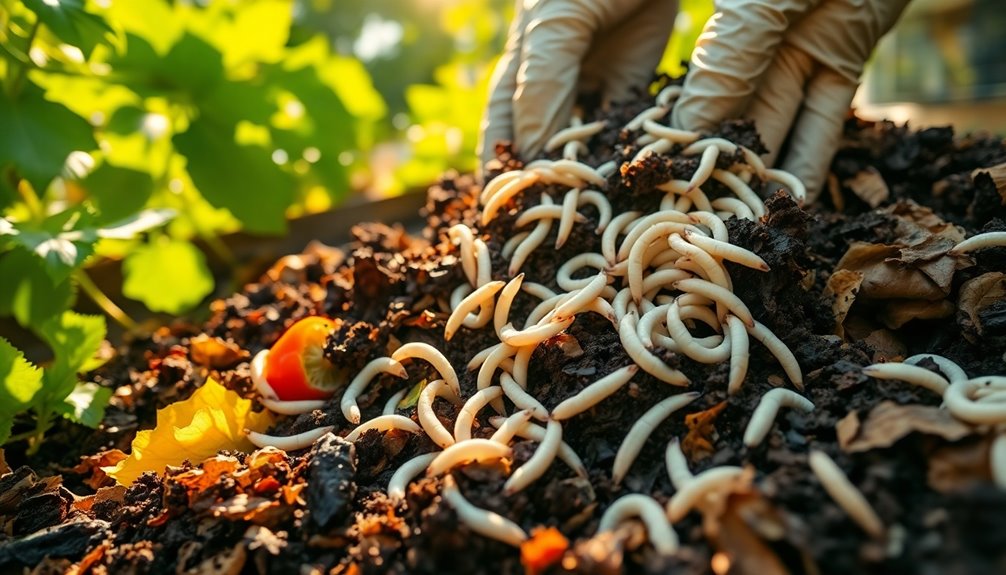
If you’ve got maggots in your compost bin, don’t worry—it’s fixable and can be done for free! First, check for food waste, excess moisture, and lack of aeration, which attract flies. To eliminate maggots, sprinkle salt, use vinegar solutions, or apply diatomaceous earth. Turn your compost regularly and avoid adding meat or dairy. Maintaining a balanced mix of green and brown materials helps too. Stick around to learn more about preventing future infestations!
What Causes Maggots in Your Compost Bin?
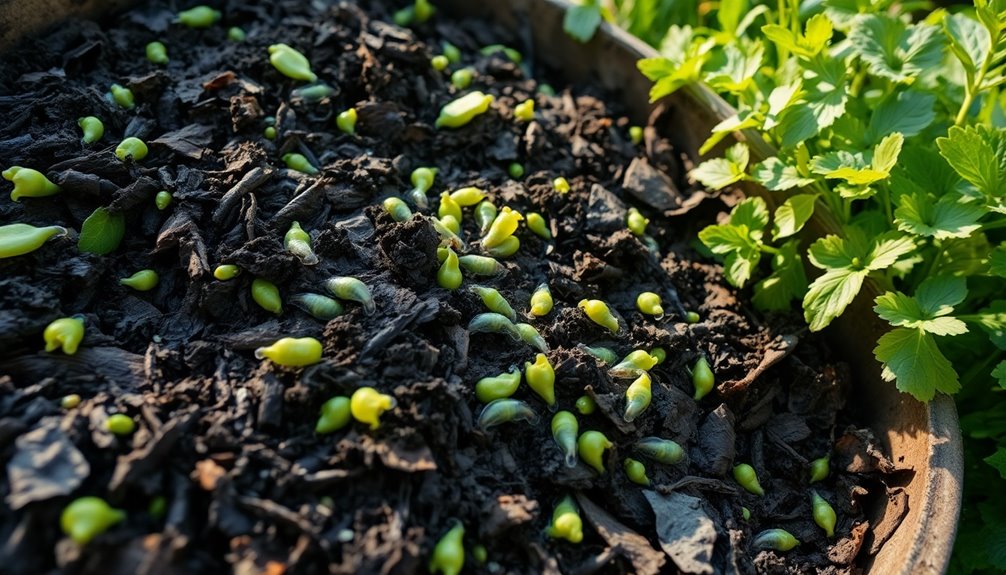
Maggots in your compost bin often appear when food waste attracts flies looking for a place to lay their eggs. High moisture levels, especially from excess food waste, create ideal breeding conditions for these pests.
Maggots thrive in compost bins due to food waste attracting flies and high moisture levels, creating perfect breeding conditions.
If you don’t regularly aerate or turn your compost, it can become a hotbed for maggots. Warm temperatures, particularly in sunny spots, speed up the composting process and draw in more flies.
Additionally, composting unsuitable materials like meat, dairy, and oily foods increases the risk of infestations.
Finally, an imbalance between nitrogen-rich greens and carbon-rich browns can lead to excess moisture and odors, further inviting flies. Maintaining a balance of nitrogen-rich greens and carbon-rich browns helps prevent these issues and keeps your compost healthy.
Keep these factors in check to maintain a healthy compost bin and avoid maggot problems.
Signs You Have a Maggot Problem in Your Compost
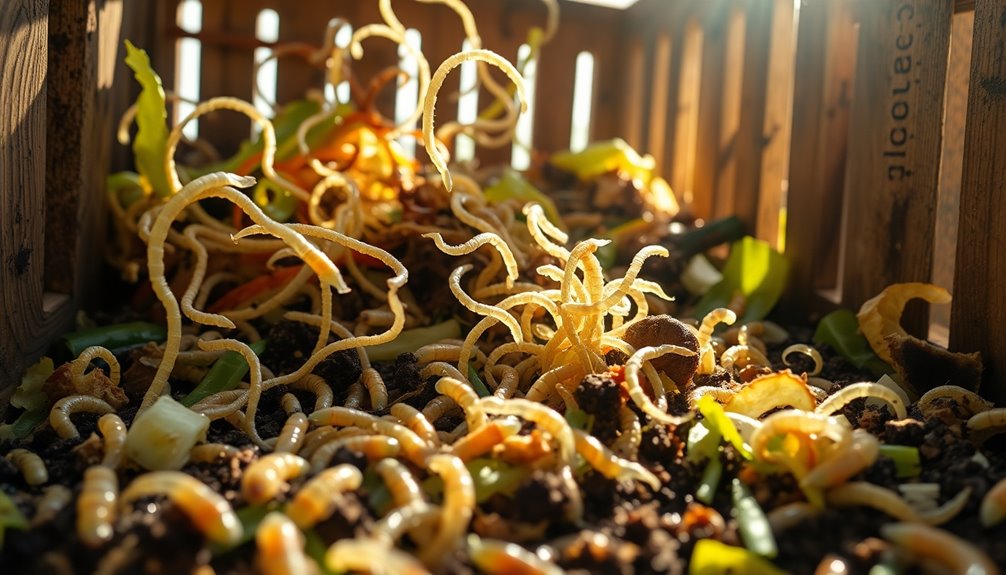
Wondering if you’ve got a maggot problem in your compost? Look out for these signs that indicate a potential maggot infestation:
- Small, white, wriggling larvae in your compost bin
- Unpleasant odors from rotting food scraps
- Excess moisture or a slimy layer in your compost
- An increase in adult flies buzzing around the area
- Imbalanced compost, particularly with too many nitrogen-rich materials
If you notice any of these, it’s essential to address the issue quickly. Tracking spending helps you allocate resources for compost maintenance effectively.
Ignoring these signs can lead to a larger maggot problem, making preventing maggots even more challenging.
7 Free Methods to Eliminate Maggots in Your Compost
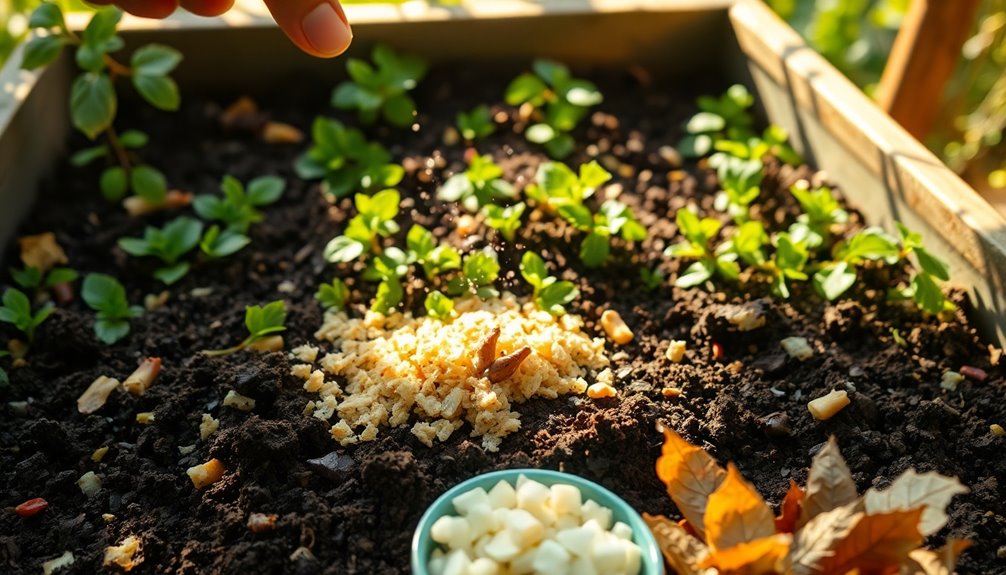
If you find yourself dealing with maggots in your compost, there are several free methods to tackle the issue effectively.
Start by sprinkling a mixture of salt and lime directly on the maggots in your compost bin; this will dry them out and eliminate them without harmful chemicals.
Sprinkle salt and lime on maggots in your compost bin to safely dry them out and eliminate them.
You can also use diatomaceous earth by applying it around the affected areas, as it dehydrates and damages their exoskeletons.
Another option is to spray a vinegar solution (1 part vinegar to 2 parts water) onto the maggots and the bin’s interior.
Regularly turning your compost helps aerate it, maintaining proper moisture levels. Proper moisture management is crucial for preventing mold growth and maintaining the health of your compost.
Finally, keep your compost bucket in a cooler, shaded spot, and consider freezing food scraps before disposal to prevent maggot development.
How to Use Diatomaceous Earth for Maggot Control
To effectively combat maggots in your compost bin, using diatomaceous earth (DE) can be a game changer. This natural, non-toxic powder works by dehydrating maggots and damaging their exoskeletons, making it an ideal solution for maggot infestations in your organic waste.
Here’s how to use it:
- Sprinkle a thin layer of DE directly on the maggots.
- Apply around affected areas to create a protective barrier.
- Verify the compost bin is dry for maximum effectiveness.
- Reapply periodically to control maggots and deter other pests.
- Always wear a mask and gloves while handling DE.
Additionally, incorporating budget-friendly cooking practices, such as using kitchen scraps for composting, can help reduce waste and improve your compost quality.
With these steps, you can maintain a healthier compost bin and keep those pesky maggots at bay!
Best Practices for Maintaining a Healthy Compost Environment
Maintaining a healthy compost environment is essential for effective decomposition and pest control. To achieve this, mix green (nitrogen-rich) and brown (carbon-rich) organic matter in a 2:1 ratio. This balance helps prevent excess moisture, which can attract maggots.
Regularly turn your compost bins to aerate the pile, promoting even decomposition and discouraging flies from laying eggs in stagnant areas. Keep the compost moist but not soggy—think of a wrung-out sponge.
Avoid adding meat, dairy, and oily foods, as these break down slowly and can lure pests. Finally, use breathable covers to protect your compost while allowing airflow, and sprinkle diatomaceous earth around the bin as a natural deterrent against flies and maggots. Incorporating frugal strategies into your composting practices can enhance your sustainability efforts while reducing waste.
Tips for Preventing Maggots in Your Compost Bin
To keep maggots at bay, you need to maintain proper moisture levels in your compost bin. Mixing the right materials, like green and brown compostables, helps create a balanced environment that discourages pests. Additionally, embracing sustainable living practices in your composting routine can further enhance the effectiveness of your efforts.
Maintain Proper Moisture Levels
While keeping your compost moist is essential for decomposition, it’s equally important not to let it become soggy, as excess moisture can attract unwanted pests like maggots.
To maintain proper moisture levels in your compost pile, follow these tips:
- Aim for a consistency similar to a wrung-out sponge.
- Regularly check moisture levels, especially during hot weather.
- Add dry materials like shredded paper or cardboard if it gets too wet.
- Aerate your compost by turning it regularly to promote airflow.
- Monitor for compacted areas and break them up to enhance drainage.
Choose Suitable Compost Materials
Keeping moisture levels in check is only part of the equation for a successful compost bin. To prevent maggots, be selective with your kitchen scraps. Avoid adding meat, dairy, and oily foods, as these attract flies and may lead to infestations.
Stick to a balanced mix of greens and browns—think fruit and vegetable scraps, coffee grounds, and yard waste. Chop or shred larger materials to promote quicker decomposition and reduce odors. Incorporate dry materials like shredded paper or cardboard from hardware stores to absorb excess moisture, making your compost less appealing to pests.
Regularly monitor your bin for signs of black soldier fly larvae and adjust your materials to maintain a ratio of about 2 parts browns to 1 part greens.
Understanding the Role of Beneficial Organisms in Composting
Beneficial organisms are the unsung heroes of composting, transforming your kitchen scraps and yard waste into nutrient-rich soil. They play a crucial role in breaking down organic matter and enriching your compost ecosystem.
Beneficial organisms quietly revolutionize composting, converting waste into fertile soil and enhancing the compost ecosystem.
Here’s how they help:
- Earthworms consume decomposing materials and aerate the compost.
- Beneficial bacteria and fungi decompose organic matter at a microscopic level.
- They enhance nutrient availability by excreting nutrient-rich castings.
- Beneficial nematodes prey on harmful larvae and eggs, controlling pest populations like flies and maggots.
- A balanced compost ecosystem maintains ideal conditions for decomposition while minimizing pest issues.
- Seasonal ingredient selection can also improve your compost by ensuring a variety of organic materials that support diverse microbial life.
When to Seek Help: Knowing When Your Compost Needs Expert Attention?
Monitoring your compost’s health is key to maintaining a thriving ecosystem. If you’re finding persistent maggots in your compost, despite adjusting greens and browns or regularly turning it, it might signal a deeper issue.
A significant uptick in adult flies can lead to future infestations, making it time to seek help. Look for foul odors or overly wet conditions; these often indicate that your compost needs expert attention to restore balance. Additionally, understanding rental income tax can help you manage expenses related to composting systems if they are part of your property management.
Consulting with local extension services or composting experts can provide tailored solutions specific to your setup. If you’re considering larger-scale composting or a complex system, professional advice can optimize compost quality and prevent pest problems before they start.
Don’t hesitate to reach out when in doubt!
Conclusion
By following these tips and methods, you can tackle the maggot crisis in your compost bin without spending a dime. Remember, a healthy compost pile is like a thriving ecosystem, bustling with life and energy. Keep an eye on your compost, maintain the right balance, and you’ll create a paradise for beneficial organisms while keeping those pesky maggots at bay. With a little care, your compost can become the envy of the neighborhood!