
 0
0
 0
0
Making your own liquid dish soap with castile soap is a breeze and a healthier option for your family and the planet. Just mix 1/2 cup of liquid castile soap with 1/8 cup of water. Add a few drops of your favorite essential oil for fragrance. Optionally, mix in a teaspoon of vinegar for extra cleaning power and some glycerin for a frothier texture. Stick around to discover more tips and tricks for perfecting your homemade dish soap!
Benefits of Homemade Liquid Dish Soap
When you choose homemade liquid dish soap, you’re not just opting for a cleaner option; you’re also making a healthier choice for your family and the planet.
This natural soap, made with liquid castile soap, is free from harmful toxins, making it safe for health and gentle on your hands. You can customize your homemade dish soap with various essential oils, creating delightful scents while enjoying effective cleaning.
Although it might produce fewer suds, it still delivers a residue-free finish on your dishes. Plus, making it at home is cost-effective; the ingredients are often less expensive than commercial alternatives.
Ultimately, you’re investing in a safer, more sustainable cleaning solution for your household.
Essential Ingredients for Your Dish Soap
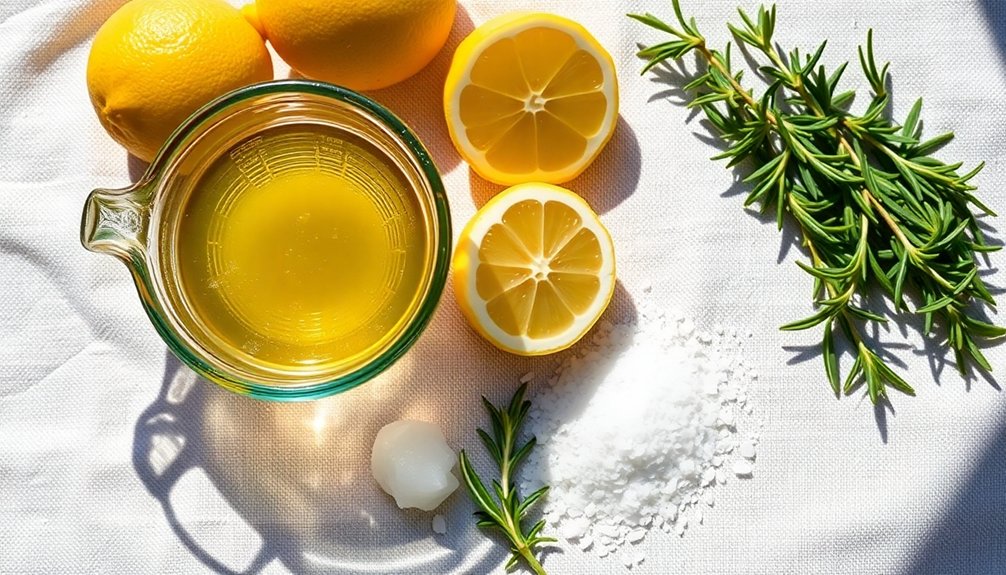
To create your own liquid dish soap, you’ll need a few key ingredients that work together for effective cleaning.
You can easily customize your soap by adding essential oils for fragrance or enhancing its power with a splash of citrus cleaner.
Let’s explore these ingredients and how they can fit your dishwashing needs.
Key Ingredients Overview
Creating your own liquid dish soap requires just a few essential ingredients that work together to deliver effective cleaning power. Here’s what you’ll need:
- 1/2 cup of liquid castile soap – This gentle, oil-based soap cleans effectively without harsh chemicals.
- 4 drops of essential oil – Choose a scent like lemon or orange for a fresh fragrance and enhanced cleaning.
- 1/8 cup of water – This dilutes the soap, making it easier to use while maintaining its effectiveness.
You can also add a small amount of vinegar (1 tsp) as a homemade cleaner, but be careful to avoid curdling when mixing. For added suds, consider incorporating 1/2 tsp of glycerin to create a frothier texture in your homemade dish soap.
Customization Options Available
How can you make your homemade liquid dish soap even better? Start by customizing your recipe with essential oils like lemon or eucalyptus for an invigorating scent and added cleaning benefits.
Just remember to avoid oil-based scents to keep your dishes grease-free. You can adjust the ratios of water, castile soap, and washing soda to find the perfect consistency and cleaning power that suits your needs.
For an extra boost in suds, add about 1/2 teaspoon of glycerin to your mix. If you’re feeling adventurous, consider alternative ingredients like vinegar or herbal extracts, but be cautious of how they might affect your soap’s consistency.
Happy customizing!
Step-by-Step Instructions for Making Dish Soap
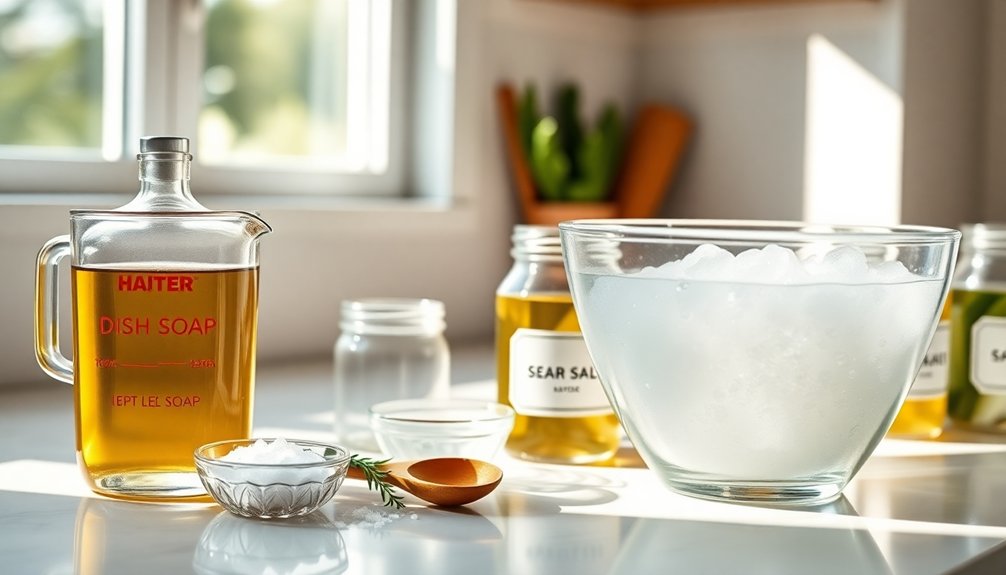
Making your own liquid dish soap is simple and rewarding. Follow these easy steps to create your homemade soap:
- In a mixing container, combine 1/2 cup of liquid castile soap and 1/8 cup of water.
- Add 4 drops of your preferred essential oil for a fresh scent.
- For extra cleaning power, mix in 1 tsp. of vinegar or your homemade all-purpose citrus cleaner, but be careful to avoid curdling.
If you want more suds while washing dishes, consider adding 1/2 tsp of glycerin.
Pour your mixture into an old liquid dish soap bottle for easy dispensing. This effective, toxin-free soap will have you enjoying the dishwashing process in no time!
Tips for Effective Use and Storage
Once you’ve crafted your homemade dish soap, knowing the best ways to use and store it can enhance your dishwashing experience.
Keep your liquid soap in a cool, dry place to prevent moisture issues and extend its shelf life to about three years.
When adding essential oil, opt for a non-oil based option to avoid greasy residue on dishes.
If you notice suds decreasing, mix in 1/2 teaspoon of glycerin for better lathering.
Adjust the water and white vinegar ratios based on your area’s hard water to boost cleaning power.
Finally, periodically shake the container to mix any settled ingredients, ensuring a consistent and effective soap for all your dishwashing needs.
Troubleshooting Common Issues
If your homemade dish soap isn’t coming out right, you might face issues like curdling or separation.
You can easily adjust the consistency by adding more water or washing soda until it feels just right.
Let’s tackle these common problems head-on so you can enjoy your DIY soap without any hassle.
Curdling and Separation Issues
When you’re crafting your own liquid dish soap, curdling and separation can be frustrating issues to tackle. Here are some tips to help you maintain that perfect consistency:
- Limit vinegar: Curdling often occurs when liquid castile soap is mixed with vinegar due to their differing pH levels. Use vinegar sparingly to avoid this issue.
- Use warm water: If you notice clumping, gently mix your ingredients with warm water. This helps dissolve solidified components for a smoother mixture.
- Regularly stir: To prevent separation, thoroughly mix the soap and store it in a cool, dry place. Give it a quick shake or stir before each use to maintain even consistency.
Adjusting Consistency Methods
Adjusting the consistency of your homemade liquid dish soap can be a straightforward process, especially when you encounter common issues.
If your soap turns out too thick, gradually add more washing soda, mixing thoroughly until you reach the desired thickness.
Conversely, if it becomes overly thick, add small amounts of hot water to thin it out without losing cleaning power.
To avoid clumping, make sure your grated soap is air-dried before mixing.
If you still notice lumps, use an immersion blender to effectively blend the mixture, resulting in a smoother consistency.
Finally, store your liquid soap in a cool, dry place to prevent moisture-related issues that can affect its consistency over time.
User Experiences and Community Feedback
Although some users have reported varying experiences with DIY liquid dish soap, many are thrilled with its cleaning effectiveness, even without the traditional lather.
Community feedback highlights a few key points:
- Enhanced Cleaning: Adding extra graded natural soap boosts cleaning power without sacrificing performance.
- Customization Options: Many enjoy incorporating essential oils, allowing for personalized scents and experiences.
- Greasy Residue Concerns: Some users have faced issues with greasy residue and sought advice on thickening methods and alternative ingredients.
Despite thickness challenges, the eco-friendly nature of homemade castile soap remains a significant draw.
Conclusion
Making your own liquid dish soap is not only eco-friendly but also cost-effective. Imagine Sarah, who switched to homemade soap and cut her kitchen waste in half while saving money. By using simple ingredients, you can create a powerful cleaner that’s gentle on your hands and the planet. So why not give it a try? With just a few steps, you’ll be on your way to a cleaner kitchen and a greener lifestyle.