
 0
0
 0
0
Homemade dish soap with baking soda works well for everyday cleaning, letting you avoid harsh chemicals and save money. While it might not cut through super tough grease like commercial options, it’s effective for regular dishwashing tasks. Plus, you can customize it with essential oils for added benefits. You’ll find many users appreciate the natural ingredients and share tips for enhancing their recipes. If you want to discover more about making your own soap, keep going!
Why Make Homemade Dish Soap?
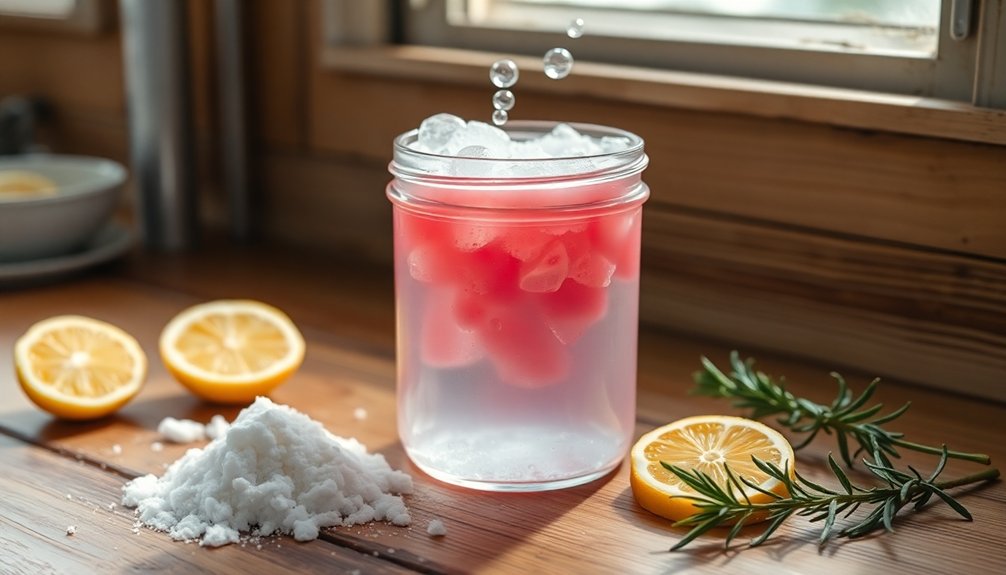
Making your own dish soap not only helps you steer clear of harmful chemicals but also promotes a healthier home environment.
By using simple ingredients like baking soda and natural bar soap, you can create a cost-efficient homemade dish soap for about $0.50 per batch. This DIY project is a fun way to engage your family in natural cleaning practices while teaching them the benefits of eco-friendly alternatives.
You can customize your soap with essential oils, enhancing its cleaning properties and adding delightful scents. Plus, this zero-waste approach allows you to reuse containers, reducing plastic waste.
Embracing homemade dish soap not only protects your health but also contributes positively to the planet.
Comparing Effectiveness: Homemade vs. Commercial
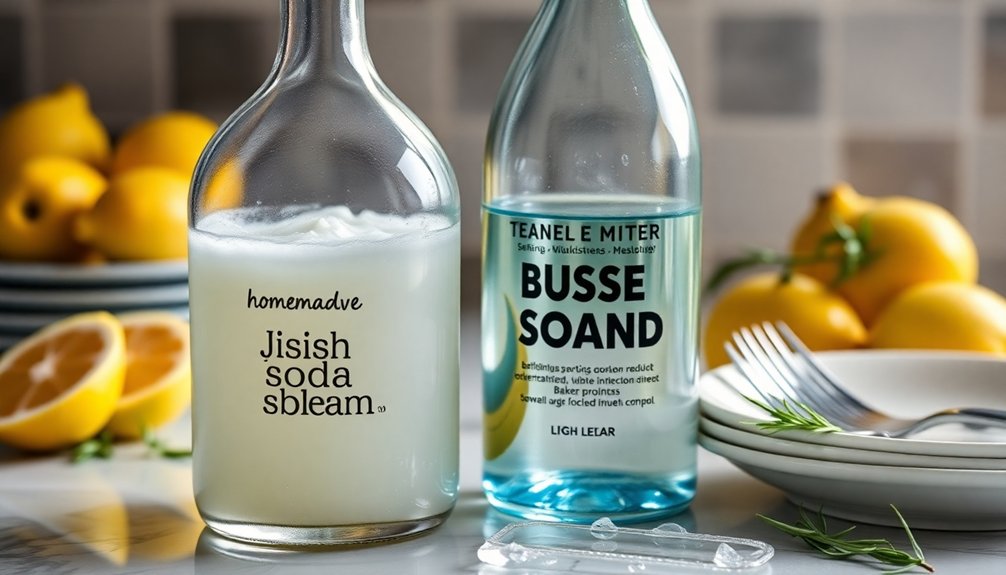
When comparing homemade dish soap to commercial options, you’ll notice differences in cleaning power, cost, and environmental impact.
While homemade versions can be gentler on your wallet and the planet, they mightn’t always tackle tough grease as effectively as store-bought brands.
Let’s explore how these factors play out in your dishwashing routine.
Cleaning Power Comparison
While you might find that homemade dish soap can effectively tackle everyday grease and grime, it often falls short in comparison to commercial alternatives.
Here’s what you should consider:
- Foaming Power: Commercial dish soaps use surfactants for enhanced foaming, giving a perception of better cleaning.
- Tough Grease: Homemade dish soap may struggle with stubborn grease compared to more potent commercial options.
- Safety: Homemade versions, particularly those with baking soda, are safer and free from harmful chemicals.
Though homemade dish soap is a safe, eco-friendly alternative that can cut grease, it may not deliver the same cleaning power as commercial dish soap.
If you’re prioritizing effectiveness, commercial options might still reign supreme.
Cost-Effectiveness Analysis
Choosing between homemade and commercial dish soap often boils down to cost-effectiveness. Homemade dish soap, using baking soda, costs about $0.50 per batch, whereas commercial dish soaps can range from $3 to $10 per bottle.
While some users find homemade versions less effective for heavy grease, they still offer decent cleaning power for everyday dishwashing. Baking soda enhances the effectiveness of homemade soap, acting as a mild abrasive and deodorizer, making it suitable for tackling tough stains and odors.
Additionally, using homemade options reduces environmental impact by minimizing plastic waste and avoiding harmful chemicals.
Ultimately, if you’re looking for an effective and budget-friendly alternative, homemade dish soap could be the way to go.
Environmental Impact Assessment
Although commercial dish soaps often promise superior cleaning power, their environmental impact raises significant concerns. You might want to reflect on switching to homemade dish soap with baking soda as an eco-friendly alternative.
Here are some key points to ponder:
- Many commercial soaps contain harmful phosphates and synthetic surfactants that pollute water and harm aquatic life.
- Homemade options can effectively cut through grease and dirt, even if they don’t produce as many bubbles.
- Creating your own dish soap isn’t only cost-effective, averaging around $0.50 per batch, but it also promotes a healthier environment.
Essential Ingredients for Your Dish Soap
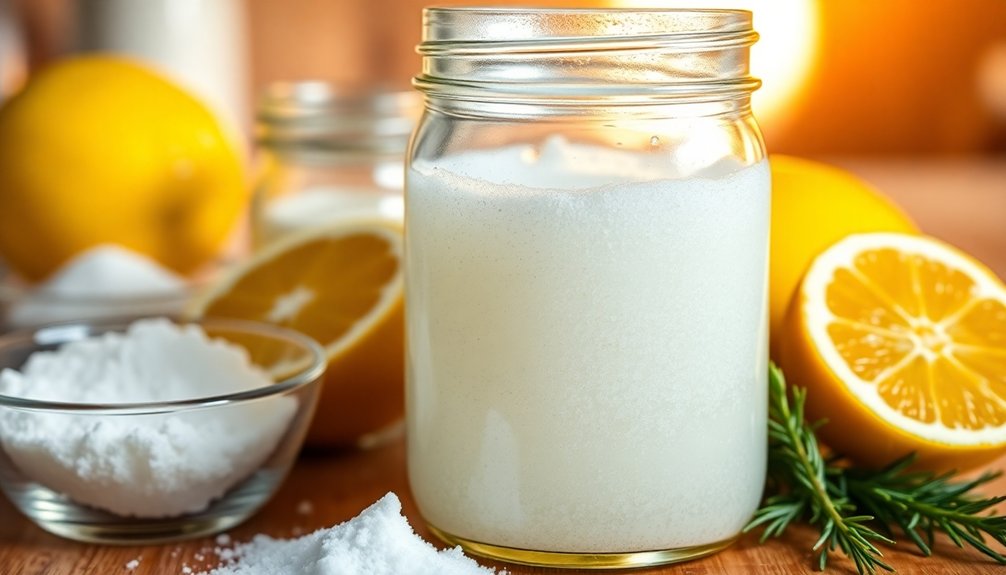
To create an effective homemade dish soap, you’ll need a few essential ingredients that work together to tackle tough grime and grease.
Baking soda is a key player, renowned for its grease-cutting properties and ability to deodorize, making it perfect for cleaning dishes. When you combine baking soda with grated castile soap, you enhance the overall cleaning power, resulting in a gentle yet effective solution for your dishwashing needs.
Typically, you’ll want to use about 1 tablespoon of baking soda per batch to thicken your mixture and boost its efficiency. Plus, baking soda acts as a natural abrasive, helping you scrub away stuck-on food without scratching your cookware, ensuring all your dishes come out sparkling clean.
Step-by-Step Guide to Making Dish Soap
Making your own dish soap is a simple process that can be done in just a few easy steps. Here’s what you’ll need:
Create your own dish soap easily at home with just a few simple ingredients and steps.
- Grated natural bar soap (like Ivory or homemade soap)
- Baking soda
- Hot water
Start by grating 1/4 cup of your chosen soap and set it aside.
In a small saucepan, combine 2 cups of hot water with the grated soap over medium heat. Stir consistently until the soap melts—don’t let it boil.
Next, mix in 1 tablespoon of baking soda to boost grease-cutting power. If you like, add 2 teaspoons of salt for thickening.
Pour the mixture into a storage container and let it cool completely before sealing. Remember to shake before each use!
Tips for Using Your Homemade Dish Soap
To get the most out of your homemade dish soap, it’s important to use some effective techniques.
Start by washing dishes right away or rinsing them before soaking to boost cleaning power.
Remember to shake your container before each use to keep the ingredients well mixed for ideal results.
Optimal Dishwashing Techniques
Effective dishwashing techniques can greatly enhance the performance of your homemade dish soap. Here are some tips to optimize your cleaning routine:
- Rinse dishes immediately after use to prevent food residue from hardening.
- Soak heavily soiled dishes in warm water mixed with vinegar for 15-30 minutes.
- Use a dish brush to minimize bacteria growth and guarantee hygienic cleaning.
Storage and Consistency Tips
While homemade dish soap can be a great eco-friendly option, proper storage and consistency are key to maintaining its effectiveness.
Store your mixture in a cool, dark place to prevent separation or solidification. If your homemade dish soap becomes too solid over time, simply reheat and stir it to restore its original consistency.
To avoid spills during transfer, use a funnel when pouring the soap into a soap dispenser or a recycled plastic bottle with a flip-top lid, which allows for easy dispensing and prevents clogging.
Don’t forget to shake the container before each use to mix any separated ingredients, ensuring consistent cleaning power with every application.
Adding a few drops of essential oil can also enhance the scent!
Enhancing Cleaning Power
Storing your homemade dish soap properly sets you up for success, but using it effectively is just as important.
To enhance the cleaning power of your soap, consider these tips:
- Add baking soda to cut through grease and eliminate odors.
- Incorporate white vinegar into your dish-soaking routine for extra grease-fighting capabilities.
- Soak heavily soiled dishes in a mixture of warm water and vinegar before washing to loosen stubborn residues.
When washing, tackle dishes immediately or rinse them first to prevent dried-on food from becoming harder to clean.
Finally, keep your dish soap in a container that allows for easy shaking before each use, ensuring you maintain its cleaning effectiveness.
Your dishes will thank you!
Storage Solutions for Your Dish Soap
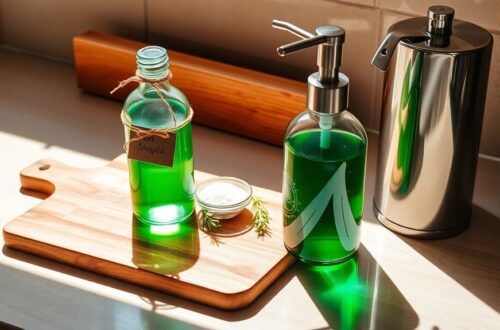
To keep your homemade dish soap fresh and effective, consider using repurposed containers like old ketchup bottles or pump dispensers.
Before transferring your soap, make certain the container is clean and dry to prevent contamination.
For ideal storage solutions, place your dish soap in a cool, dark place to maintain its quality and prevent ingredient separation.
If your soap thickens or solidifies, you can easily restore its consistency by applying gentle heat and stirring well.
Remember to shake the bottle before each use, especially if you notice any separation from natural settling.
Using these tips guarantees your homemade dish soap remains effective and ready for all your cleaning needs.
User Experiences and Recommendations
How do users feel about homemade dish soap with baking soda? Many find it effective for everyday use, though it may struggle with tough grease compared to commercial options.
Here are some popular tips from the community:
- Add essential oils: Incorporating lemon or tea tree oil not only boosts antibacterial properties but also adds a revitalizing scent.
- Adjust thickness: Fine-tuning the ratio of baking soda can create your desired thickness for easier dispensing.
- Repurpose containers: Users love using old ketchup bottles, emphasizing the eco-friendly aspect of this dish soap recipe.
Some even blend in castile soap or vinegar for extra cleaning power, showcasing the versatility of homemade laundry solutions.
Conclusion
Making your own dish soap with baking soda not only saves you money but also helps reduce plastic waste—did you know that approximately 300 million tons of plastic are produced globally each year? By switching to homemade solutions, you’re taking a small yet impactful step toward a cleaner planet. So, give it a try! You’ll enjoy sparkling dishes and the satisfaction of contributing to a more sustainable future, all while keeping harmful chemicals out of your home.